As the 90 degree sun blared in Midtown Manhattan last Friday, a crowd of dozens flooded the entrance of Madison Square Garden snaking out of the venue’s door—not for a concert or a game, but for merch. It was just five hours before game 2 of the NBA finals, and the line to snag an official jersey or a cap at the Knicks’ home arena seemed to be never-ending, despite moving quickly.
For many of the people in line, this would be their first piece of Knicks gear. Such is the effect of Knicksmania, an ecstatic response from a city that has not seen its pro basketball team reach the championship since 1999.
But for those unwilling to brave the long lines, or spend at least $60 for an official Knicks shirt, an entire ecosystem is taking shape beyond the Garden.
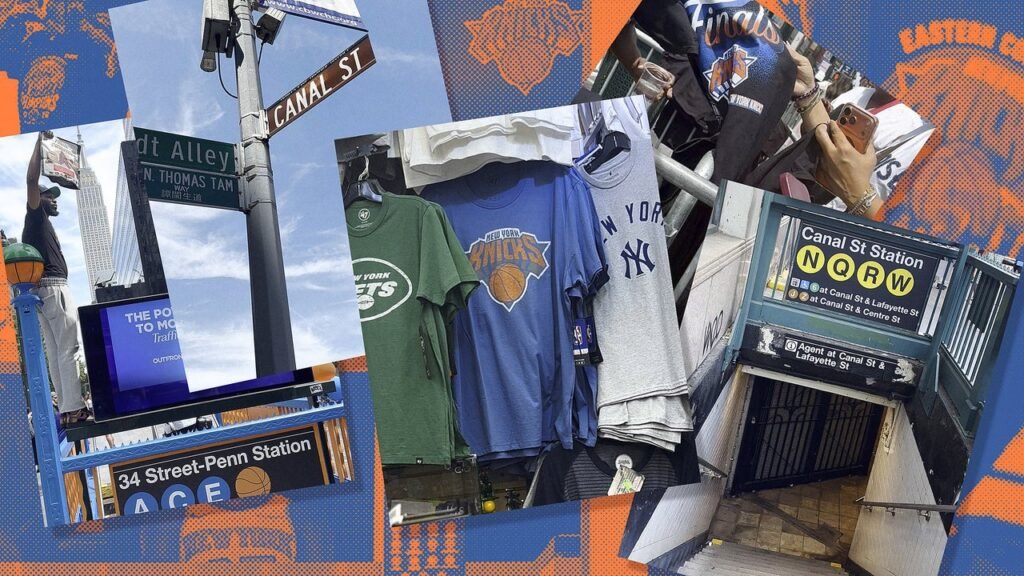
Stepping out of the 34th Street station on a subway entrance painted blue and orange, a vendor draped the metal fences commonly used for street closures with $20 Gildan shirts printed with the Knicks logo and “NBA Finals.”
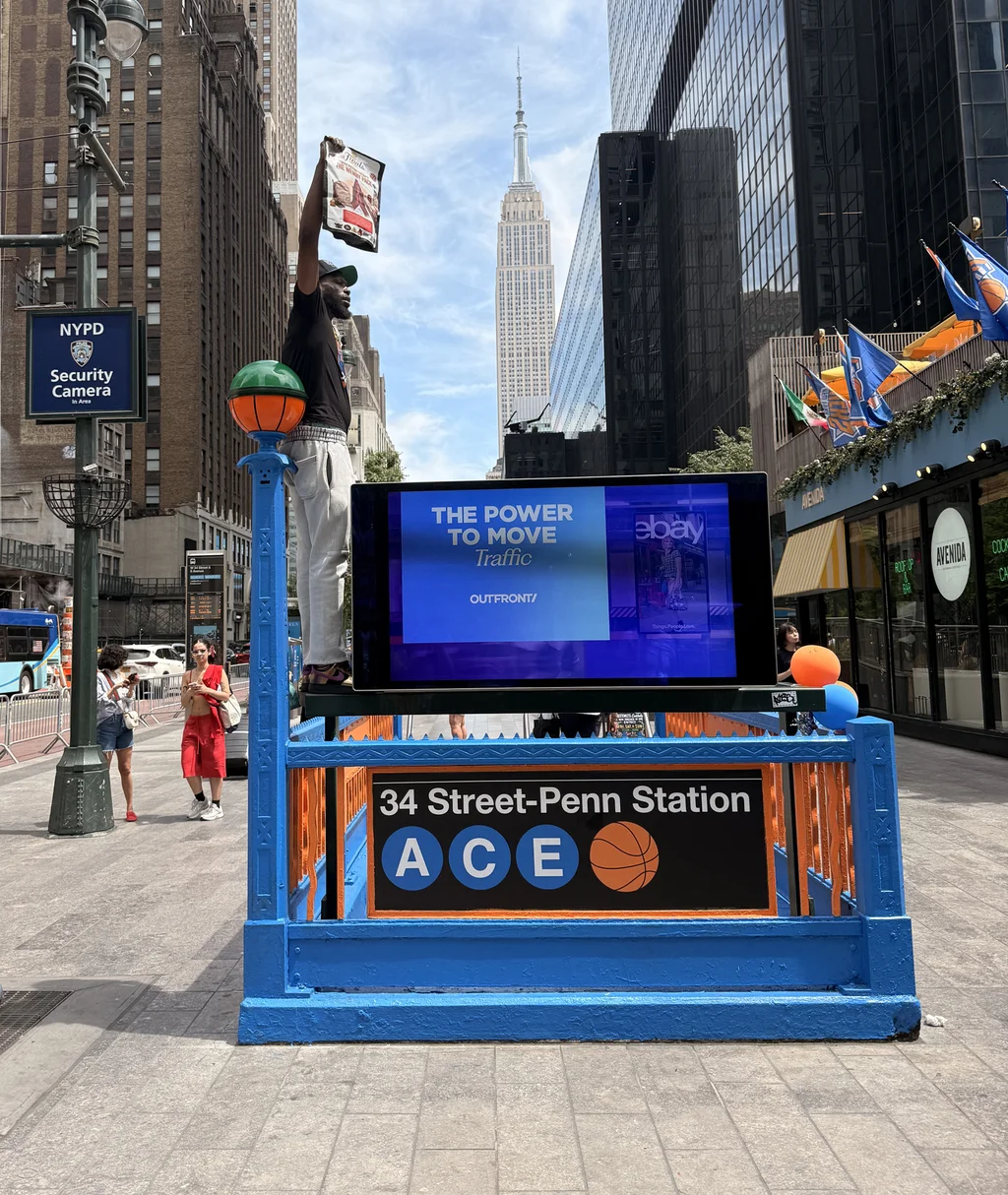
A block over, outside the entrance of MSG, at least four different vendors had small black carts filled with at least 60 shirts each, all around the $20 mark. When asked about how they managed to secure a large number of championship-themed shirts, despite the Knicks reaching the finals less than a week ago, an anonymous vendor put it simply: go online, find a design, and “print that shit on a t-shirt.”
The options ranged from bright orange shirts to white and black options, but a common thread among all of them was that they seemed to be AI-generated.
On social media, users noticed the phenomenon as well.
“I think… A.I. has zapped the power from bootlegs,” a user said on X about the shirts. While many seemed to be collages of stock photos of the Knicks logo with similar typeface, one particular design featured an image of the team resembling the hypersaturated AI style, with a busy background featuring the garden and Batman.
“It’s made them more efficient actually, and lets them have more designs now,” a user noted.
The AI merch has been spotted in Bed Stuy, Union Square, and even the West Village. While vendors agreed the technology was in part responsible for their quick response to Knickmania, the use of AI is also becoming a differentiator between merchants in the bootleg economy.
“My cousin Lorenzo makes rad bootleg NY sports shirts, all human-designed, no AI. US open, Liberty, Mets, Knicks, and World Cup designs,” a user advertised on X.
In Harlem, a separate artist has gained attention for his 2000s airbrushed designs, painting bootleg Knicks merch in real time.
Regardless of the origin of the designs, Knicks fans are fully embracing the offshoot product lines emerging throughout the city, seeing bootleg fashion as a physical representation of the city’s DNA, one in which anyone can hop on a trend and make it their own—as well as a quick buck along the way.
“NY is so back. $25 for Bootleg Knicks Finals shirts outside of MSG,” a user said on X. “NYC has never been more alive.”
Sold out
Down on Canal Street, a retail corridor usually filled with faux Goyard Saint Louis GM Bags and unofficial Airpod Maxes, sports jerseys draped the awnings of various gift stores. But no Knicks merch was to be found.
Speaking with five different vendors, it became clear that Knicksmania has already ravaged the area: Only five XL shirts were left on the entire street. Store workers, who wished to remain anonymous, told Fast Company that, because no one could have predicted the Knicks making it to the finals, they ordered their usual product amount, which quickly sold out as the team advanced.
One store owner who has been on Canal Street for over eight years, says typically he sells at most one to two Knicks caps a week—with tourists usually opting for Yankees merch. But this season, his Knicks caps were gone within a week.
The same vendor estimated he has sold at least 200 jerseys at the $60 range within the last two weeks, and while he is trying to order more from what he claims is an official licensed supplier, they are sold out as well.
Left hanging in all the stores instead are soccer jerseys, a nod to the incoming FIFA World Cup, but vendors say they are simply not selling well.