Welcome to the 348th installment of A View From the Easel, a series in which artists reflect on their workspace. This week, Connor Czora mines the history of porcelain ceramics while teaching the next generation of potters in DC.
Want to take part? Check out our submission guidelines and share a bit about your studio with us through this form! All mediums and workspaces are welcome, including your home studio.
Connor Czora, Washington, DC
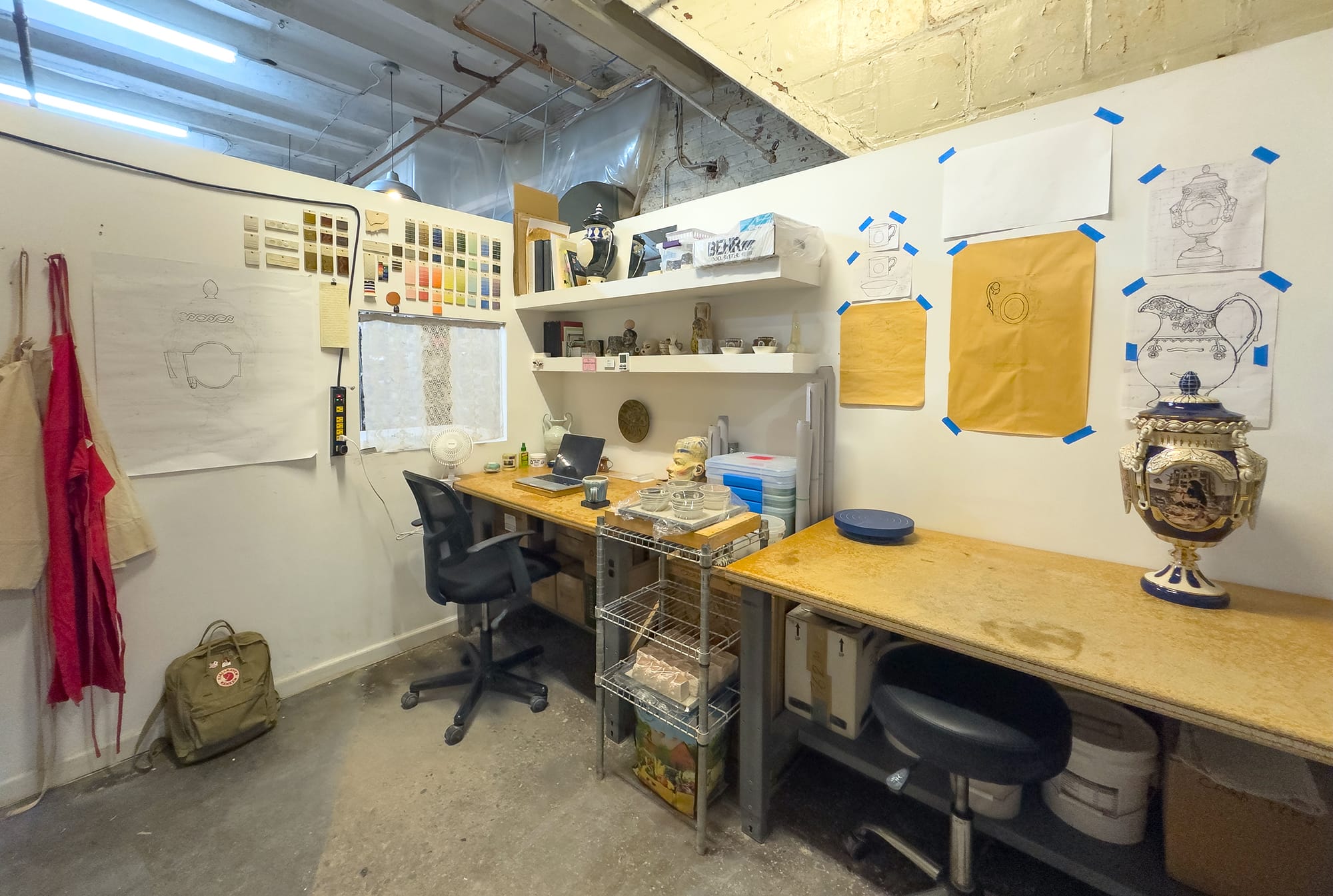
How long have you been working in this space?
Seven years.
Describe an average day in your studio.
I work at District Clay Center, where I also teach. Every day, I get to the studio between 1pm and 2pm to catch up on emails before diving into my own work. Ceramics go through several stages before they’re finished: throwing/building, surface decoration, glazing, decal transfers, and gilding. Each stage can take days or weeks, so in one workday, I’ll often find myself just throwing or just applying luster. I rotate between music and audiobooks in the background.
How does the space affect your work?
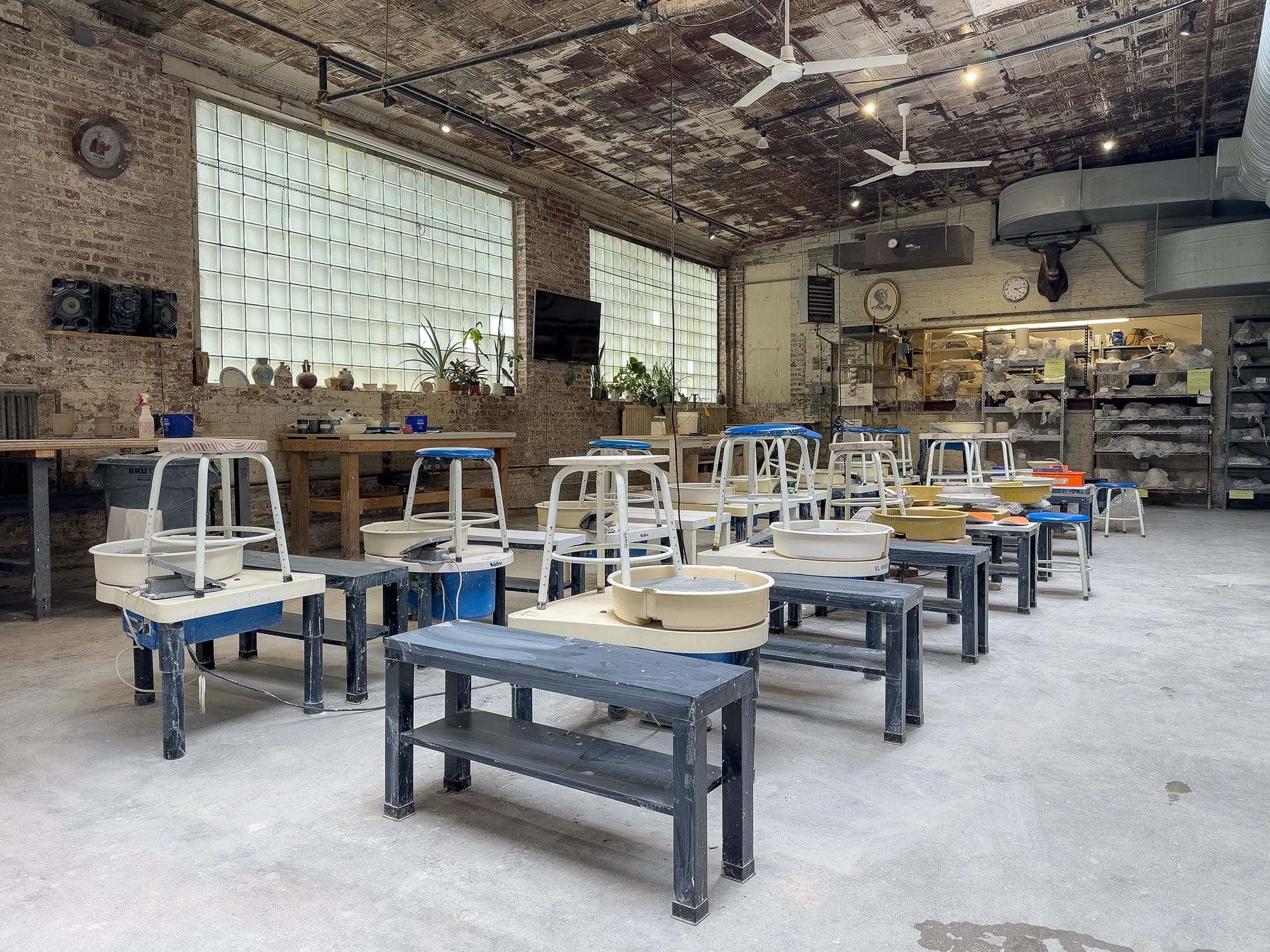
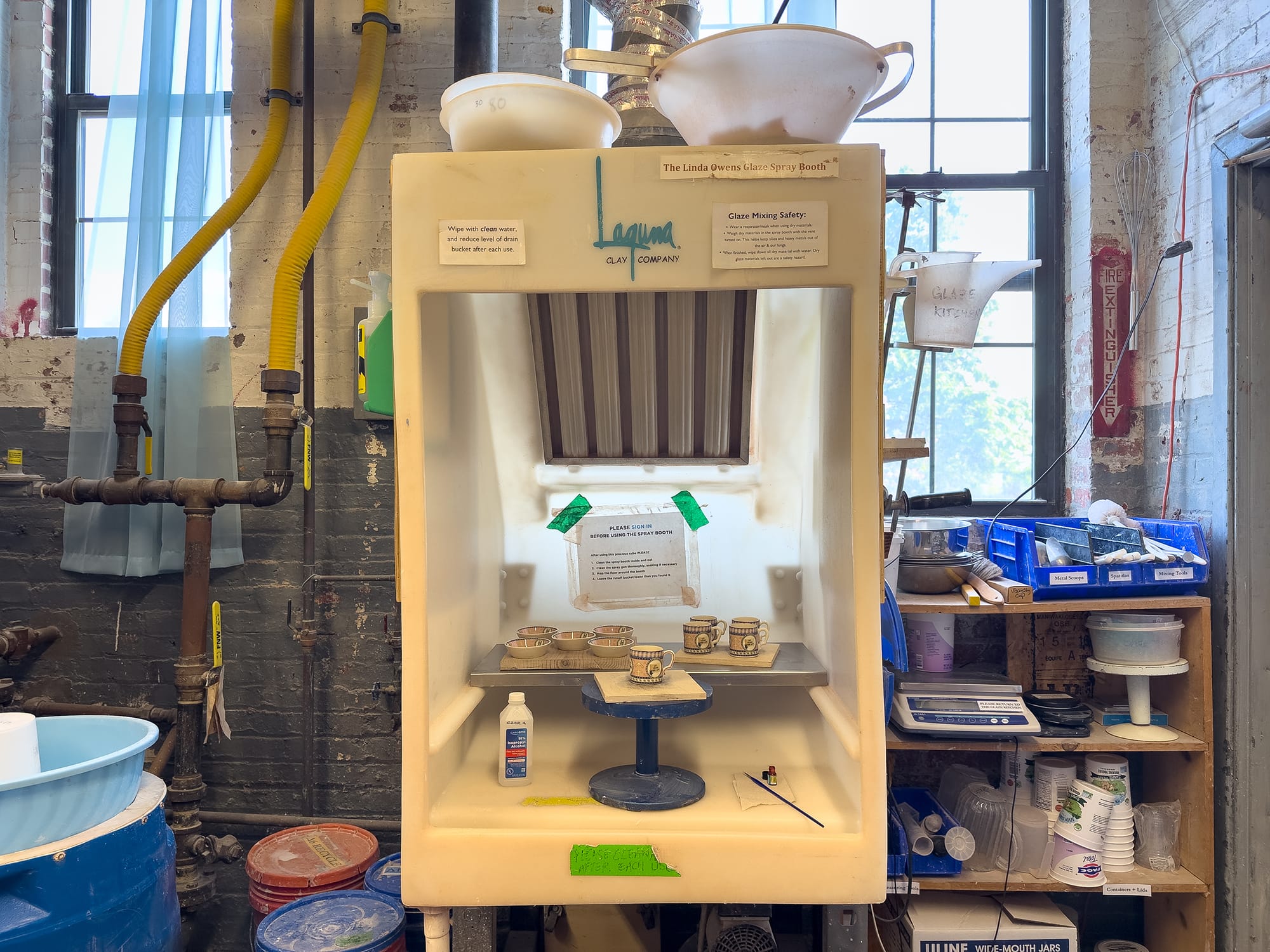
The wonderful thing about community studios is that I have my own space, but I can also use the studio’s pottery wheels, kilns, and other equipment as I need to. This access to kilns removes a major financial barrier for making ceramic art. Working in a community studio also means that I can spread out: There are multiple classrooms that I can work in, and if one wheel is out of order, I can just use another.
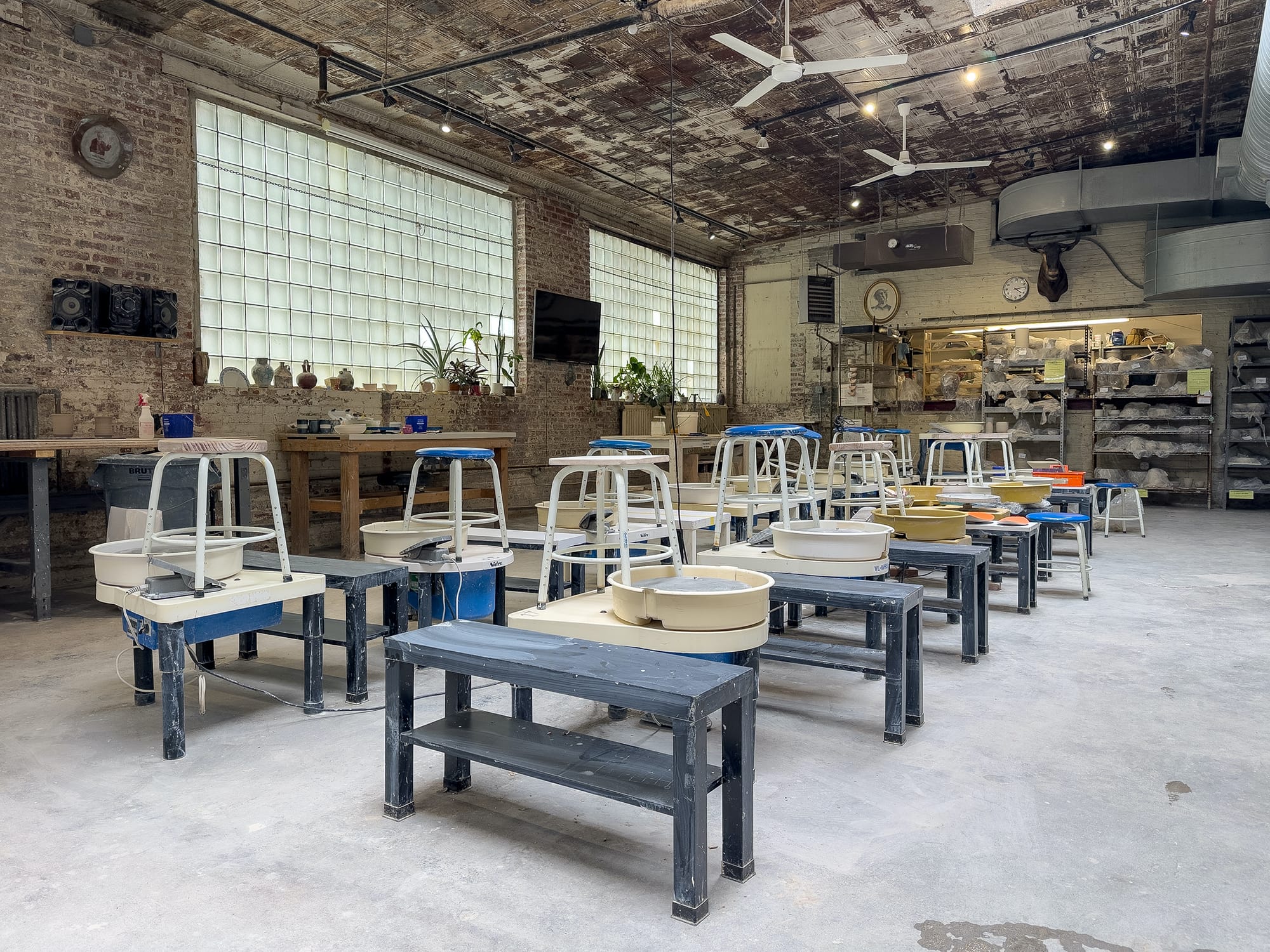
How do you interact with the environment outside your studio?
District Clay has about 400 weekly students, along with an artist program. As a teacher, I frequently work side-by-side with my students in the classroom. Ceramics is a fairly communal medium, so the clay world feels like a big family. In DC, we have a dozen or so studios around the city. Throughout the years, our studios have collaborated on pottery festivals, fundraisers, and gallery exhibitions. The district itself also provides good funding opportunities for artists, allowing connections across media.
What do you love about your studio?
Our space was a vintage furniture warehouse before it was a pottery studio, so we have old artwork and antiques around the studio that give a lot of character to the space. We also have large skylights and windows on the south and west sides of the studio, giving us lots of natural light and keeping the studio from feeling cramped. Our neighborhood hasn’t gentrified (yet), and it’s nice to work in a quieter corner of the city.
What do you wish were different?
Working in community is a great way to avoid the solitude that can accompany art practices. At the same time, I do have to establish firm boundaries between when I’m working as an artist and when I’m working as an employee of the studio. I’m still working on finding the right balance here.
What is your favorite local museum?
I’m going to cheat on this question. My favorite free museum in DC is the National Gallery of Art. Their collections are enormous, spanning medieval to contemporary art. They had a wonderful exhibition of Canova’s work a few years ago. My favorite paid museum is Hillwood. The estate and collection belonged to Marjorie Merriweather Post, former owner of General Foods and Mar-a-Lago. The estate houses a major collection of Sèvres and imperial Russian porcelain, both of which inspire my work.
What is your favorite art material to work with?
I am endlessly fascinated by porcelain. The clay is soft, smooth, and translucent when thin. My work connects historical ceramics to contemporary social issues, and porcelain carries a rich history of alchemy, trade, imperialism, and exploitation. Our supply chains are relatively traceable, and I know where the different mines are where my clay and glaze materials are extracted. Questions around sourcing become part of the artwork. Whose clay, whose land, do I have access to? What responsibilities does this entail?