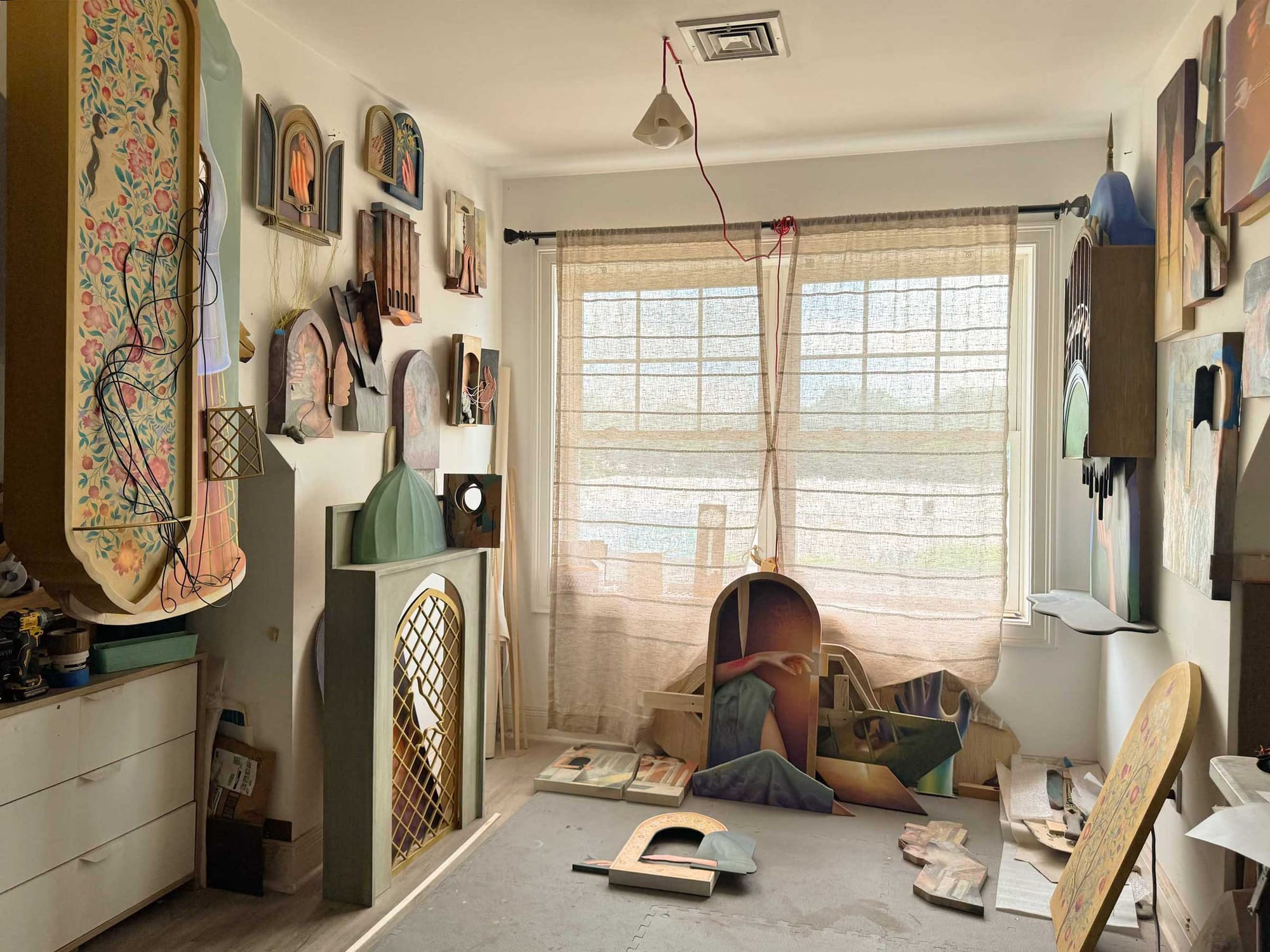
Welcome to the 344th installment of A View From the Easel, a series in which artists reflect on their workspace. This week, Arghavan Khosravi pulls from Persian miniature traditions to create surreal assemblages of paint, canvas, and wood.
Want to take part? Check out our submission guidelines and share a bit about your studio with us through this form! All mediums and workspaces are welcome, including your home studio.
Arghavan Khosravi, Stamford, Connecticut
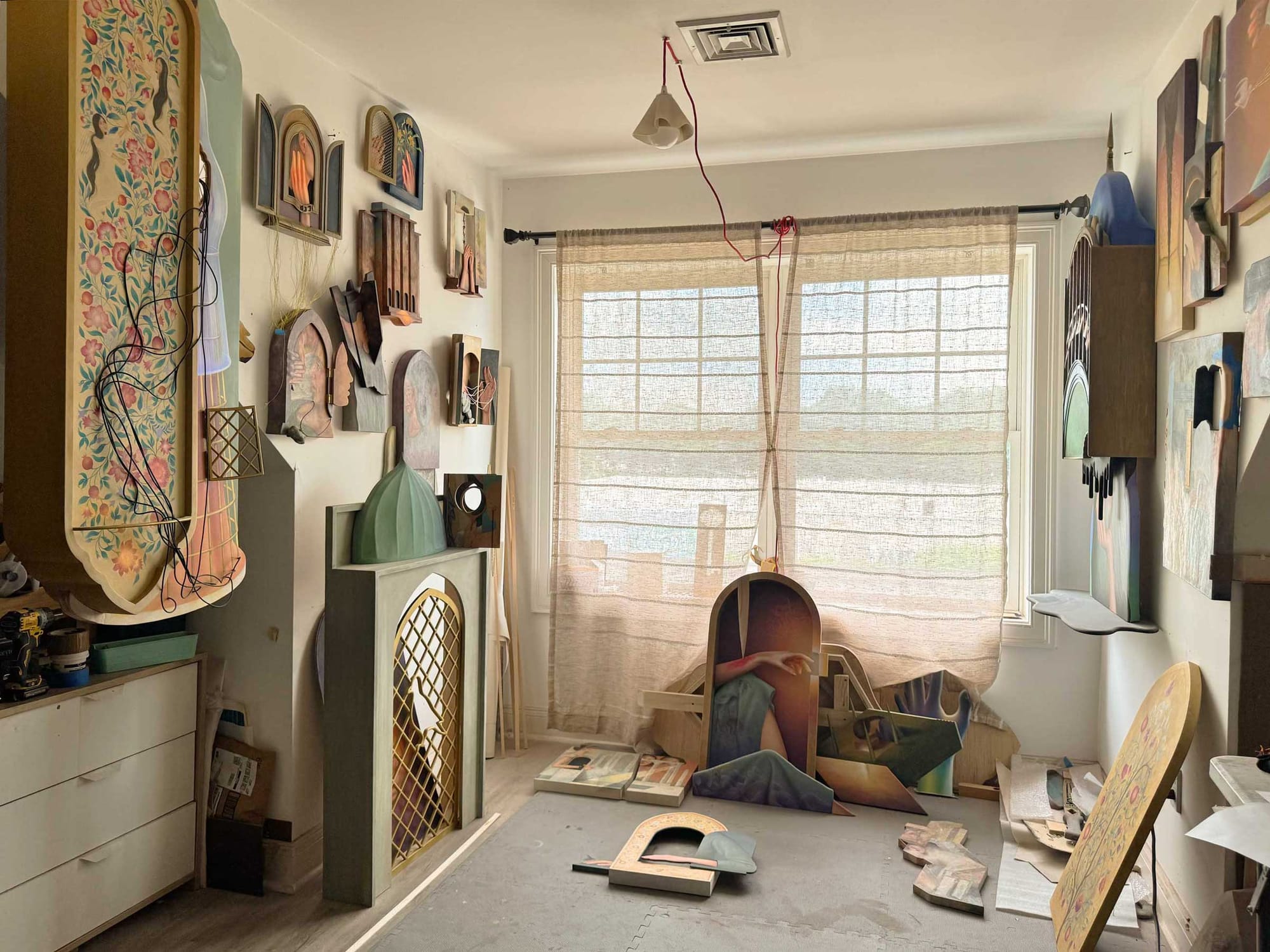
How long have you been working in this space?
Almost five years.
Describe an average day in your studio.
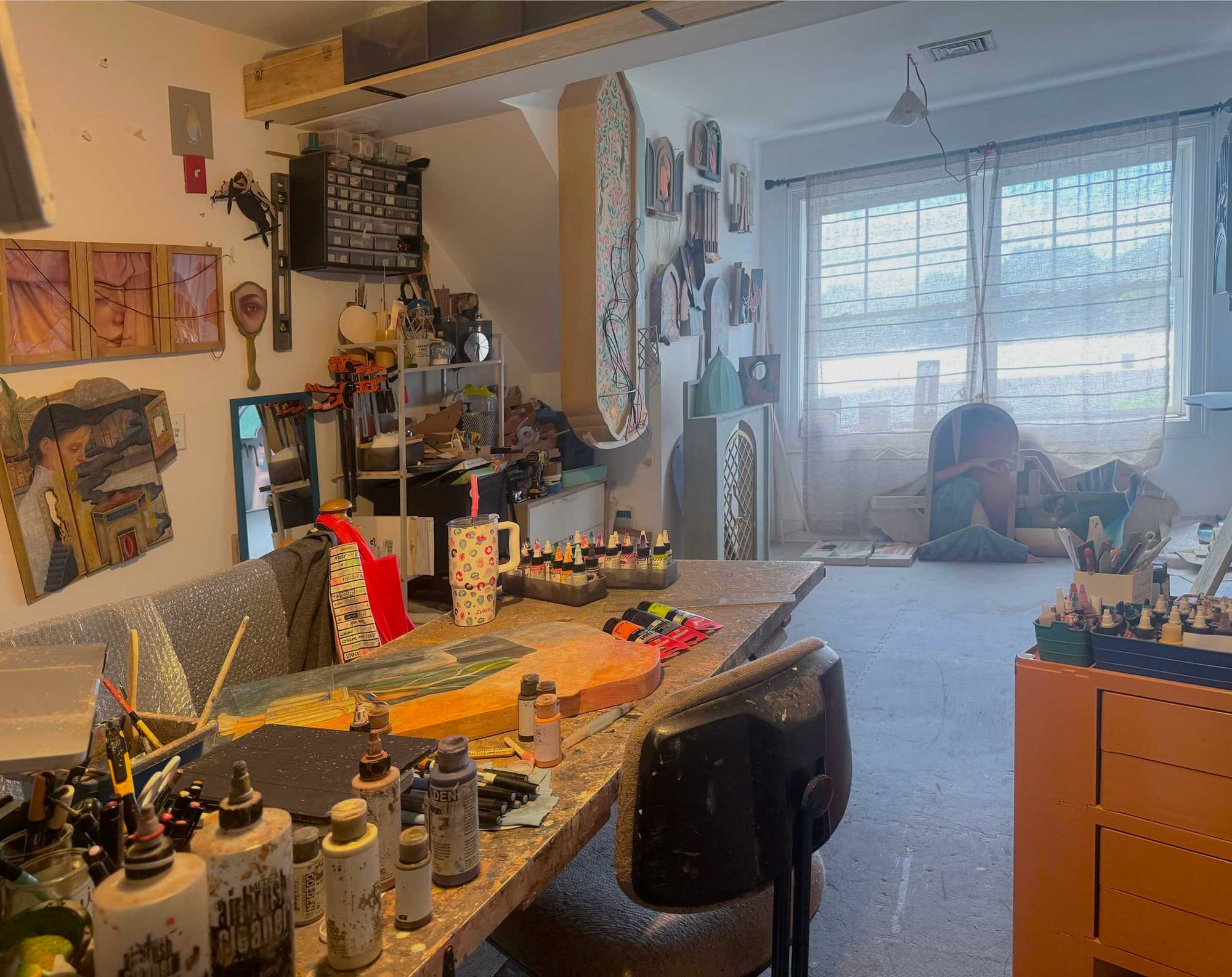
An average studio day usually starts with an espresso shot and a news podcast, often from the New York Times or the Washington Post. While listening, I review sketches or plans from the day before. If I’m in the fabrication phase, I finalize the panel shapes and take them to the woodshop. If I’m painting, I check on primed panels and begin underpainting. Later, I may switch to music or a dialogue-heavy show while doing repetitive physical work. For sketching and brainstorming, I prefer silence.
How does the space affect your work?
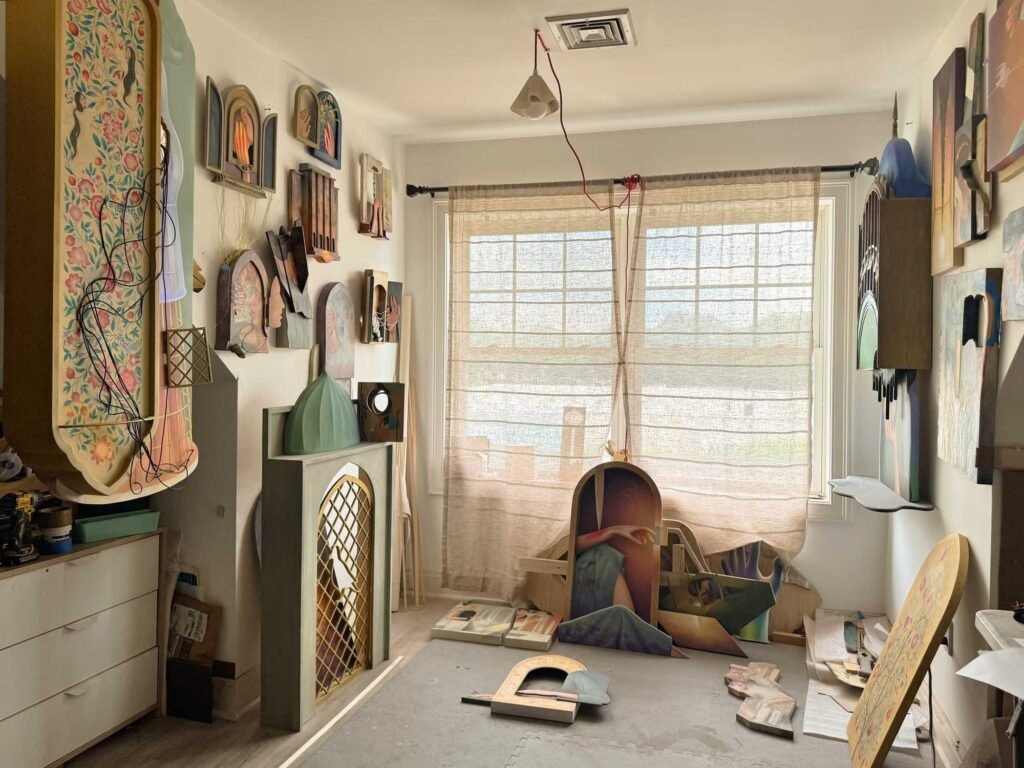
My studio is a small loft space above the townhouse where I live, so the space has shaped my daily routine. The live/work setup makes my hours very flexible, and not commuting gives me more time in the studio. The space is limited, but because my larger works are already built in separate sections (a structure that felt right for the subjects I wanted to explore), I can accommodate the scale more easily. Having my own woodshop nearby has also allowed the work to become more sculptural, complicated, and experimental.
How do you interact with the environment outside your studio?
Honestly, I have not really found an artist community near where I live. But one of the advantages of being in Connecticut is that I can take a one-hour train to Manhattan and come back the same day. So I can still stay connected to artist friends and the art community in New York through openings, events, exhibitions, etc. I also feel that social media, email, and Zoom studio visits make that distance feel much smaller.
What do you love about your studio?
What I love most about my studio is the flexibility it gives me. I can spend long hours there every day of the week, but it does not feel like a job. It feels like I am spending my time doing what I love. Most days, my studio feels like the most exciting place to be, except for the occasional days when I face an artistic block. So really, what I love most is the convenience and the sense of freedom it gives me.
What do you wish were different?
In the future, I would like to keep the live/work situation, but with more separation between the living space and the studio. Ideally, the studio would have its own entrance and be much larger, with enough room to store works and have more working area, and maybe even a small showroom for completed pieces during studio visits. I would also like a larger woodshop with more tools.
What is your favorite local museum?
My favorite local museum is the Aldrich Contemporary Art Museum, and I promise I’m not saying that just because I’m included in their first Decennial. I really admire the way the museum supports contemporary art and Connecticut-based artists, and the sense of community it has helped create for artists in the region.
What is your favorite art material to work with?
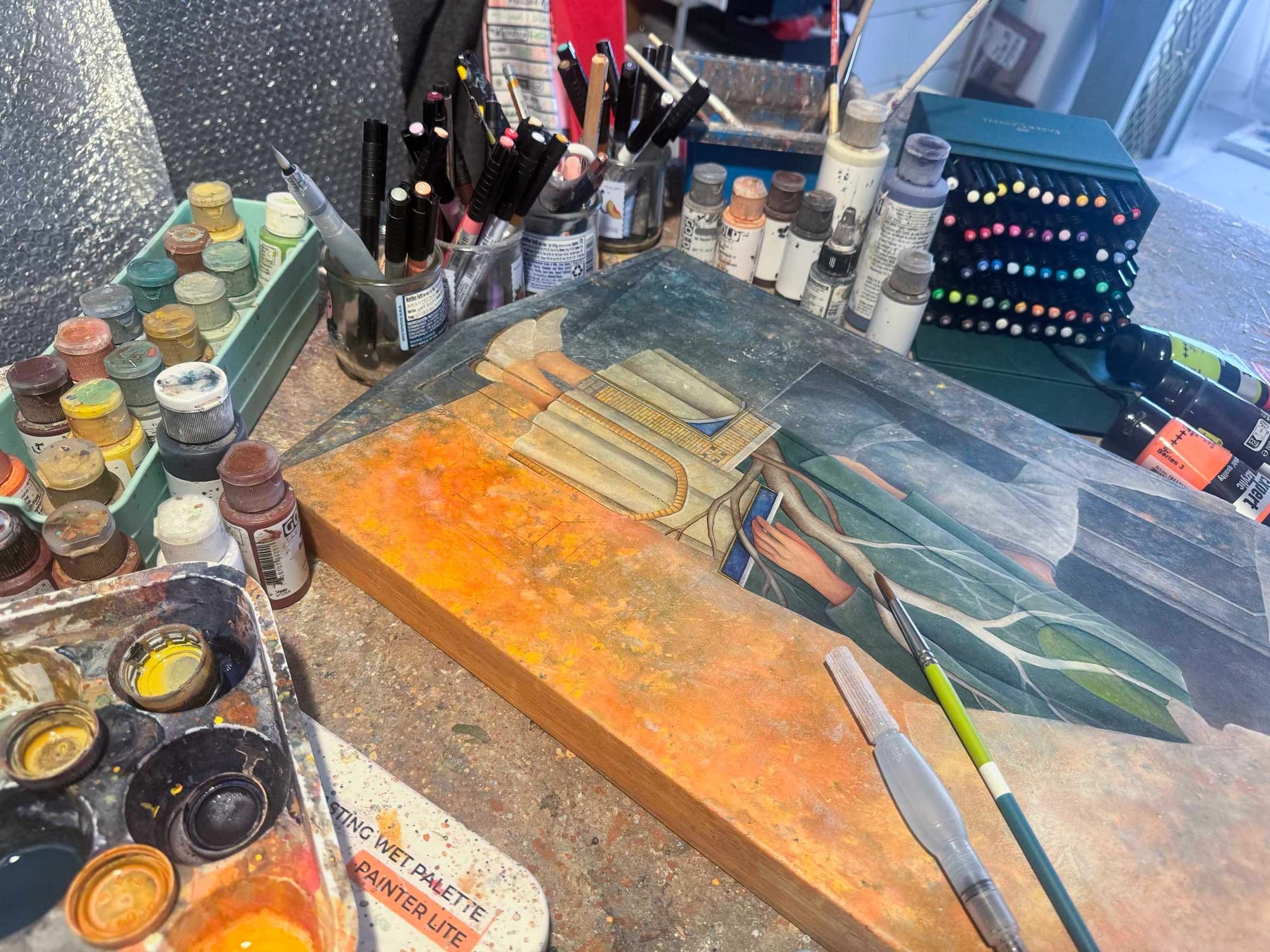
My favorite materials are the ones I am currently working with: acrylic paint, canvas, and shaped wood panels. I know these materials very well, and acrylic paint dries quickly, which suits me because I am often impatient to see the result and move to the next phase. I also really enjoy working with wood. The time I spend in the woodshop is often very therapeutic, which is one reason I do not outsource that part of my practice.