“The engine that we have now could have probably taken seven years and up to half a billion dollars,” Stan Rudenko tells me over a video call from Abu Dhabi. “In our collaboration, it basically took half a year . . . and we already have a first version. It’s mind-blowing.”
Rudenko is the CEO of Aspire Space Technologies, and the collaboration he’s talking about is with Leap 71, a Dubai-based computational engineering startup founded by the aerospace engineer Josefine Lissner and the entrepreneur Lin Kayser. They have formed an almost sci-fi alliance: A team staffed by the legends of the Soviet space program—engineers who built the Energia rocket and the fully autonomous Buran space shuttle—is joining forces with an autonomous AI software system and HBD, a Shanghai-based large-format metal additive manufacturer. Their goal? To build a fully reusable orbital rocket.
If they pull it off, they could become the most formidable enemy to SpaceX’s quasimonopoly on the commercial space economy. They plan to do it not by copying Elon Musk’s massive Starship, but by resurrecting the decades-old aerospace dream of the aerospike engine, a rocket engine that uses an exhaust cone instead of an exhaust bell, allowing it to work at any altitude. They want to put it on Oryx, a two-stage vehicle that will make space launches cheaper than what’s available today.
If it all works and they complete their timeline—from its late 2026 full-scale engine test to its 2031 first flight—Oryx will be the first fully reusable rocket. That’s a big if, since nothing in this industry is guaranteed to work.
To understand why this is a big deal, you have to look at the current launch market. The laws of orbital physics set a limited number of launches per spaceport, and there is a limited number of spaceports around the world. Currently there are 28, almost half controlled by the U.S. and most of the rest controlled by China and Russia, with Japan, Europe, and India controlling one each.
Right now, there are about 2,400 satellites made annually, without counting SpaceX’s own satellites, and 600 of those can’t be launched. Satellite companies face 18- to 24-month timeframes for launch slots. This is only going to get worse as the space industry grows, according to analysts.
Plus, the most active private launch companies today, SpaceX and Blue Origin, are hoarding capacity for their own megaconstellations of AI servers and satellites. “Starship will be launching Elon’s data centers and not StarCloud’s,” Rudenko points out, noting that the commercial launch market is becoming dangerously vertically integrated. There’s a big world outside the U.S. and China—Chinese companies are also using their launch capacity for their own satellites—that is starved for launch slots. Because the fully reusable Oryx is designed to fly, land, and turn around rapidly like a commercial airliner, it aims to provide a dedicated, high-frequency flight schedule. Aspire is betting that this speed will be the key to absorb the launch backlog.
Musk’s answer to everything is Starship, a rocket that is twice as powerful as the Saturn V, stands 394 feet tall, and consumes 1.2 million gallons of fuel in each launch to carry from 220,000 to 300,000 pounds of satellites to orbit. Given that your typical satellite weighs 1,100 to 2,000 pounds, this thing is too big to make sense for many commercial operations. It’s the equivalent of a giant semitruck you have to completely fill with small Amazon packages before it makes economic sense to drive.
It’ll be great to mass-deploy SpaceX’s fabled massive constellations of AI servers and Starlink satellites. Or to go to the moon and Mars. But integrating anything from 136 to 170 third-party satellites into one Starship launch will be an operational nightmare.
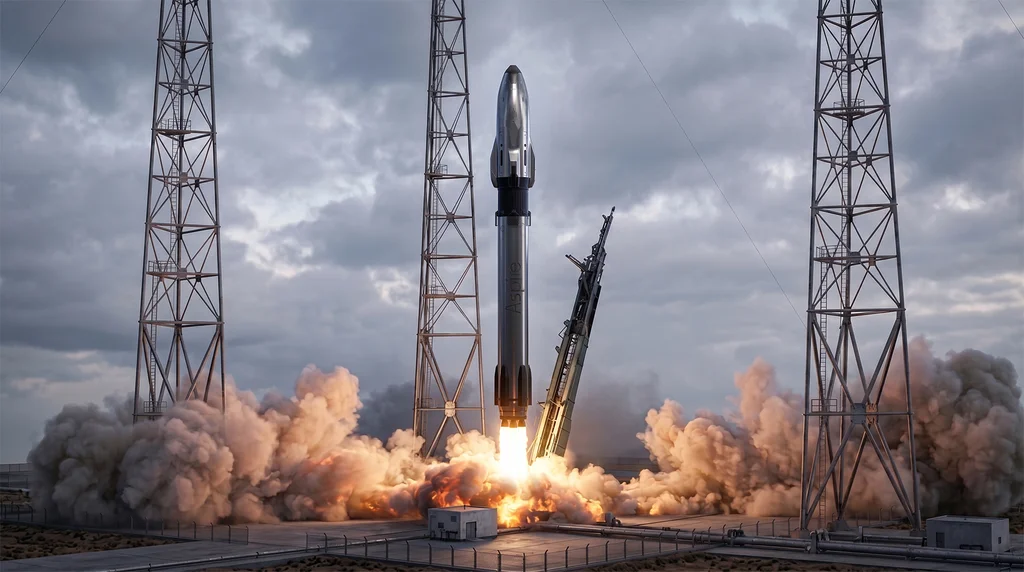
Aspire is building a launch vehicle called Oryx that competes in terms of payload with SpaceX’s 229.6-foot-tall Falcon 9. The latter hits the sweet spot for commercial payloads: At 38,000 pounds of total cargo, it can comfortably fit a handful of medium-size satellites, plus a variable number of smaller satellites.
Right now, the Falcon 9’s top stage is disposable and only the main booster stage gets back to Earth. The launch price per kilogram ranges from $2,500 to $3,000, making it the cheapest way to reach orbit. The Oryx, Rudenko promises, will cut down on the launch price by making the entire rocket reusable. The company’s estimates claim the Oryx will get launch prices down to a shocking $200 per kilogram, beating Musk by more than a factor of 10.
The Oryx
The Oryx is a fully integrated, fully reusable two-stage space transportation system engineered for rapid turnaround flights. Drawing on the heavy-lift DNA of the Soviet Buran-Energia program that its engineers worked on decades ago, the architecture relies on 10 liquid methane and liquid oxygen (methalox) engines. Five large 1,000-kilonewton engines push the first-stage booster off the pad, while five 200-kilonewton engines take over to push the upper stage into orbit.
Visually, the Oryx truly looks like a modern sci-fi spaceship. It’s unlike anything we have seen in real spaceflight history. Sitting atop its first stage, it’s neither a fragile capsule perched on a disposable stick like the Dragon nor the silver bullet of Starship.
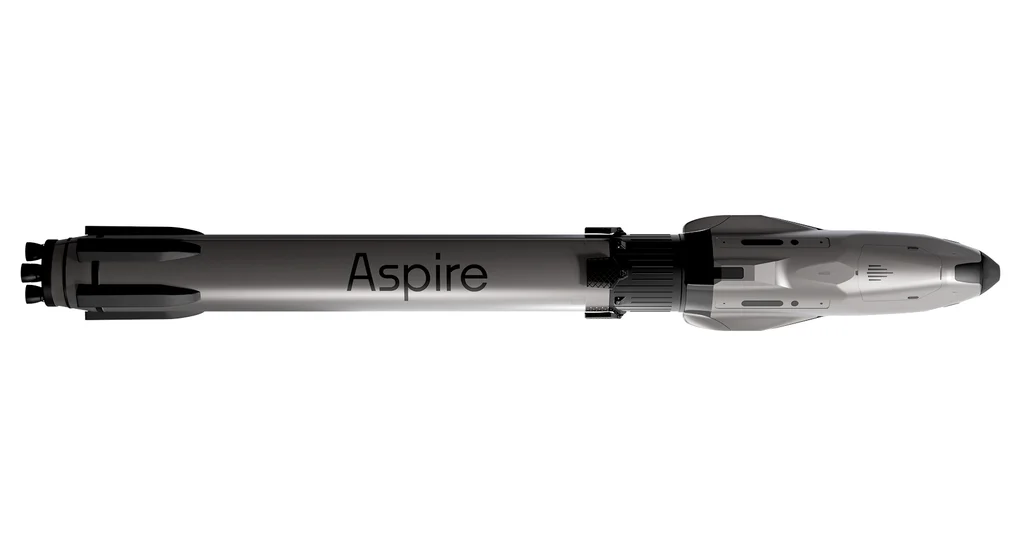
While its first stage is the functional equivalent of the Falcon 9, the real innovation is what happens at the top. The upper stage isn’t just a cargo container that ferries satellites like the one used by SpaceX’s workhorse. Called the D2 Cargo, it’s an autonomous spaceship that sports landing legs and aerodynamic strakes. It doesn’t look at all like a traditional rocket stage but more like a ship from The Expanse, a sci-fi series set in a future where humanity has colonized the entire solar system.
In the TV series, spaceships follow a minimalist design philosophy akin to Dieter Rams’ principles of design. Their form follows function, but the result is aesthetically pleasing, elegant shapes that fulfill the requirements for orbital operations and reentry, but at the same time are a dance of smooth surfaces that truly feel like the future. It’s the antithesis of Starship, which has the retrofuturistic polished stainless steel pointy bullet look of old Flash Gordon cartoonish vehicles.
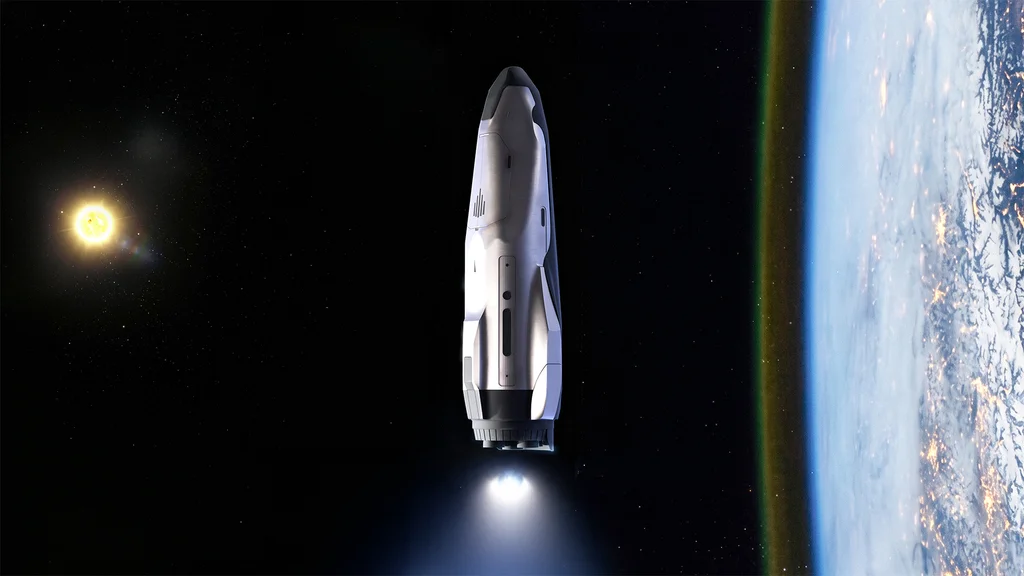
Aspire aims to fly the Oryx in three ways. One is a traditional fully expendable mode—where the upper stage burns up in the atmosphere or crashes into the sea—carrying 15 metric tons to low earth orbit. Two is landing the booster like a Falcon 9, in which case it can carry 12.5 tons. But three is the ultimate goal—the fully reusable mode. This allows the D2 Cargo to carry 3 tons of payload into orbit, maneuver around, refuel space stations, or act as a standalone floating laboratory for pharma and semiconductor research, and then safely fly its 3-ton cargo back down to Earth to be used again.

The aerospike dream
Making a Falcon 9-sized upper stage fully reusable is a difficult physics problem. You have to carry engines that work in the vacuum of space, plus engines that work at sea level to land the ship. Starship solves this by just being gargantuan—it carries two sets of engines, absorbing the massive weight penalty. A smaller ship can’t afford that dead weight.
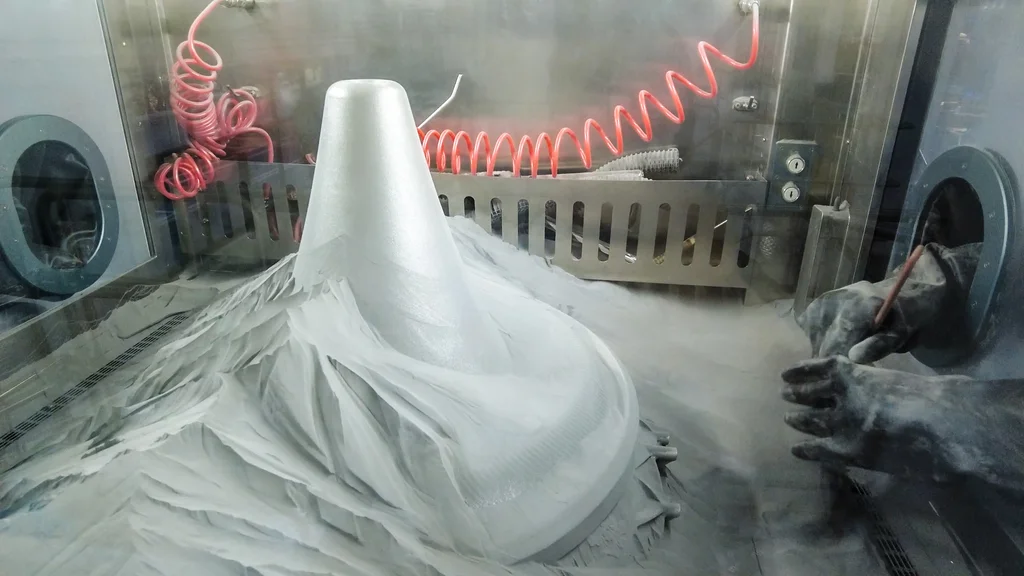
The elegant solution is the aerospike. “The aerospike has the same efficiency when it is in space, but it also allows it to land on Earth,” Kayser explains. The ship comes down, stops on the power of its own exhaust, hovers for a second, and gently lands. The aerospike is lighter and significantly more efficient than a vacuum engine. This efficiency comes from its shape.
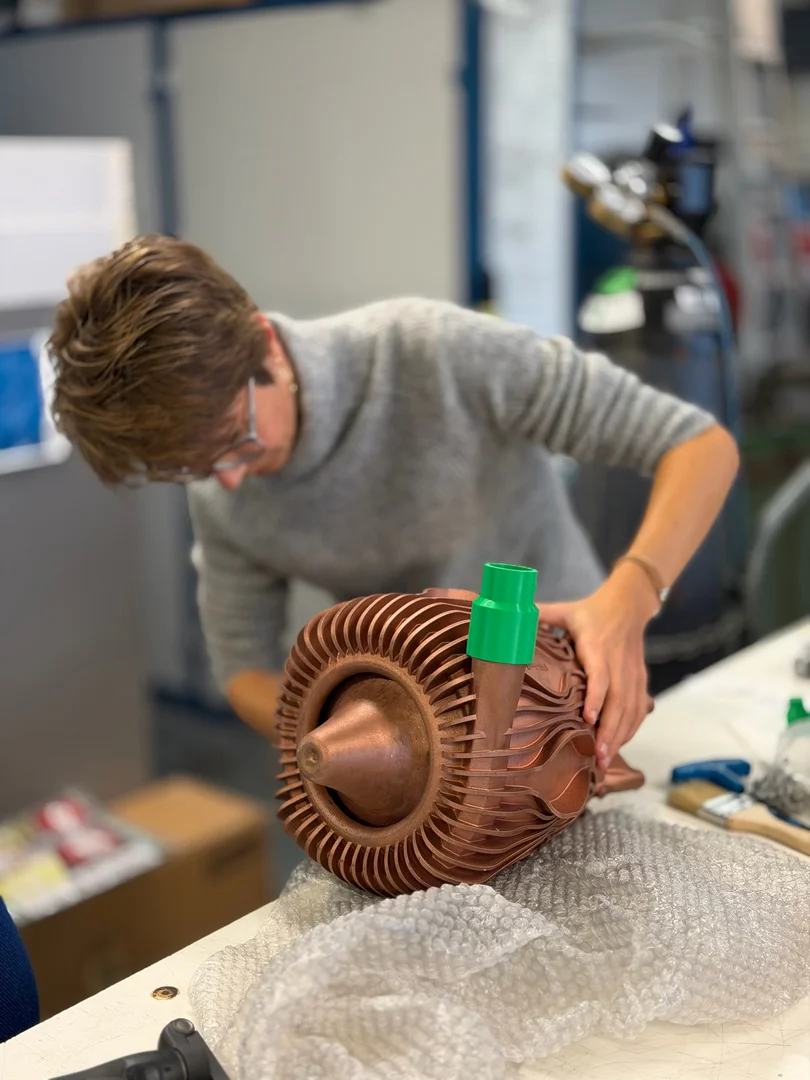
Unlike the conventional bell-shaped nozzles we are all familiar with, an aerospike acts like an inside-out engine. It channels supersonic exhaust along a central cone that starts wide and ends in a point, much like a slightly concave ice cream cone. This shape allows the expanding gases to adjust naturally to atmospheric pressure.
That’s why aerospikes have been the Holy Grail of space flight for decades. NASA spent years and millions of dollars trying to make aerospikes work in the 1990s with the X-33 program. They failed. The problem was that the spike sits in the middle of exhaust gas heated to 5,430 degrees Fahrenheit (almost 3,000 Celsius) that aggressively melts the metal.
This is where AI came to the rescue. Rather than human engineers trying to manually draw impossibly intricate internal cooling channels in CAD software, Leap 71 uses an in-house AI model called Noyron. Noyron is essentially a real-world Jarvis—Tony Stark’s AI assistant-engineer from the Iron Man movies. The computational AI model is encoded with thermodynamics, fluid dynamics, and manufacturing constraints discovered in decades of rocketry research by the United States and the Soviet Union.
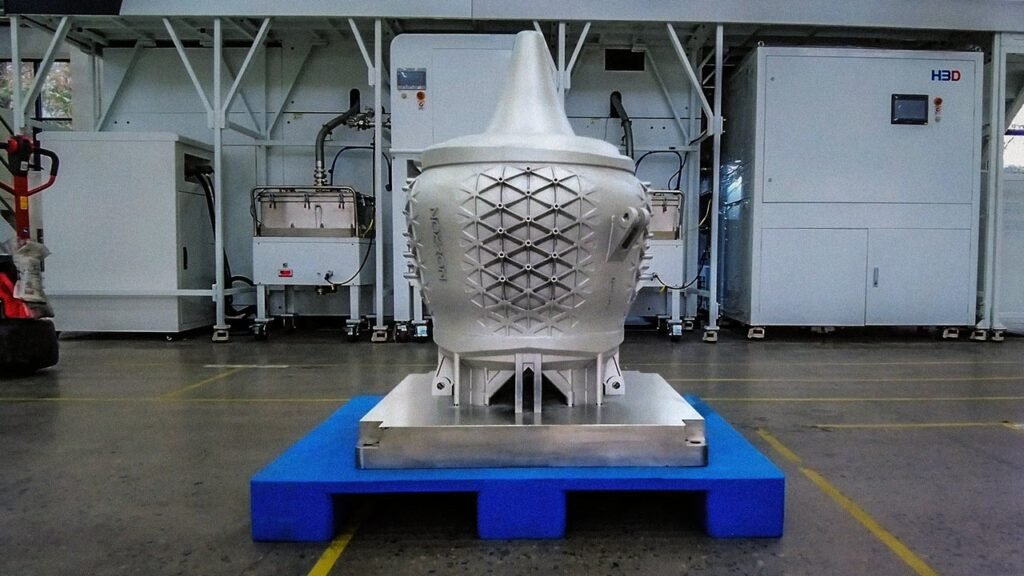
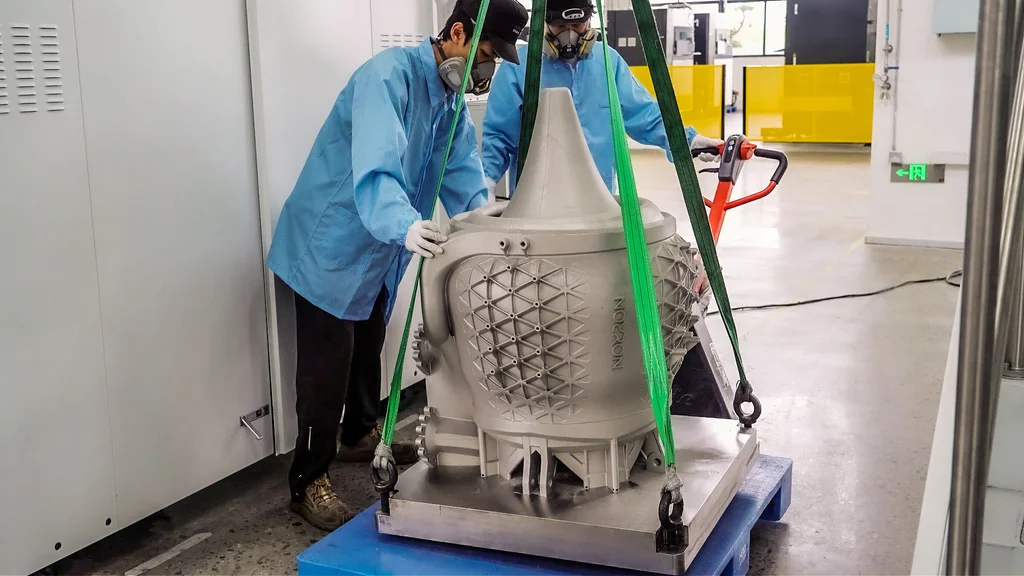
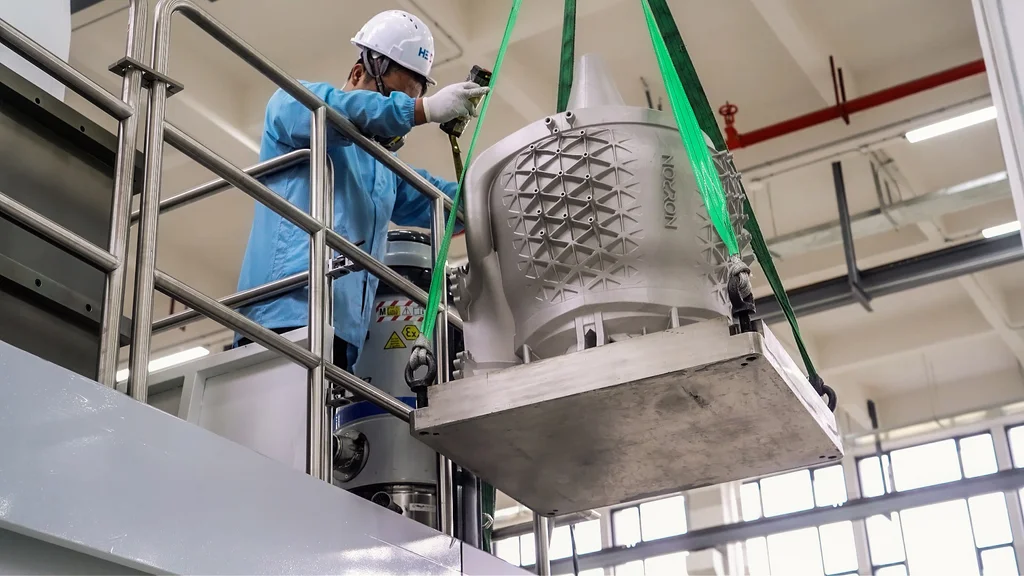
Just a few months ago, Leap 71 partnered with the Shanghai-based manufacturer HBD to 3D-print the XRA-2E5, a monolithic methalox aerospike capable of generating 20 tons of thrust, like the Blue Origin BE-3U in the upper stage of Jeff Bezos’s New Glenn rocket. Noyron autonomously designed the intricate regenerative cooling system of the aerospike: Inside the smooth walls of the engine there is a 3D-printed network of channels that carry the cryogenic liquid oxygen and methane from the rocket’s fuel tanks to the combustion chamber. Since these liquids have a very low temperature (minus 297 degrees Fahrenheit for the oxygen and minus 260 for the methane), the fuel channels act as the cooling element for the spike and the combustion chamber.
HBD used a massive 10-laser printer to build the one-meter-tall (39-inch) engine out of a superalloy called Inconel 718 in just 289 hours. It’s the largest 3D-printed aerospike ever made, and it proves Noyron can scale to orbital-class thrust.
Time to fire up
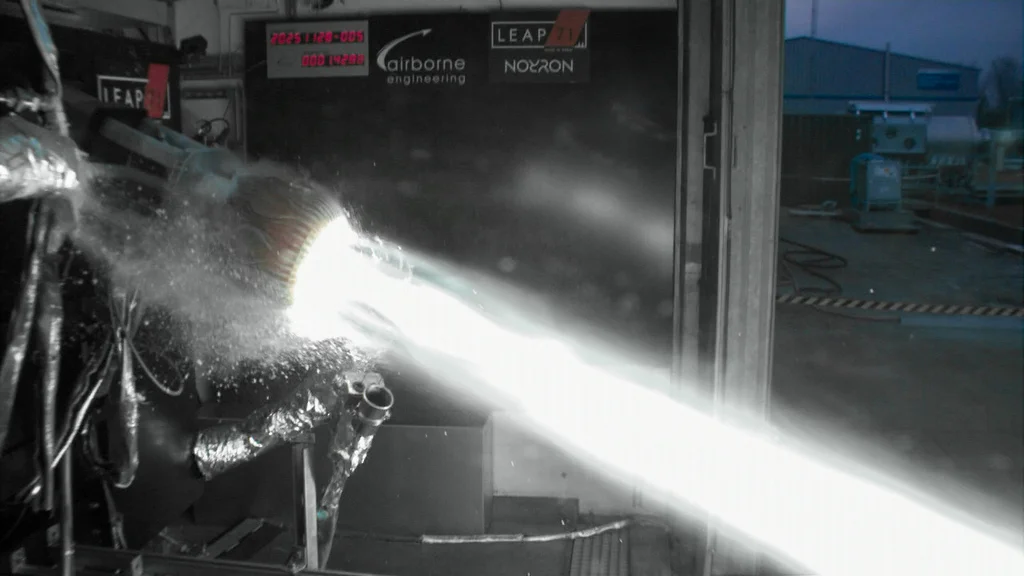
But having a beautiful perfect piece of printed metal sitting on a trade show floor is very different from surviving 20 tons of controlled explosions. While Leap 71 already successfully tested aerospikes created by Noyron back in 2025, Kayser tells me that the bigger XRA-2E5 was a manufacturing test to prove the 3D-printing process wouldn’t fail structurally. The actual hot-fire test engine is what they are working toward next.
Their biggest problem isn’t the AI, the physics, or the printers but finding the right testing site. “We can design these things now much quicker than we actually can build the infrastructure to test it,” Kayser admits. Finding a test stand and propellant farm capable of handling a 200-kilonewton methalox engine is a massive undertaking. The testing facility is their primary bottleneck.
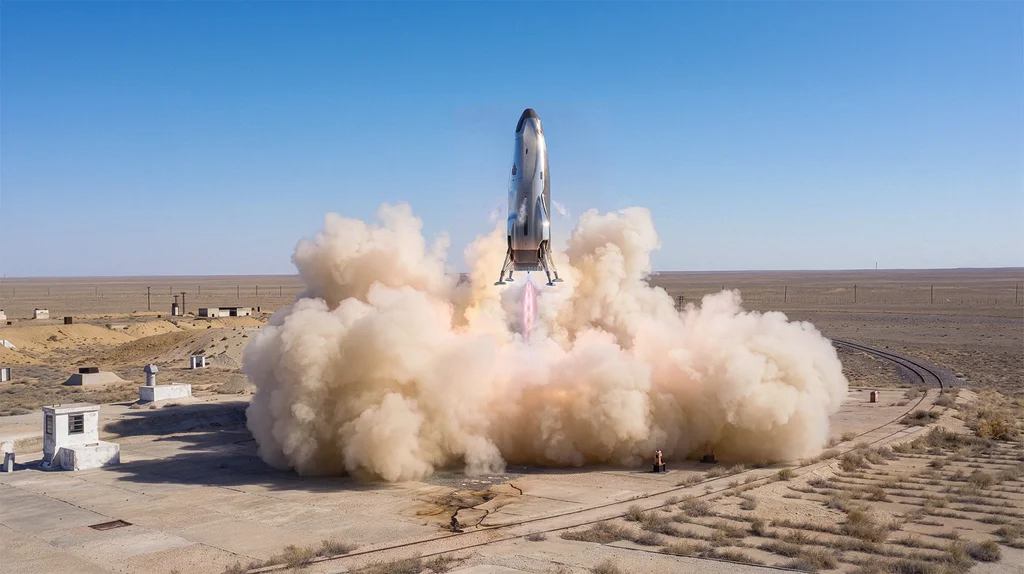
To solve this, they need to either build massive new test infrastructure from scratch or borrow someone else’s. Kayser says the United Arab Emirates government is highly interested in supporting the construction of a dedicated test site in the desert. But building a heavy-duty propellant farm takes serious time. That’s why Leap 71 is looking at Baikonur in Kazakhstan—which still houses heavy Soviet-era aerospace infrastructure—to see if they can use its facilities just to get the engine hot-fired this year.
But while the engine test-stand situation is still being negotiated, the launchpad for Aspire’s Oryx rocket is locked down. Aspire already has a launchpad in Baikonur. Operating from the historic cosmodrome where the Soviets built their space empire is important. First, Baikonur is in Rudenko’s (and his team’s) blood. His father actually managed the spaceport. Now, a new generation of ex-Soviet engineers is returning to the Kazakh steppes to test a decidedly 21st-century spacecraft.
Baikonur also provides a huge operational advantage over SpaceX. Musk’s rockets launch from the U.S. coast. To save fuel, SpaceX prefers to land the Falcon 9 booster out in the ocean on an autonomous drone ship, which is a logistical headache. If they want to fly the booster back to land, it requires a heavy fuel penalty to turn the rocket around in midflight.
Aspire’s architecture avoids this by using the vast, empty geography of the steppes and the legacy logistics of the Soviet rail system. When the Oryx launches, the D2 Cargo upper stage will deploy its payload in orbit and eventually fly all the way back to the launchpad. But the first-stage booster won’t waste fuel turning around.
“What we can do in Kazakhstan is you can fly downrange, land in the desert, and take the train back to the actual launch site,” Rudenko explains. You simply drop the booster in an empty stretch of desert, load it onto a railcar, and roll it home. “You don’t have to deal with the operations and shifts and waves and salt water spraying. All of these things are really not great for rockets.”
Final countdown
“Our next big, big milestone is in 2028,” Rudenko tells me. “We’re going to make a hopper test of our second-stage spaceship.” The company plans to launch the 16-meter-tall D2 Cargo ship from Baikonur, push it to an altitude of about 0.6 miles on the power of Leap 71’s aerospike engine, hover in midair, and bring it gently back down to the pad. It’s the same kind of low-altitude proving flight SpaceX used to validate the Starship architecture, proving out the software, the propulsion stack, and the landing systems all at once.
If the hopper test works, it paves the way for full orbital test flights targeted for 2031. It’s a very ambitious timeline but Rudenko and Kayser are 100% sure it will be done. In fact, the former claims they are ahead of schedule with every milestone so far.
And yet, the aerospike hasn’t breathed fire yet, and orbital spaceflight is notoriously unforgiving, as Soviet engineers know. But with Aspire’s internal estimates suggesting this fully reusable system could drop payload costs to an absurd $200 per kilogram, there is motivation for sure. If this unlikely alliance of ex-Soviet rocketeers and AI software engineers can survive the test stand, we might see the rise of a new space power: an agile, high-cadence space fleet that can rival Musk and Bezos the same way the Soviet Union once challenged the United States. This time, with the almighty Chinese also in, it will be a much tighter race. It may have no winners this time because, no matter who gets ahead initially, the launch market and the future space economy, the ultimate technological revolution, will be big enough for everyone.