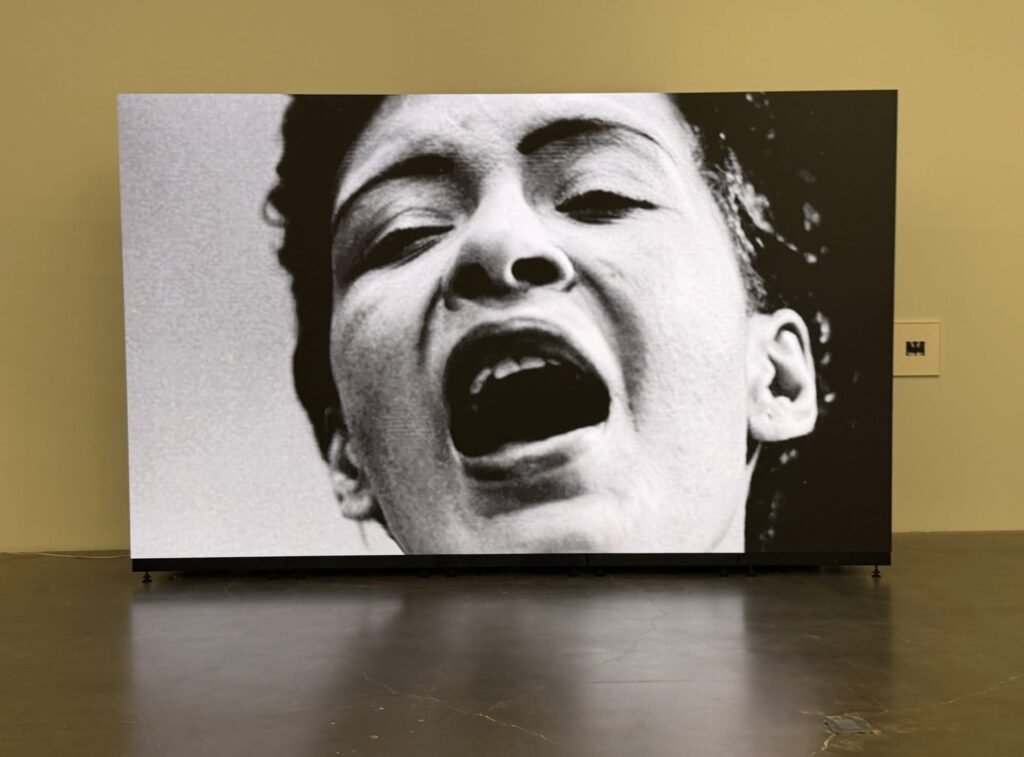
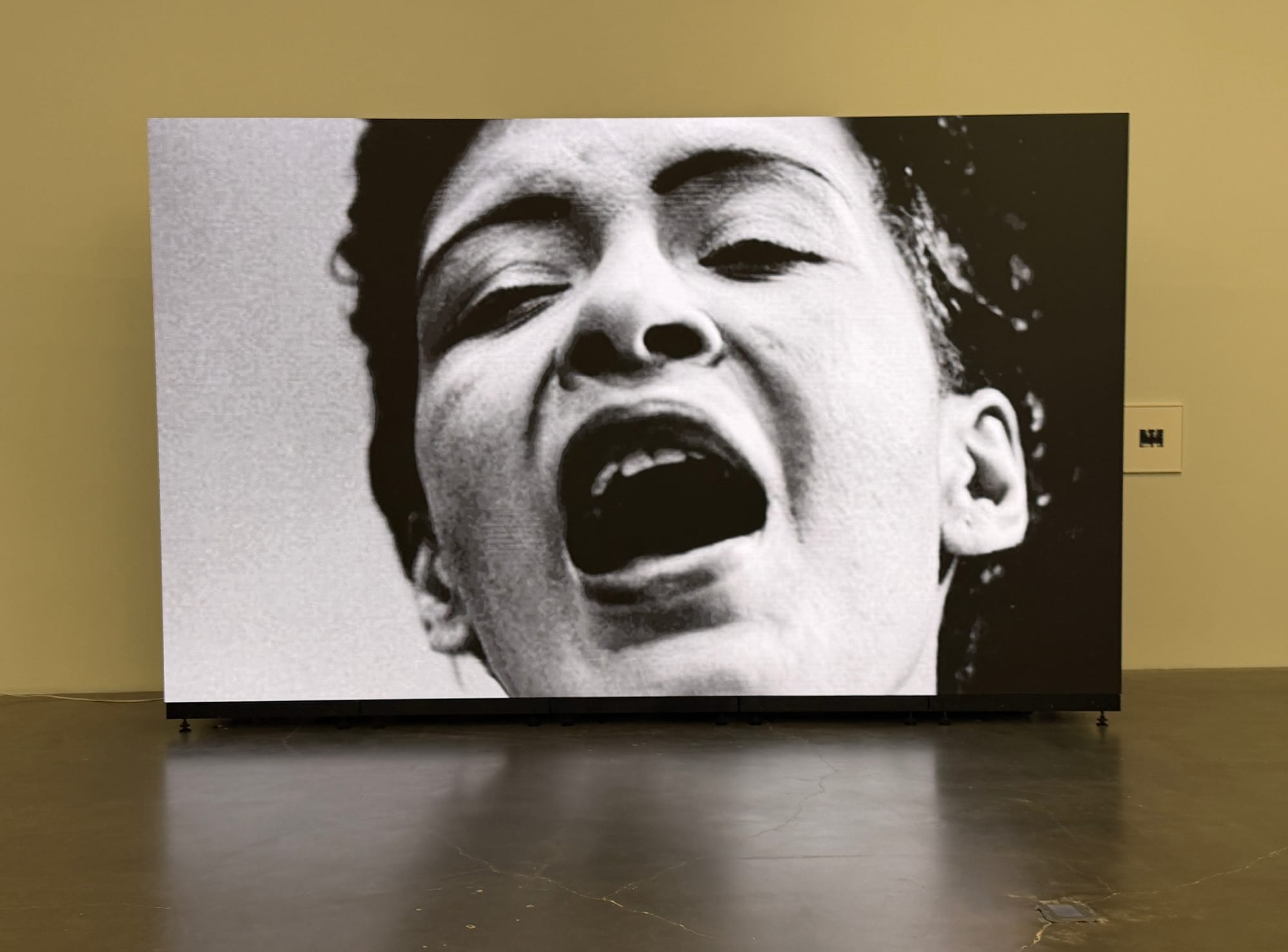
Arthur Jafa’s survey I Am Tony at the New Museum in New York is full of the artist’s characteristic gallows humor that ironizes even the most morbid images and brings to the surface the solemnity of low culture.
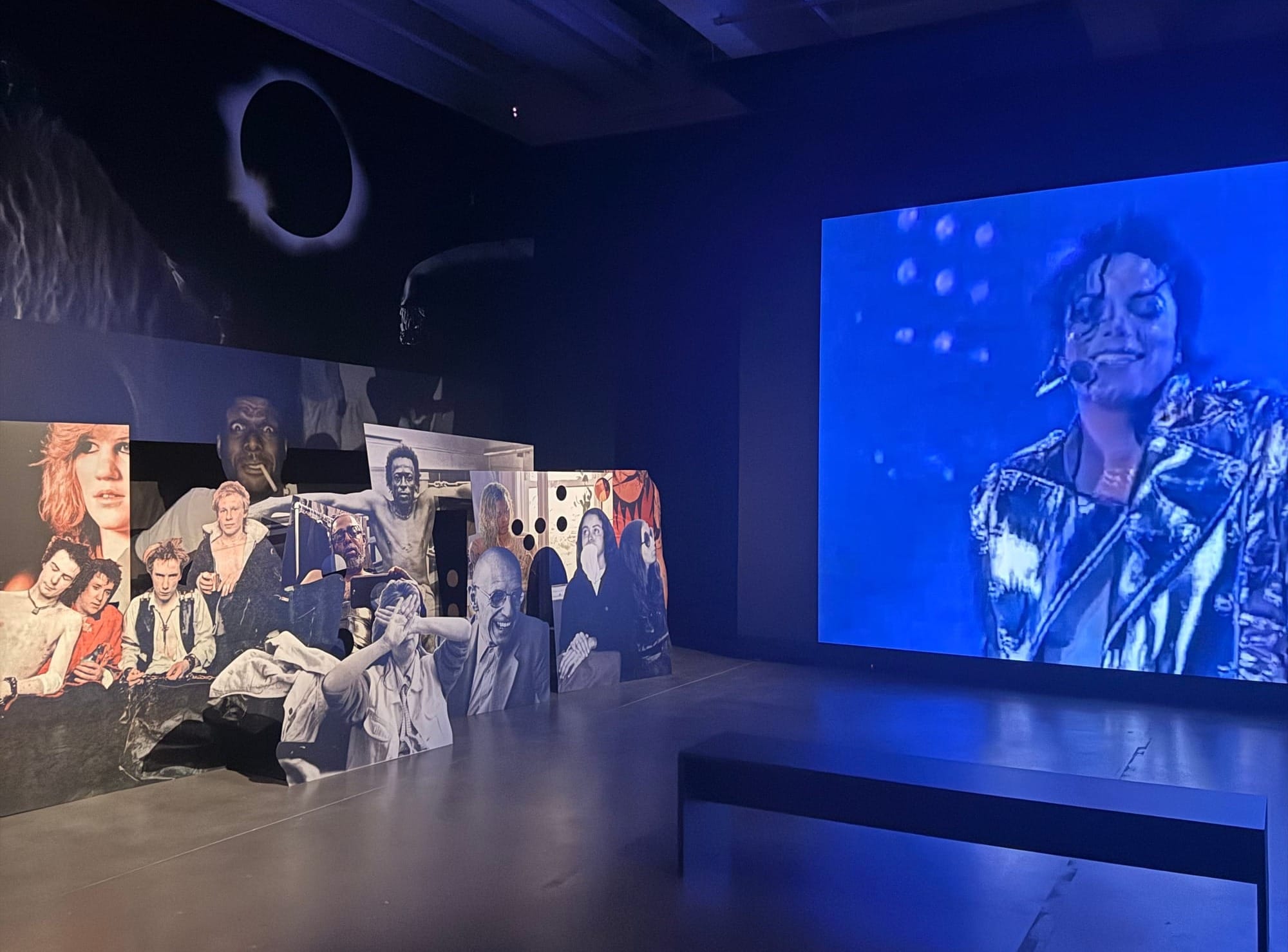
Occupying two levels of the Lower Manhattan institution, the exhibition is densely packed with work that ventures beyond the video art that has made Jafa one of America’s most important living artists. The largest exhibition of his work to date, its ambitions — which it achieves with mixed results — seem to be to engage in the same themes Jafa has continually mined, this time in even more idiosyncratic and brash ways. These include the history of Black music, religion and secularity, American cinema, political violence, popular culture, and the Internet.
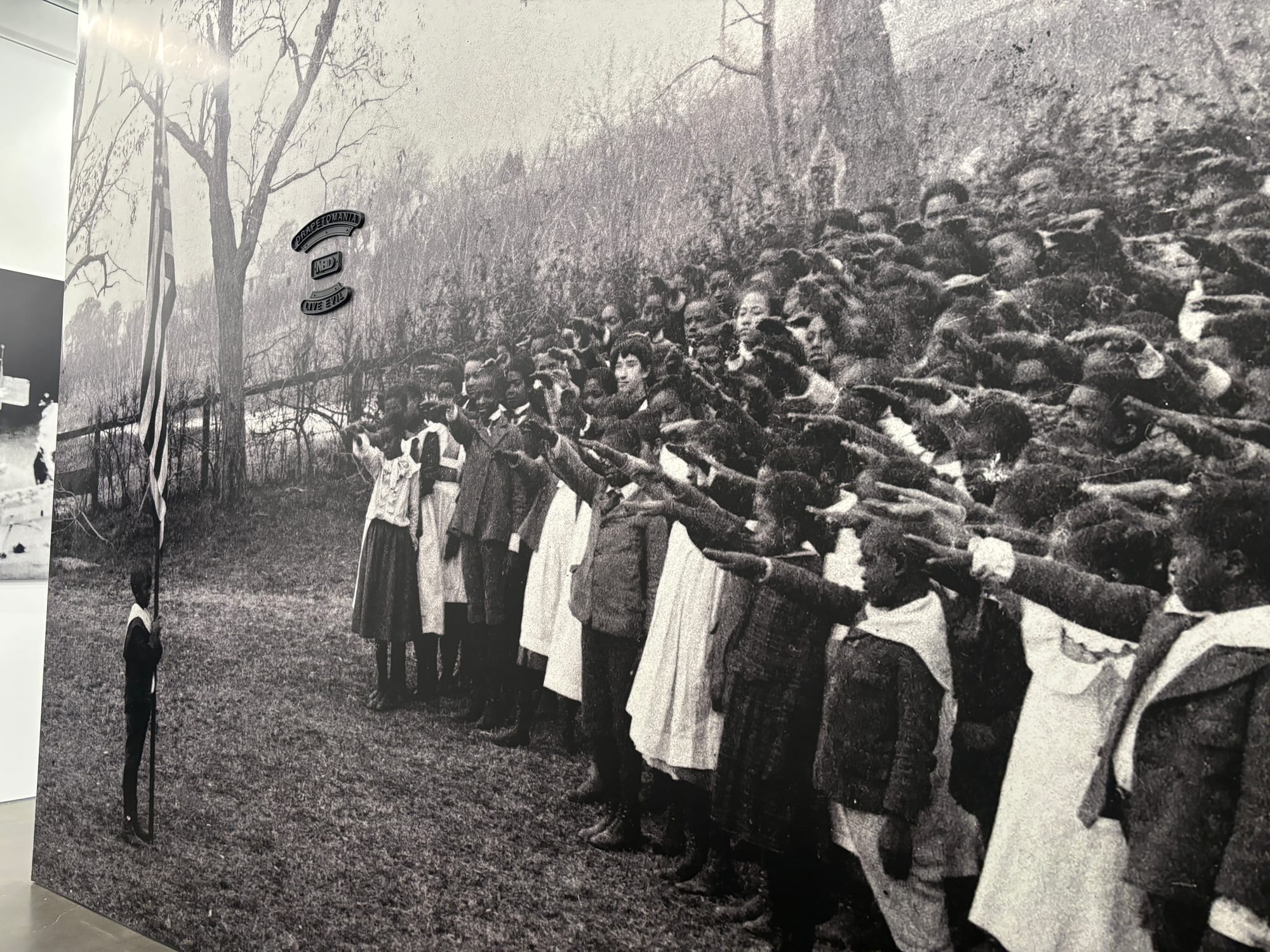
One floor opens onto the aptly titled “Allegiance” (2026), a wall-to-wall black-and-white image of a crowd of 19th-century Black schoolchildren performing what looks like a “Sieg Heil,” while in the left quadrant, there is a boyish flag-bearer. The stars and stripes confirm that, despite initial appearances, this is a blown-up piece of Americana: a vernacular photograph of a once neutral, outmoded ritual. It has a grainy, spectral quality, and the way its young, somber subjects cluster in the frame produces a melancholic effect. The wall text explains that this gesture was once a customary and patriotic way of honoring the flag, but it is what that same salute came to mean in a 20th-century European context that gives this piece its power, which it derives through shock, juxtaposition, and new connotations that become apparent out of context.
Another wallpaper, “Rwanda, 1999” (2026), is of a photo taken by Jafa at the Murambi Genocide Memorial in Rwanda, five years after the atrocity it observes took place. The bloodied garments of the mass killing’s victims are strewn across the entire museum wall. It’s impossible to view this without thinking of the genocide in Gaza, and one imagines its evocation was intentional on Jafa’s part, though the wall text does not explicitly mention Palestine.