Welcome to our “Ask Dr. Paola” series, where every Monday we bring expert advice straight from Dr. Paola Cuevas (MVZ) to help our readers better understand their dog’s health and well-being.
Whether you’re a new pet parent or a seasoned dog lover, Dr. Paola is here to provide answers to your most pressing questions. From nutrition tips and preventive care to troubleshooting common behavioral issues, Dr. Paola is ready to offer insights that will keep your furry friend happy and healthy. Stay tuned for expert guidance on a range of topics that matter most to you and your dog, so you can make informed decisions and provide the best possible care for your canine companion. Have a question? Send it in here! 
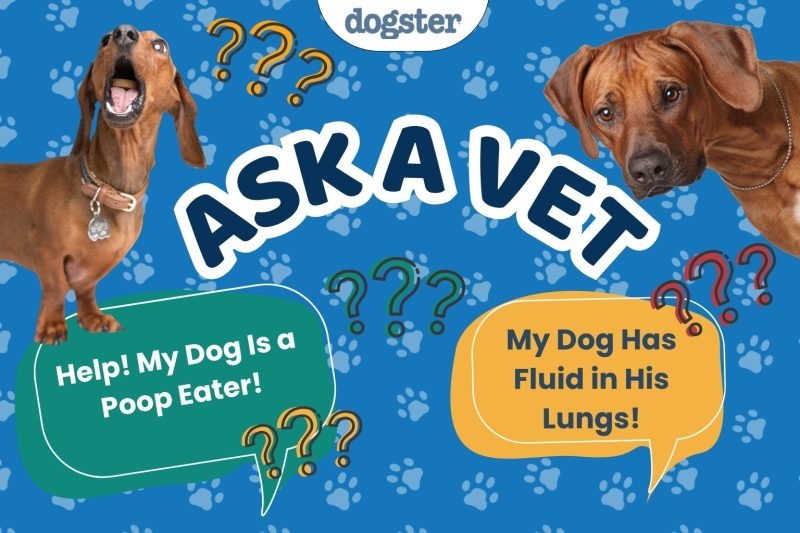
Help! My Dog Is a Poop Eater!
“I have a female dog whom I rescued in October. Lulu is a “poop eater.” I mostly get the poop picked up immediately. I’ve purchased no poop chews and reward her with treats when she poops and immediately runs to the door after. She has learned to come to her bed for treats after doing her business. I do, however, catch her trying to eat a piece of it if I missed picking it up. I feel she was food insecure before coming to me and learned to eat poop. She was so skinny. What more can I do?“ – Carlan
Dear Carlan,
What you are seeing with Lulu is actually quite common, especially in dogs who have experienced food scarcity or inconsistent care. From a behavioral perspective, coprophagia can become a learned survival strategy, much like someone who once had limited access to food holding onto habits even after their environment improves. The fact that she was underweight when you rescued her strongly supports that this behavior may have started as an adaptive response rather than a preference. The good news is that you are already doing several things very well, especially reinforcing her for eliminating and returning to you, which helps shift her focus away from the feces and toward a predictable reward.
At this stage, management and consistency are key. Immediate cleanup remains one of the most effective tools, since preventing rehearsal of the behavior is like removing the opportunity for a habit to strengthen. Continue reinforcing her for coming inside right after she eliminates, and consider making that reward especially high value so it consistently outweighs the motivation to investigate the stool. Some dogs benefit from being on a leash during potty breaks so you can gently guide them away right after they finish. Nutritionally, ensure she is on a complete and balanced diet with adequate caloric intake, since lingering hunger or malabsorption can contribute to this behavior. If the behavior persists despite good management, it can be helpful to have a veterinarian assess for underlying digestive issues such as exocrine pancreatic insufficiency or intestinal parasites, although in many rescue cases, behavior remains the primary driver.
It is also important to be patient with her, since habits formed under stress can take time to fade, even in a safe environment. You are essentially helping her “rewrite” an old survival script with a new, more secure routine. Over time, with consistent reinforcement and prevention, most dogs gradually lose interest in feces as they learn that food is reliably provided and more rewarding options are available. Keep up the wonderful management and give it time!
Sincerely,
– Dr. Paola
If you want real time answers to your questions, you can talk to one of our veterinarians online. Click on the image or button below:


Help! Can I Do An O2 Box at Home?
“My 9-year-old Shih Tzu, Frederick, has developed fluid in the lungs, and I also found
out he has an enlarged heart, almost extending to both sides of the rib cage. The emergency vet, at the time, said he wanted to keep Frederick overnight in an O2 box. I knew Frederick would not like that, as he sleeps at the foot of my bed every night. But I’m wondering, my husband works with an O2 tank for welding. Is it possible that I can build an O2 box and use my husband’s O2 bottle at home?” – Rachel
Dear Rachel,
I’m really glad you asked before trying this, because Frederick’s situation is serious, and your instinct to support his breathing comes from a place of deep care. When a dog develops fluid in the lungs, often related to heart enlargement from conditions like degenerative valve disease, oxygen therapy can be lifesaving, but it must be delivered in a controlled, medically supervised way. An oxygen cage in a clinic is not simply a box with oxygen flowing in; it carefully regulates oxygen concentration, humidity, temperature, and carbon dioxide levels, while the patient is continuously monitored for any changes in breathing effort or stress.
Using a welding oxygen tank at home is not safe, as it does not allow precise control of oxygen delivery. This can lead to complications such as oxygen toxicity or inadequate ventilation, which may worsen his condition rather than improve it. It is also important to remember that oxygen therapy is only one part of stabilization. Medications like diuretics to remove fluid, along with cardiac medications to support heart function, are essential and address the underlying cause rather than just the breathing difficulty.
If Frederick is showing increased breathing effort, restlessness, or difficulty settling comfortably, he needs prompt veterinary care in a setting where monitoring and treatment adjustments can be made safely. While hospitalization can feel emotionally difficult, it is often the most compassionate option in these cases. Many clinics will work with you to reduce stress, including allowing visits or providing gentle calming support. If he stabilizes, your veterinarian may then guide you on safe home care. Your bond with him is very clear, and choosing the level of care that keeps him comfortable and supported is one of the kindest things you can do for him at this time.
Best wishes,
– Dr. Paola
- View past week’s questions here: April 13, 2026
- See our full list of past articles here
- Click here to submit a question
- Get Dr. Paola’s weekly advice sent straight to your inbox. Sign up below!