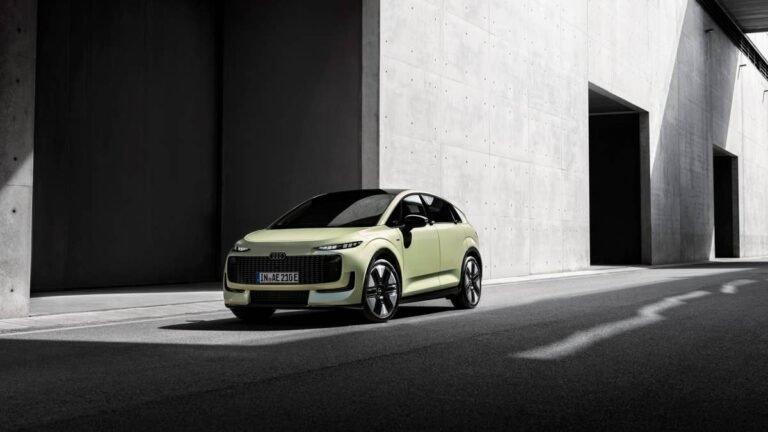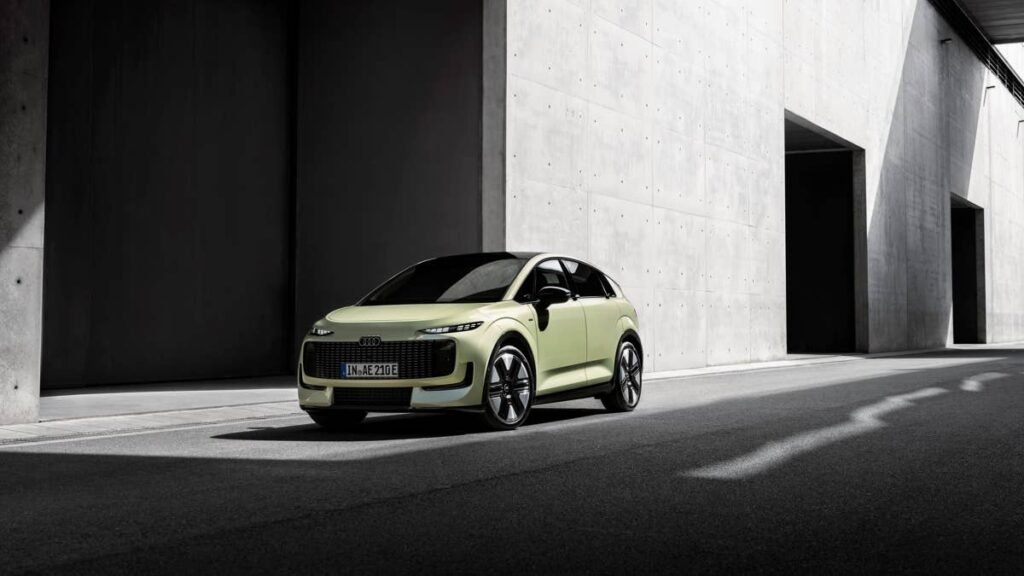
Audi first teased the A2 e-tron’s headline efficiency figure over a month ago, but this week’s reveal fills in everything that mattered to actually buy one: three battery sizes, real pricing, and a features list built around home energy use rather than just range. It’s rolling off the line at Audi’s Ingolstadt plant now.
Audi
The Efficiency Record Autoblog Already Told You About, Now With A Price Tag
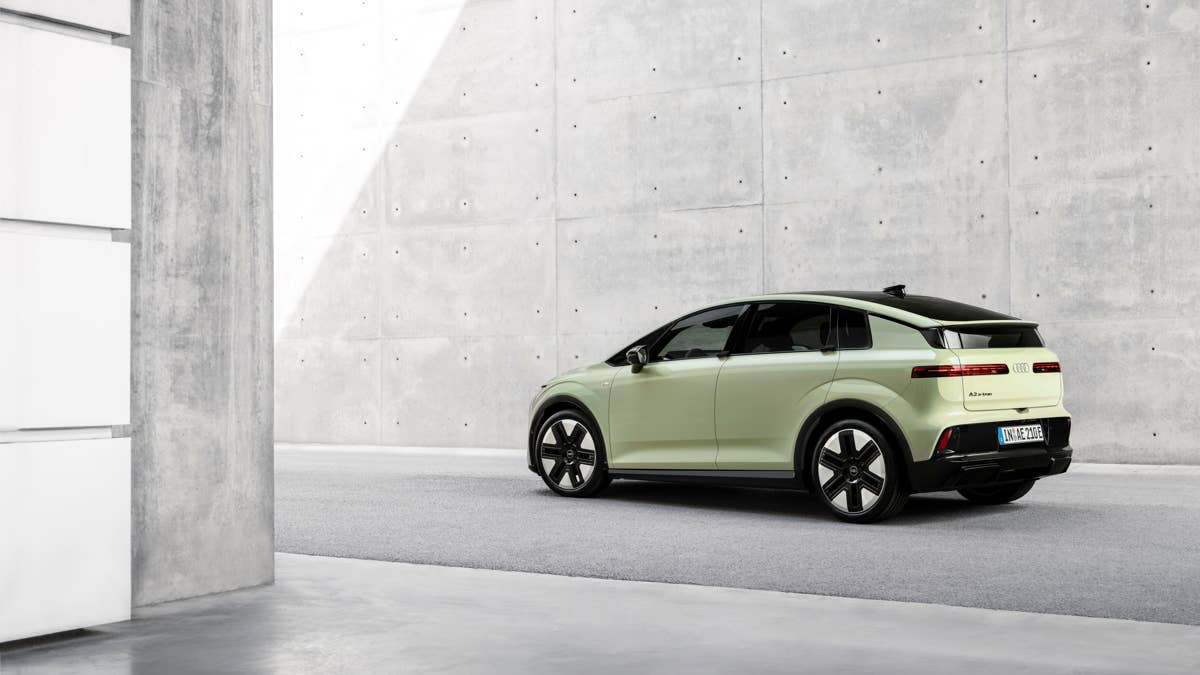
The A2 e-tron’s WLTP-rated 12.8 kWh per 100 km — already confirmed to beat every efficient EV sold in the US, including the Lucid Air Pure and Tesla Model 3 RWD — carries over unchanged into the production car. What’s new is how Audi is charging for it: the entry-level 52-kWh battery (50 kWh usable) starts the lineup, scaling up to 61-kWh and 84-kWh packs, with WLTP range spanning roughly 263 to 401 miles depending on configuration and motor choice. The top APP550 dual-motor setup adds real performance to go with the efficiency, at 322 horsepower.
Audi
Built On A Platform Audi Won’t Name
The all-new A2 rides on Volkswagen Group’s updated MEB+ architecture, sharing its battery options and 400-volt charging system with the facelifted VW ID.3 Neo almost exactly — DC charging tops out at 183 kW on the largest battery, with a 10-80 percent charge taking 24 to 29 minutes. Audi’s own materials never mention the VW connection directly, pricing the A2 at €1,975 (about $2,290) above a comparable ID.3 Neo Life to justify the badge. Cargo space (14.0 to 47.2 cubic feet with seats folded) tracks closely with the ID.3 too, though the A2 does add a small 0.46-cubic-foot frunk the ID.3 Neo skips entirely.
A Home Battery With Doors
Audi
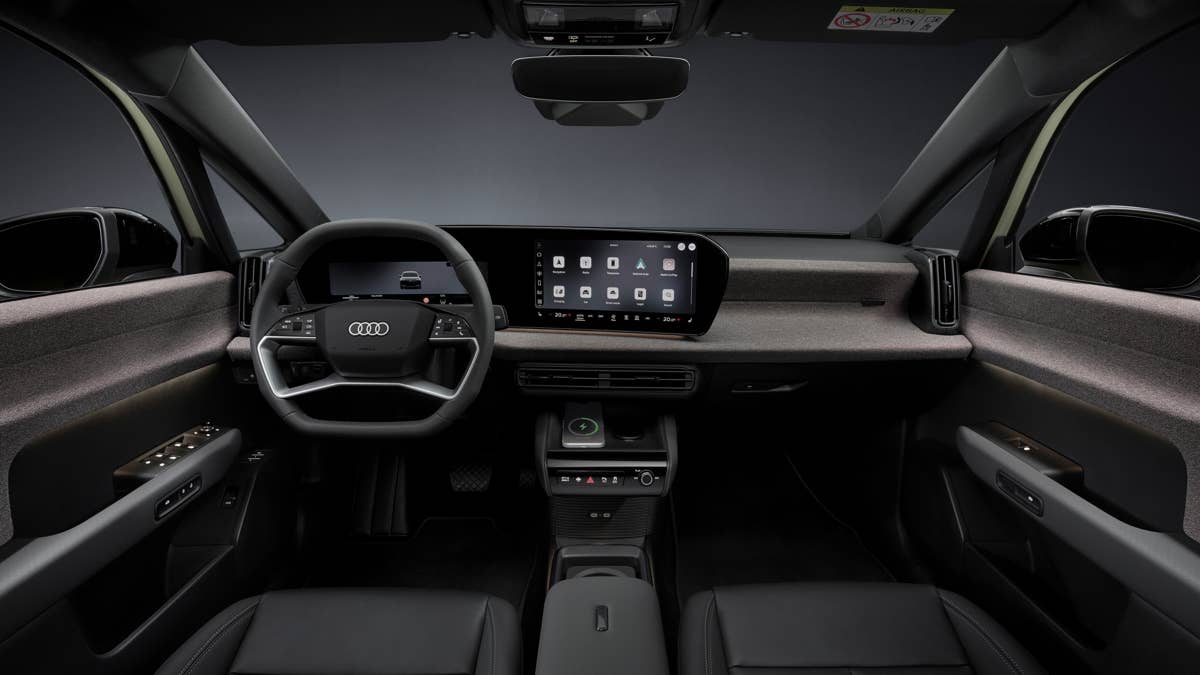
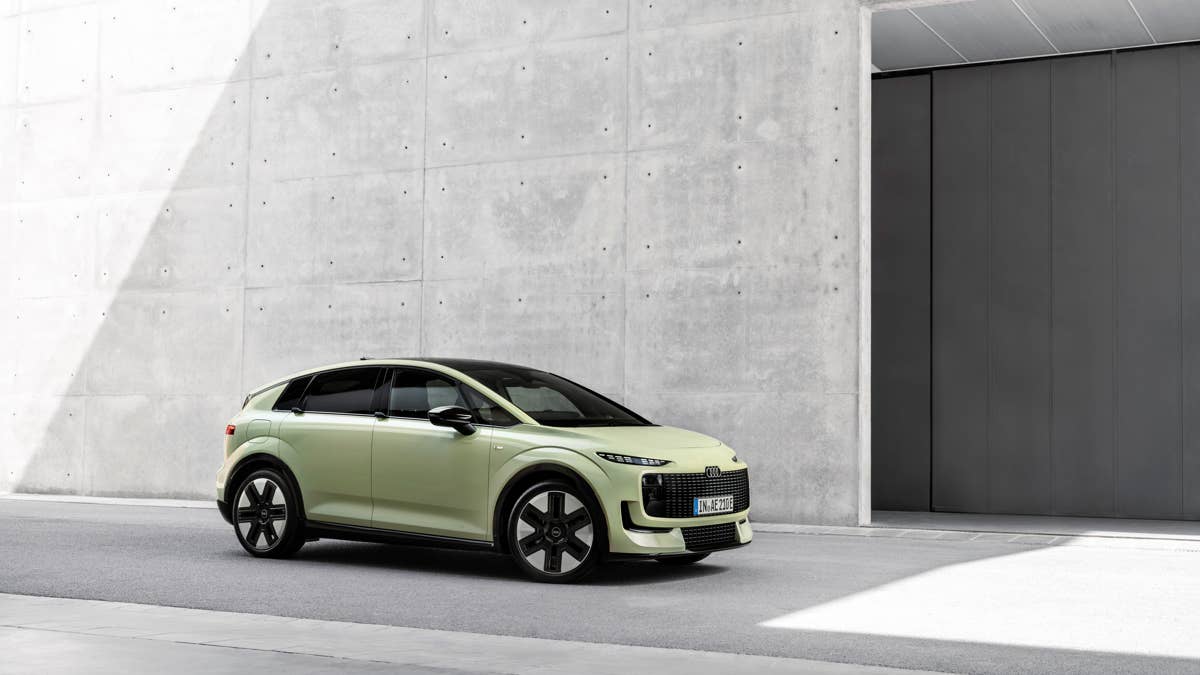
The feature likely to matter more than the badge debate is vehicle-to-home support: the A2 e-tron can act as backup power storage for a house with rooftop solar, charging between 20-80 percent and discharging through a compatible DC wallbox — a capability Audi’s Q4 e-tron only just gained itself as its first bidirectional-charging model. Audi is also betting on pressure-sensitive door fins instead of mechanical handles, backed by auxiliary batteries to keep working through an electrical fault.
None of this reaches American shores. Audi’s own releases don’t mention the US market at all, continuing a pattern where the smallest, most efficient European EVs stay in Europe while larger, less efficient SUVs make the trip across the Atlantic.