
Automakers worldwide quickly adopted the touchscreen display fad, and they did so for multiple reasons, including a more futuristic look and feel, greater functionality, and lower cost. But there are just as many downsides, including greater risk of driver distraction, unsightly fingerprint smudges, and a somewhat generic ambiance that makes even the most expensive models feel all too similar to entry-level products. Audi is among those that have acknowledged the overdigitalization of car cabins, promising to bring buttons back and put less focus on unsightly screens that remain conspicuous when the car is not in use. Proof of its efforts has been uncovered by CarMoses, which discovered a pair of patents filed by the Ingolstadt-based automaker at the European Patent Office.
Audi Patents: Hidden Buttons Beneath a Touchscreen
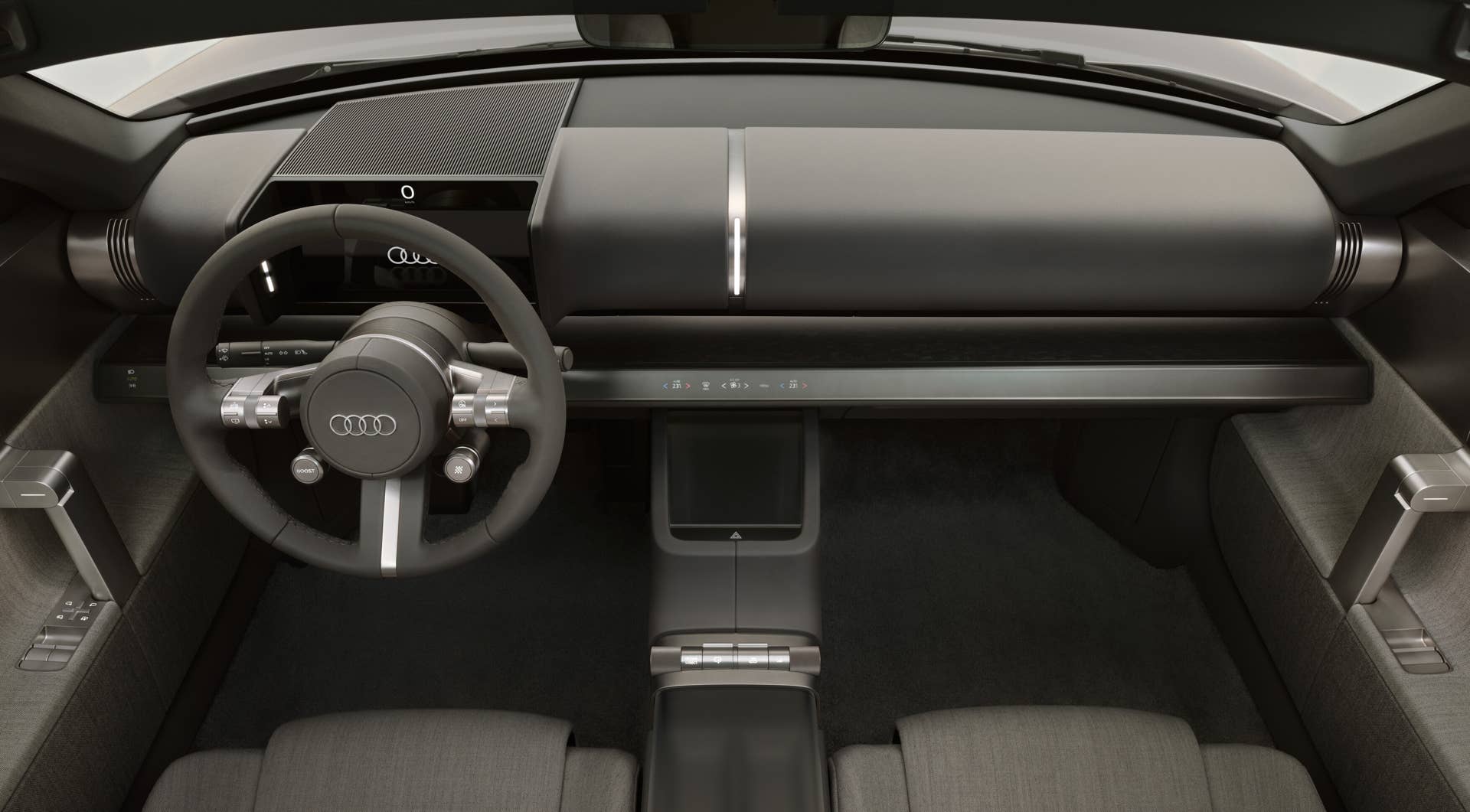
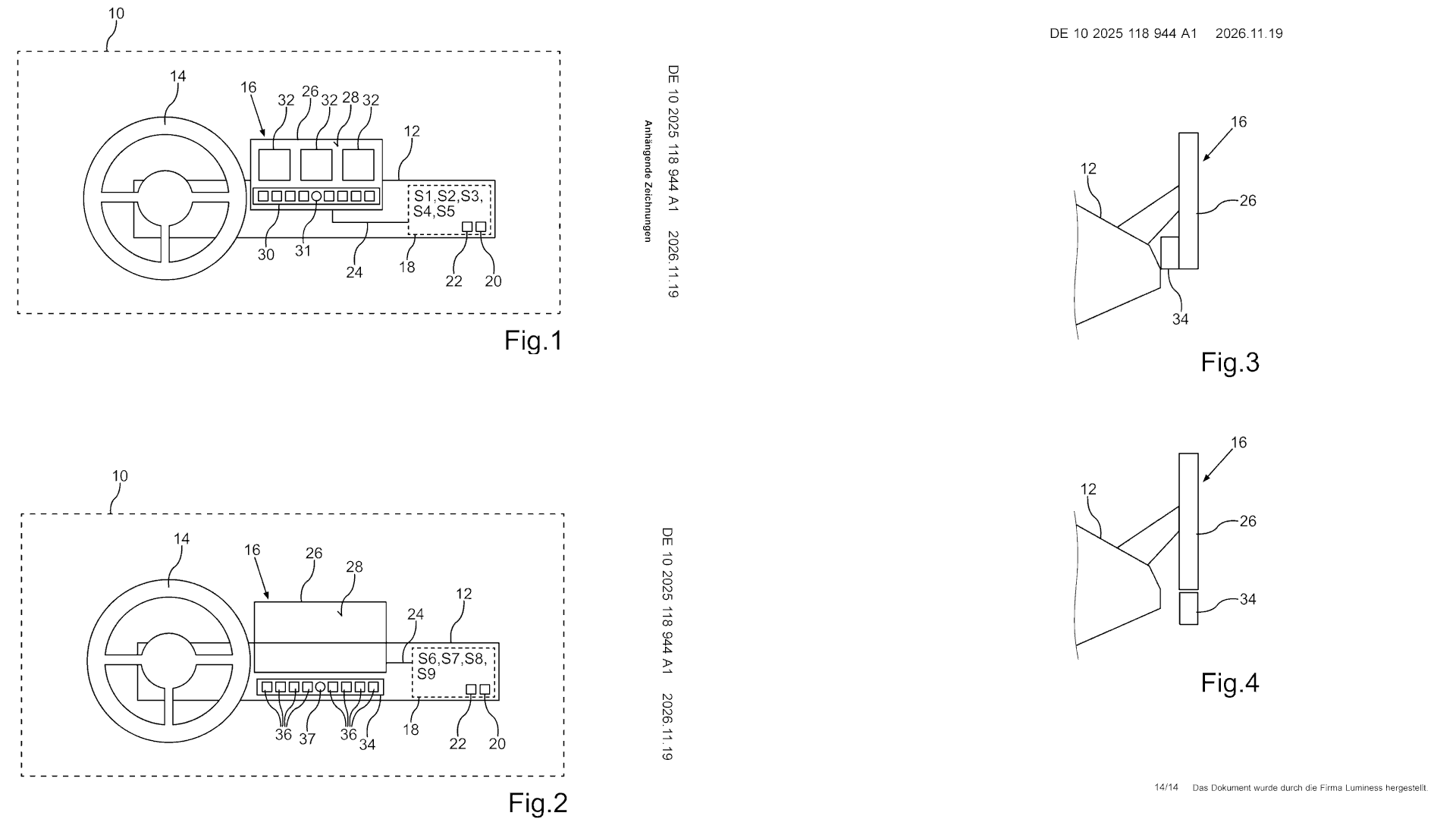
One patent filed by Audi in Germany shows designs for an infotainment interface that features a reasonably sized touchscreen underscored by a motorized bar housing physical switches/buttons along the bottom edge of the display. When these buttons are not needed, the bar folds away, hiding behind the touchscreen until they’re summoned again. The other patent describes a flap over the lower part of the touchscreen, which swings down into a shallow shelf housing physical switchgear and/or a padded hand rest. Either example could make use of gesture or voice controls to expand/fold away, or they could move automatically depending on certain pre-programmed conditions. For example, the control bar or flap could disappear/close when the car is switched off and do the opposite when the car is unlocked again.
Related: 2028 Volkswagen Golf R Gets an Electric Supercharger to Cut Turbo Lag
Interestingly, while it’s clear that Audi is making a return to physical controls to satisfy customers who want more tactile interactions, both patent documents (filed two days apart) also say the inventions were motivated by safety and cost concerns: as screens get bigger and more numerous within a single cabin (and therefore more expensive), they also become more difficult to safely certify, getting in the way of airbag deployment and obscuring the driver’s sightlines.
Autoblog’s Take
The patents were filed before the Audi Concept C was unveiled, and that vehicle uses a foldable 10.4-inch display to minimize the digital feel of the cabin, but that doesn’t mean future Audis will follow the concept’s interior approach directly. These patents indicate that other possibilities exist, and perhaps certain vehicles will go one route while others do something different. Whatever the future holds, both of these documents allow an interior display to be both smaller and more satisfying to interact with, and we sincerely hope to see something similar in future Audi reveals.