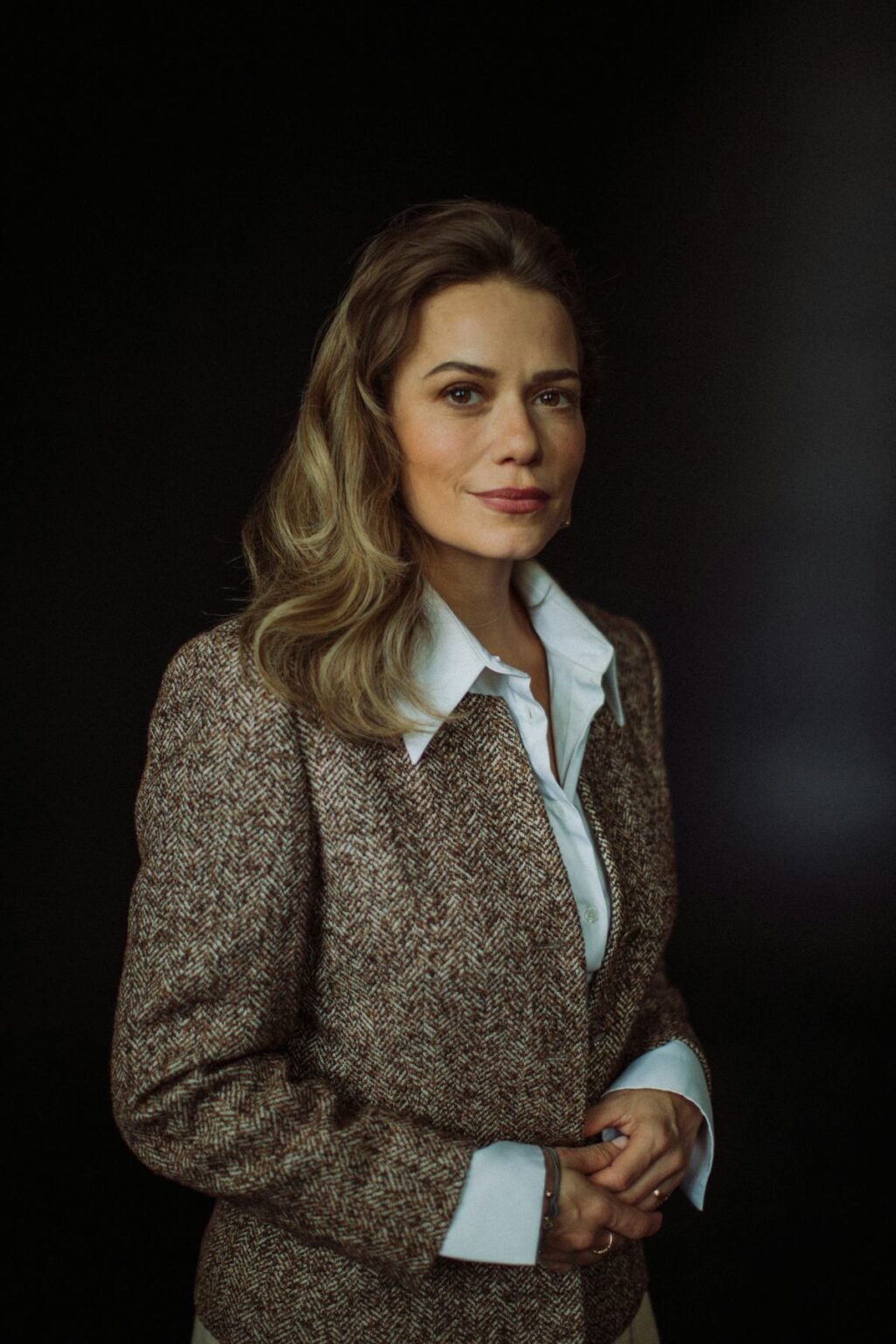
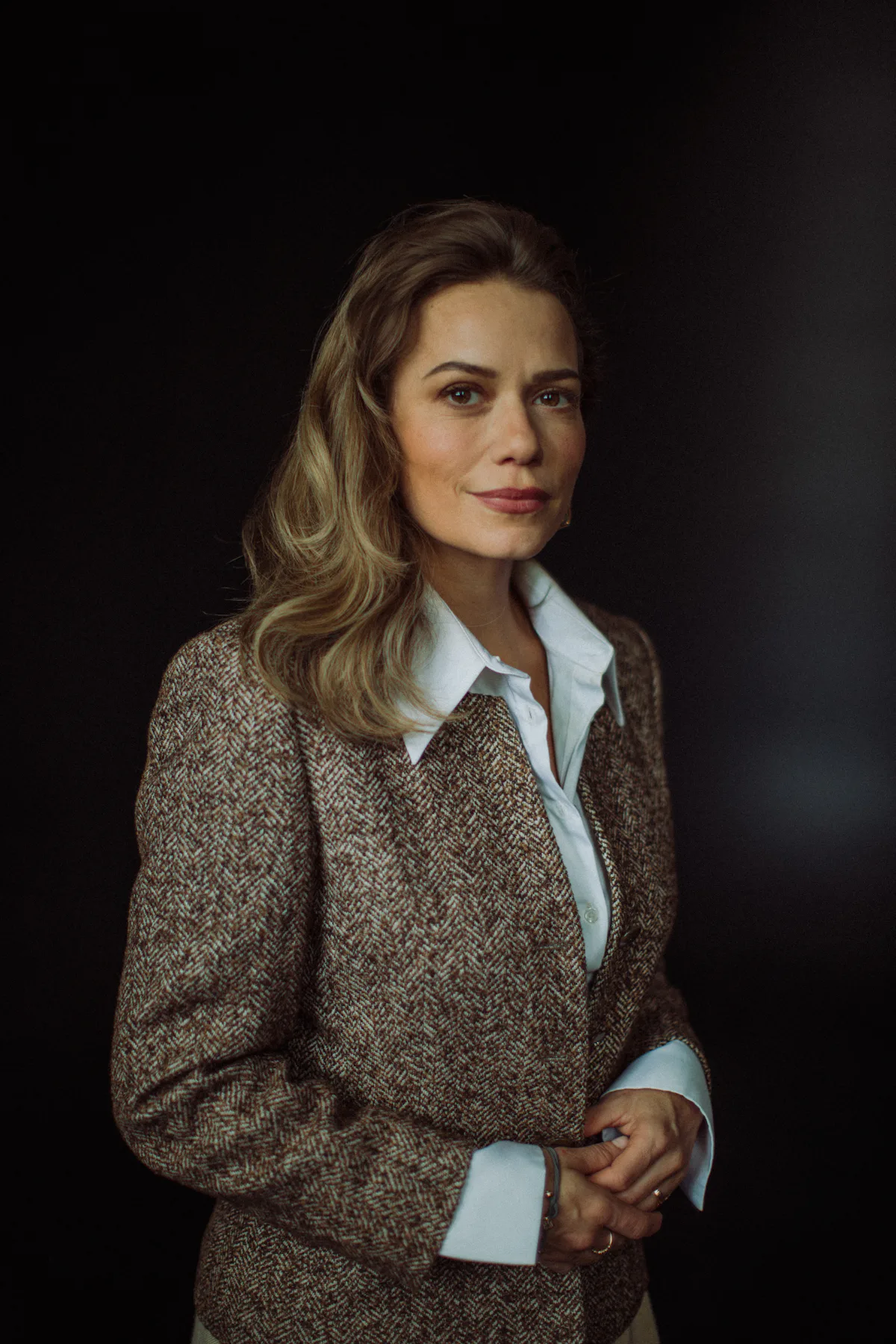
Bethany Joy Lenz didn’t just write The Betrayal of Cora Wexford. That art on the cover? She painted it, which feels especially fitting for a novel about a woman who is an artist in that very medium. Lenz is a longtime hobby painter (she does it for the joy of “slapping around on a canvas”), not a portraitist of the dead like her heroine, but she says the process gave her a window into Cora’s head: getting lost in meticulous work, where every stroke matters.
That attention to detail runs through the whole book, Lenz’s first novel after her bestselling memoir Dinner for Vampires. Set in 1888 London as Jack the Ripper terrorizes Whitechapel, it follows Cora, 38, single, childless, and running from her past, as she’s commissioned to paint the forgotten women whose deaths the city keeps shrugging off. All the while, her own relationship with a charming stranger named Miles starts to hint that darkness could be closer to her door than she even imagined. The Ripper may dominate the headlines, but Lenz is just as interested in the unspoken violence happening in living rooms everywhere, and in the people who look the other way.
When Scary Mommy caught up with the One Tree Hill alum, she opened up about everything from gaslighting and the psychology of looking away to why 45 feels like the most settled she’s ever been.
Scary Mommy: Which came first, Cora or the Ripper? How did you land on telling the stories of these “invisible” women against the backdrop of Ripper lore?
Bethany Joy Lenz: Cora was first, absolutely. The only reason I set it in Victorian times is because every time I thought about the story, that’s the only way it would manifest itself in my brain. Probably because one of my favorite suspense films is Gaslight with Ingrid Bergman and Charles Boyer. So I wanted to set something in that world that maybe is like a companion to Gaslight. It’s not the same story, it’s not derivative, but it lives in that world and there are a lot of similar notes and themes. Once I realized that’s where I wanted to set it, I actually picked 1888 because I wanted it to be around the World’s Fair and the construction of the Eiffel Tower. Then I realized there’s no way I could set a story in London in 1888 that’s a suspense and not talk about Jack the Ripper.
I had to recalibrate and then realized, actually, I think this is perfect — I can parallel the heightened, feverish fear that everyone was experiencing around being a potential victim of physical violence while psychological violence was happening in living rooms everywhere, all over London. I mean all over the world, really, but for the purposes of this story, I just wanted to look at why is that so? Why is everyone wrapped up in the fear and fascination with just the physical violence when we’re made up of so much more as human beings, and why doesn’t the psychological violence and emotional violence get the attention that it deserves?
SM: Cora toes the line between authenticity and survival, which is what most women did then. How much of that tension felt distinctly Victorian to you, and how much kind of bleeds over into 2026?
BJL: You know what’s funny is I thought that I was going to be discovering so many things that shocked me that were so different. They’re not. I really thought, like, OK, so maybe we’re not institutionalized now because we are experiencing fluctuations of menopause. Maybe we’re not shut up behind closed doors because we might be eccentric or forced to be looked down on by society if we choose not to have children or be unmarried… I just don’t think much has changed, unfortunately. So the more that I wrote, the more I researched, the more I was like, Oh, we’re still here.
I think that’s why I was also drawn to putting this in a time period that wasn’t modern, so that it didn’t feel threatening for readers to feel like it’s too close to home. I think as they read, they’re going to realize that it is close to home. I’m hoping that people will discover that as they’re going — that things maybe have not changed as much as we would like to think that they have. But the thing is, it’s timeless. These issues have existed for as long as we can imagine, and that’s important to realize and remember.
SM: You’ve described what happens to Cora as a kind of murder in itself. And while this is a big genre leap from your memoir, Dinner for Vampires, those same traces of manipulation surface. Was fiction freeing in a way? How did it feel different for you?
BJL: It felt different writing fiction in the sense that context could be adjusted. I could take things and put them anywhere and any time and really craft the most succinct version of an amalgam of experiences that I’ve had, that women I know have had, and be able to tie it all together because the truth is these narcissistic personalities are so unoriginal … It’s funny because they believe that they’re the most original, wonderful person that’s ever existed. And they’re so special that they’re the most basic and beige and uninteresting people that have ever existed because they don’t exist. They don’t have a person within themselves to exist as.
SM: One thing that frustrated me most while reading, because I understood where Cora was coming from, was how much truth was sitting right in front of everyone and they just refused to see it. That feeling of am I crazy? really got to me. I feel like that a lot these days. Why was it important that the danger wasn’t just Miles, but a whole community looking away?
BJL: Thank you for mentioning that. I think you’re right; it is very prevalent today. And what I’ve learned from being around this personality type for so many years of my life and seeing how the community tends to respond to the victim and the perpetrator, I think human nature just never changes, and we’re always looking for the low-hanging fruit and the easy way out. The easiest thing to do is believe the person who is asking the least of you, which is always going to be the abuser or the narcissist in this scenario.
It’s hard to ask people to consider that they were wrong and that they got something so wrong — that they could believe that there’s this person in their community who is wearing a mask and presenting something completely false to everyone and legitimately fooling everyone, and to think that I got fooled.
It sends people into a whole well of introspection. That’s the requirement in order to decide to believe a victim. You have to believe that you also have been hoodwinked, essentially, and understand that. That’s really hard on the ego. And I don’t mean to say it from a place of feeling judgmental because I’ve been in that situation too. I’ve been asked to believe something that I didn’t see evidence for when I was much younger. I was just like, “Look, he’s never been mean to me. I don’t know. I don’t want to get in the middle of it.” And I regret it, but I had my own life. I was busy. I didn’t know. So I’m hoping that this will help make people aware and help people feel safe to go ahead and explore those parts of themselves because it’s OK to grow.
SM: Absolutely. We’ll switch to something a little lighter now: If we’re dream casting, who plays everyone if this becomes a series? You were my Cora, btw.
BJL: Oh my gosh. Yes, I would love to play Cora in some sort of live version of it, whether it was TV or theater. I mean, I would love to see this on Broadway with a super cool rock soundtrack like Florence + The Machine. And I’ve recently been listening to some Agnes Obel, Lizzy McAlpine, Tame Impala. Let’s just pile it all in there, make a super cool, dark, gothic, Victorian musical.
Dreamcast, I really haven’t gone there in my brain. I guess I kept kind of picturing in my mind … she’s a redheaded actress… She’s the redhead in The Forsytes, the modern version of it, not the Damian Lewis version. I think of her as Helen in my brain.
I feel like Miles could go so many different ways. Gosh, if Mads Mikkelsen was 35, I’d be up for that. I’d love to play Cora. Is Pedro Pascal Armand? I don’t know. We need some super hunky Arabic man for Armand.
SM: Speaking of new chapters, One Tree Hill just turned 23. It’s like a baby that’s gone off to college and graduated. After Drama Queens and your memoir, on the other side of it all, it feels like you’ve come to this place where there is just so much happiness. You turned 45 this year and just seem so much like yourself. Is that an accurate read?
BJL: Absolutely. I feel so much more settled than I have in years. There’s just a lot of stability in my life in a way that is so beautiful and comforting. And whether I’m traveling or wherever I’m living or whatever I’m doing, I think it’s the sense of self-acceptance and self-forgiveness and compassion and all those things that we just work really hard to achieve within ourselves, and finding that connection for me with God and my faith and just feeling like I don’t have all the answers and that’s OK.
When I was younger, I felt like I needed all the answers in order to feel safe and secure. And I think there’s actually a lot more comfort now in not knowing exactly all the things and being OK with it, just exploring and listening and learning. It’s better.
This interview has been lightly edited for length and clarity.