Bitwarden, the maker of a popular free password manager and other security solutions, is quietly making changes.
In February, longtime CEO Michael Crandell moved to an advisory role, according to LinkedIn, with no announcement from the company. His replacement, Michael Sullivan, former CEO of both Acquia and Insightsoftware, touts his experience with “all facets of mergers and acquisitions” on his own LinkedIn page, including experience working with leading private equity firms.
CFO Stephen Morrison also left Bitwarden in April, replaced by former InVision CEO Michael Shenkman. Both Crandell and Morrison joined the company in 2019. Kyle Spearrin, who started Bitwarden as a fun hobby project in 2015, remains the company’s CTO.
Meanwhile, Bitwarden has made some subtle tweaks to its website.
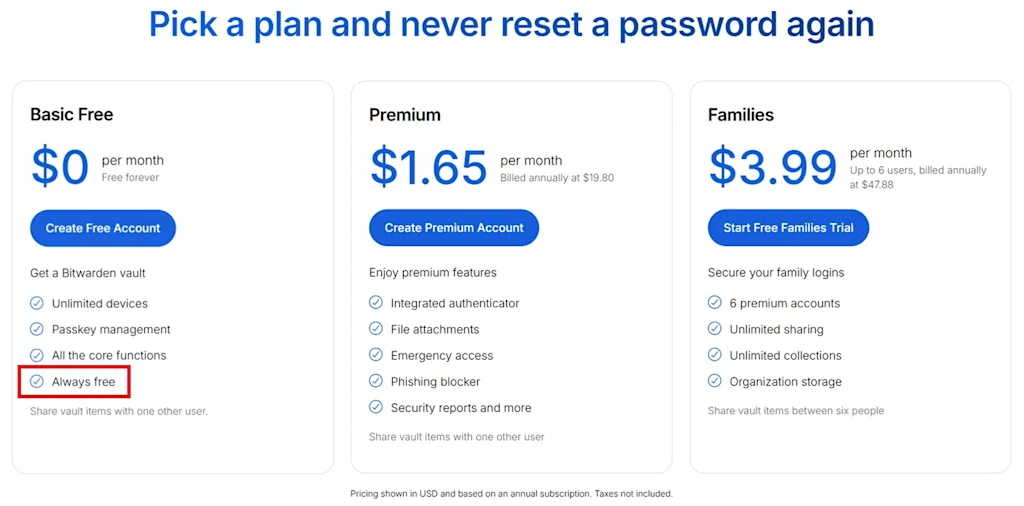
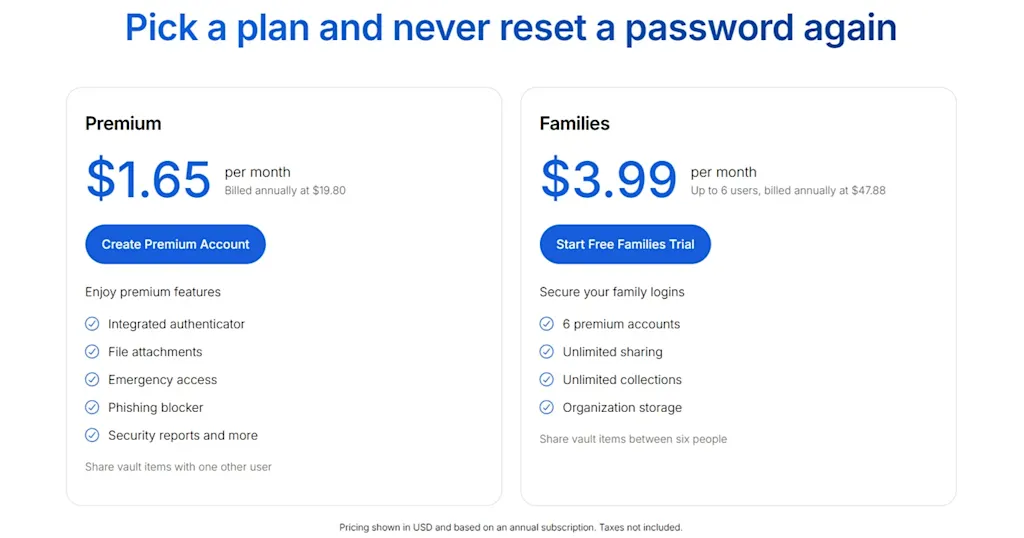
The page for its personal password manager no longer includes the phrase “Always free.” Previously this appeared under the “Pick a plan” section partway down the page, but that section no longer mentions the free plan, though it remains available elsewhere on the page. Bitwarden made this change in mid-April, according to the Internet Archive.
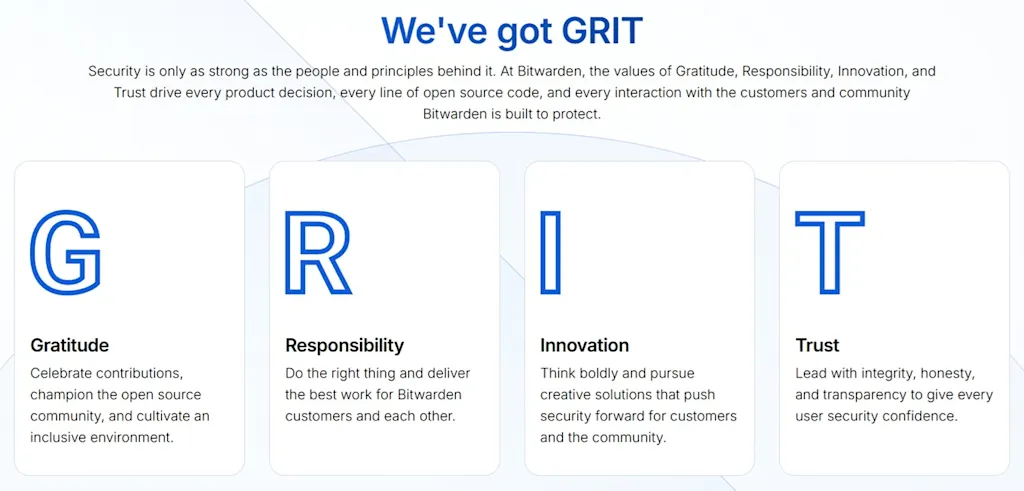
Bitwarden has also stopped listing “Inclusion” and “Transparency” as tentpole values on its careers page. The company has long defined its values with the acronym “GRIT,” which used to stand for “Gratitude, Responsibility, Inclusion, and Transparency.” After May 4, it changed the acronym to stand for “Gratitude, Responsibility, Innovation, and Trust.”
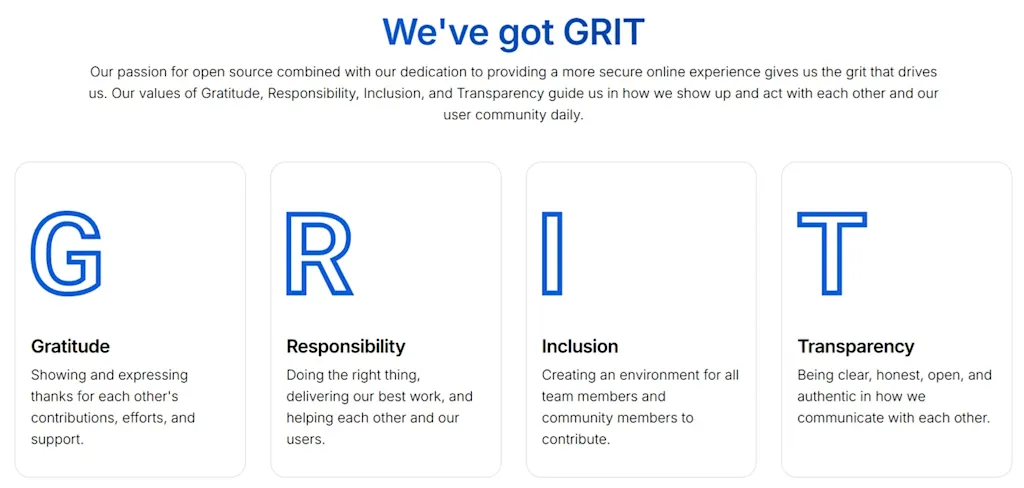
The phrase “inclusive environment” still appears under a description of Gratitude, while “transparency” is mentioned under the Trust heading. They’re just no longer the focus.
These changes arrive not long after Bitwarden doubled the price of its Premium password manager plan, from $10 to $20. When the company revealed these changes in February, it tucked them into a lengthier blog post about feature updates and opted not to immediately notify customers. Bitwarden is instead disclosing the price hikes in the reminder emails it sends 15 days ahead of each renewal.
Bitwarden’s blog does not mention the leadership changes or new company values, and the company has not issued any news releases about them. The company has not yet responded to a request for comment.
Who’s running Bitwarden now?
On his LinkedIn page, Sullivan, Bitwarden’s new CEO, describes himself as having “robust experience in all facets of mergers and acquisitions, including direct experience with leading PE firms Hg, Vista Equity Partners, and TA Associates.”
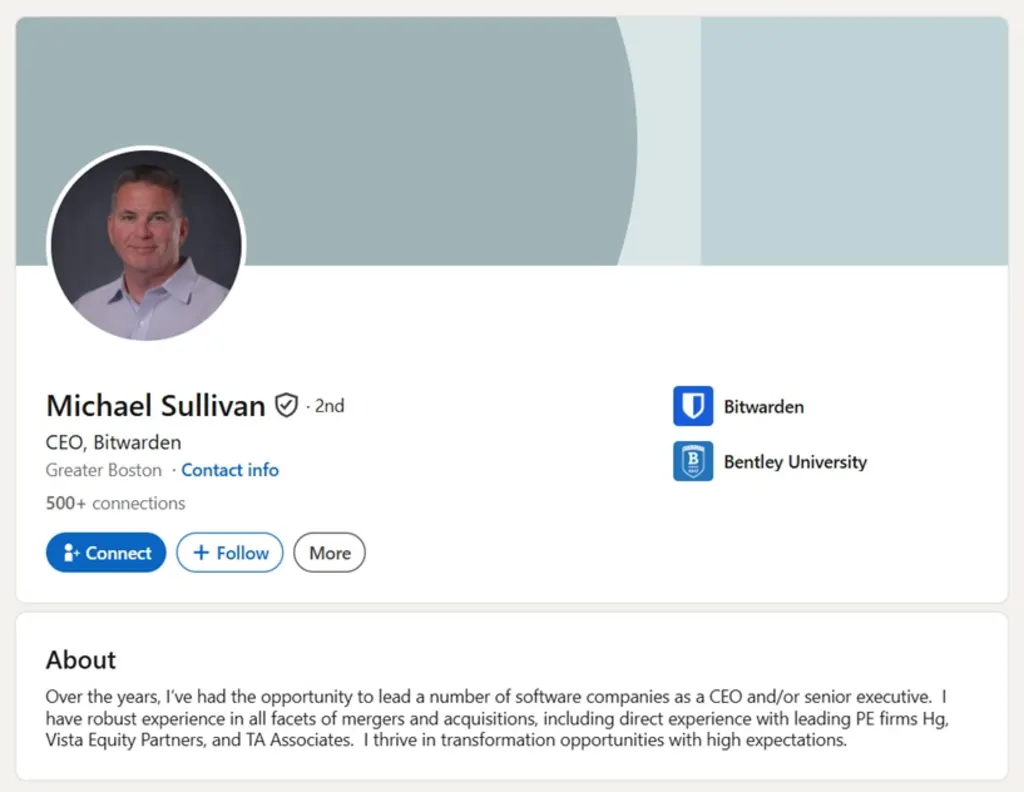
Indeed, Sullivan oversaw major infusions of private equity money into the previous two companies he led. Those included a $1 billion acquisition of cloud platform Acquia by Vista Equity Partners in 2019 and a $1 billion investment by Hg into financial reporting software maker Insightsoftware in 2021.
Though he was active in posting news from Insightsoftware on his LinkedIn page, Sullivan hasn’t yet commented on his new job at LinkedIn. A message to Crandell, Bitwarden’s former CEO, has gone unanswered.
Full circle
In a 2024 interview with Fast Company, Spearrin, Bitwarden’s founder, said he started working on the password manager as a hobby.
He wanted to learn about developing mobile apps and browser extensions, and was concerned that LogMeIn’s acquisition of LastPass, his preferred password manager, would lead to unwanted changes. (LogMeIn had previously killed off a free version of its remote desktop software.)
When LogMeIn went on to impose new restrictions on the free version of LastPass—exactly as Spearrin and other users had feared—it led to a growth spurt for Bitwarden. Spearrin attributed many of Bitwarden’s subsequent spikes to further issues at LastPass, including a major security breach in 2022. As of two years ago, Bitwarden had 8.5 million users.
“I can name a lot of episodes where, if you look at Bitwarden’s user growth on a line chart, you can probably pinpoint several of those episodes as being peaks,” Spearrin said.
These days, Bitwarden’s personal password manager faces tougher competition, as Apple, Google, and Microsoft have all built increasingly robust free password managers into their web browsers and operating systems. They’re also pushing to get rid of passwords altogether and put themselves in charge of password-less logins.
While Bitwarden sells a Premium version to individuals, it has also relied on the free version to funnel customers toward its enterprise plans. The company has expanded into other security products as well, including a secrets manager for software developers.
Despite those broader ambitions, Crandell said Bitwarden’s commitment to a robust free tier was ironclad. “That’s a firm commitment from the company,” he said in a 2024 interview. “Fully featured, free forever.”
Hopefully, the latest changes at Bitwarden don’t reflect a change of heart.