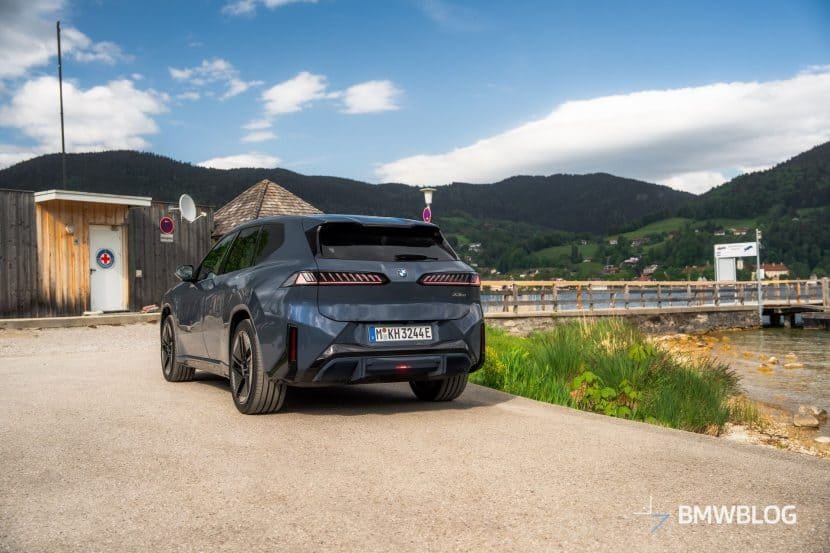
BMW’s Neue Klasse offensive is off to a promising start in Switzerland. The new iX3, named the country’s Car of the Year 2026, has become the Group’s most successful electric vehicle just months after its March launch. It also outsold the combustion-powered models in the company’s lineup in the third quarter.
According to figures released by BMW Group Switzerland, the iX3 recorded 1,242 new registrations between January and September. That puts it ahead of the cheaper iX1, which attracted 1,131 registrations over the same period. The electric SUV’s momentum was particularly strong between July and September, when it recorded 684 registrations, making it the BMW Group’s best-selling model in Switzerland.
The iX3 finished ahead of the entry-level X1, which registered 575 units during the third quarter, and the blockbuster X3, which followed with 497. That’s an impressive result for a vehicle that entered the market in March, especially since the X1 remains BMW’s best-selling individual model so far this year, with 2,338 registrations through September. The X3 follows with 2,029.

The iX3 Is Doing Great, But BMW Sales Are Down Overall
The early success also builds on the iX3’s award-winning debut. In January, a jury of automotive experts selected it as the Swiss Car of the Year 2026, recognizing the first production model from BMW’s Neue Klasse generation. The latest registration figures suggest the SUV’s appeal extends beyond the jury room.
The iX3’s performance stands out against a challenging backdrop for BMW Group Switzerland. The company registered 16,414 BMW and MINI vehicles during the first nine months of the year, down 12.9% from the same period in 2025. Despite the decline, it retained second place in the overall market and remained Switzerland’s largest premium automotive provider.
BMW alone accounted for 13,926 registrations, down 12.1%, while MINI recorded 2,488 units, down 17.3%. However, electric vehicles are moving in the opposite direction. BMW’s fully electric models generated 3,213 registrations through September, a 22.1% year-over-year increase. That put the marque in third place among all electric vehicle brands in Switzerland.


The broader BMW Group also advanced its electrification efforts. Fully electric vehicles and plug-in hybrids accounted for 6,915 registrations, up 1.6% from a year earlier. Battery-electric vehicles alone increased by 16% to 4,113 units. Fully electric models represented 25.1% of the group’s registrations, meaning one in every four new BMW or MINI vehicles registered in Switzerland had no combustion engine.
That figure exceeds the Swiss market’s overall electrified-vehicle share of 38.5% when counting both battery-electric vehicles and plug-in hybrids. Across the BMW Group’s lineup, the combined share reached 42.2%.
Like the other regional divisions, BMW Group Switzerland isn’t stopping with the iX3. The company plans to roll out the i3 sedan before the year’s end, bringing a second Neue Klasse model to local showrooms.

Neue Klasse Offensive Is Off To A Strong Start
The iX3’s early success doesn’t guarantee that every Neue Klasse model will enjoy the same reception, but it gives BMW a strong start. With the i3 arriving soon, the company will have two next-generation EVs targeting different market segments.
For now, the iX3 has already delivered a notable result: it isn’t merely BMW’s most successful electric vehicle in Switzerland. It has also shown that a new EV can become the company’s top-selling model overall, even in a market where established combustion-powered SUVs remain important players.
If fuel prices remain high, I reckon that the shift toward electric vehicles could gain even more momentum. Lower running costs are already a major selling point for EVs, and the iX3’s early success shows that buyers are warming up to BMW’s latest electric offerings. If filling up keeps pressuring household budgets, more customers may be tempted to switch, giving the Neue Klasse lineup another boost in the months ahead.
First published by https://www.bmwblog.com