1 Series: BMW’s Entry Point
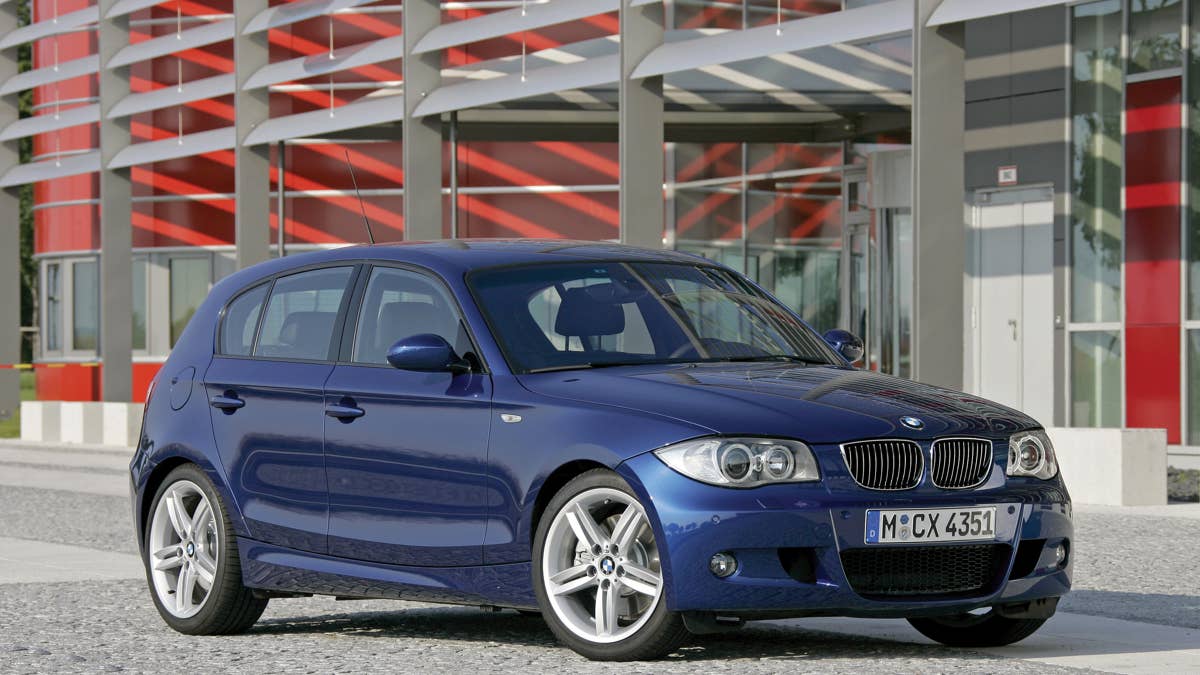
While the 1 Series hatchback has never been offered in the U.S., as it was only offered as a coupe across the Atlantic, it’s a car that’s been a hit for BMW in Europe for over 20 years. In some countries, it’s even the German automaker’s best-selling model, and understandably so. It’s much cheaper than a 3 Series and serves as an entry point into getting a BMW into one’s driveway.
The first two generations were fun little cars, mainly because those were still rear-wheel drive. However, in the company’s own research, a vast majority of owners didn’t really care, or even know, that the car was rear-wheel drive. To boost practicality and interior space, the third-gen shifted to a Mini-based front-drive chassis. While it’s sad it lost its tail-out capabilities, the added room helped further boost sales and made the car even more relevant. At least the 2 Series retained its rear-drive layout.
Nonetheless, the 1 Series serves an important role in the BMW lineup, even as the X1 has consistently outsold it in several markets.
BMW
Before the 1 Series
That said, the 1 Series isn’t BMW’s first mass-market hatchback. That title belongs to the 3 Series Compact, specifically the E36/5. Introduced in March 1994, it was intended to do exactly what the 1 Series would 10 years later: offer a more attractive and affordable entry into the brand.
Two generations of the 3 Series Compact were made, but only the first-generation made it stateside. And while the first one looked like an E36 coupe with its tail chopped off, it used a good chunk of E30 parts to keep prices down. It was successful enough to merit a second generation, although the E46/5 didn’t make it to the U.S. because its predecessor didn’t meet sales expectations.
In two generations, the 3 Series Compact was only available as a two-door. However, that didn’t stop BMW from toying with a more practical four-door version. Tucked away for decades was a prototype that, ultimately, didn’t get the board’s approval.
Retro Garage Official/Instagram
The Four-Door Compact
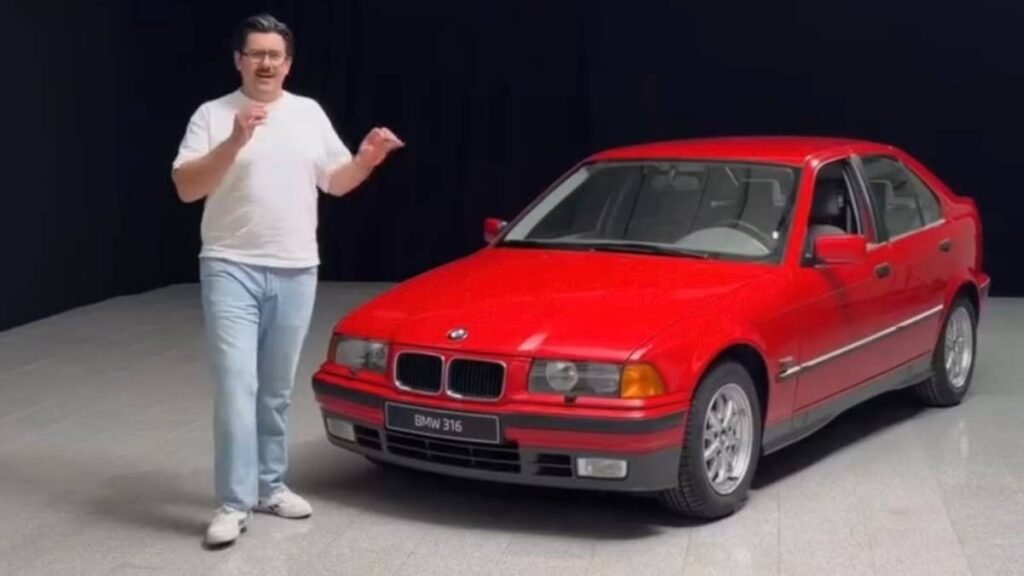
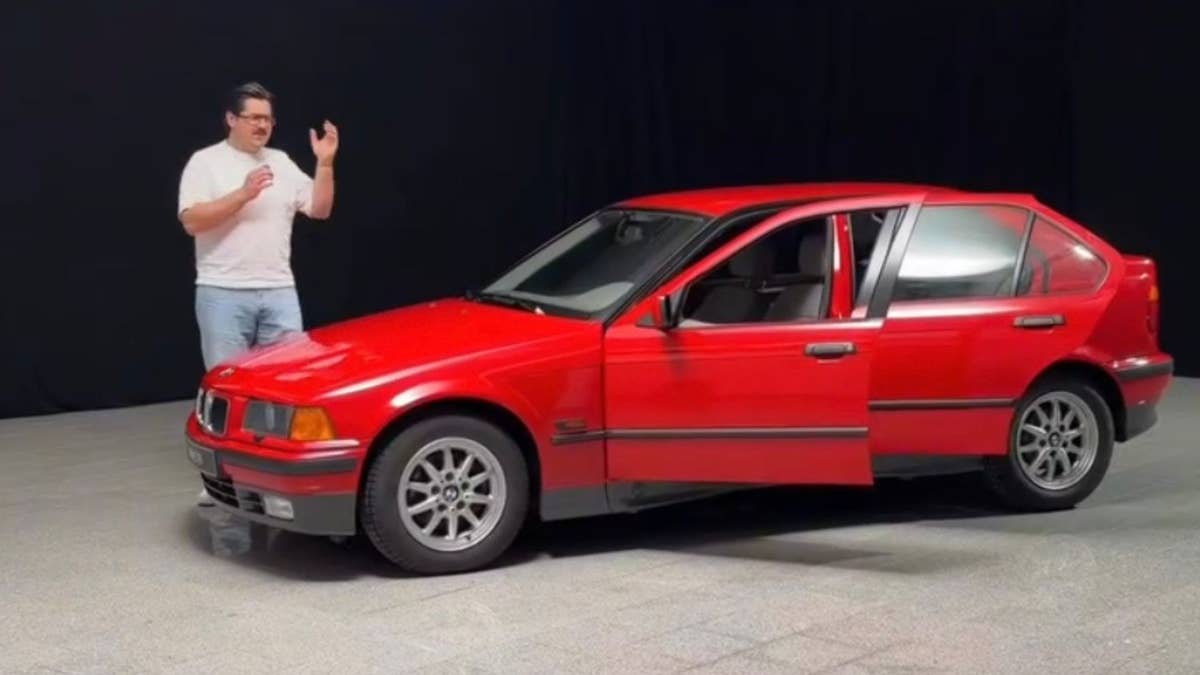
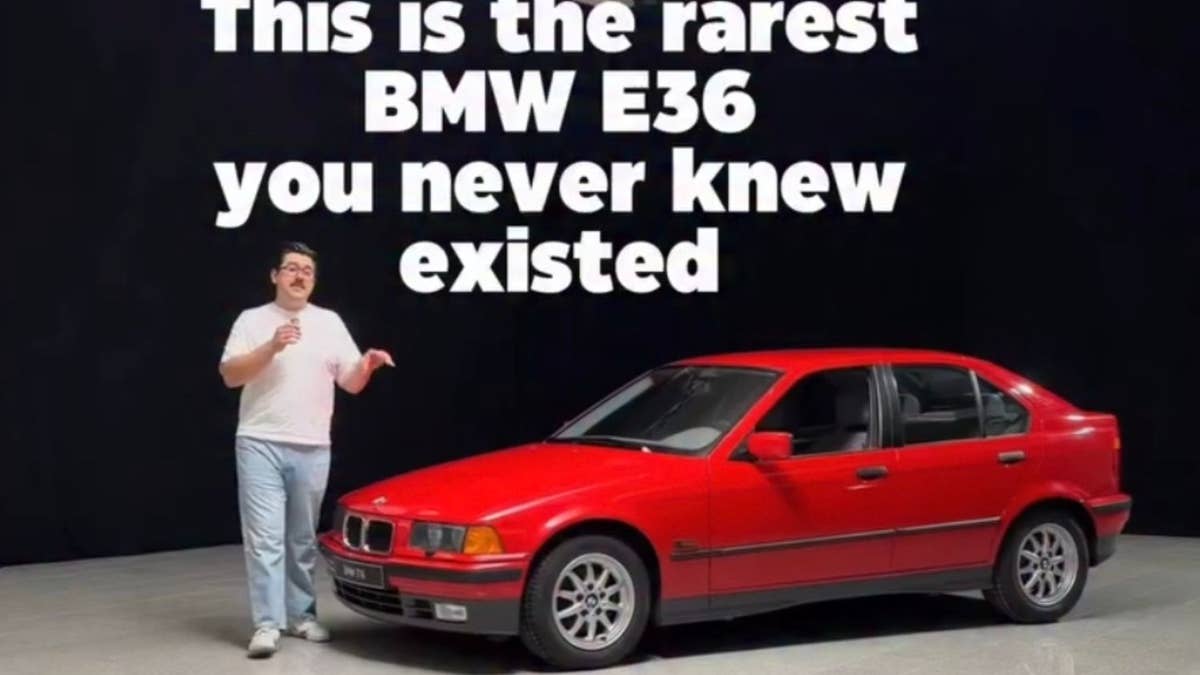
BMW Classic recently let Retro Garage Official take a look at a unique, one-off car. For the first time ever, the four-door E36/5 3 Series Compact made its public debut, showing BMW’s initial attempt to gain more share in the so-called Golf class.
Instead of just slapping on rear doors on the Compact, this one is based on the 3 Series sedan. But, like the two-door, this one has a big chunk of its rear chopped off, and there’s a tailgate instead of a trunk lid. The prototype is based on a 316i that, apparently, used to be Boston Green but has since been repainted to Hellrot (Bright Red).
The car itself is a bit of a mishmash of parts. Apart from the tailgate straight from a Compact, the dash is also from the smaller version. The doors were, quite clearly, from the sedan, and it has wind-up windows on all four corners. Oddly enough, they kept the power-window switches, along with the seat-heater button. It wasn’t fancy or any of that, but it’s a functioning car.
Not Approved?
Obviously, the car never made it to production, but why? No exact reason was given, but cost may be the likeliest factor here. It might have been priced too close to the sedan, making the idea of a more attainable entry-level model moot.
Also, the E36 3 Series didn’t have the most generous trunk space, and while the rear seats could’ve been folded down, cargo capacity might have been microscopic with all seats up. Developing it would’ve cost BMW even more, as the structure would’ve needed more reinforcement than a two-door compact. BMW might as well build an entirely new car rather than work with the E36 platform to try and make it work.
But while BMW didn’t approve the four-door 3 Series Compact, it still liked the idea. You can think of it as the precursor to the 1 Series, and to some extent, even the 2 Series. It opened the possibility of BMW offering something smaller than a 3 Series, and it’s been a success for the brand ever since.
Retro Garage Official/Instagram