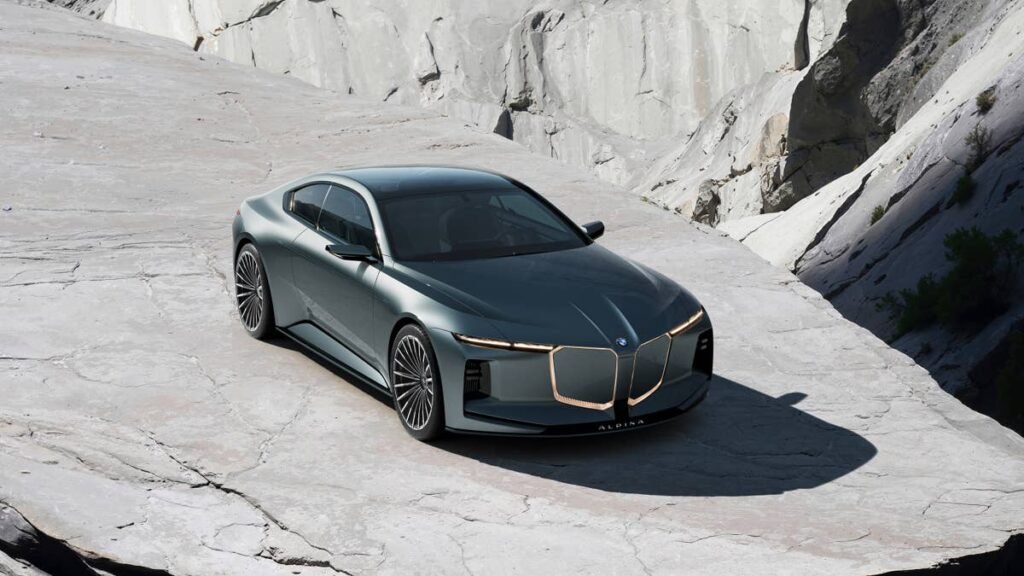
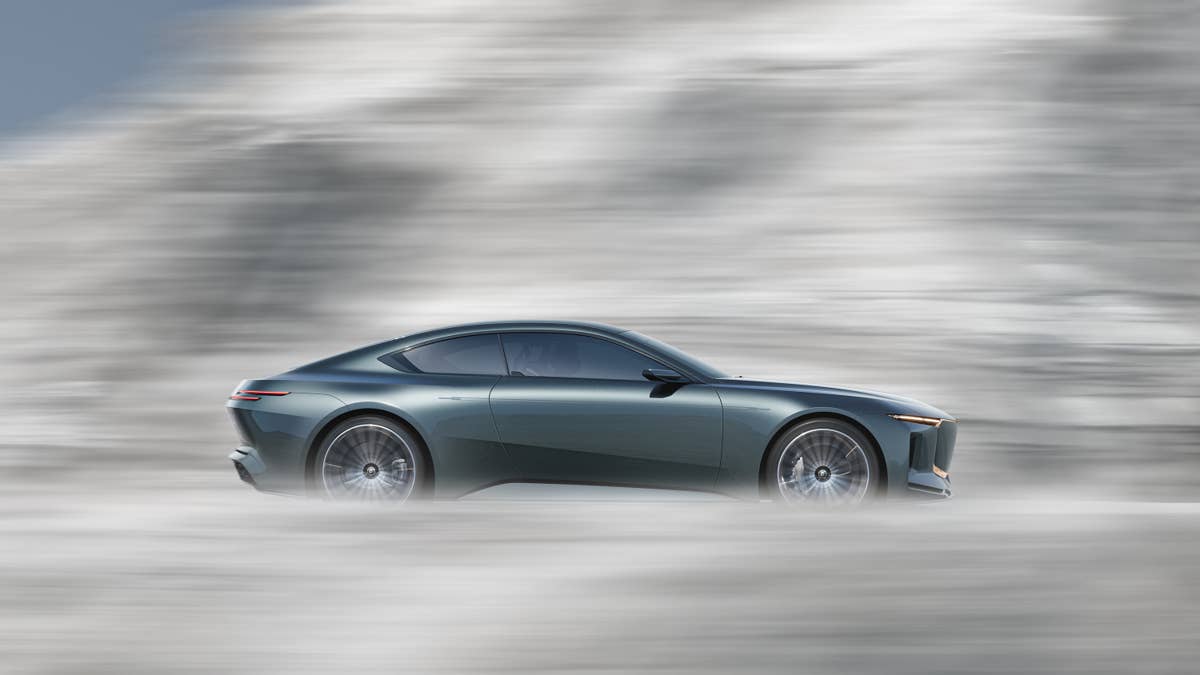
BMW revealed the Vision BMW ALPINA at the 2026 Concorso d’Eleganza Villa d’Este, a one-of-one design study that does something rare in an industry drowning in aggressive concepts and neon lighting: it whispers. At 5,200 mm (roughly 204 inches) long, the Vision BMW ALPINA is enormous. It is a four-seat, V8-powered grand tourer with a raked coupé roofline, 22-inch front and 23-inch rear wheels wearing Alpina’s signature 20-spoke design, and the kind of restrained confidence that makes a Bentley Continental look like it is trying too hard. BMW calls this the beginning of a new chapter for Alpina under its direct ownership. If this is the opening paragraph, the rest of the book will be extraordinary.
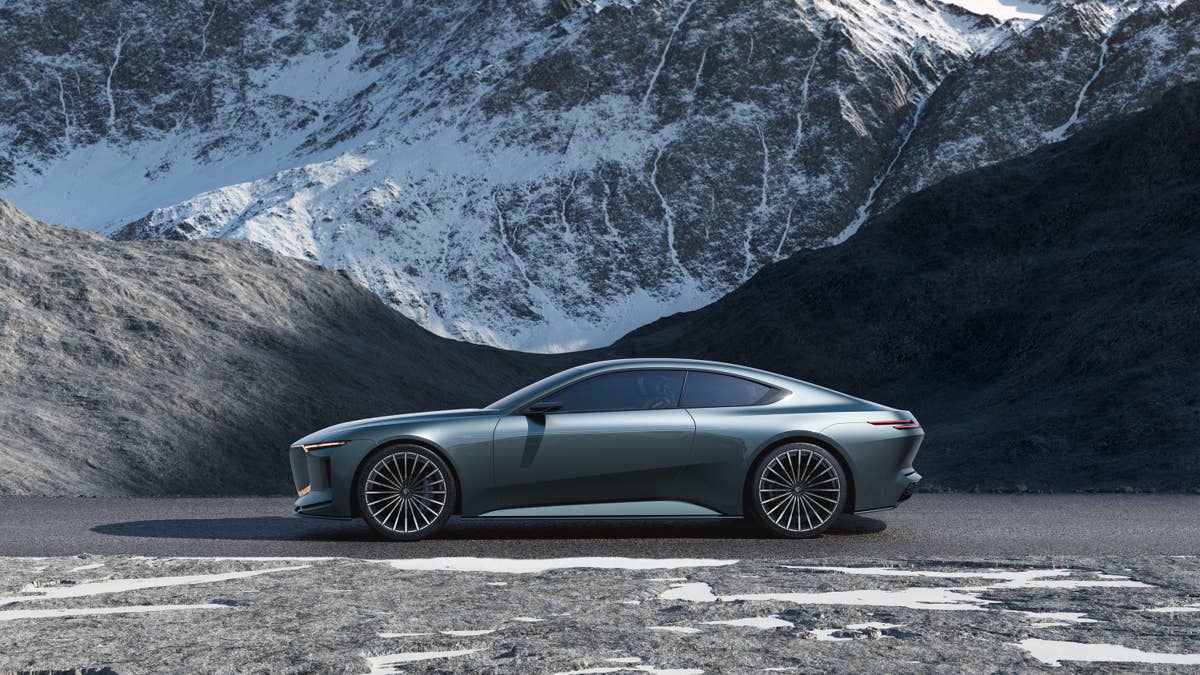
What you’re looking at
Start at the front. A reinterpreted shark nose frames BMW’s kidney grille as a three-dimensional sculpture with hidden deco-line graphics on the inner surfaces and a softly backlit perimeter that reveals itself only when the car is active. Machined, polished “ALPINA” lettering sits on the lower front apron like a signature on a painting. Daytime running lights glow in a warm white tone inspired, according to BMW, by “the first light over the Bavarian Alps.” That is either the most beautiful piece of automotive design language ever written or the most Bavarian. Probably both.
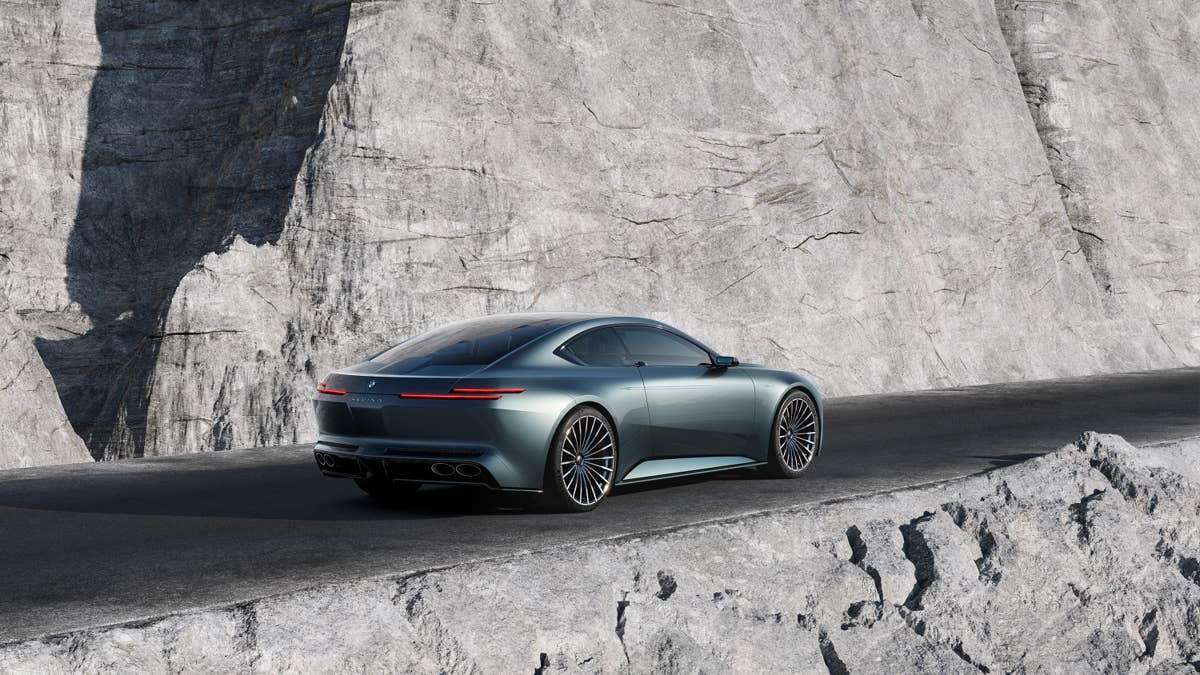
Running along the body is what BMW calls the “speed feature line,” a single visual axis that rises at a 6-degree angle from the lower front corners and wraps around to the rear. Modernized deco-lines, part of Alpina’s design vocabulary since 1974, are painted directly onto the body beneath the clear coat. The elliptical four-pipe exhaust stays because some things are sacred. At the rear, the effect is less “look at me” and more “you are welcome to look, but I was not designed for your approval.”
The interior is absurd in the best way
BMW calls the design philosophy “Second Read,” meaning the details reveal themselves only to people paying attention. Inside, that philosophy is applied with the kind of obsessive craftsmanship that justifies every dollar of whatever this would cost if it were for sale.
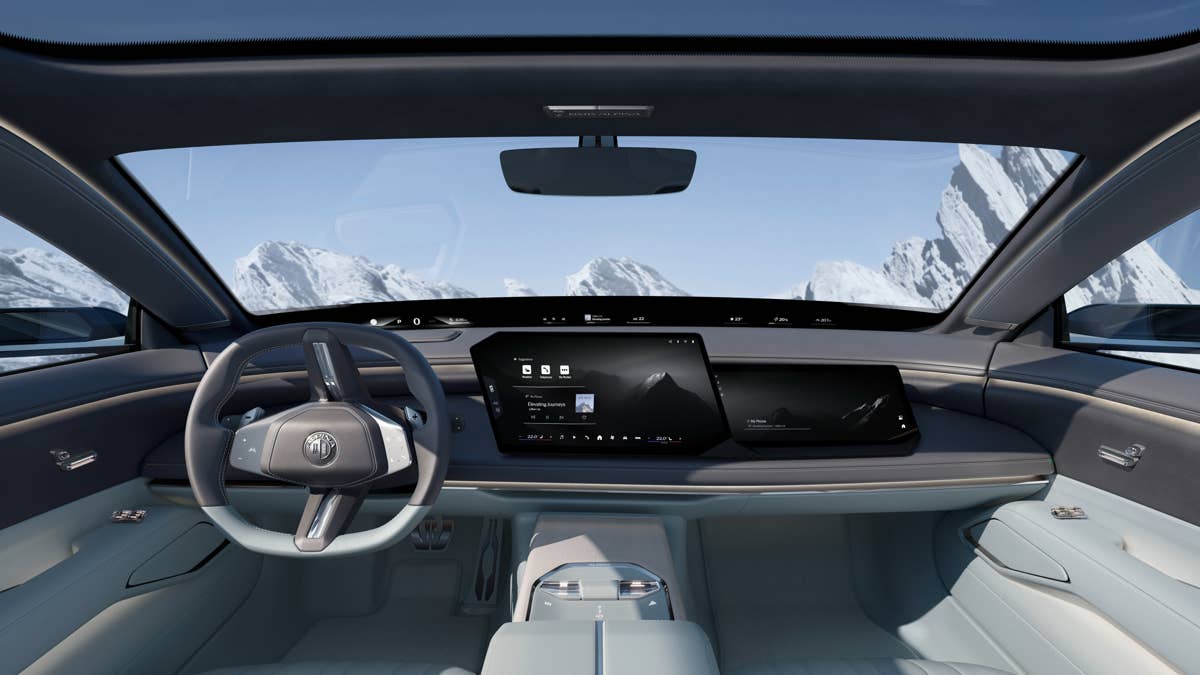
Full-grain leather sourced from producers across the Alpine region covers the cabin. Stitching patterns are inspired by the deco-lines. A bridge stitch borrowed from historic Alpina steering wheel hand-stitching appears sparingly in heritage blue and green. Metal components throughout the interior use a watchmaking-inspired beveling technique that combines satin and polished finishes. Crystal is reserved exclusively for the controls that affect driving: the start button, the drive selector, and the volume dial. Everything you touch to make the car go is crystal. Everything else is leather and metal. The hierarchy is deliberate.
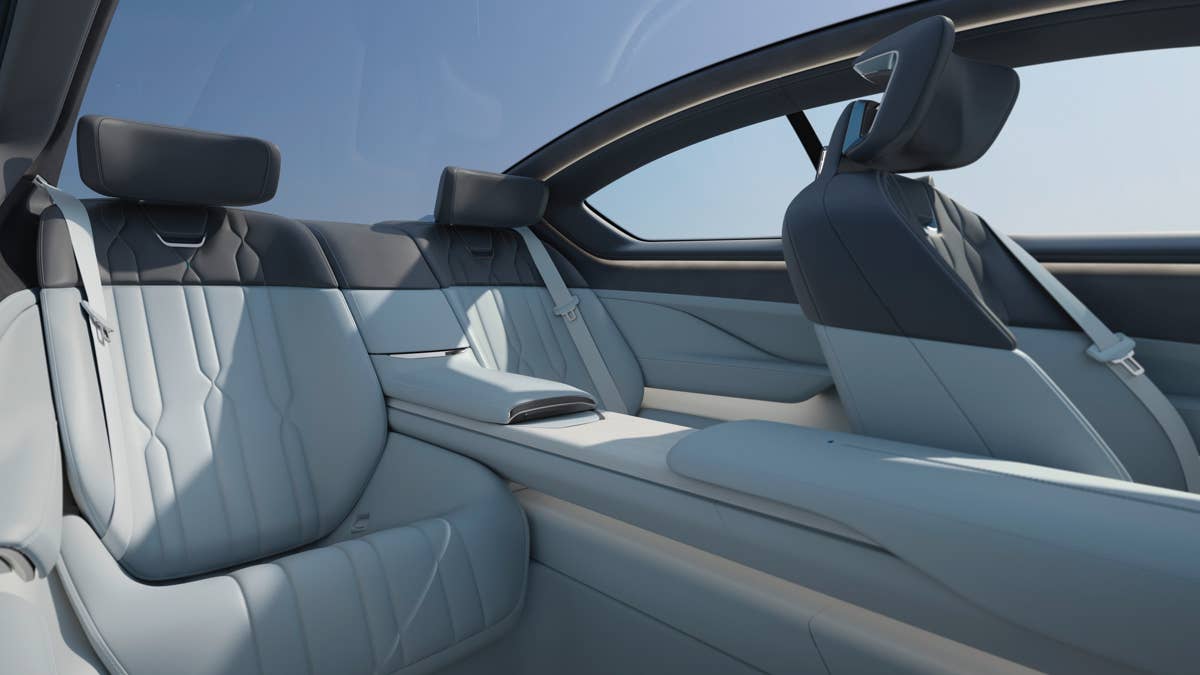
And then there are the glasses. Behind the rear console, a glass water bottle sits beside BMW ALPINA crystal glasses that rise on a self-deploying mechanism. Each glass is engraved with 20 deco-lines, features a six-degree rim profile matching the exterior speed line, and is held in place by concealed magnets against the open-grain center console. Softly lit from below. If you do not understand why this matters, this car was not designed for you. If you do, you are already emotionally invested in it.
A comfortable driver is a faster driver
That phrase comes from Burkard Bovensiepen, the founder of Alpina, and BMW has made it the spiritual foundation of this concept. Vision BMW ALPINA includes a Comfort+ mode that goes beyond what any current BMW offers, prioritizing isolation and ease at high speed, treating the driver as someone who covers hundreds of miles at a time and arrives feeling better than when they left. A V8 sits under the hood, tuned to produce the characteristic Alpina exhaust note: rich and deep at low speed, sonorous at high revs. No specific output figures were announced because this is a design study, and the point is not horsepower. The point is everything else.
Adrian van Hooydonk, head of BMW Group Design, put it simply: “Our role as the new custodians of this brand is to preserve this distinctiveness and shape it for a contemporary context.” What that means in practice is a car that treats speed and comfort as complementary goals rather than competing ones. Alpina has believed that since 1965. BMW is now spending real money to prove it still matters.
Why this matters
Alpina was independent for nearly 60 years before BMW acquired the brand. This concept is the first clear signal of what BMW intends to do with it. Not to badge-engineer it into an M sub-brand. Not to dilute it into another trim level. But preserve the things that made Alpina different: the obsessive material quality, the long-distance comfort, the philosophy that a grand tourer should be fast enough to outrun almost anything and refined enough to make you forget it can. If the production cars that follow this concept carry even half of what the Vision promises, BMW will have done something most acquisitions fail to do: make the original fans proud rather than furious.