Hello and welcome to Modern CEO! I’m Stephanie Mehta, CEO and chief content officer of Mansueto Ventures. Each week this newsletter explores inclusive approaches to leadership drawn from conversations with executives and entrepreneurs, and from the pages of Inc. and Fast Company. If you received this newsletter from a friend, you can sign up to get it yourself every Monday morning.
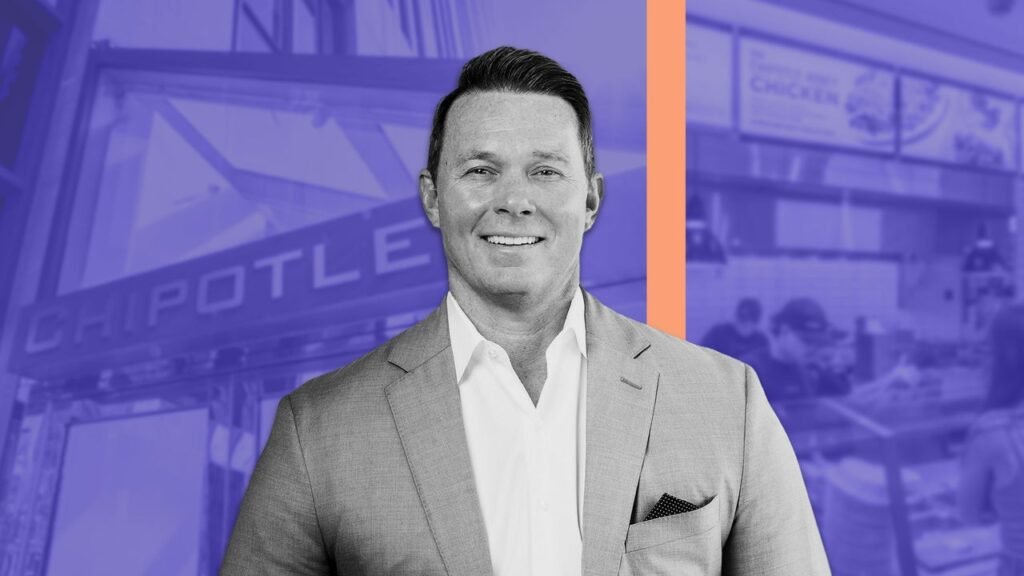
After Scott Boatwright became CEO of Chipotle Mexican Grill in November 2024, he added two red chairs to the black seats in the boardroom at the restaurant company’s Newport Beach, California, headquarters. The red chairs are meant to remind executives and directors of the two kinds of stakeholders often not represented in their meetings: restaurant workers and customers. He also installed a sign outside the conference room that reads: “THE ANSWERS ARE IN THE RESTAURANTS.”
“I often see leadership teams sit around a boardroom and hypothesize about problems that are happening out in the business, and then they start to spin up solutions to address those problems that they haven’t accurately identified,” Boatwright says. “They spin up ideas, put the ideas in place in restaurants, and never go to see how that work landed in the restaurant. You need to go accurately identify the challenge that you see. And the only way you can do that is talking to the people who are closest to the problem—not the people sitting around the board table.”
Rising through the ranks
Looking for answers in restaurants isn’t just a slogan for Boatwright—it’s how he learned the business. He was a dishwasher during high school, and in college he worked at a resort’s banquet operations, where he rose from setting up tables to becoming the assistant food and beverage manager. He spent 18 years with Arby’s Restaurant Group before joining Chipotle in 2017 as chief operating officer. Chipotle’s board named Boatwright interim CEO in August 2024 when Brian Niccol decamped for Starbucks, and announced him as permanent CEO a few months later.
During Boatwright’s time as operating chief, he says he restructured the business to reduce the number of restaurants that field managers oversaw and increased training and development to equip leaders to better support restaurant managers. That, in turn, led to better retention and satisfaction scores from frontline workers.
“The most important component of our organization are the 135,000 people that work in our restaurants,” adds Boatwright, who says he still spends time in restaurants, even helping workers prep for meals. “We are running a people organization that happens to sell burritos.”
Accelerating innovation
As CEO, Boatwright’s challenge is to improve the company’s financial performance—Chipotle’s stock is down about 10% this year, while the S&P 500 is up 10%—amid economic uncertainty, inflation, and fast-changing consumer behaviors. He concedes that the company needs to be nimbler, and he’s brought in outside talent, such as a new chief digital officer and chief brand officer, and promoted internal leaders as chief supply chain officer and chief development officer.
Boatwright admits the company had fallen behind on innovation. While quick-service rivals experimented with limited-time deals and value menus, Chipotle resisted, sticking to its identity as a premium offering. (The company prides itself on its food being additive and preservative free.) He says he moved to accelerate innovation about a year ago. At the end of last year, Chipotle launched a high-protein menu featuring adobo chicken, and the company is highlighting its affordability by pointing to items such as tacos starting at $3.50.
Boatwright’s moves are starting to pay off: First-quarter results beat Wall Street expectations, with revenue climbing 7.4% to $3.1 billion and same-store sales inching up slightly, reversing a year of declines. “Pushing urgency in the organization is starting to have an impact,” he says.
Wall Street isn’t the only constituency with its eye on Boatwright. Like other restaurant CEOs—think McDonald’s Chris Kempczinski, who drew online scorn earlier this year for a video of himself eating a Big Arch burger—Boatwright has gone unexpectedly viral. A comment encouraging Chipotle customers to “ask for a little more” if they feel their portions aren’t big enough got widespread attention, with some commentors complaining that the CEO was putting the burden on customers to address inconsistencies in portion sizes.
“I was trying to convey [that] we value this idea of abundance,” Boatwright says. The company says guests can always request—in person or on the app—their desired portions of rice, beans, cheese, tomato salsa, and other ingredients, while premium items such as proteins and guacamole are extra. If customers are still unhappy with their experience, he says, “that’s just an opportunity for us as a brand to get sharper on the training and education of our people.”
Where do you find answers?
How does your company keep current on what’s happening with employees and customers? Send your ideas and insights to stephaniemehta@mansueto.com, and we’ll include some of the best responses in a future newsletter.
READ MORE: restaurant CEOs
- How Todd Graves built Raising Cane’s into a $5 billion brand
- Inside Brian Niccol’s Starbucks redesign
- Sean Tresvant is turning Taco Bell into a global powerhouse