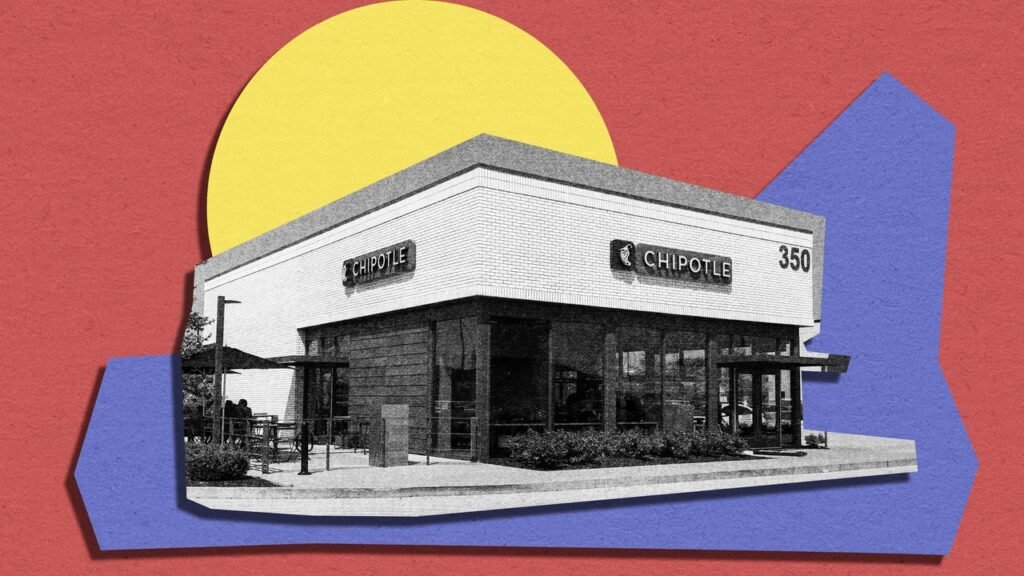
Last year, 23,000 Chipotle employees were promoted to various leadership roles.
The company, which has over 130,000 employees globally, has a tendency to look towards its own staff when it comes to filling those positions. Of those employees promoted, 83% of field leaders, around 90% of restaurant management roles and all regional vice presidents were internal promotions instead of external hires.
Chipotle’ chief operating officer Jason Kidd is very involved in the company’s internal promotion strategy. According to a recent interview with Business Insider, Kidd said he visits nearly a dozen Chipotle locations each week — and spends more than an hour at dinner with a few members of the regional team in the market he’s visiting.
Kidd’s weekly tradition allows him to get to know employees on a deeper level. But it’s also a way for him to identify and source potential candidates for internal promotions.
“We’re constantly identifying internal talent during these visits; seeing how people show up and see how they react,” Kidd told BI.
At these dinners, Kidd looks for four traits in possible candidates.
Firstly, he looks for employees who take care of others and work well in groups. “At the end of the day, we run a people business,” Kidd told BI. “So you need to make sure you take care of your people.”
He also looks for employees who “own the outcome”—those who take responsibility for both the good and the bad. “If somebody can own the outcome of what they’re doing, they’re likely going to be a good leader,” Kidd said.
The third trait Kidd looks for is the skill to anticipate and plan for problems rather than just reacting to them. “We don’t need firefighters; we need people who could be ahead of the issues and anticipate what’s going on,” he said.
And last but not least, Kidd said he looks for those with strong problem-solving skills, by both identifying an issue and offering clear solutions to them.
Chipotle plans to open up hundreds of more restaurants this year—meaning Kidd will have even more locations on his plate to visit.
Last year, a survey from People Insights found that 56% of employees believe senior leaders made a genuine effort to listen to them. While executives having unstructured dinners with employees can seem rare, a handful of leaders have shared the same mindset as Kidd.
During his tenure as Walmart’s CEO, Doug McMillon prioritized doing the jobs alongside employees to get a better sense of the company’s operational hurdles. When Howard Schultz was the CEO of Starbucks, he frequently visited stores as a means to build trust and listen to employee concerns.
In June, Chipotle CEO Scott Boatwright told Fast Company how he prioritizes the voice of both employees and consumers. Outside of a conference room at Chipotle’s headquarters, Boatwright placed a sign that reads: “THE ANSWERS ARE IN THE RESTAURANTS.”
“I often see leadership teams sit around a boardroom and hypothesize about problems that are happening out in the business, and then they start to spin up solutions to address those problems that they haven’t accurately identified,” Boatwright said.
“They spin up ideas, put the ideas in place in restaurants, and never go to see how that work landed in the restaurant,” he added.
“You need to go accurately identify the challenge that you see. And the only way you can do that is talking to the people who are closest to the problem — not the people sitting around the board table.”