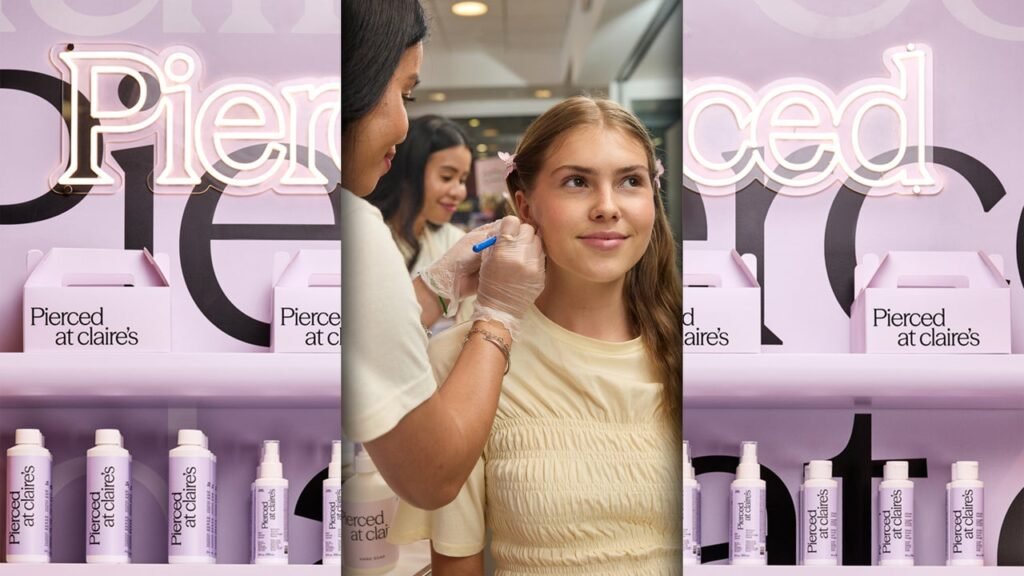
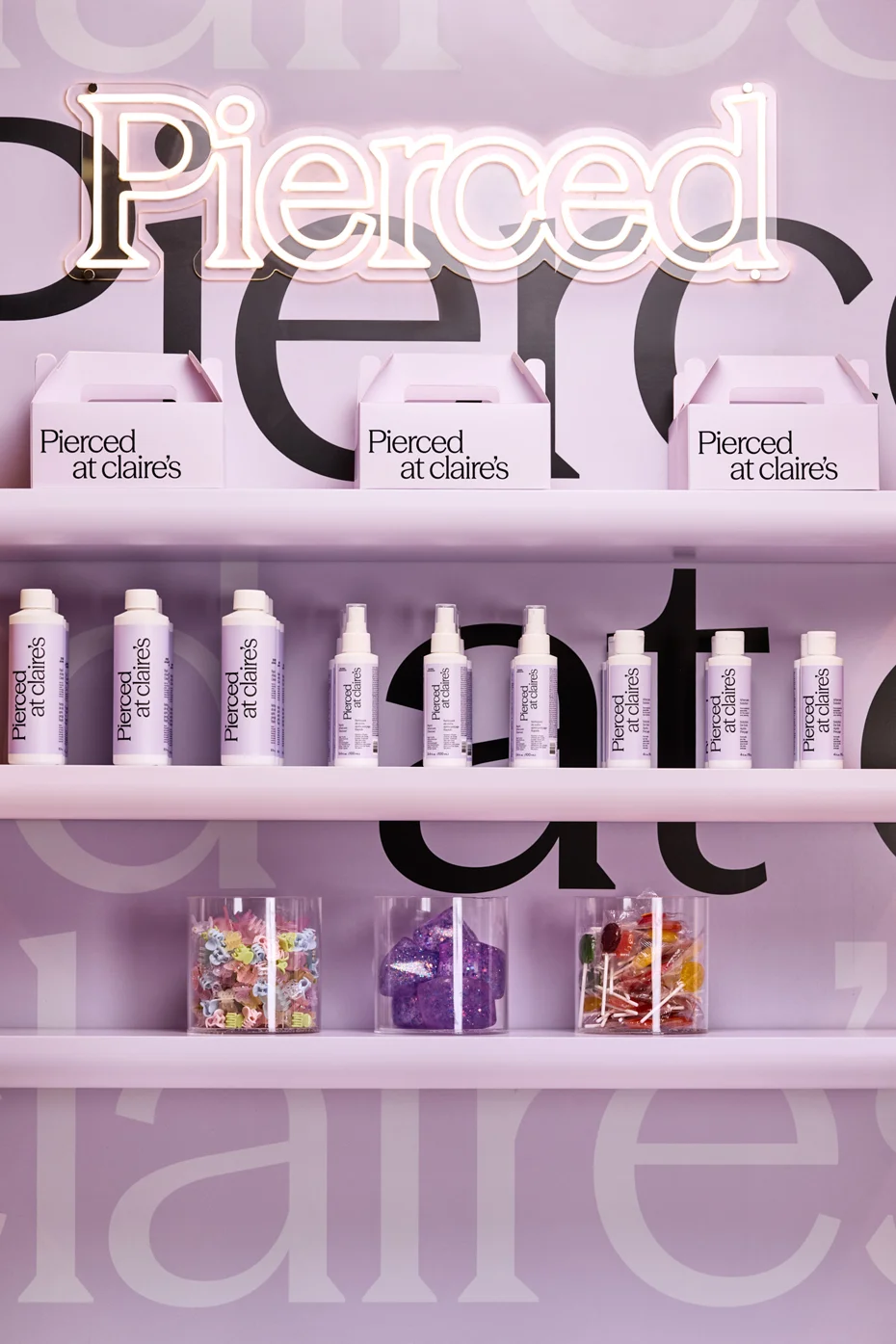
Inside Claire’s newly remodeled flagship in Santa Ana, California, you won’t find candy-colored walls of jewelry and scented gel pens. Instead, you’ll find a sleek, minimal interior, anchored by a curved ear-piercing station. The store is drenched in a soft purple shade that was picked by a focus group of six- to fourteen-year-olds, the demographic Claire’s wants to win over.
This glow-up is Claire’s latest play to capture the hearts, minds, and pocket money of today’s tweens. The brand is trading sensory overload for an Instagrammable layout built around ear piercing. The strategy makes sense because Claire’s is best known for ear-piercing, having done it 131 million times over the past 65 years. The brand will begin by remodeling flagship stores in major cities, but it expects to overhaul the whole fleet of roughly 900 stores within a year.
Putting Piercing Back at the Center
Many millennial moms have nostalgia for Claire’s, so the brand’s superpower is its enviable brand recognition. But over the last few years, the ear-piercing landscape has changed, with buzzy newcomers like Rowan, Studs, and Lovisa giving Claire’s a run for its money. Claire’s will have to work hard to keep its crown.
Claire’s has had a turbulent few years, as it struggled with tariffs, tightening consumer spending, and declines in mall traffic. It filed for Chapter 11 in 2018, and shelved its plans for an initial public offering before entering into a second bankruptcy filing. It faced a towering wall of debt, including a $500 million loan.
At one point, the company considered shutting its entire North American footprint, but last year private equity firm Ames Watson swooped in with $140 to acquire the brand’s core operations, intellectual property, and store network. Taking a page from the playbook of Lids, which Ames Watson also owns, a new team has set out to cut underperforming locations and remodel the remaining stores in the fleet.
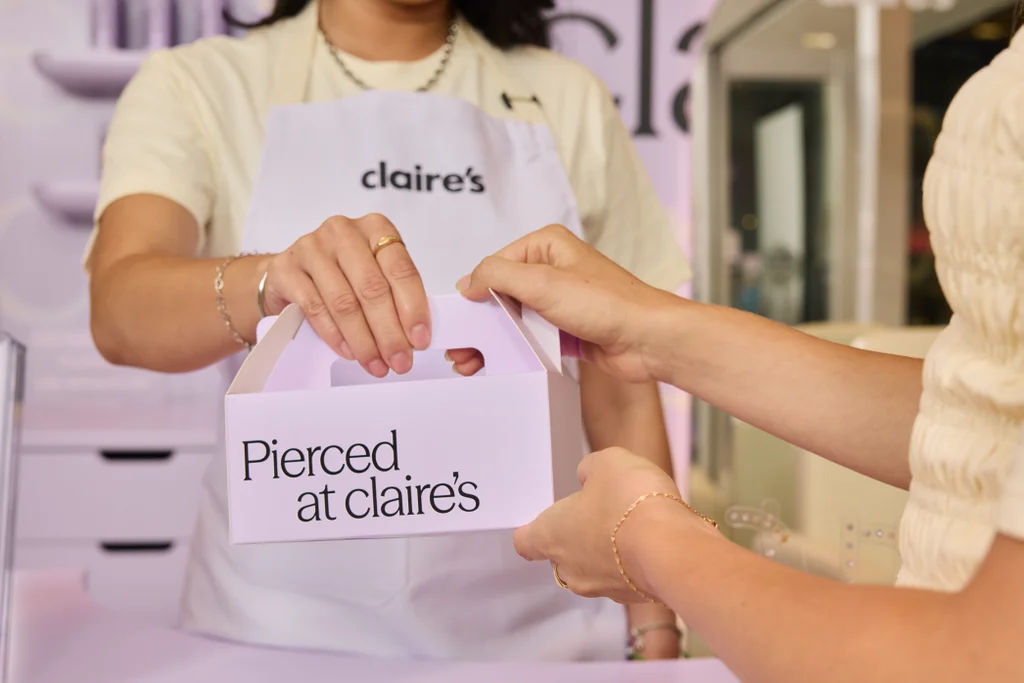
At the center of this reinvention is a total overhaul of the piercing experience. The goal is to elevate a childhood milestone into a core memory. “We know that piercing is the heartbeat of Claire’s,” says Carey Brezler, VP of retail operations. “When you ask someone about Claire’s, the first thing they tell you is their own ear-piercing story. We wanted to understand how to elevate the piercing experience within the store.”
The company has created a clinical training program to train its employees, evolving the piercing experience from a quick service into a medical treatment. There is now hands-on instruction and rigorous recertification. To maintain consistency, a specialized “Piercing Excellence Team” of instructors travels across the country to train and support teams in all 900 locations nationwide.
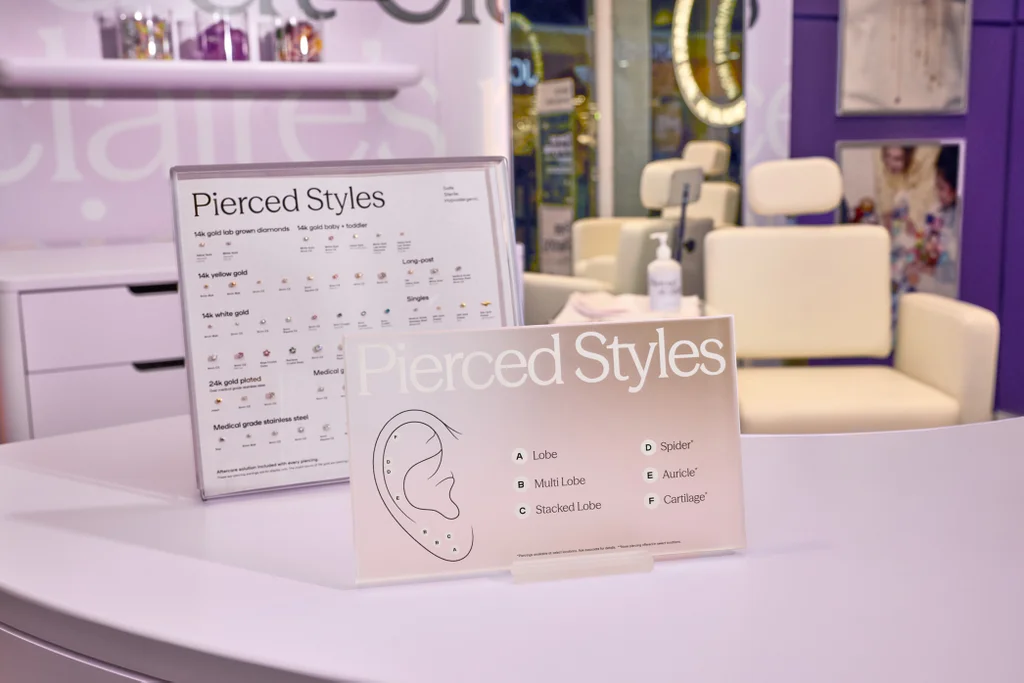
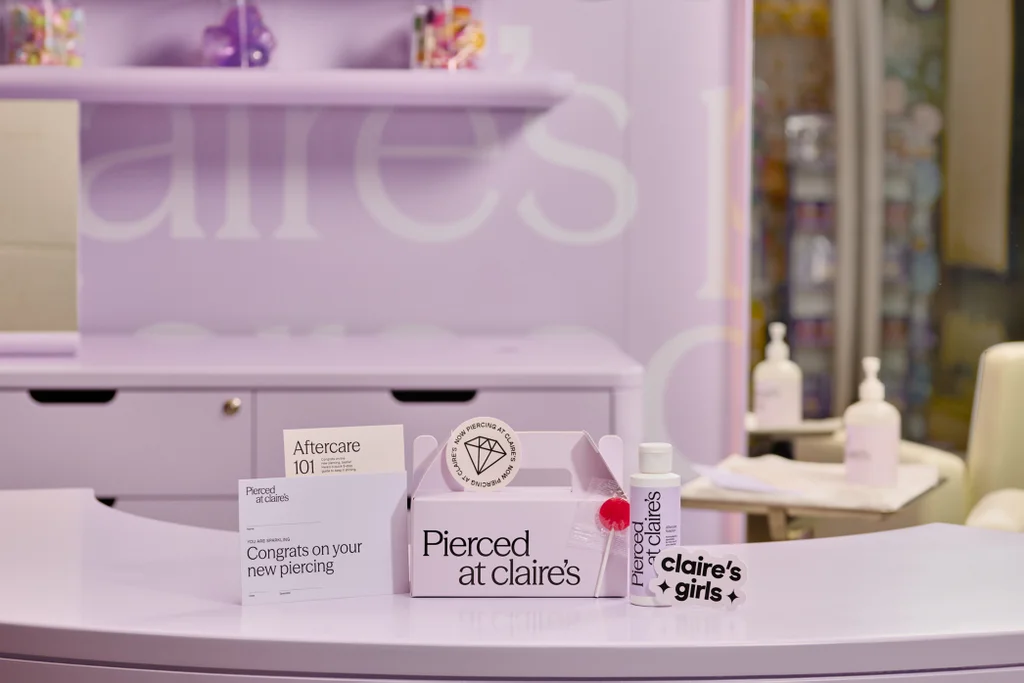
The physical environment matches this higher standard. Stores feature redesigned piercing stations with cases full of earrings, clean medical trays for specialists, and celebratory piercing certificates. The brand has also been expanding its assortment of studs, including a premium line of lab-grown diamonds. But it will stay true to its heritage of offering piercing free with the purchase of an ear-piercing kit.
Pulling Back on Product
The ear-piercing station now takes up more real estate in the store, so the brand has had to pare back on the rest of its merchandise. For decades, stepping into Claire’s meant diving into an avalanche of accessories, toys, and makeup. Kids loved the thrill of the treasure hunt, but the sheer volume of products could feel overwhelming. “It’s an abundance of affordable stuff,” says Jillian Cueff, chief merchandising officer. “But it creates challenges because there’s just so much. It’s kind of a sensory overload.”
Now the company is curating a smaller number of products that Claire’s merchants believe will resonate with its young shoppers. Striking the right balance between that chaotic fun and a clean, modern shopping experience meant rethinking how aisles flow.
Historically, the brand has organized products by categories like necklaces, earrings, and accessories. But Cueff says that this isn’t how customers actually shop for product. They’re far more interested in mixing and matching jewelry together, or creating stacks of necklaces that look good together. Claire’s is now organizing product by style, making it easier for tweens to curate a look.
“Our first step was understanding who our customer is,” Cueff says. “We’ve updated our signage to make it easier to navigate through the store.”
In the 1990s and 2000s, Claire’s was at the center of a vibrant tween culture that included magazines like Tiger Beat and Teen, and stores like Delia’s and Limited Too. With the rise of e-commerce and the decline of mall culture, the tween market hollowed out. Many tweens today are searching for products and brands that speak to them, and Claire’s sees an opportunity to step into the void.
But there are now other players trying to win over this crowd. Rowan and Studs have shown that parents are willing to pay a premium for specialized, high-end piercing experiences. To survive, Claire’s must prove that it can out-execute a new generation of competitors.