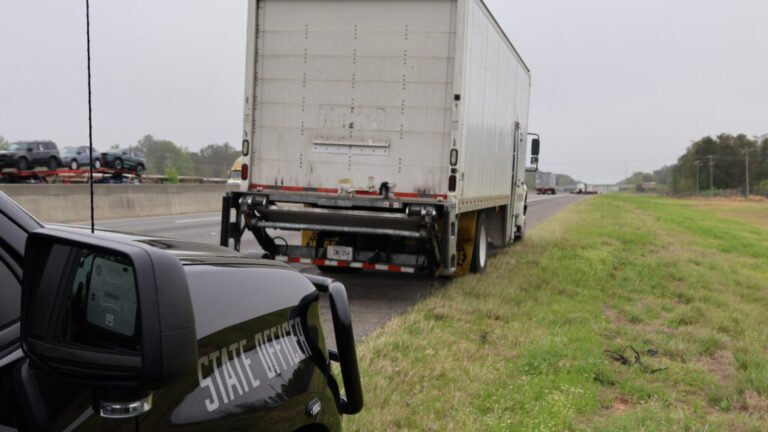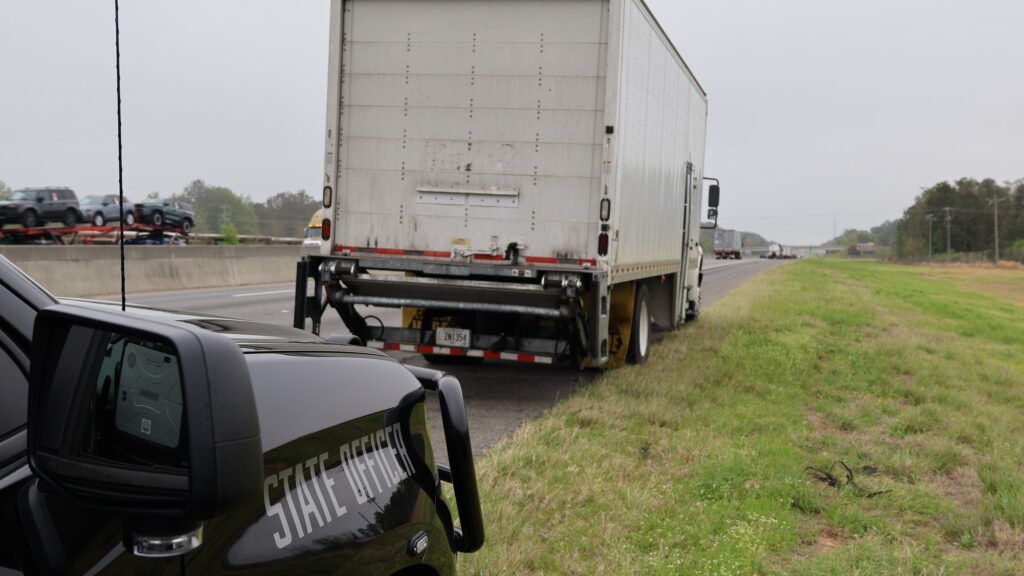
- Four states teamed up for an overnight commercial vehicle enforcement operation.
- Inspectors sidelined 78 drivers and 25 vehicles after 568 inspections.
- Seven people were arrested, including one case involving alleged fentanyl trafficking.
Most of us probably don’t think of Saturday Night Fever very often. For police in four southern states, it was their entire focus on September 26. That night, an operation of the same name aimed at cracking down on commercial hauling dangers led to 568 inspections. Officers handed out 173 moving violations, sidelined 25 trucks, and took 78 drivers off of the road in the process.
The operation was led by the South Carolina State Transport Police with support from the Federal Motor Carrier Safety Administration and authorities in North Carolina, Georgia, and Florida. It marked South Carolina’s third Saturday Night Fever operation of 2026, but the first to expand into multiple states. That said, it still led the way.
Read: Texas Drops Spanish From Its Truck Driver’s Exam, Making It English-Only
South Carolina alone deployed 70 officers across its interstate network, while the broader operation stretched along the I-95 corridor. Rather than focusing exclusively on trucks themselves, officers checked everything from driver credentials and fatigue to electronic logging devices, cargo securement, mechanical problems, distracted driving, and impairment.
The numbers suggest they weren’t exactly short of things to find. Of the 568 inspections, 78 drivers were placed out of service, nearly 14 percent of the total inspections.
Another 25 commercial vehicles were sidelined because of issues inspectors deemed serious enough to keep them off the road. Authorities also issued 173 moving violations and made seven criminal arrests. According to the South Carolina Department of Public Safety, those arrests included offenses involving driving with a suspended license, drug possession, controlled substances, and alleged fentanyl trafficking.
Interestingly, 12 of the 78 drivers pulled out of service faced that consequence because they failed federal English language proficiency requirements. Under direction from last year, all commercial drivers in the U.S. must be able to read and speak English well enough to communicate with the public and officials. This is far from the first time we’ve seen a crackdown specific to this violation.
What’s more interesting here is the collaboration between several states on the same night. “Unsafe carriers do not stop at state lines, and neither should our partnerships,” said Georgia Department of Public Safety Major Andrew Montgomery. Despite the operation’s somewhat goofy name, the idea behind it is straightforward. Commercial trucks routinely cross multiple jurisdictions in a single shift, so South Carolina’s experiment is now following them across state lines as well.
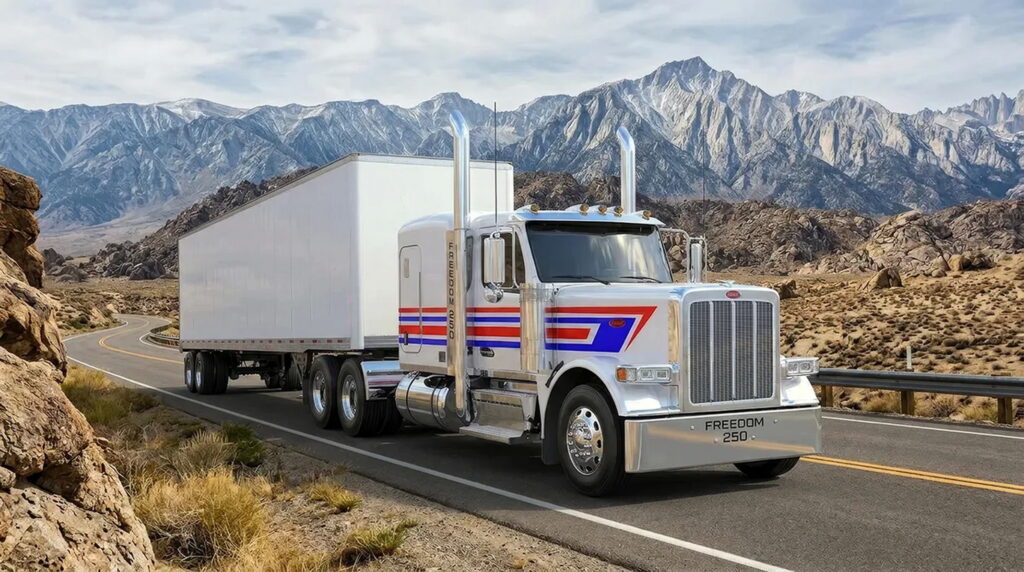
Lead Photo: Georgia Department of Safety