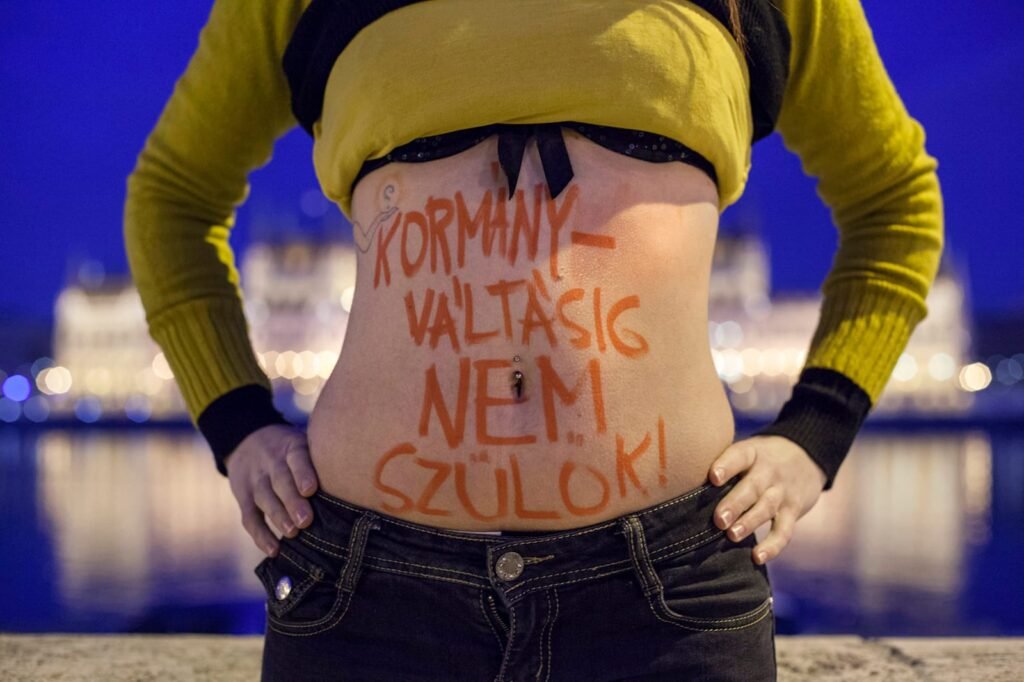
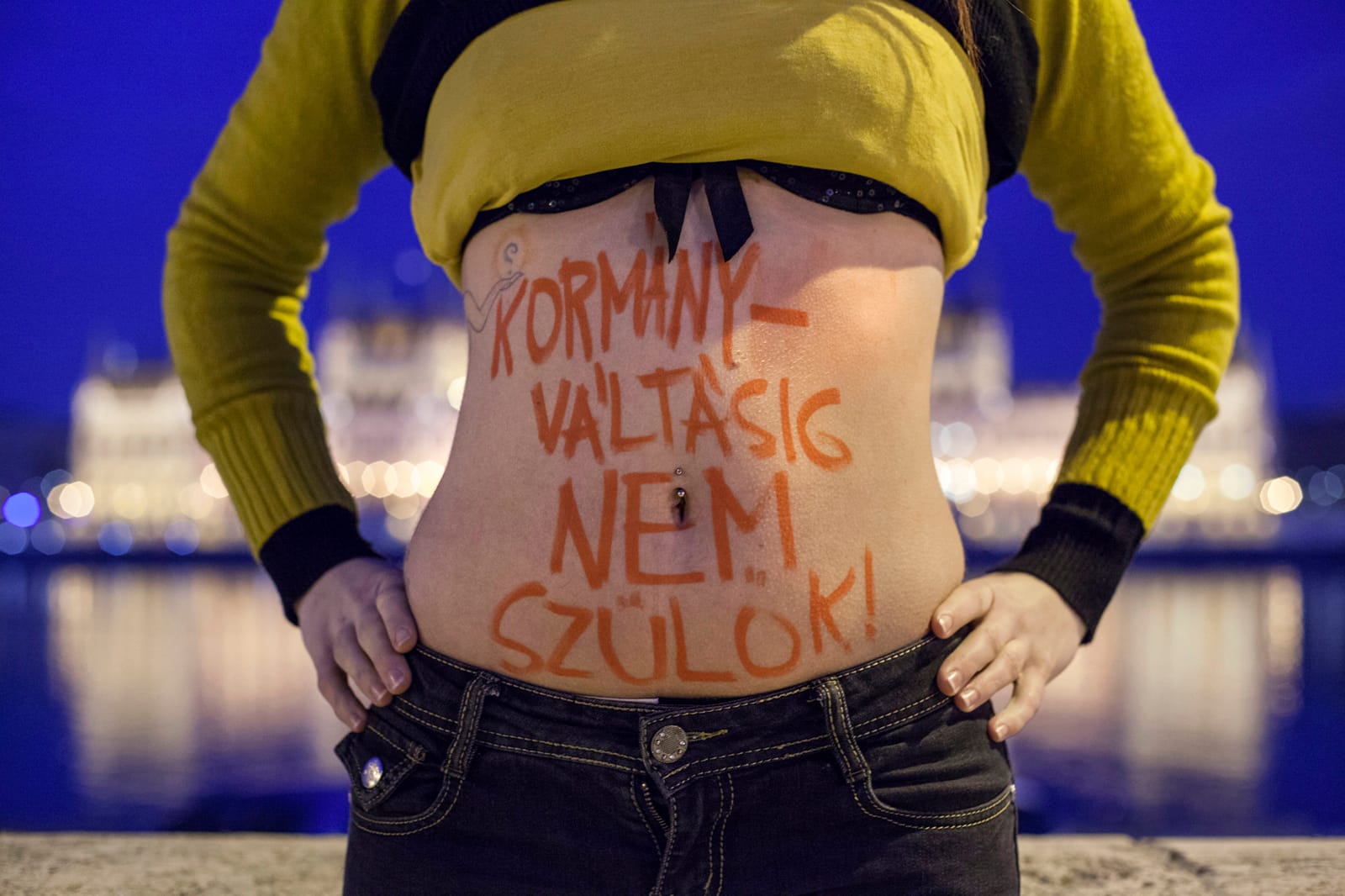
Having lived my entire adult life under right-wing authoritarian Viktor Orbán’s regime, his colossal defeat at Hungary’s parliamentary elections last Sunday by Tisza, the largest opposition party, still feels hard to believe. Witnessing people in my hometown, Budapest, erupt with joy — dancing in the streets, strangers high-fiving each other — makes me hopeful that after 16 years, the Orbanization of culture and the instrumentalization of art institutions to broadcast the regime’s ethno-nationalist, conservative Christian agenda may finally be coming to an end.
The Hungarian art scene now stands at a watershed moment, much like in 1989 after the collapse of the Soviet Union, and the task of restoring our institutional ecosystem is immense. Watching this transformation from my second home, the United States — showing its own authoritarian drift, following a blueprint that feels eerily familiar — I cannot help but see Hungary as both a cautionary tale of how ideological control can suffocate critical thinking and artistic freedom, and a source of hope that even such deeply ingrained authoritarian regimes can be dismantled.
When Orbán and his Fidesz-KDNP coalition came to power in 2010 with a parliamentary supermajority, he introduced the System of National Cooperation (NER), a new social contract intended to unite the nation through social and economic “reforms.” In practice, however, it became a network of Orbán-loyalist business elites who directly benefited from these changes. NER expanded rapidly, attaching its tentacles to independent media, successful businesses, cultural institutions, and even universities, while methodically silencing critical voices and dissent.

As most of Hungary’s cultural institutions are state-funded, changes swept across the field within just a few years. This began with the concentration of unprecedented control in the hands of the conservative Hungarian Academy of Arts, which became a key decision-maker in the allocation of state grants, alongside the appointment of loyalists to museum leadership positions in flagship contemporary art institutions such as the Kunsthalle and the Ludwig Museum in Budapest. For many artists and art professionals, state-run institutions and grants became questionable sites of professional legitimacy and competence. Protests, the occupation of the Ludwig Museum, and discursive events followed, and many curators left their institutions after the new appointments, moving abroad, shifting to the commercial sector, or founding independent initiatives. Museums were increasingly staffed either by those who accepted the status quo or by those who remained out of a sense of responsibility to steward their institutions as best as possible under compromised conditions, operating with a constant sense of cognitive dissonance. Though less visibly today, a shrinking group of artists and professionals continues to boycott the co-opted institutional ecosystem, even as this stance has come to feel increasingly futile in the face of a business-as-usual institutional environment.
Navigating the field as a young curator, gallery director, and art writer felt like constantly walking on a minefield. Within this fractured system, the Orbán regime pitted cultural professionals against one another: those willing to follow the regime’s playbook gained access to grants and opportunities at flashy new museums as well as NER-adjacent private institutions, while those who refused to legitimize the system faced extreme financial precarity and a severe lack of opportunities. A culture of paranoia and fear took hold in the arts, where direct censorship only had to be deployed on a few distinct occasions, as widespread self-censorship became the norm. These tensions mirrored those of society at large, where family members stopped speaking to one another over political differences, and many people were afraid to voice dissent — some still carrying vivid memories of Soviet-era repression — out of fear of losing their jobs or becoming targets of the government.
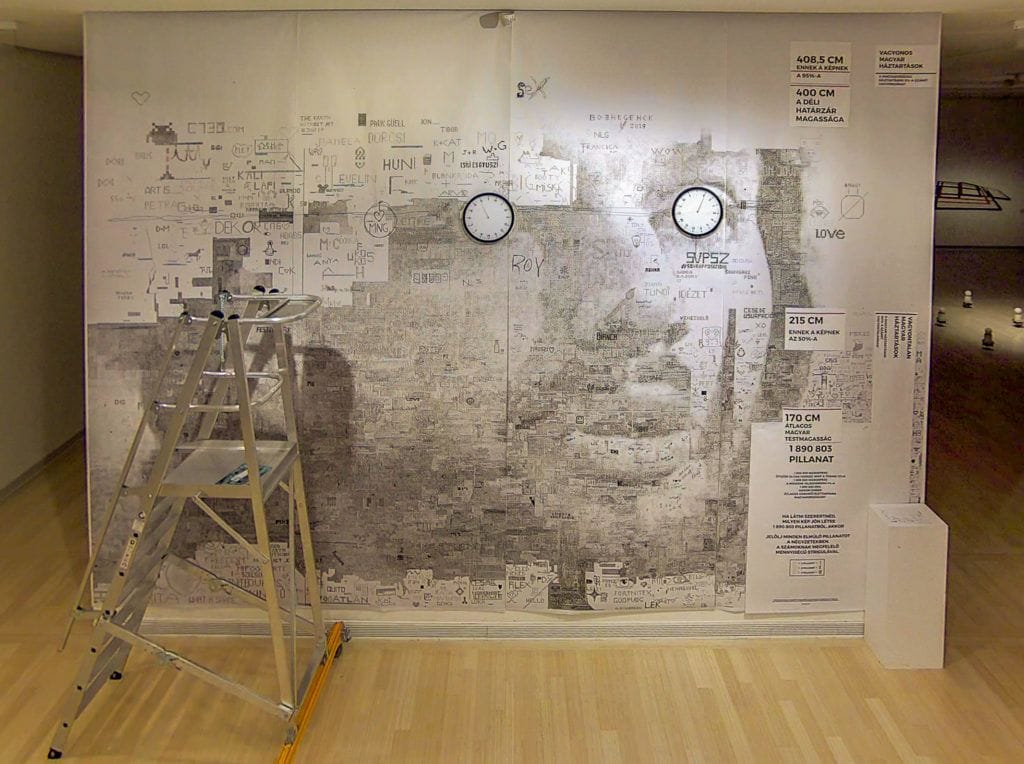
Despite this atmosphere of growing despair and apathy, a few initiatives managed to survive and occasionally even thrive, such as the OFF-Biennále Budapest, the country’s largest contemporary art event. Initially founded to provide a platform for grassroots, artist-run, independent projects, OFF operates free from state funding and the ties that come with it, relying instead on international and private support. Last year, OFF celebrated its 10th anniversary with its largest edition to date, brought to life by our team of 10 curators working outside the state apparatus. The biennale highlighted issues often overlooked by mainstream institutions, amplifying the voices of queer, Roma, immigrant, and other communities targeted by the government or that do not neatly fit into its utopia of a homogeneous, white, heteronormative Hungarian society.
Institutions funded and maintained by the opposition-led capital and its municipalities also had more room to maneuver, as in the case of Liget Gallery, a historic nonprofit where I served as director between 2022 and 2025. This position was severely underpaid, and the institution’s budget was minimal, but these constraints were offset by full curatorial autonomy — a rare privilege under this regime. Over the past 16 years, offering perspectives outside the dominant institutional framework often required extreme self-exploitation; in my case, this meant working three jobs simultaneously. This level of financial precarity drove many people out of the field — or out of the country altogether — as NER became so pervasive that functioning outside its sphere of influence was practically impossible.
By last year, Hungary had become the most corrupt country in the EU, yet cracks in the system were beginning to appear. As the government strengthened its ties to Russia and moved to ban the annual Pride march, it seemed we had reached a tipping point. In defiance of the ban and the legal threats surrounding it, a larger-than-ever crowd took to the streets. While the incoming prime minister, Péter Magyar, did not participate in the march, a line in his victory speech was interpreted by many as a symbolic gesture toward the queer community, perhaps signaling that the rhetoric of hate and fearmongering may begin to recede.

At this stage, Tisza’s cultural program remains vague, though it promises to restore institutional autonomy. If the cultural and educational landscape were to be released from the grip of ideological control, allowing for a broader range of perspectives, the situation could begin to shift. After years defined by struggle, grief, and survival, there may now be space to collectively reflect on both the few successes and the many failures of the previous regime. For this process to unfold meaningfully, however, the Orbán-loyalist museum directors who have been stifling critical discourse at our institutions for more than a decade should step aside and allow others to take on the work of rebuilding.
From the US, where I have returned during Trump’s second term, the situation feels different yet somehow uncomfortably familiar. Amid funding cuts and mounting censorship, art institutions appear to be treading carefully, with the recent Whitney Biennial offering one such example. Hungary’s trajectory can serve as a point of reflection: a reminder of how damaging institutional silence and complacency can be and that maintaining autonomy is a constant battle.