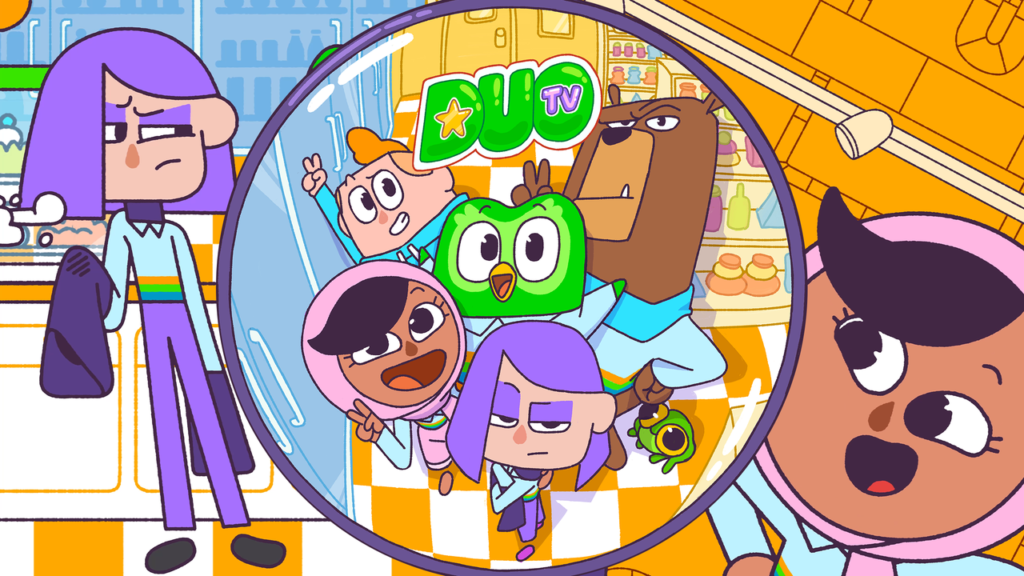
Duo the owl has twerked on main, flash mobbed a Charli XCX concert, died, sent his ashes to Dua Lipa, and come back to life. His next big act? Starring in his own animated show.
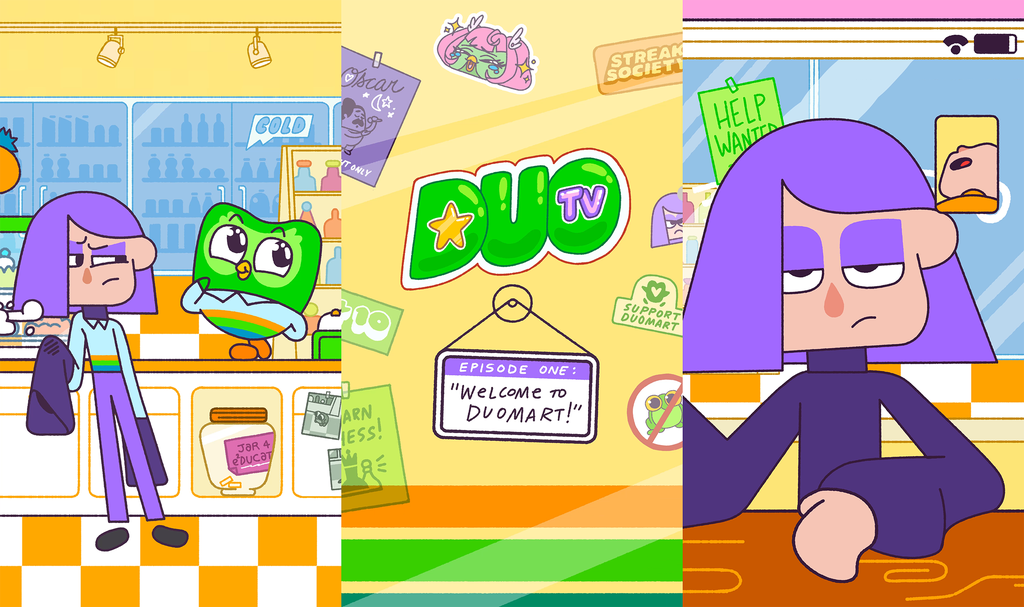
Duo TV is a new animated series that was created entirely by Duolingo’s in-house design studio. The six-episode series stars in-app characters including Duo himself, the deadpan goth teen Lily, her best friend Zari, and a grumpy bear named Falstaff as they navigate working at a mysterious grocery store called DuoMart. The first two episodes, which will be published on Duolingo’s official YouTube channel and Instagram page, air on October 12, followed by a new daily episode until the finale.
For Duolingo, the series is part of a broader mission to deepen the relationship between its fans and its characters. Duo and his motley crew first noticeably entered the zeitgeist during the COVID-19 pandemic, when the brand’s uniquely irreverent humor on social media helped it amass a major following. In the years since, the brand has continuously upped the ante on investing in its characters and design team to keep users coming back for more.
“We tell everyone right from the get-go, we want to be a hundred-year business,” says Miguel Reyes, Duolingo’s head of design. The brand believes that kind of longevity will require more than just an Android and iOS app. Specifically, it’s betting that by building out an entire world around its characters through efforts like Duo TV—essentially, creating its own entertainment arm—it can set itself up for the next several decades of business growth.
Duolingo bets big on character lore
Duolingo has long been the envy of marketers everywhere for its uniquely beloved mascot and characters, which serve as both the basis of the brand’s marketing flywheel and guides to its in-product features.
In 2024, Duolingo’s CEO, Luis von Ahn, estimated the owl’s value at “hundreds of millions of dollars” and posited that around 15% of new users come to the app via organic social media. Today, Duo’s fanbase includes 5.3 million Instagram followers, 6.94 million YouTube followers, and 18.2 million TikTok followers. Its senior director of brand marketing, Katherine Chan, told Fast Company in late 2024 that the company aimed to make Duo “more famous than Mickey Mouse.”
Characters like Duo, Lily, and Falstaff serve as great external marketing tools, but Duolingo has also used them to help build out new in-product functions. Lily, for example, is the voice of the brand’s recently debuted AI-powered speaking function Video Call; while others, like Lucy, Bea, and Zari, guide users through interactive mini podcasts on DuoRadio. Duo himself has helped to drive major in-app engagement through activations including, in one instance, an update that replaced his normally chipper app icon with a “dead Duo” (he eventually came back to life).
As Duolingo’s roster of characters has become more critical both to its social media growth and its in-product navigation, the company has funneled significant resources into building out its design team. The company says the team’s size has more than tripled since 2021, growing an average of about 30% per year over the past five years, to an estimated current head count of around 150 employees.
Duolingo has also built out its design resources through acquisitions including the animation studio Gunner, the motion design team Hobbes, and, just this August, the animation studio Animade.
“Design at Duolingo is the second largest function in the entire company, only behind engineering, which is very atypical of a tech company,” Reyes says.
The team’s expansion has allowed Duolingo to start experimenting with its character universe in new ways. In 2024, the brand launched its first-ever webcomic miniseries, called Duo Unleashed!, with Webtoon—following Duo as he hires an assistant and accidentally creates an army of clones. The series generated 3.5 million impressions across organic owned socials.
In 2025, Duolingo followed up with a five-episode anime series made in collaboration with the L.A.-based studio Titmouse, wherein characters including Lily, Zari, and Falstaff must compete as beta testers for Duo’s app (very meta). It amassed a whopping 117.1 million impressions. The Duoverse, so far, is proving to be a highly engaged endeavor.
Sarah Beth Morgan, Duolingo’s associate creative director, says the Webtoon and anime proved that there was a major audience appetite to learn more about the brand’s characters and their lore. With Duo TV, her team created the brand’s first animated series developed fully in-house, and it pulls back the curtain a bit further on the mysterious world of Duolingo’s characters.
How Duolingo made an animated series entirely in-house
Next to the slushie machine in the whimsical grocery store DuoMart, there’s a floor vent that seems to be able to speak multiple languages.
It’s just one of the mysterious entities introduced in Duo TV, which follows Lily as she learns more about her new workplace, DuoMart; her coworkers, Zari and Falstaff; and her boss, Duo. Morgan says the series’ premise is based on a highly successful pop-up that Duolingo hosted last year in Tokyo’s trendy Shibuya area, which was staffed by giant versions of Duo and Lily and sold exclusive themed merch.
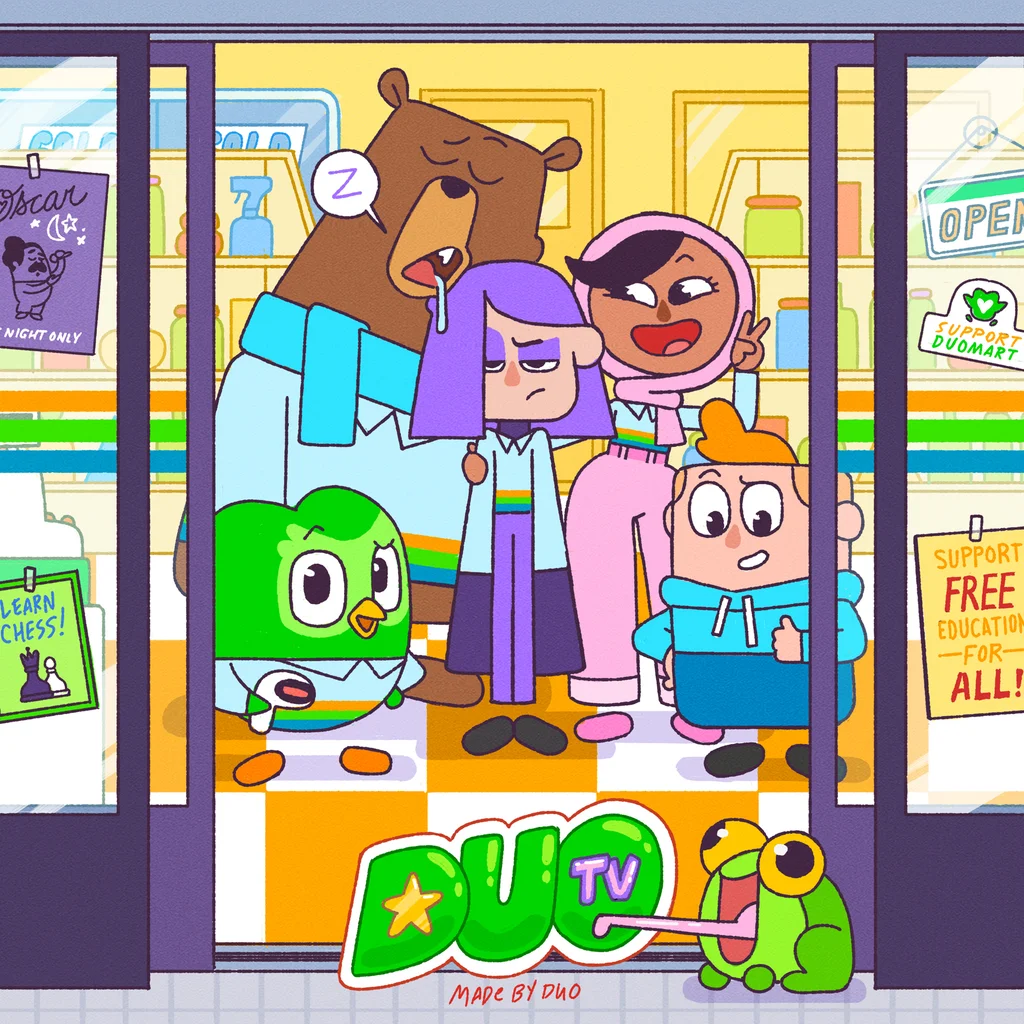
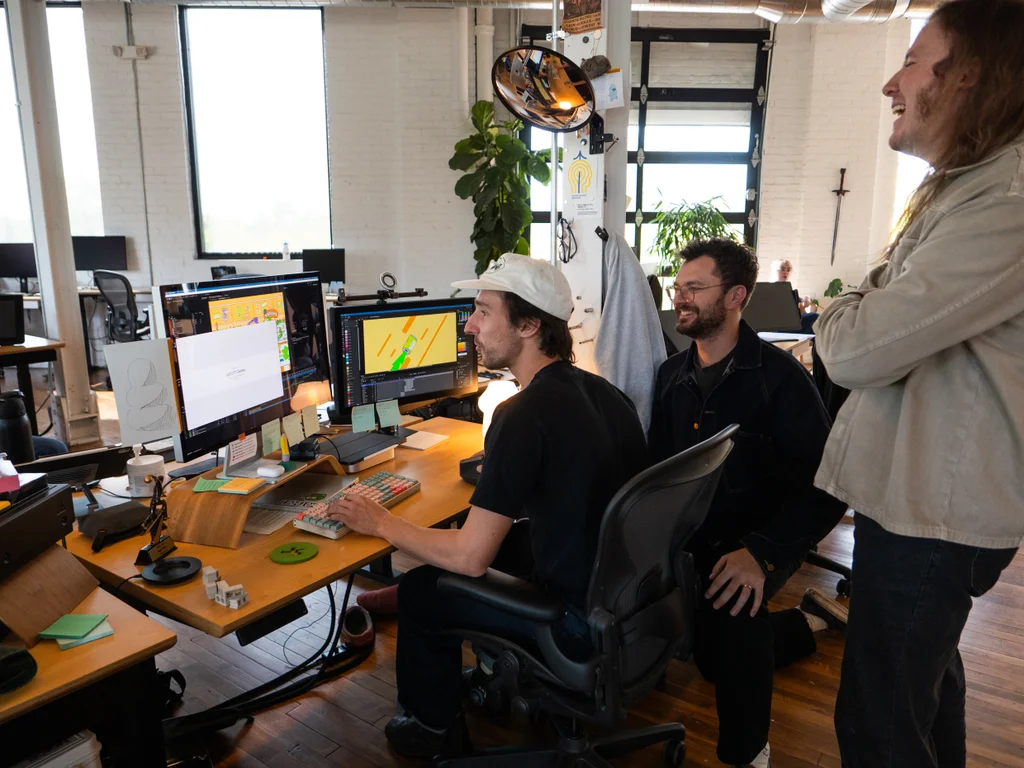
Given that Duolingo’s design studio has never made its own animated series, Morgan says, the entire creative process was new. So, her team approached it the way the brand approaches almost everything else: with A/B testing.
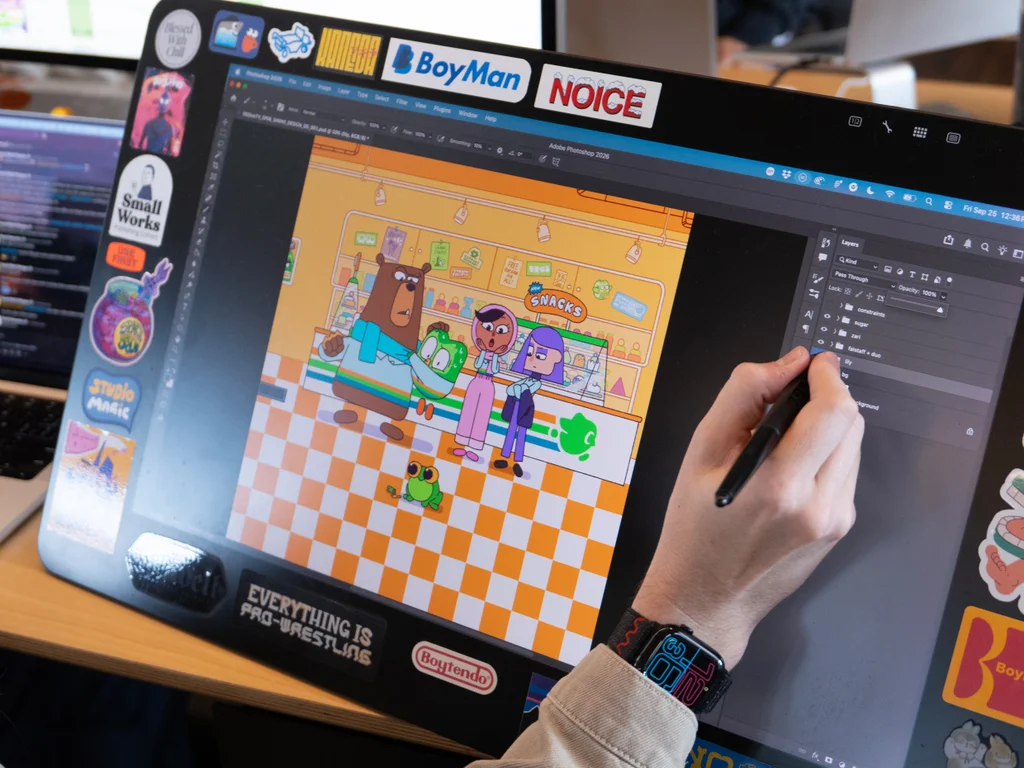
“This whole process was from the ground up, so we were kind of finding our feet on, ‘Okay, when do we write the script? Do we create the style at the same time as we’re writing the script? Do we have to get approval on this before this?’” Morgan recalls. “There was a lot of figuring it out as we went. At the time that we were creating the script, we had some space to create this A/B test, which was a perfect opportunity to see what the audience’s appetite leaned towards.”
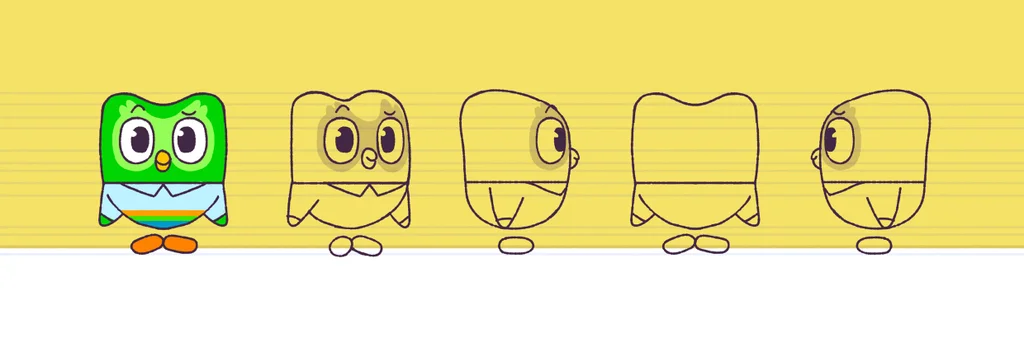
The team put together two short animated clips with the exact same content and plot. One clip used a more realistic, 3D style, while the other leaned into a more hand-drawn, 2D quality. Both were posted to Duolingo’s official YouTube channel. Ultimately, the 2D version garnered almost double the engagement of its 3D counterpart—and that’s the style the team chose for the final product.
If the series feels familiar, that’s because it’s designed to mimic the feeling of a classic Saturday morning cartoon. Each episode is short and high tempo, with plots that can stand on their own but also tie into a broader story arc. All eight-and-a-half minutes of content were made with frame-by-frame digital animation.
“A bunch of us are millennials,” Morgan says. “We grew up waking up early on Saturday before our parents were awake and going to watch Cartoon Network or Nickelodeon. That was a huge inspiration, just that whole general era.”
Specifically, the team pulled visual cues from The Cartoon Cartoon Show, an experimental early aughts program that spawned popular series including The Powerpuff Girls and Johnny Bravo; the ‘90s classic Ed, Edd n Eddy; and the sakuga style from anime, which refers to scenes where the quality of the animation suddenly becomes drastically more realistic, often to comedic effect.
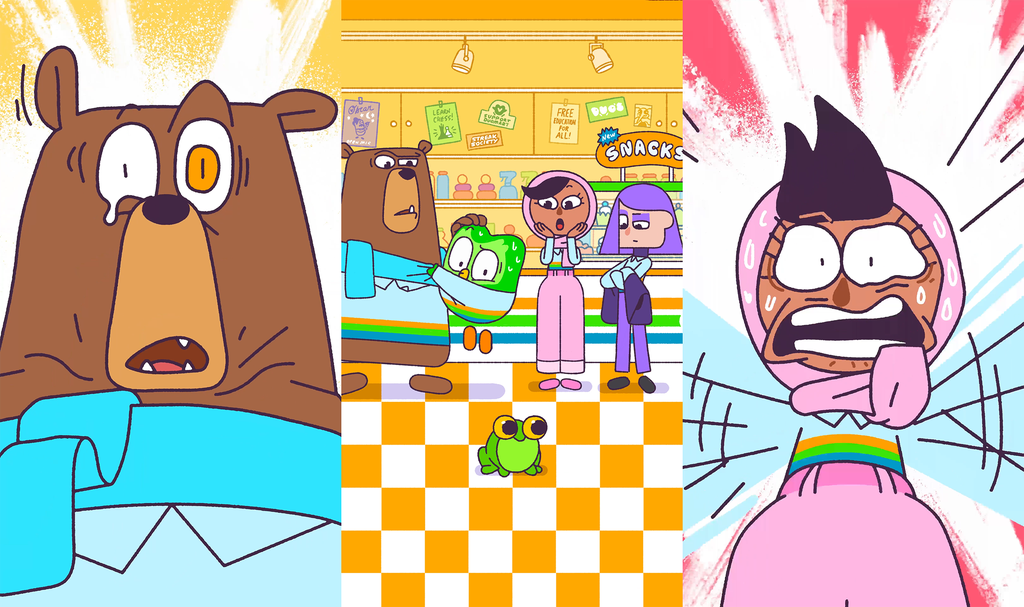
The series feels like a mash-up of nostalgic call-backs and meme-able moments that Duolingo’s massive online audience are sure to recirculate. It also feels like a potential turning point for the brand. After years spent building up its audience on social media, Duolingo is turning that momentum into a new kind of highly produced, studio-quality entertainment.
“We want to be known as a healthy tech brand and just a brand that’s good for the world,” says Reyes, the design chief. “And I think the way people do that is feeling connected to characters and connected to something bigger than just an app.”