
When you picture an engineer, what comes to mind? Maybe you think of a solitary person late at night toiling over the designs of a bridge that will connect communities. You might even picture students working hard on complex formulas.
The reality of modern engineering, however, is vastly different. It is a bold, creative sector that shapes our modern world, from the software on our phones to the sustainable energy systems powering our cities. It’s a much more diverse industry than it ever used to be, too. However, in the UK only 16.5% of engineers are women.
23 June 2026 marks the 13th year of International Women in Engineering Day (INWED). It’s a global campaign by the Women’s Engineering Society (WES), and this year’s official theme is Engineering Intelligence, highlighting the innovative and data-driven ways today’s professionals are solving global challenges.
If you’re a student, recent graduate or early-career professional wondering if a STEM pathway is right for you, then exploring the possibilities is a great idea. Engineering careers aren’t one-size-fits-all, and the industry needs diverse voices.
A career that isn’t one-size-fits-all
A huge myth about engineering is that you have to fit a very specific, highly mathematical mould to succeed. While technical knowledge is definitely important, the field is broad. You can build a career path that aligns with your professional skill set and your personal passions:
- Environmental and sustainable engineering: if you’re passionate about combating climate change, environmental engineers design renewable energy systems, sustainable agriculture and eco-friendly infrastructure.
- Software and digital engineering: for those who love the digital world, software engineers build the apps, platforms and cyber security systems that keep society connected.
- Biomedical engineering: if you want to work in healthcare but not with patients directly, then biomedical engineering could be for you, where you could design life-saving medical devices, prosthetics, and healthcare technologies.
- Electronic engineering: from the microchips in your laptop to the cabling powering your home, electronic engineers keep the modern world fully charged.
- Civil and structural engineering: if you are fascinated by the spaces we live and work in, civil engineers design resilient, smart cities and sustainable transport networks that connect communities.

The skills that power innovation
Many of the most valuable traits in engineering are actually soft skills you might already possess. At its core, modern engineering is about problem-solving and critical thinking. This ties directly into the concept of Engineering Intelligence, which celebrates the blend of human ingenuity, adaptability and technical skills needed to make things work. It doesn’t matter if you’re figuring out how to make a supply chain more efficient or how to fix a bug in your code, the ability to approach challenges from new angles is crucial.
Innovation also requires a huge amount of imagination and creativity. Engineering is about bending the rules and inventing solutions that have never been tried before. Creativity allows you to look at an outdated process and design a completely new framework to fix it. This is where fresh perspectives become invaluable, proving that a non-traditional background or a recent career pivot can actually be a massive advantage.
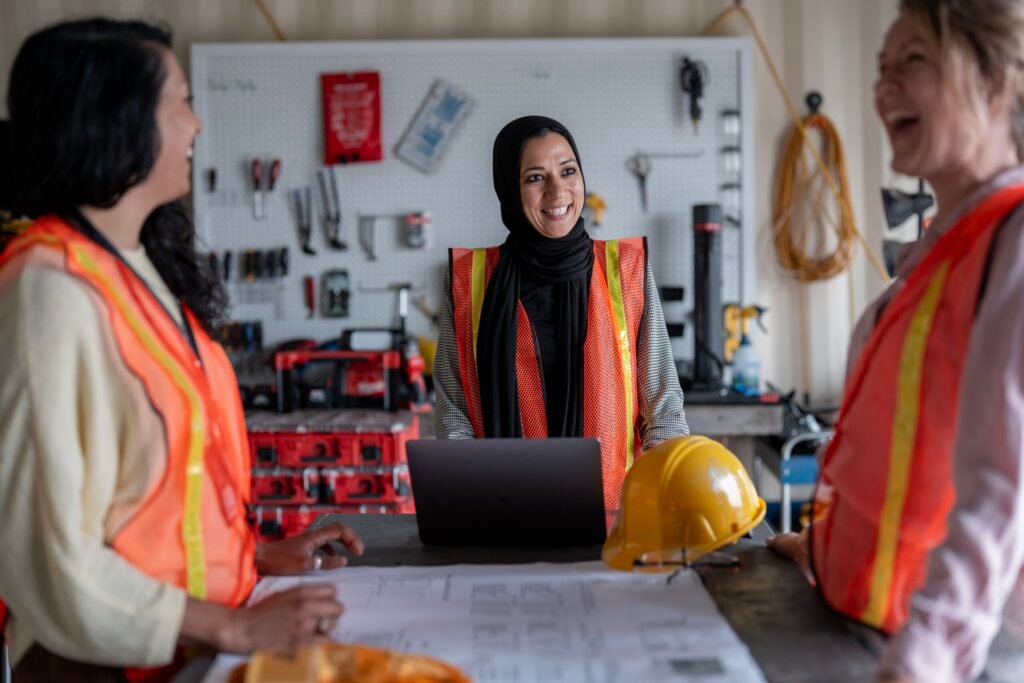
Modern engineering is highly collaborative and highly diverse, as the best ideas are never formed in isolation. Emotional intelligence, clear communication and the ability to collaborate effectively are among the most sought-after soft skills by top employers. By bringing your unique viewpoint to the table, you actively contribute to more successful, innovative outcomes.
This is also demonstrated through the data. In 2023, McKinsey found that companies with greater than 30% of their workforce represented by women were significantly more likely to financially outperform companies with less diversity. The same was true for ethnic diversity, with the most diverse companies performing at least 27% better financially than their less diverse competitors. Despite this, EngineeringUK found that in 2025, only 17% of the engineering and technology workforce in the UK are women, compared with 56% in other occupations, and 14% of the workforce in engineering and technology are disabled, versus 18% in other occupations. Globally, women make up just 28.2% of the overall workforce in STEM industries. This is a reminder that there’s still progress to be made, so what can we do?
Championing women in engineering
To truly champion women in engineering, we must dismantle the outdated stereotypes that hold talent back. The WES has worked tirelessly for over a century to advocate for equality, and their initiatives like INWED and the WES Awards play a vital role in giving women engineers a global profile. By celebrating these achievements, the industry can provide the visible role models needed to inspire more girls and women to pursue technical careers.
However, closing the gender gap also requires a shift in workplace culture, creating environments that are genuinely supportive and inclusive. By stepping into the world of engineering yourself, you become a vital part of this change. Your presence challenges the status quo and helps pave the way for a more equitable future for everyone.
Taking your first step into tech and engineering
Entering a new field can feel intimidating. Remind yourself that every expert was once a beginner. Here are seven ways to confidently step into the world of engineering:
- Follow your curiosity: start by exploring the areas of science and technology that genuinely interest you, rather than worrying about fitting into a specific job title.
- Connect with a community: look for online networking groups, local meetups and organisations dedicated to supporting women in STEM to surround yourself with inspiring peers.
- Embrace lifelong learning: technology changes rapidly, so adopting a progressive mindset and updating your skills through short courses and certifications will keep you adaptable.
- Seek out mentorship: finding an experienced professional through networks like WES can help you navigate early-career challenges and build your confidence.
- Start a personal project: applying your knowledge to a real-world problem or a passion project is a great way to build a portfolio that catches a recruiter’s eye.
- Focus on your soft skills: remember that emotional intelligence, teamwork and communication are just as highly valued as technical know-how.
- Challenge the stereotypes: don’t let outdated ideas about who can be an engineer hold you back; your unique perspective is exactly what the industry needs.
Start your engineering journey
Progress starts with education. If you’re ready to explore your potential and build the skills needed to thrive in a technical role, we offer a wide range of expert-led online courses. Invest in your future and discover how you can engineer a better world today.
Explore our introductory engineering and tech courses:
- Principles of Engineering by King’s College London
- Effective Communication Skills for Engineers by Universiti Malaya
- Ideation: The First Step in Engineering Design by Universiti Malaya
- Fundamental Skills in Engineering Design by University of Leeds
- An Introduction to Electronic Engineering by UK Electronic Skills Foundation
- Introduction to Data Engineering with Microsoft Azure by FutureLearn
Final thoughts
Engineering is fundamentally about shaping the future. By bringing your unique perspective to the industry, you’re actively participating in Engineering Intelligence and helping to design a world that works better for everyone. Believe in yourself and start engineering your career.