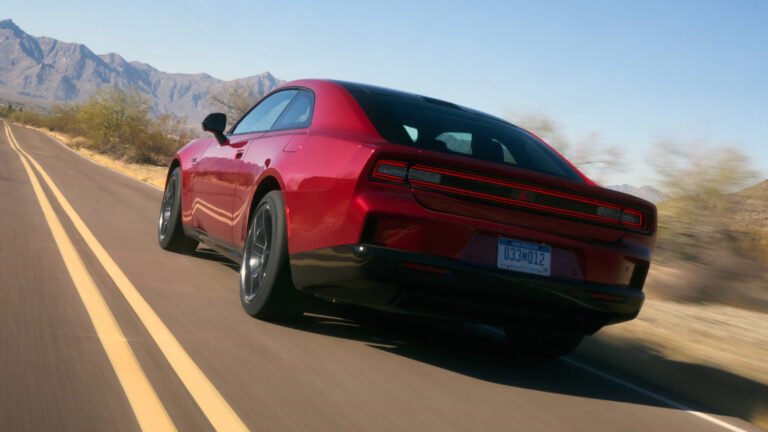
For nearly a decade, I was convinced a Sprinter van was the ultimate adventure vehicle.
I owned three different Sprinter vans over eight years, spent more than 2,000 nights living on the road, and traveled all over North America chasing hiking trails, mountain bike rides, ski trips, and remote campsites.
Then I became a parent.
Last year, my family traded our Sprinter for a Rossmonster Baja Trail expedition truck. Since then, I’ve spent a full year living on the road with my partner, our two-year-old son, two dogs, and all the van life gear that comes along with family travel. We drove from Utah to the southern tip of Baja, crossed the continent to eastern Canada, and spent months camping in deserts, mountains, forests, and beaches along the way.
A lot of people have asked whether I think an expedition-style truck camper is better than a Sprinter.
The answer is no.
After living extensively in both, I’ve come to believe they simply solve different problems.
Before I dive in, it’s worth clarifying that the Rossmonster Baja isn’t representative of every truck camper on the market. The Baja falls into a category often referred to as an expedition truck. Similar vehicles include EarthRoamer, Storyteller Hilt, TruckHouse, GXV, and other fully integrated truck-based campers designed for extended off-grid travel.
If you’re new to van life and trying to decide between an expedition truck and a Sprinter van for extended travel, full-time living, or family adventures, this article is for you. Rather than declaring a winner, I’m sharing the tradeoffs I’ve experienced after living full-time in both and why my preferences have changed over time.
Quick Takeaways
Which is better: Expedition Truck or a Sprinter Van?
If I were traveling solo or as a couple, I’d seriously consider a Sprinter again. It’s easier to drive, easier to park, provides better access between the cab and living space, and can be built around a wide range of budgets.
But for this stage of life, traveling full-time with a toddler, the expedition truck has been a better fit. The extra living space, dedicated sleeping areas, larger water capacity, full bathroom, and family-friendly layout have made day-to-day life on the road significantly more comfortable.
- Choose a Sprinter if you’re a solo traveler or couple who don’t need a lot of space
- Choose an expedition truck if you’re traveling full-time with kids, prioritize comfort, livability, and having a dedicated bathroom.
- If budget is your biggest consideration, a Sprinter will almost always provide more value for the money, unless you can find a used expedition truck.
The rest of this article explains why.
Why I Switched from a Sprinter to an Expedition Truck
The biggest reason I switched wasn’t because I stopped loving van life. It was because my priorities changed.
When it was just Ryan, me, and our dogs, we spent most of our time outside. My 170″ 4×4 Sprinter van was primarily transportation, a kitchen, and a place to sleep. We’d leave camp early, spend the day hiking or exploring, and return in the evening.
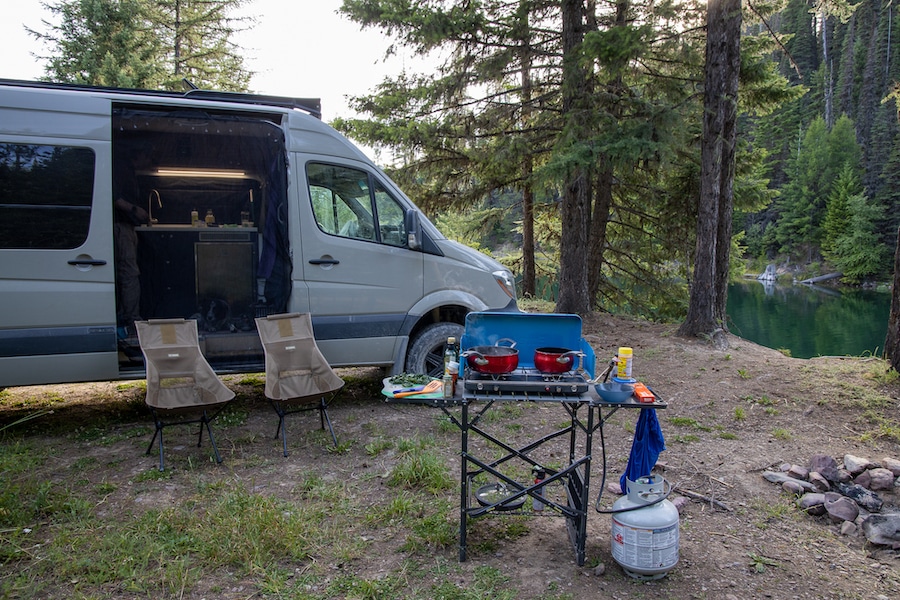
Traveling in a van with a baby looks very different.
There are naps, early bedtimes, more meals, more downtime…and so much more stuff.
As a result, things like a dedicated dinette, separate sleeping spaces, a larger bathroom, and a roomier interior suddenly became much more valuable than they had been during my early van life years.
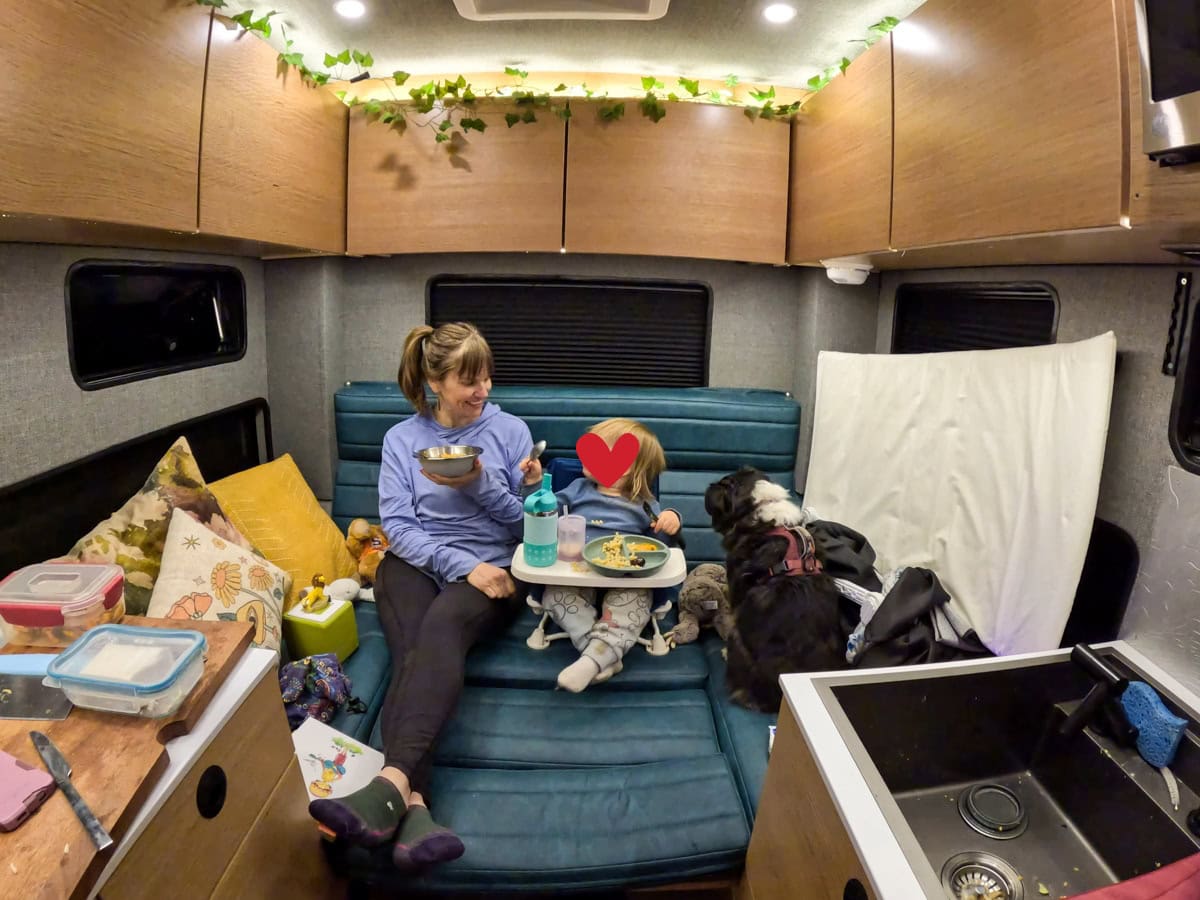
That shift in priorities explains almost every conclusion I’ve reached after spending a year in the Baja Trail.
The Showdown
For those who want the highlights, here’s my quick comparison of where I think each rig comes out ahead. These rankings are based on my personal experience after living full-time in both and reflect the way my family travels today.
Category |
Sprinter Van |
Expedition Truck |
|---|---|---|
|
City Driving |
Winner |
|
|
Highway Driving |
Winner |
|
|
Cab Comfort |
Winner |
|
|
Parking |
Winner |
|
|
Off-Road Driving |
Tie |
Tie |
|
Living Space Comfort |
Winner |
|
|
Big Gear Storage |
Winner |
|
|
Interior Storage |
Winner |
|
|
Water Capacity |
Winner |
|
|
Cab Pass-Through |
Winner |
|
|
Stealth Camping |
Winner |
|
|
Cost |
Winner |
Driving and Handling
One category where the Sprinter still has a clear advantage is everyday driving and maneuverability.
The seating position provides excellent visibility. As someone who is 5’5″, it’s easier to see over the hood in the Sprinter, and it feels surprisingly manageable for such a large vehicle. In cities, parking lots, and tight trailhead parking areas, the Sprinter feels more like a large SUV than a commercial vehicle.
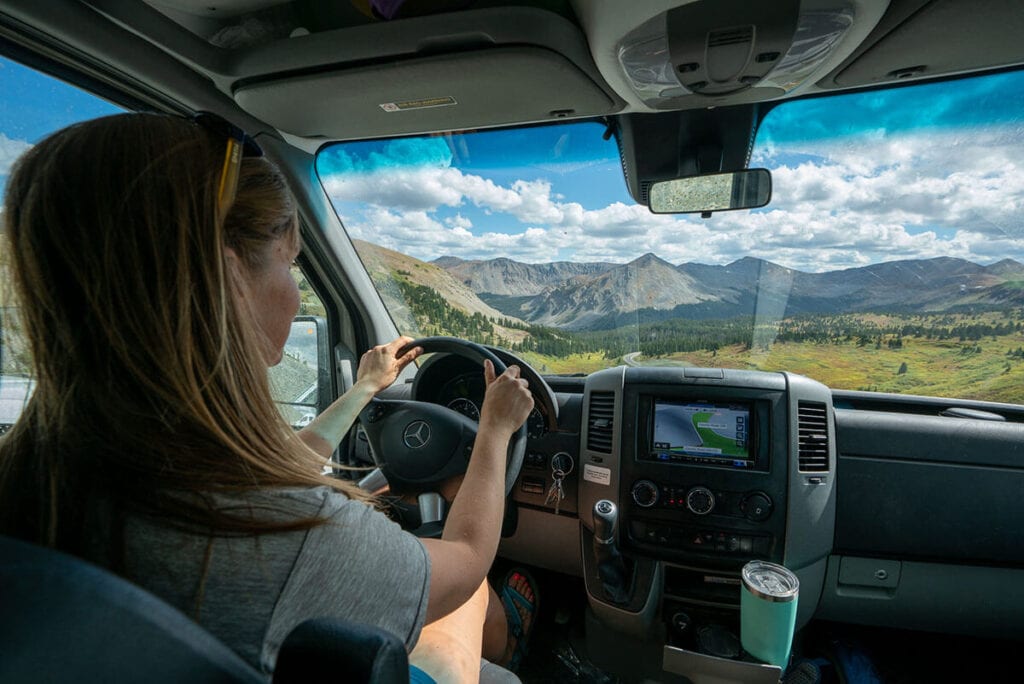
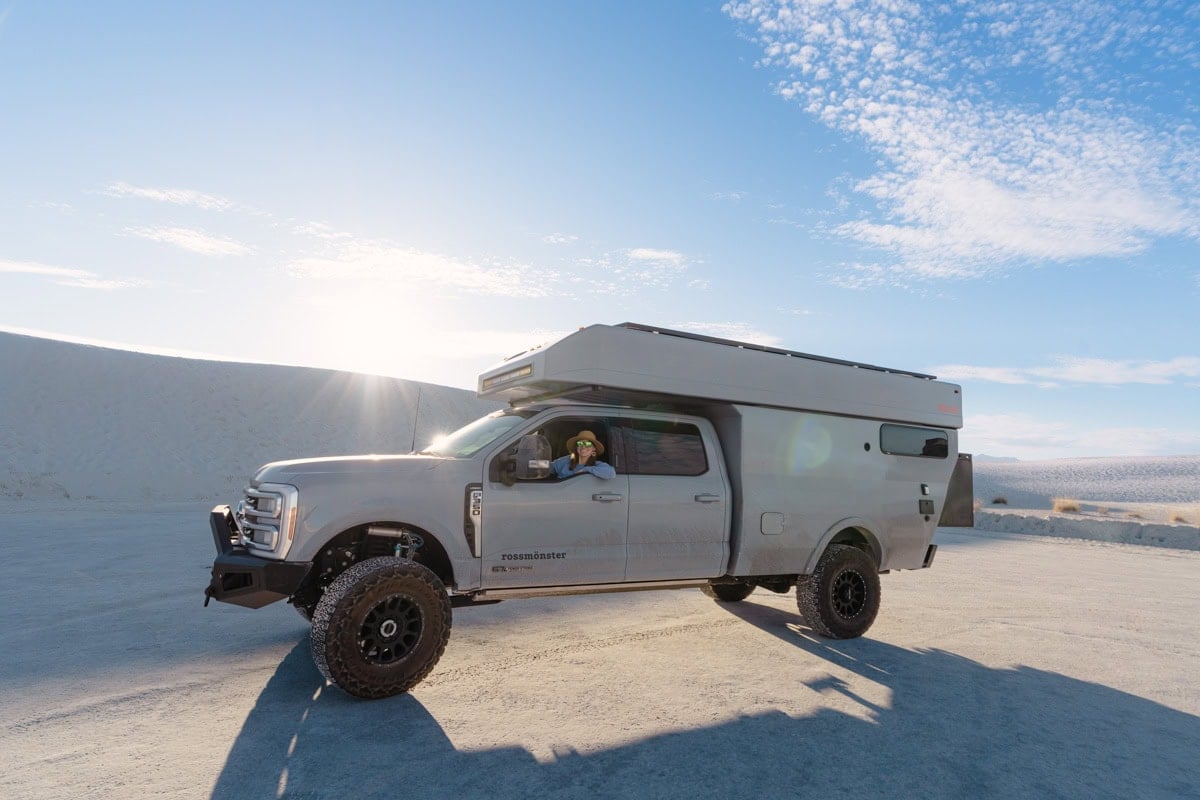
The Rossmonster Baja, on the other hand, definitely feels like a big truck.
It’s wider and feels more substantial from the driver’s seat. While I adapted quickly, I still find city driving easier in a Sprinter. I’d be lying if I said I didn’t make Ryan do most of the driving (which was not the case in my Sprinter Vans).
Where the Rossmonster Baja shines, however, is on the highway.
The Ford F-350 has significantly more power than any of my Sprinters did. Long mountain grades that would have my Sprinter floored and working hard barely faze the truck. Acceleration is noticeably quicker, merging is easier, and the truck feels more relaxed at highway speeds.
The wider stance also contributes to a more stable feel on pavement, especially in windy conditions. Further, the truck is about a foot shorter than a high-roof Sprinter when it’s in drive mode (this is not the case with a lot of other expedition trucks).
Another thing I didn’t fully appreciate until becoming a parent is how much I value having everyone ride in the truck cab. While I never felt unsafe in my Sprinter Vans, I do like the fact that our son is riding in a factory-designed passenger area rather than directly underneath overhead cabinets and storage compartments.
Off-Road Capability
People are often surprised when I say this, but I think this category is much closer than many people expect.
My second Sprinter had a Van Compass suspension system, and we took that van places most people wouldn’t consider taking a van. We crossed Cinnamon Pass in Colorado, explored countless remote desert roads throughout Utah, and spent years seeking out dispersed campsites far from pavement.
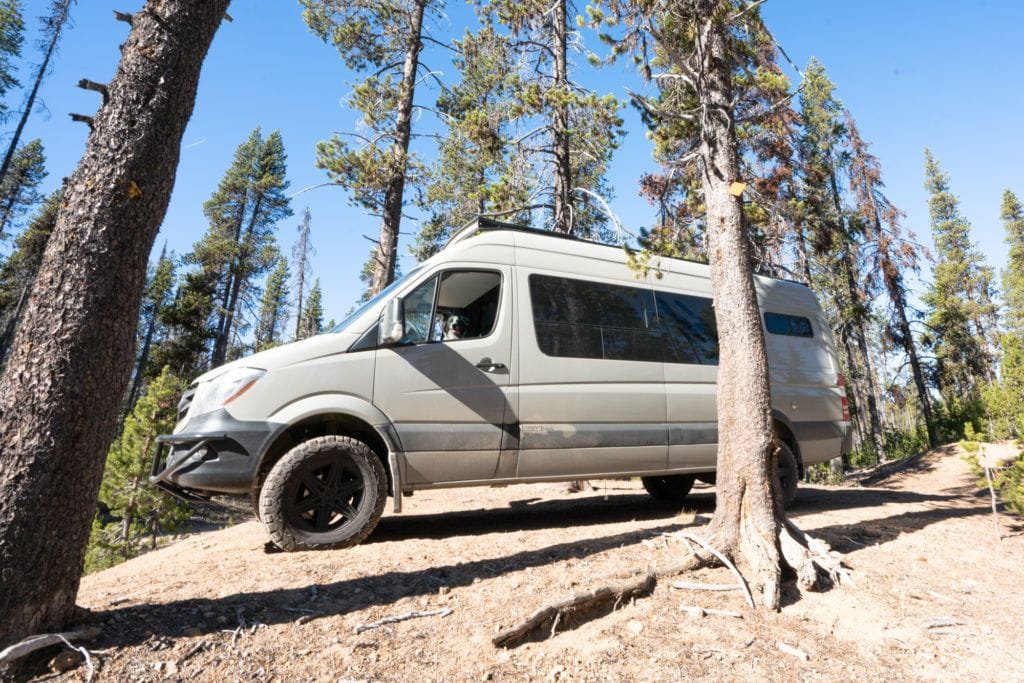
The van performed beautifully, and I rarely felt limited by it…other than the time we had to back down Ophir Pass after getting stuck in a big shale rut. Whoops!
One advantage of the Sprinter is its narrower width and surprisingly tight turning radius. On narrow forest roads, overgrown tracks, and tight switchbacks, it can actually feel more maneuverable than the Baja. We also never had to worry as much about tree branches brushing the sides of the vehicle.
The Baja does have some advantages. The truck sits higher, rides on larger 37-inch tires, has more ground clearance, and offers significantly more power. On steep climbs and rough roads, the truck feels more confident and requires less effort to get through challenging terrain. The larger tires also do a better job absorbing washboards, potholes, and rough roads, which can make long dirt-road approaches more comfortable.
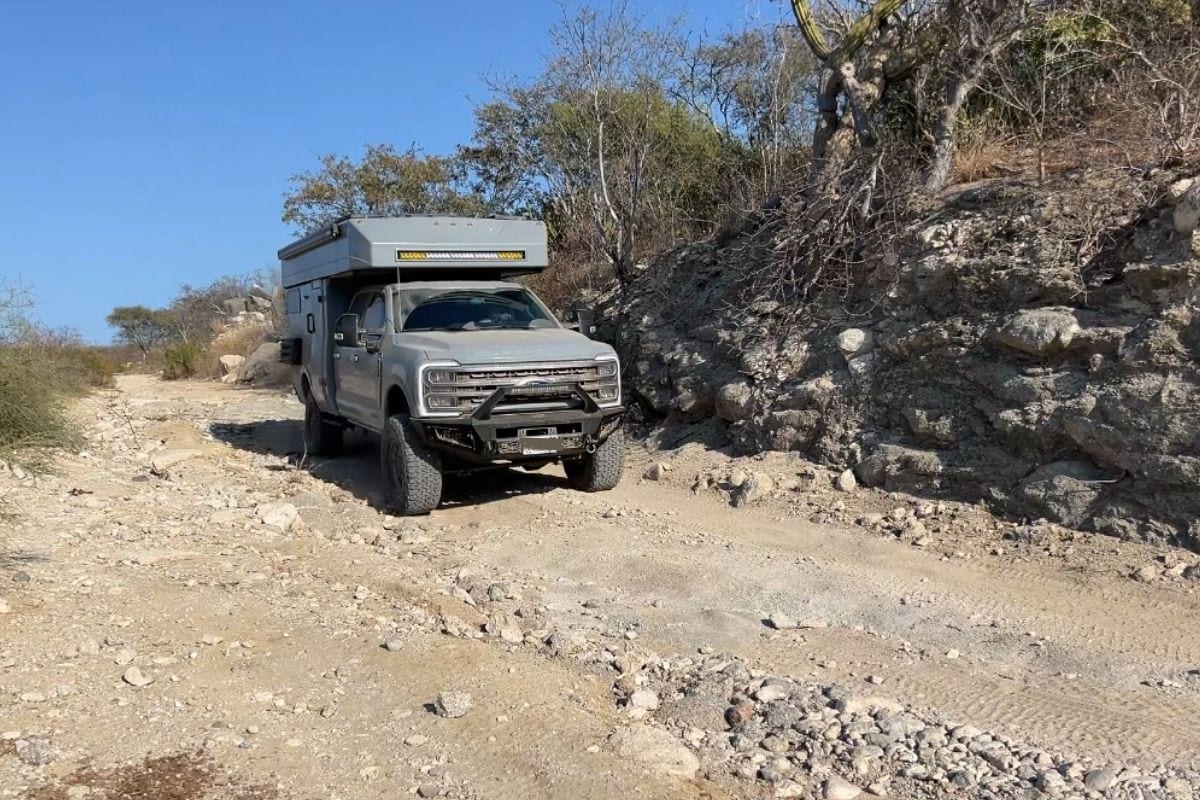
That said, I don’t think off-road capability is determined by the chassis alone. The quality of the build, the overall weight of the vehicle, tire choice, and suspension setup all play a major role.
A lightweight Sprinter build with upgraded suspension may perform better off-road than a much heavier expedition truck. In either case, I think upgraded suspension that’s properly tuned to the weight of the vehicle is one of the best investments you can make.
One thing I didn’t anticipate with the Baja is that while the truck itself feels incredibly capable, you can still feel the camper box moving behind you on rough roads. That’s not a knock on Rossmonster – it’s simply the reality of driving a truck with a fully built camper attached to the back. Because of that, we still find ourselves slowing down and picking careful lines through rough terrain rather than charging through obstacles.
At the end of the day, both of these vehicles are heavy. Neither drives like a lightweight Tacoma with a Four Wheel Camper. Neither is a rock crawler or designed for hardcore overlanding. If your goal is high-speed desert driving or highly technical off-roading, there are better vehicles for the job.
For the type of travel I enjoy – reaching remote campsites, exploring backroads, and spending time on public lands – I’d call this category a tie. The Baja has advantages in clearance, tire size, and power, while the Sprinter benefits from its narrower footprint and tighter turning radius.
Freebie!
Van Life Packing Checklist
Get this free PDF that will help you pack up your van in a jiffy.
Sign me up!
Living Space and Day-to-Day Comfort
This is where I noticed the biggest difference between an expedition truck vs a Sprinter Van.
When you’re traveling as a couple, a 170″ wheelbase Sprinter can feel surprisingly spacious depending on your van’s layout.
Once you add a child, however, every square foot starts working overtime. The difference is what you have to give up to make room for it.
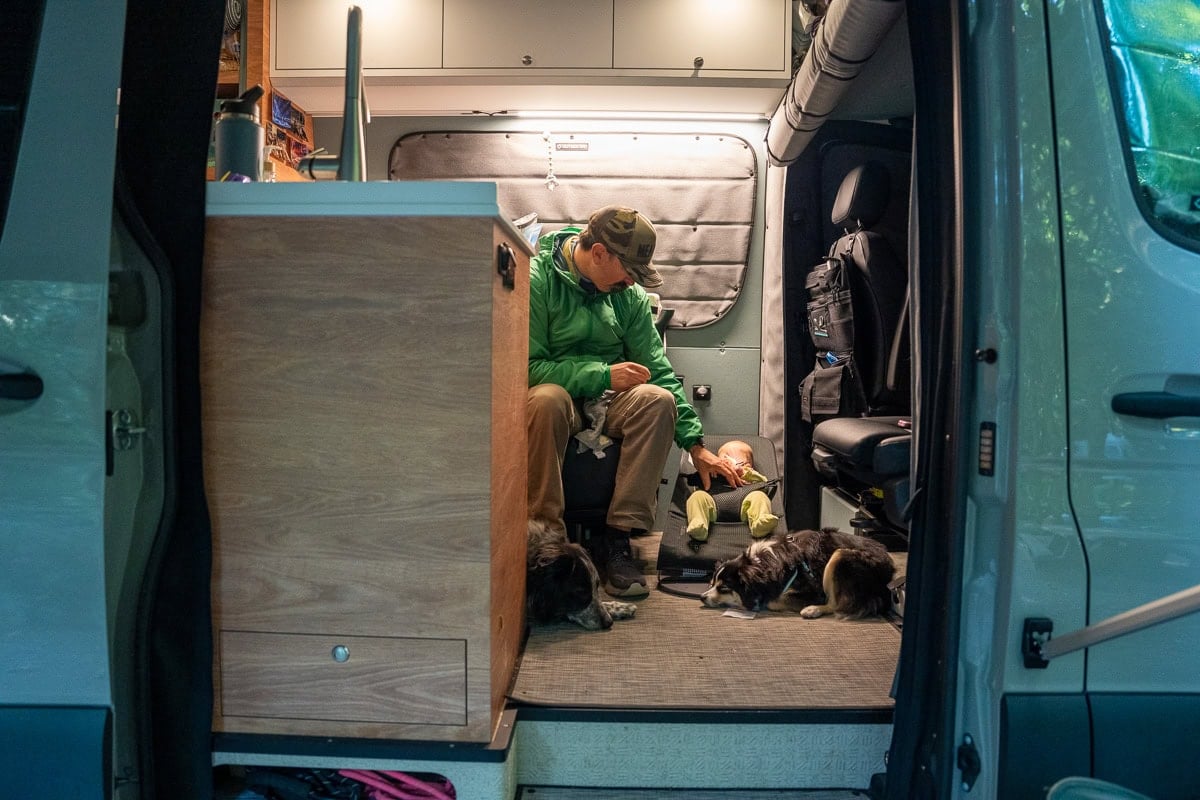
In a van, every major feature comes with a compromise. A larger bathroom might mean less kitchen space, less seating, less storage, or a more cramped overall layout.
One of the biggest advantages of the Baja Trail is the extra interior width. On paper it doesn’t sound like much, but it makes those tradeoffs feel much less severe.
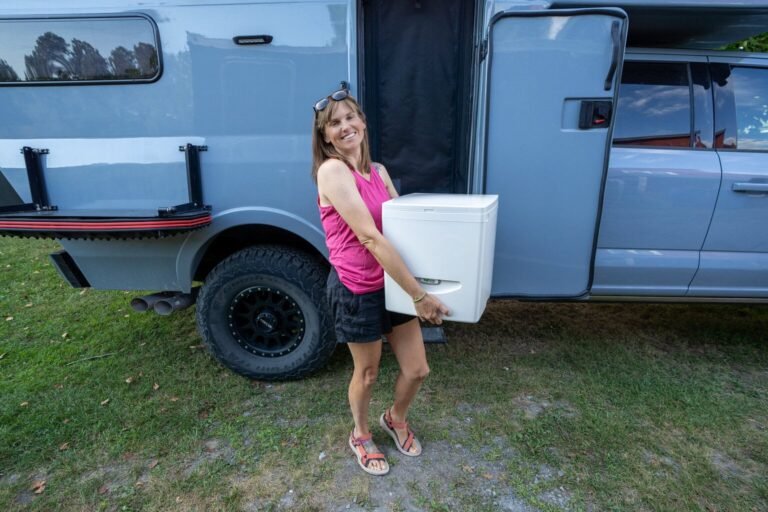
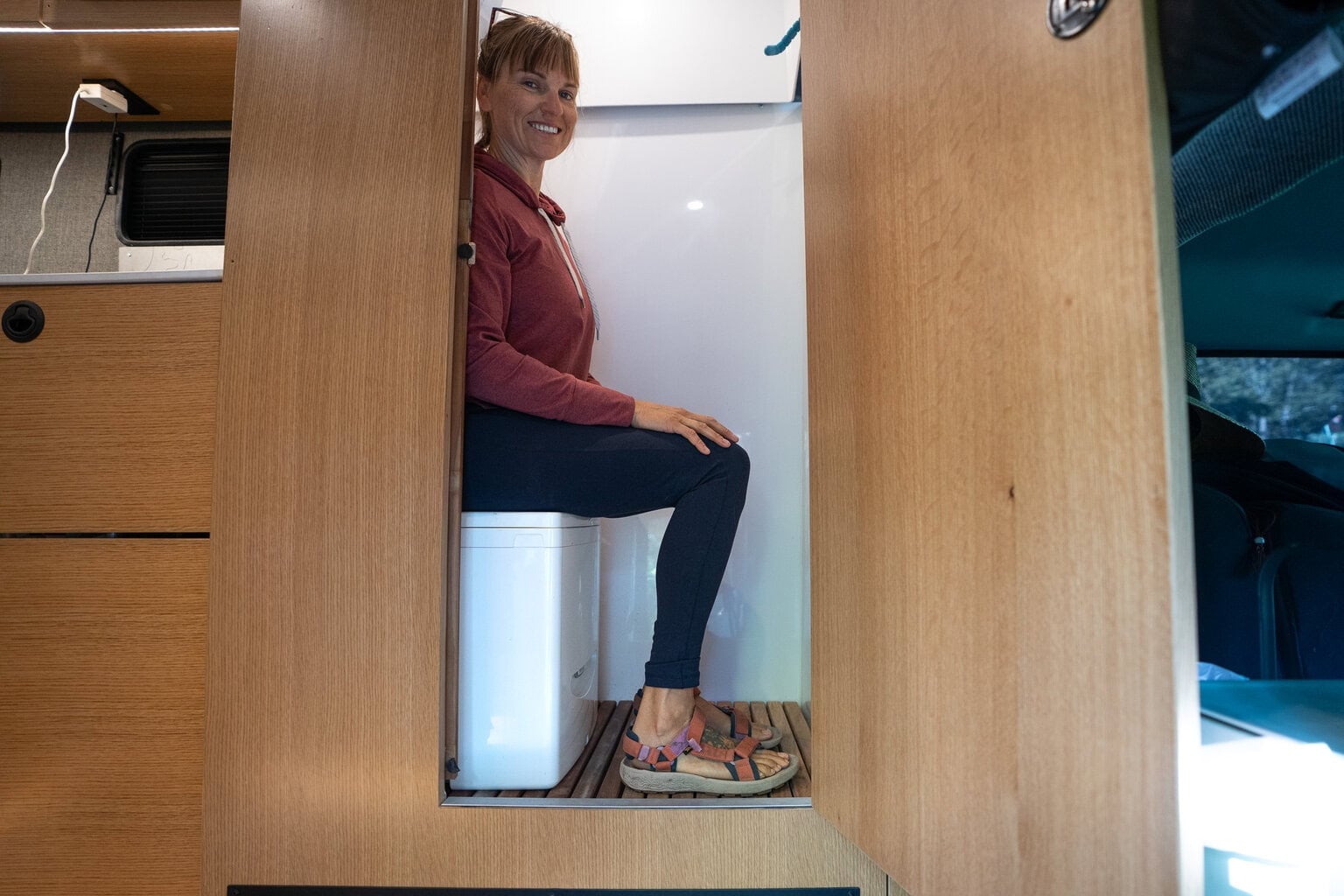
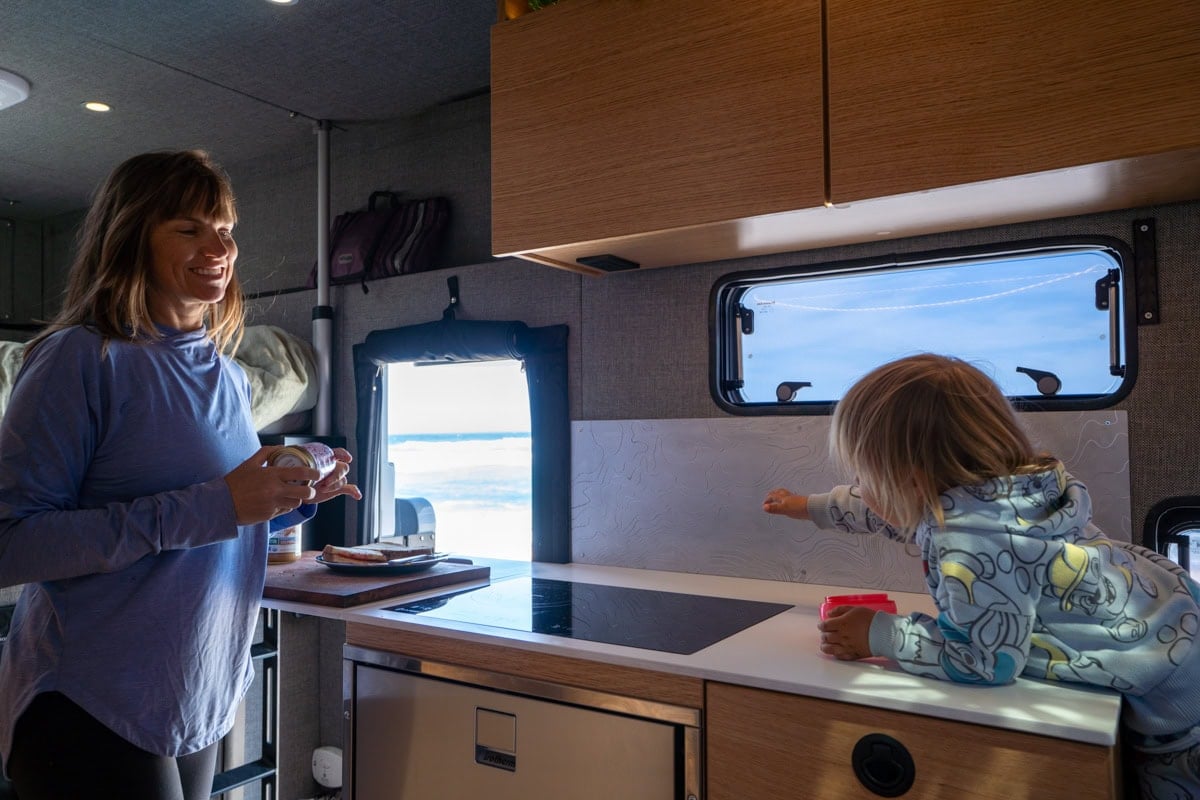
My Baja Trail has a dedicated dinette, a full bathroom with a shower and Cuddy composting toilet, a permanent bed, a spacious galley, and a separate sleeping area for our son.
And as crazy as this might sound, we (including our 2 dogs) can all be hanging out in the camper without feeling like we are stepping on each other’s toes. That wasn’t always the case in our Sprinter, especially on rainy days.
The overall flow simply works better for family travel. It’s also great for couples who work remotely and want a dedicated work area that doesn’t have to double as a bed.
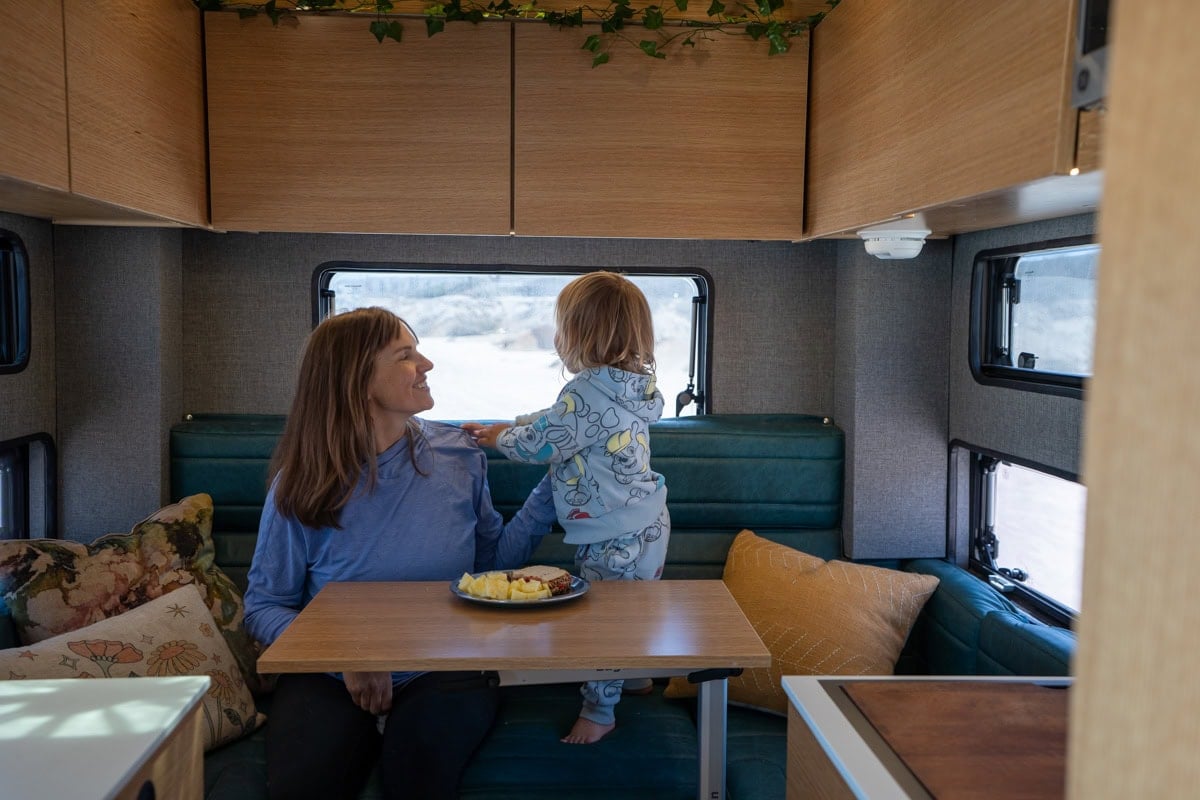
The dinette has become one of our most-used spaces, and many days we just leave it in lounge mode so we have a large, comfy area to relax. It’s where we eat meals, work on rainy days, and where our son sleeps each night.
Traveling with a toddler has also changed how I think about bathrooms. Being able to quickly use the toilet, rinse off after a muddy hike, or clean up after a beach day without rearranging the entire camper has made life on the road noticeably easier. And it’s especially nice that it doesn’t feel like the bathroom has to come at the expense of something else in our living space.
Sleeping Arrangements
The sleeping setup between a Sprinter vs expedition truck is fairly comparable for couples, but the biggest difference shows up when you’re traveling with more than two people.
In my second and third Sprinter Vans, I designed them with a standard platform bed with storage underneath. It was great for us to be able to pull over anywhere and hop into bed.
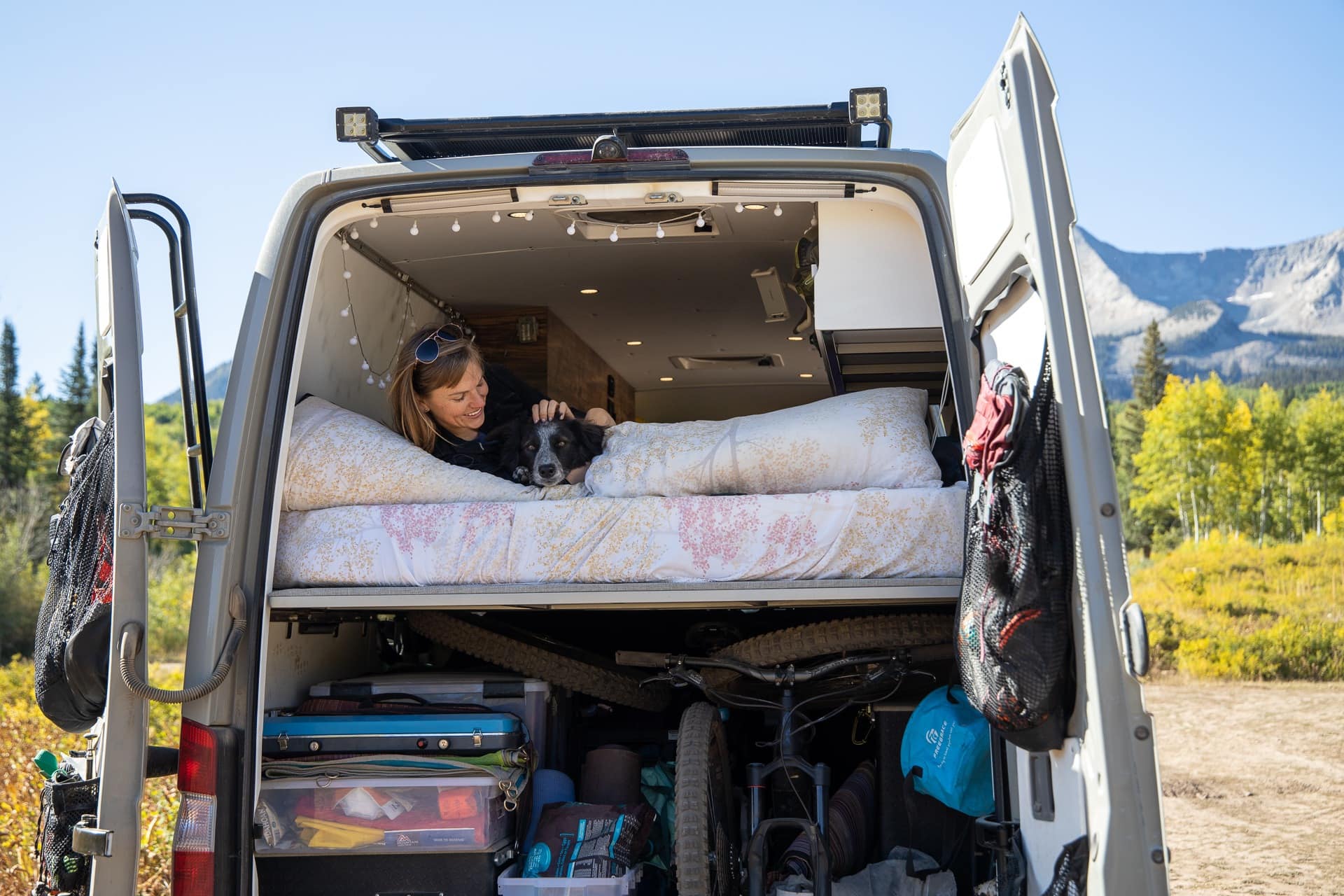
When our son was born, the limitations of a Sprinter Van became abundantly clear. The hassle of setting up his bed every night (and how much it disrupted our ability to be awake in the van after bedtime) was one of the big reasons I decided to sell that van.
The big caveat here is that my son was an infant at this stage, and once kids are out of a crib, there are much easier setups for Sprinter Van family living. Rooftop tents with access from inside the Sprinter are becoming a lot more common these days, and that’s a setup I would consider.
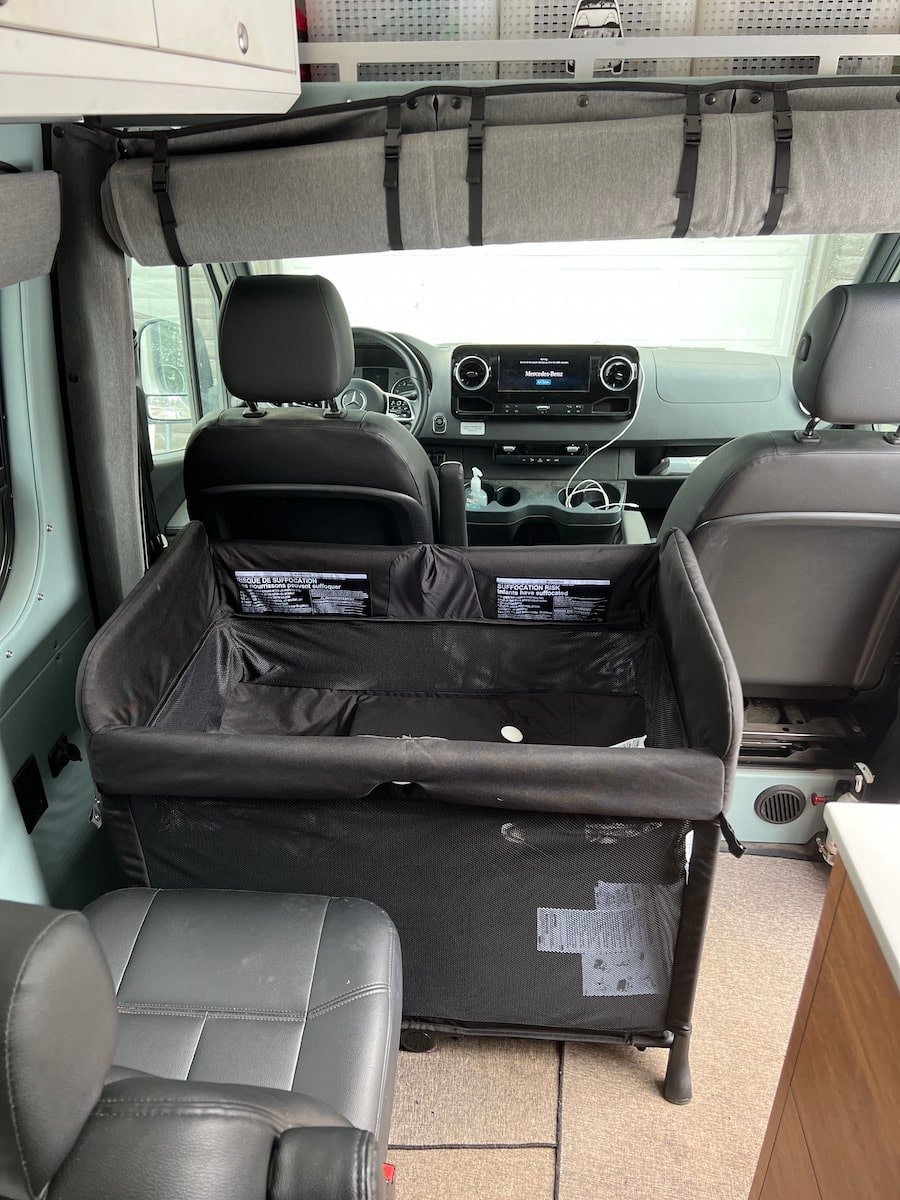
In the truck, our son sleeps on the converted dinette, while Ryan and I sleep in the cabover bed. A blackout curtain separates the spaces, allowing us to continue moving around after bedtime without worrying about waking him up. It still takes time to set up and take down every day, but at least we can all co-exist and move around in the truck after he’s asleep.
For families traveling long-term, this expedition truck setup has been one of the biggest improvements over my Sprinter.
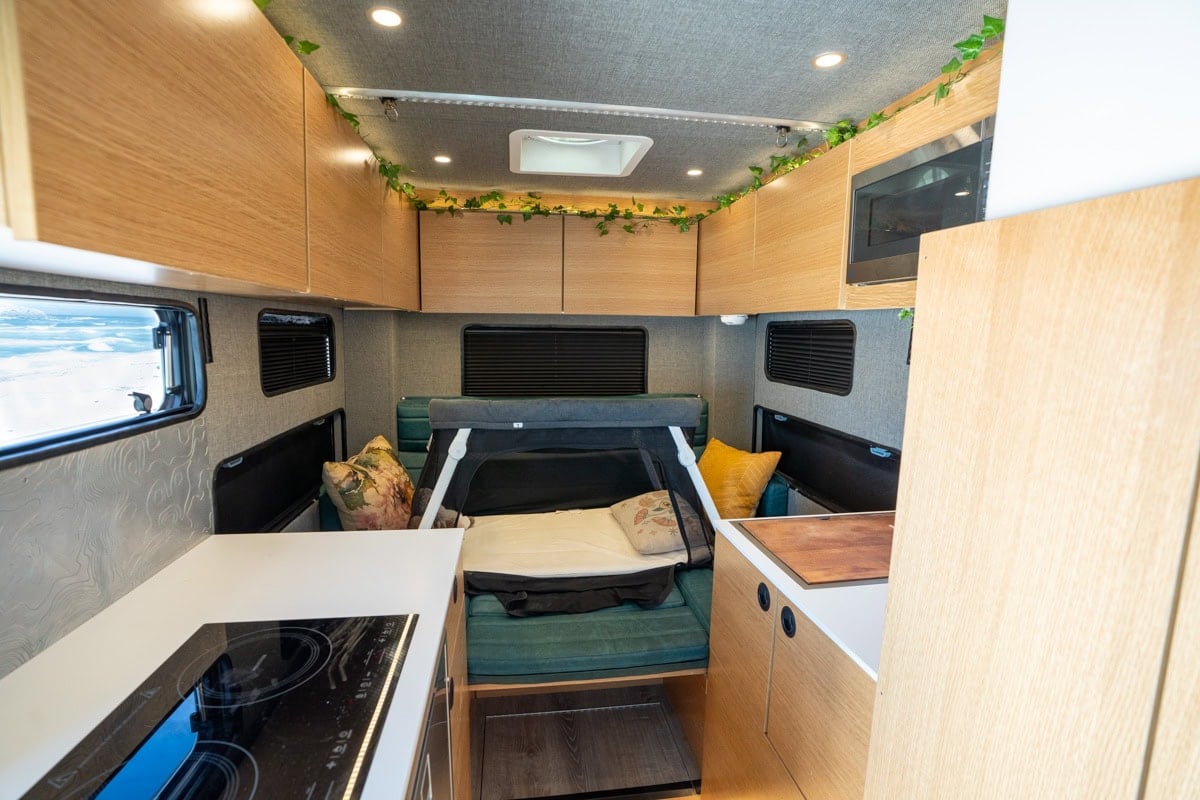
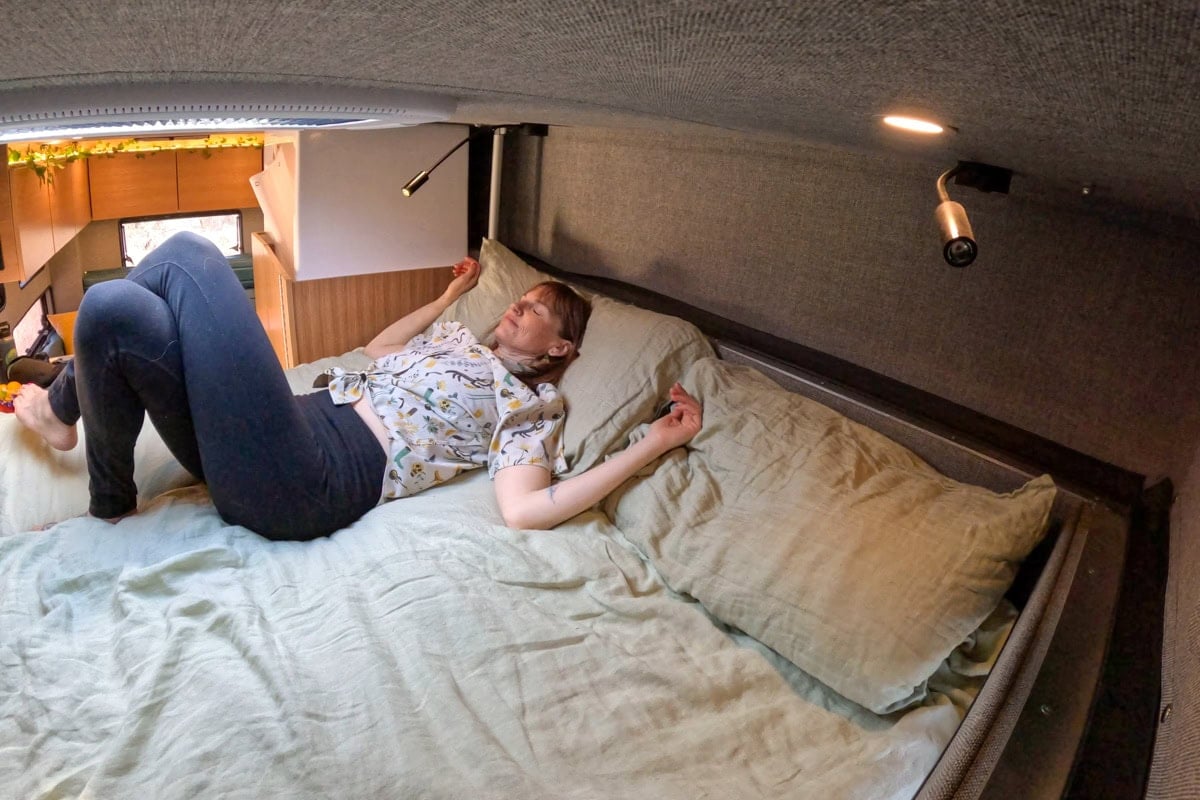
It’s also worth mentioning that the Baja’s interior height makes the camper feel surprisingly spacious. Taller travelers who feel cramped in some vans may appreciate the additional headroom and openness.
Water Capacity and Off-Grid Living
One of the most practical differences between the two setups is water capacity.
Most Sprinter conversions carry somewhere around 20 to 25 gallons of fresh water. Some carry more, but that’s a fairly common range.
My Baja carries 40 gallons.
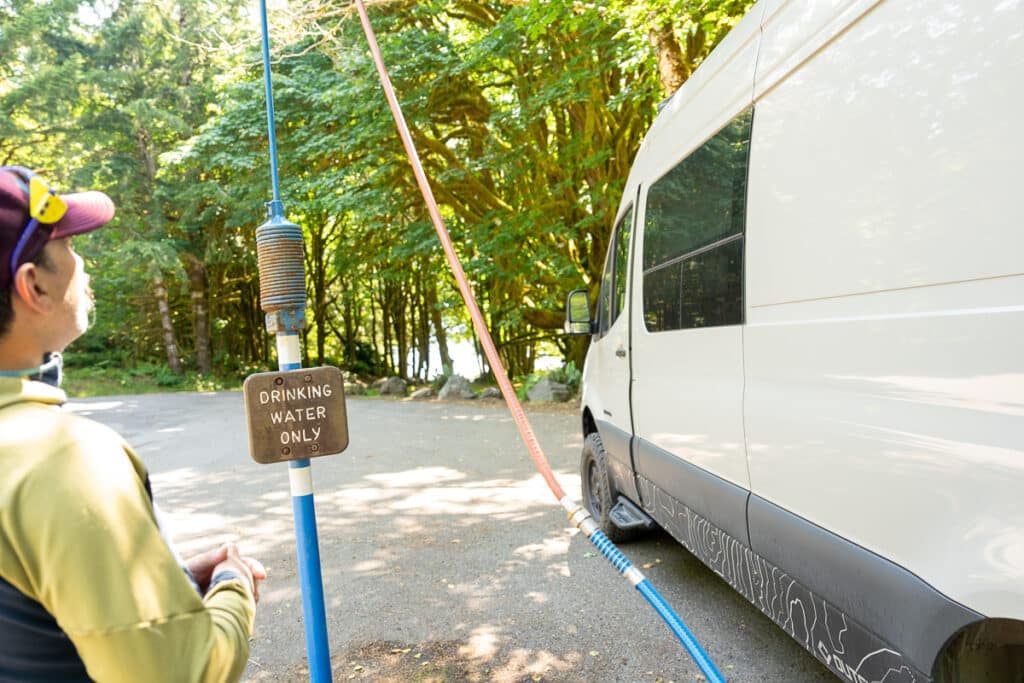
That may not sound like a huge difference, but in daily use it’s significant.
When I traveled solo or as a couple, 20 to 25 gallons felt manageable. But once you start traveling with multiple people, where you have more dishes, handwashing, and showers, the water disappears much faster than you expect.
This is one reason I’ve become less convinced that an indoor shower is a good use of space in a Sprinter. You can absolutely build one, but if you’re only carrying enough water for a few days of regular shower use, you may find yourself constantly searching for the next refill.
With 40 gallons in the truck, I spend much less time thinking about how to conserve my water and can comfortably stay off-grid for longer periods.
Pass-Through vs Walk-Through Access
One thing I underestimated when switching from a Sprinter was how much I would miss moving freely between the cab and living area.
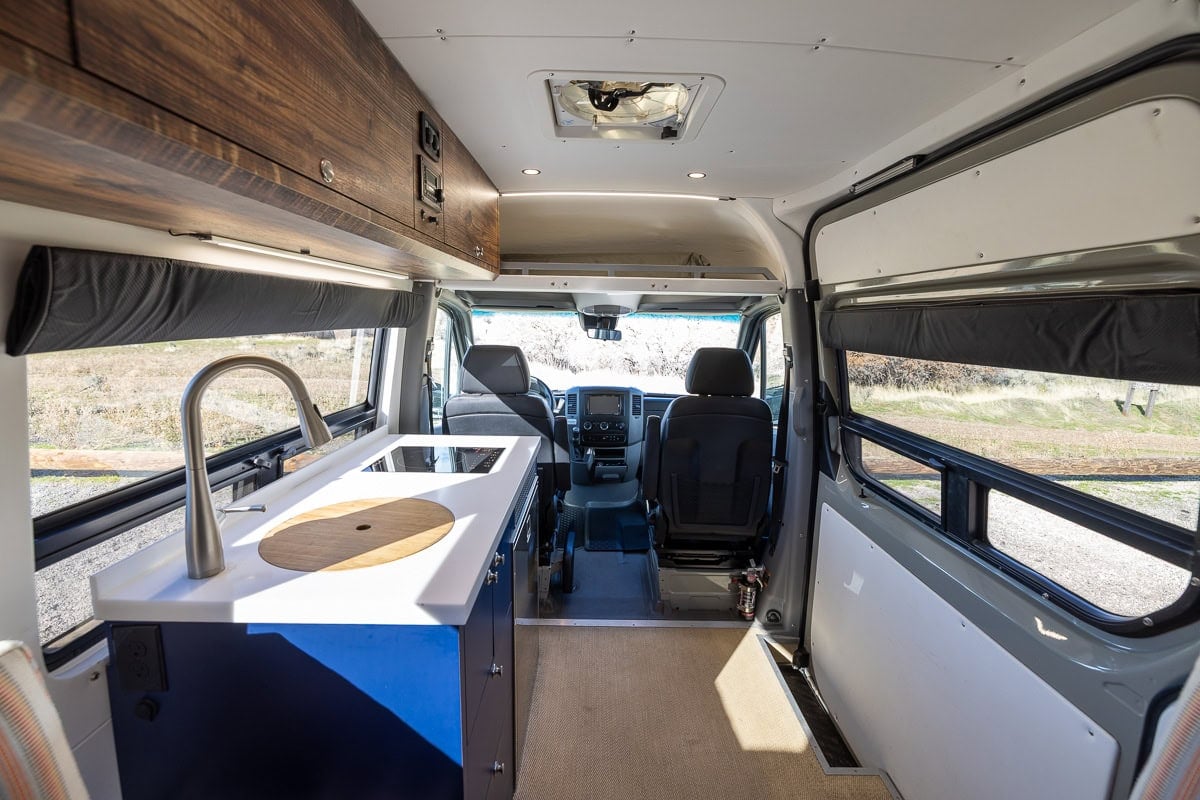
In a van, everything is connected. If I want a snack, a jacket, a camera battery, or a drink from the fridge, it’s all within reach. I could so easily hop back there while Ryan was driving, that I never thought twice about it.
Like most expedition-style truck campers, the Rossmonster Baja Trail does have a pass-through between the truck cab and camper, which was one of the features that attracted me to it in the first place.
The pass-through definitely works. Our son uses it. The dogs use it. And I’ll be honest, that alone is huge.
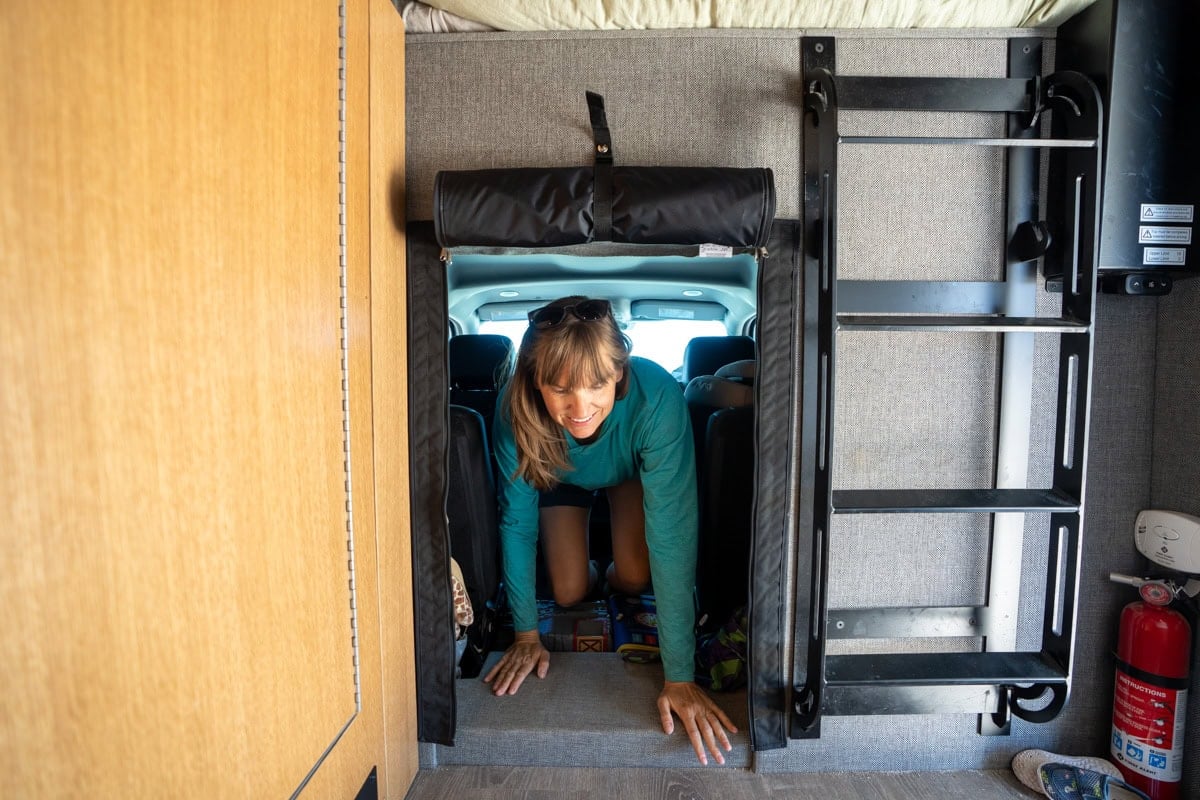
I can also crawl through it when we are driving or if I need to access something in the cab at night and don’t feel like going outside.
But in reality, you aren’t casually walking back to the fridge to make a sandwich while someone else is driving down the highway.
The pass-through is 100% better than no access at all, but it doesn’t replicate the easy experience of a walk-through van.
Storage
Storage is one category where neither setup is a clear winner. They’re simply optimized differently.
Sprinter Storage Advantages
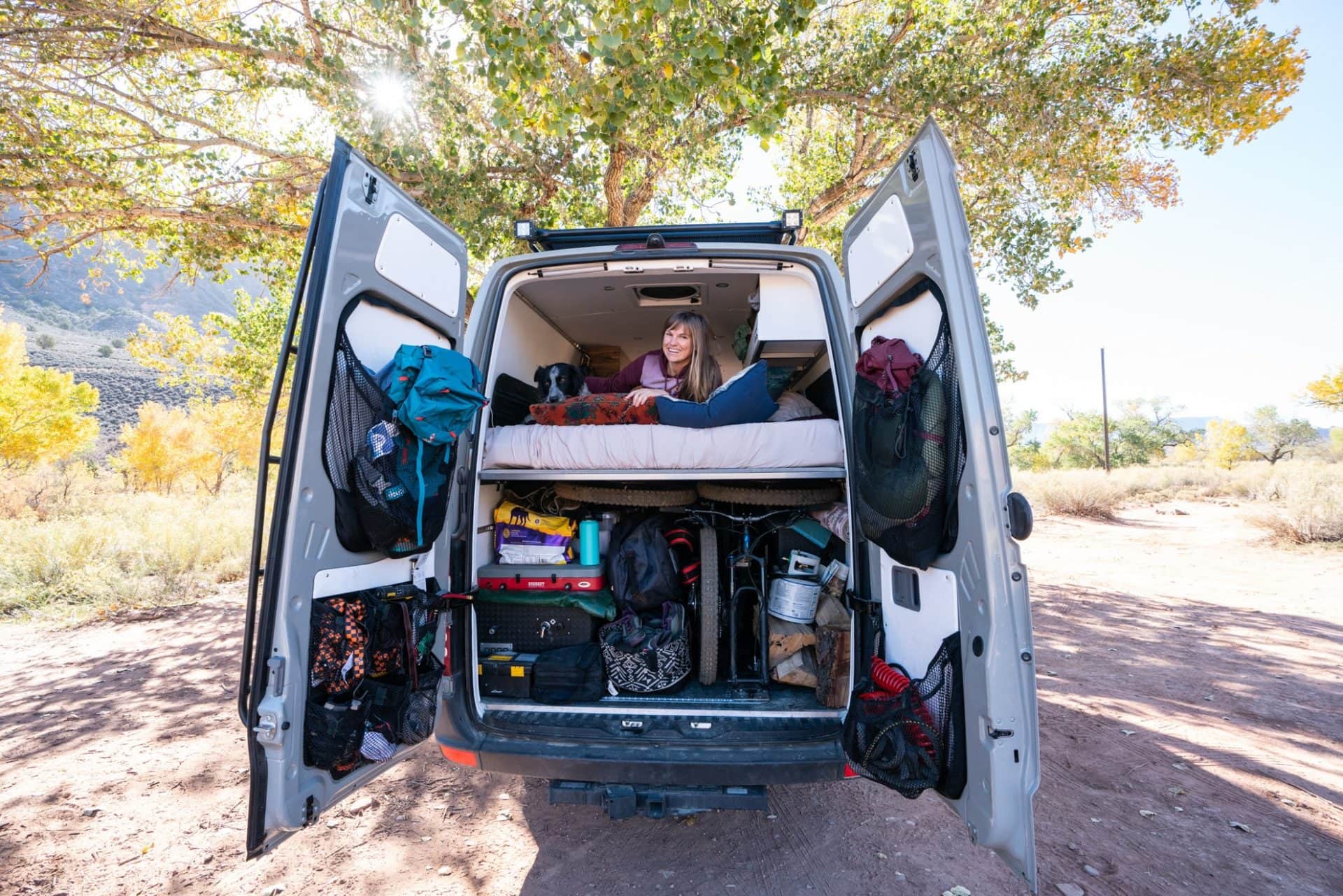
One of the biggest benefits of a Sprinter is the garage underneath a platform bed.
That space can swallow a ton of essential van life gear that is difficult to store elsewhere.
For example:
- Bikes
- Ski gear
- Large bins
- Camping equipment
- Folding furniture
Many van layouts also allow you to customize storage around your specific hobbies and priorities. We were able to fit 2-ebikes, backpacking gear, a paddle board, and more underneath the bed in my Sprinter Van.
Baja Trail Storage Advantages
Compared to most Sprinter vans, I’d say the Baja Trail has more ample storage for smaller, everyday items that you need quick access to.
We have overhead cabinets throughout the camper, drawers in the galley, bathroom storage, clothing storage near the bed, plus large exterior storage boxes. Of course, we had those in my Sprinter Van too, but I think it’s even more plentiful in the truck.
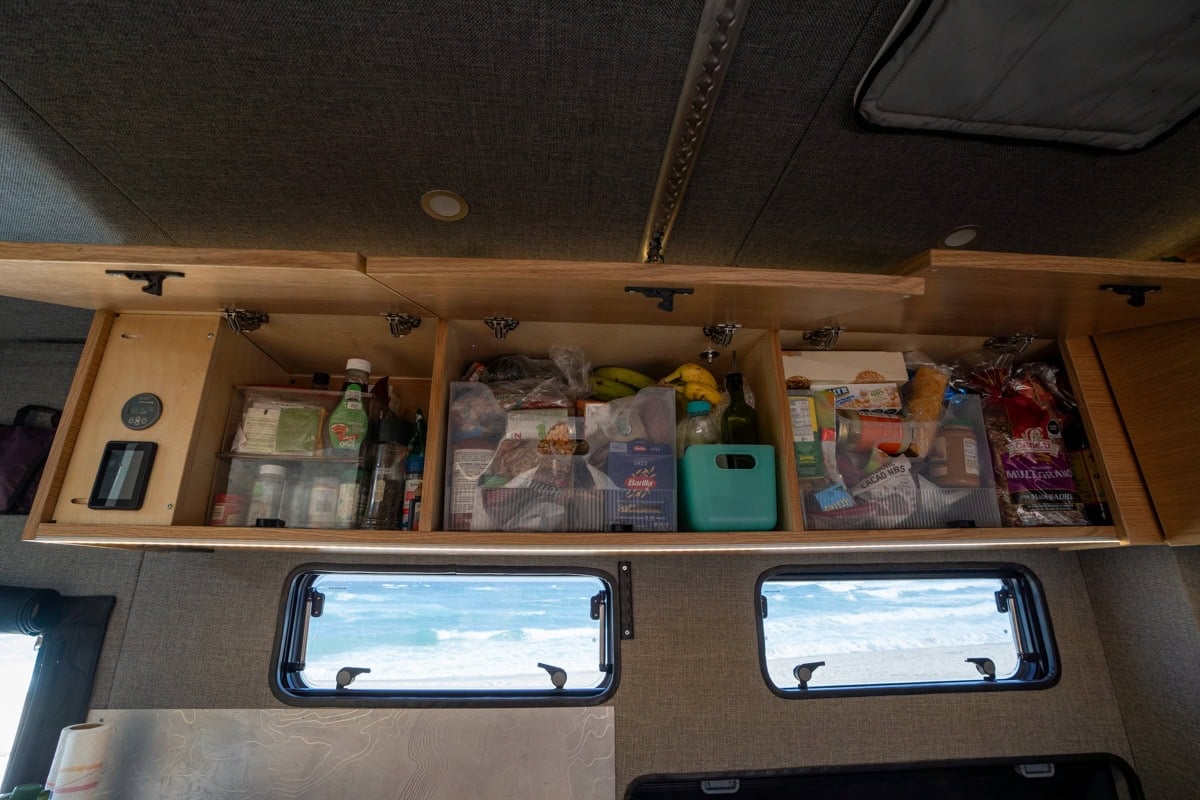
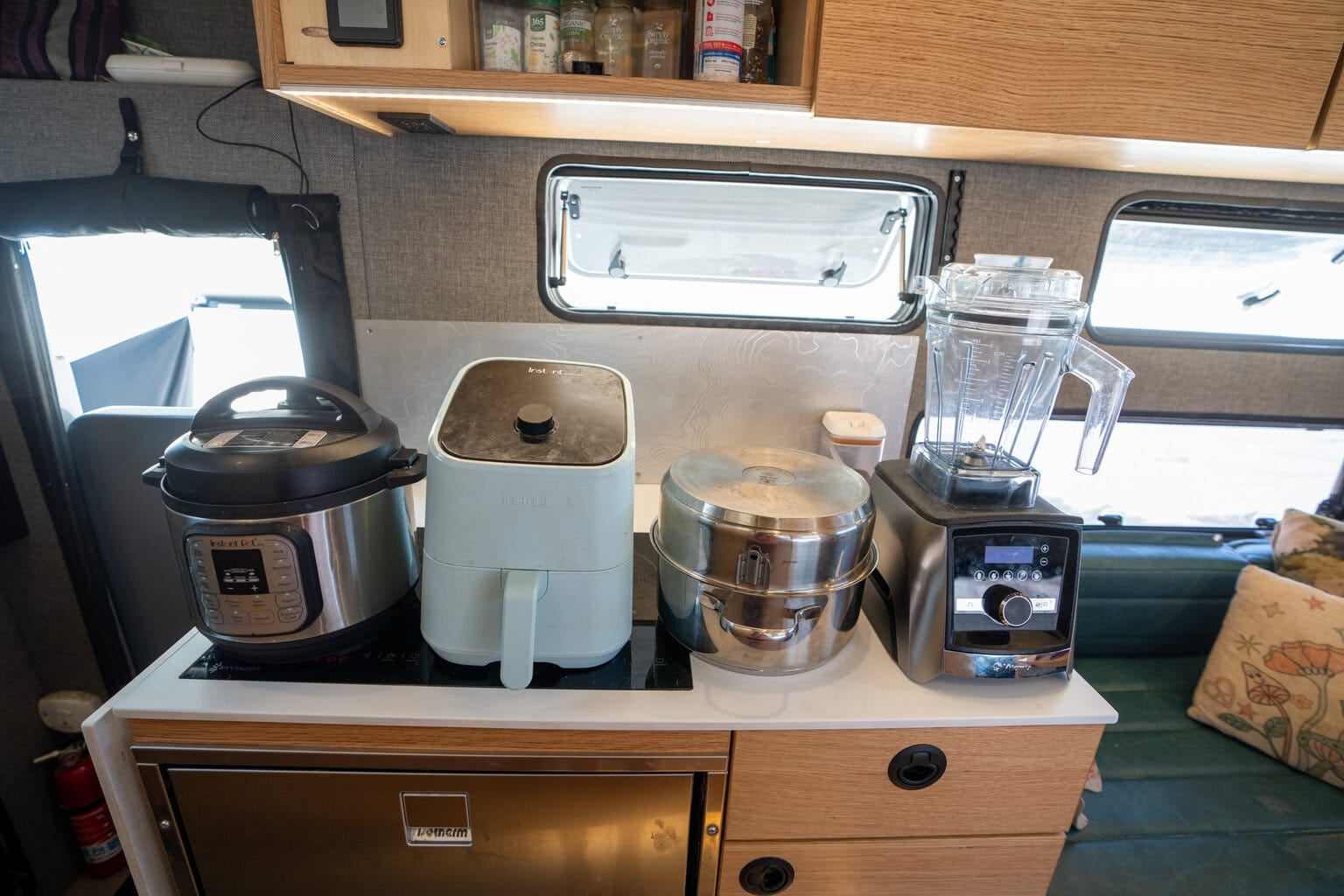
The interior cabinets in the Baja are large enough to store all of our cooking appliances, including our Vitamix, Instant Pot, air fryer, and cookware, making them easy to grab whenever we need them. In our Sprinter, those bulkier items would have lived in the garage, which meant digging them out every time we wanted to use them.
Baja Trail Storage Disadvantages
The biggest challenge in the Rossmonster Baja is large gear storage.
While the exterior boxes are spacious, they’re not as flexible as having a giant garage underneath a van bed.
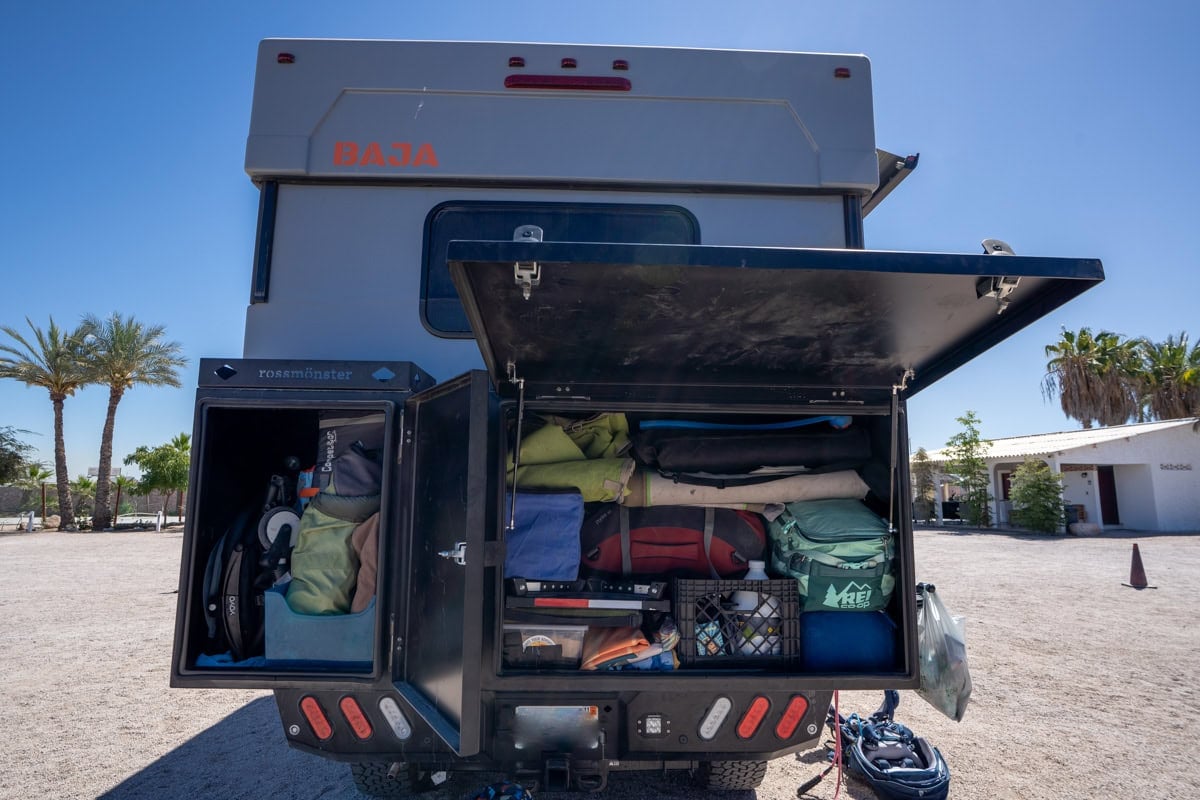
We struggled to find good homes for some larger items, particularly our child carrier backpack. For a period of time, that ended up riding inside the truck cab.
We also haven’t been traveling with our e-bikes as we did in my Sprinter Van. It is possible to mount bikes to the top of the exterior boxes on the back of the Baja, but that seems like a hassle to me, given the box’s height.
The backseat of the truck can hold a surprising amount of gear if you’re traveling as a couple. But if you’re traveling with kids or dogs and want to maintain access to the pass-through, that space fills up quickly.
The caveat is that all expedition trucks are set up differently when it comes to storage, so this limitation is one you’d have to evaluate depending on what brand of camper you plan to get.
Camp Setup and Stealth Camping
One area where the Sprinter still has an advantage is simplicity. When you arrive at camp, there’s very little to do. Put it in park, swivel the seats if you have them, and you’re essentially done.
The Baja’s power-operated pop-top only takes about 30 seconds to raise or lower, but it’s still one additional step when arriving at camp and another before driving away. That’s the trade-off for the additional headroom and the lower driving profile.
The Sprinter also attracts less attention. I don’t think modern camper vans are particularly stealthy anymore – especially if they have windows, roof accessories, awnings, and obvious camper features – but they generally blend in more than an expedition truck.
The Baja turns heads everywhere we go. Fuel stations, grocery store parking lots, trailheads, and campgrounds – people constantly stop to ask questions about it. Since this is what I do for a living, I don’t mind, and it’s actually been a fun way to meet people.
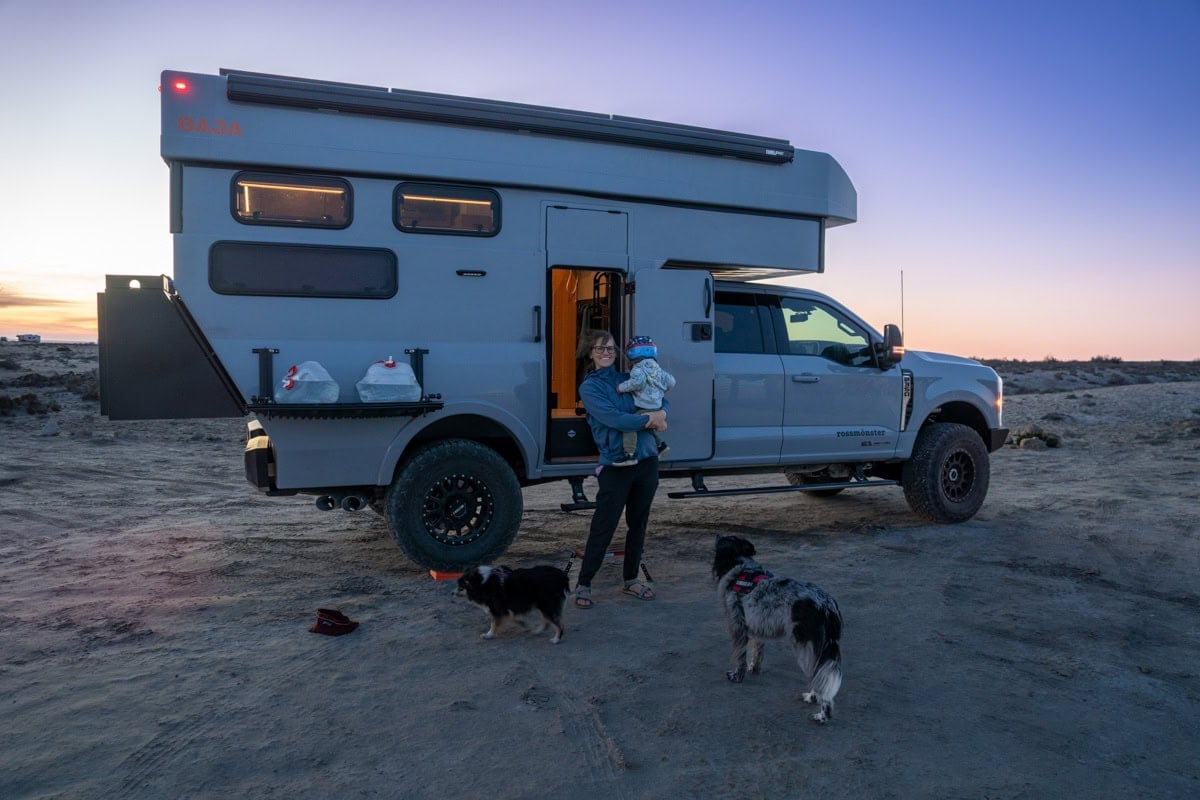
That said, this hasn’t been a major factor for me. As a family doing road life with 2 dogs, my days of stealth camping are long gone. Most of my camping is done on public lands, in campgrounds, or in places where I’m not trying to hide the fact that I’m spending the night.
Cost
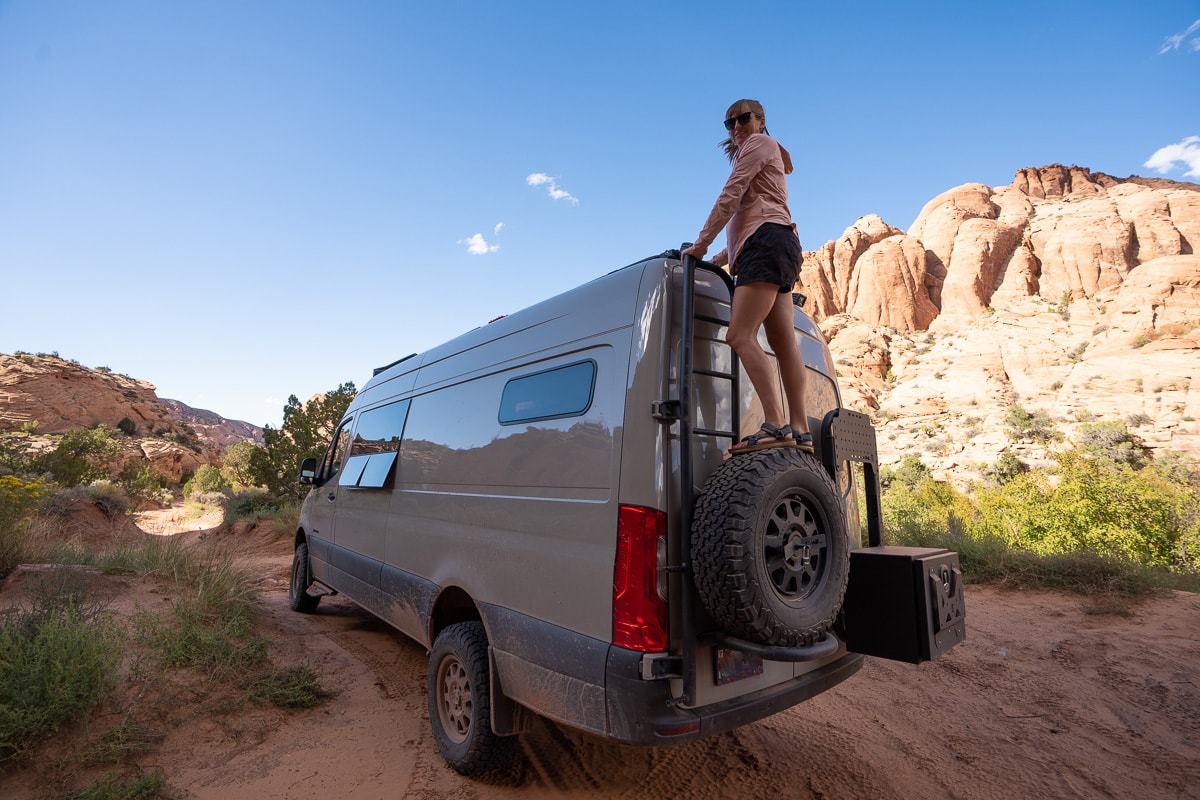
Let’s address the elephant in the room: neither of these options is inexpensive. I’ll be honest, it’s been pretty shocking to see how much the prices of adventure vehicles have skyrocketed since I got my first van in 2015.
A new AWD Sprinter cargo van generally starts somewhere between $60,000 and $80,000 before any conversion work is done. From there, you can build it out yourself, complete the conversion in stages over time, or hire a professional builder. Depending on the complexity of the build, a professionally converted Sprinter can easily cost anywhere from $150,000 to well over $300,000. The biggest advantage of a van, apart from being less expensive, is that you can design the van around your budget.
Like other expedition trucks, the Rossmonster Baja sits in a different category. New Baja models currently start around $380,000 (including the truck chassis) and can climb substantially depending on options and upgrades.
The Rossmonster is also RVIA-certified, which can make financing and insurance easier than a self-built van or a conversion from a van builder that isn’t RVIA-certified.
At the end of the day, budget is one of the most important factors to consider when choosing between a camper van and an expedition truck. While it’s easy to get caught up comparing features, floor plans, and capabilities, the reality is that both can provide incredible experiences on the road.
Rather than asking which vehicle is “better,” I think the more useful question is whether the additional cost aligns with how you actually travel. If you’re a solo traveler or couple who spends most of your time outside, it’s hard to argue that spending hundreds of thousands more will dramatically improve your experience.
On the other hand, if you’re traveling full-time with kids, spending extended periods off-grid, or prioritizing comfort and livability, the added space and amenities may be worth the investment.
One way to reduce the cost of an expedition truck is to buy used. While the market is much smaller than the Sprinter van market, used expedition trucks do come up for sale every so often. Depending on the age, mileage, and builder, it’s possible to save tens of thousands of dollars compared to buying new.
In fact, if I were shopping for an expedition truck today, I’d strongly consider buying used. Many of these vehicles are built to travel long distances and are often owned by people who take excellent care of them.
What I Miss Most About My Sprinter Vans
After a year in the expedition truck, there are a few things I genuinely miss about van life.
- The simplicity. In a van, you pull into camp, put it in park, and you’re done. With the Baja, I need to raise the roof when I arrive and lower it again before I leave. It’s a quick process, but it’s still one more thing to think about.
- The connected interior. While the pass-through is useful, it’s not the same as having full access to the living space while driving.
- The narrower driving footprint. The Sprinter was easier to navigate through cities, tight parking lots, and narrow forest roads.
- The garage. Having a huge storage area underneath the bed made carrying bikes and bulky gear much easier.
What I Prefer about the Expedition Truck
After a year of full-time travel in the Baja, there are a few things that have become surprisingly important to me.
- The extra living space. This is probably the biggest one. On paper, the Baja doesn’t seem dramatically larger than a Sprinter, but the extra width changes everything. The camper feels more open, more comfortable, and much easier to live in when we’re all inside together.
- The family sleeping arrangement. Having a dedicated sleeping space for our son has improved our quality of life more than I expected. We can put him to bed and still use the camper without feeling like we’re trapped in the dark.
- The larger water capacity. Forty gallons doesn’t sound dramatically different from 25 gallons until you’re living with it. We spend less time worrying about water and more time enjoying where we are.
- The truck cab. I find the seats more comfortable, the power is more confidence-inspiring, and I appreciate having everyone ride in a factory-designed passenger compartment.
Final Thoughts
After all of the years of road life, I still think Sprinter vans are some of the best adventure vehicles ever built.
When my kid is out of the house, I’d seriously consider owning another one. They strike an incredible balance between drivability, comfort, storage, and capability, which is why they’ve become so popular over the last decade.
But after spending the last year living full-time in an expedition truck with my partner, toddler, and two dogs, I finally understand why so many families eventually move beyond vans – whether that be to an expedition truck, a trailer, or a larger RV.
If there’s one thing I’ve learned after more than a decade of vehicle-based travel, it’s that there is no perfect rig. Every new vehicle solves one set of problems while creating new ones, and the best vehicle is the one that supports your adventures with the least amount of compromise.
Frequently Asked Questions
No. It depends on how you travel. In my experience, Sprinter vans are better for solo travelers and couples who prioritize simplicity and gear storage, while expedition trucks offer more living space and comfort, similar to an RV.
For travelers who spend months on the road, prioritize off-grid capability, and want a dedicated bathroom and larger living space, it can be. However, many people will find a Sprinter van provides better value.
Absolutely. My Sprinters handled thousands of miles of dirt roads and mountain passes. They’re more capable than many people realize.
Technically yes, but I would classify it as an expedition truck. It’s more comparable to an EarthRoamer or TruckHouse than a traditional slide-in truck camper.
The post Expedition Truck vs Sprinter Van: Which Is Better for Full-Time Travel? appeared first on Bearfoot Theory.