Pause!
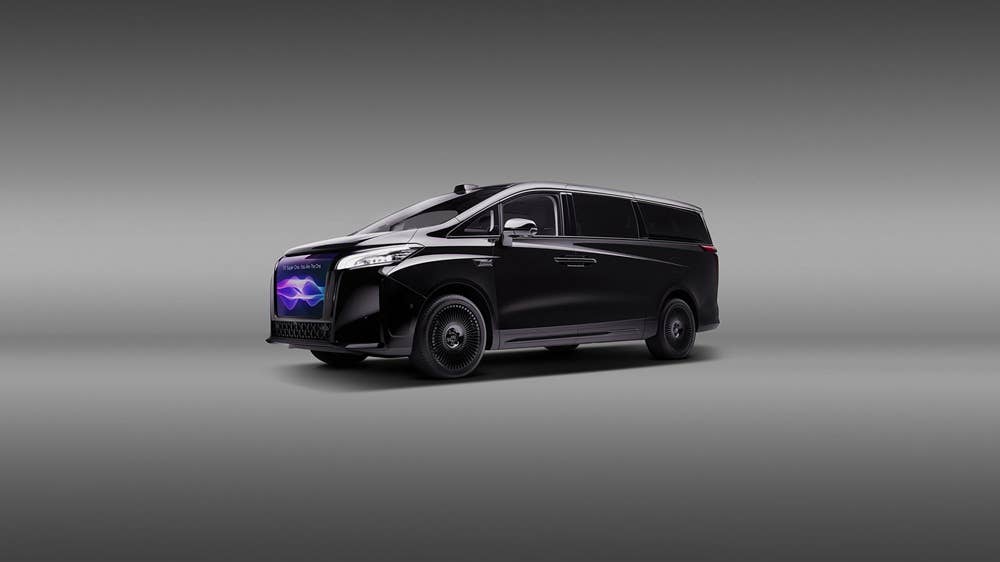
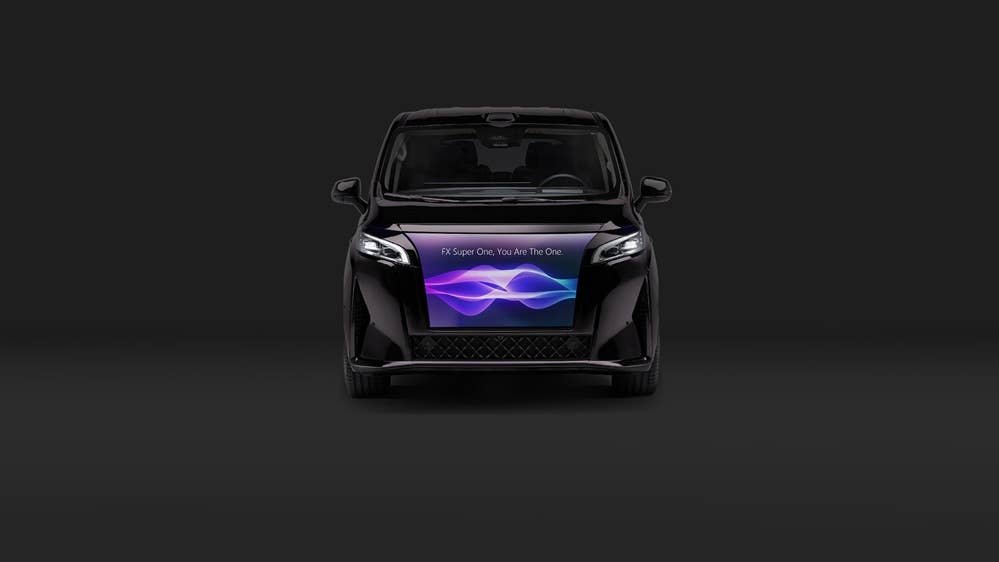
Faraday made some noise by announcing its FX Super One Minivan, but less than a year later, the brand hit pause after deciding that its 400V powertrain wasn’t up to snuff with the rest of the industry.
Many brands, especially those from China, are already at the 800V mark or using range extenders. Brands that are at the forefront of EV innovation are already there, which led Faraday to reconsider its powertrain strategy to deliver a better EV experience to prospective clients.
Faraday Future
Faster, Longer, Stronger
The move from 400V to 800V will present a challenge to Faraday, as it won’t be able to bring its products to market just yet. However, the move could prove to be a good one, as the 800V architecture opens the door to “longer range, faster charging speeds, and superior powertrain efficiency,” according to Faraday.
Range-extended vehicles are also in the brand’s radar, as they are “well-suited to extreme-cold winter regions such as the U.S. East Coast.” This follows suit with other manufacturers that are joining the Range-Extender EV race, like Volkswagen, with some of its China-exclusive models, or RAM with its REV lineup. For many markets without a mature charging network, a range-extended EV might be just what the doctor ordered until full infrastructure maturity is achieved.
On the full-EV front, we’re seeing pretty much every new high-horsepower EV (launched or to be launched) coming with at least an 800V architecture to support megawatt charging speeds, as is the case with BYD with its Flash Charge and Geely with its sub-four-minute megawatt charging standard, and ranges that could rival some hybrids. Other brands like Mercedes, Polestar, and Volvo are all in the 800V camp already, and Faraday wants to be at the forefront.
Faraday Future
Pumping the Brakes
For now, we expect the Faraday FX Super One Minivan to go back into the lab for a new 800V architecture. The company hopes to bring the model to mass production as soon as possible, but it’s “subject to securing financing from strategic or medium-to-long-term investors.”
As for when the model will make it to market, Faraday optimistically stated that the “first phase of delivery within 6 to 9 months,” while the “second phase of delivery within 12 to 15 months, and the ” third phase of delivery within 21 to 24 months.” This timeline outlines the company’s push if it were to go with the 800V architecture.
However, if the REEV route were to be exploited, it would take longer for Faraday to deliver, with the first phase expected within 9 to 12 months and the second phase within 21 to 24 months. Following that, the third phase might come within 24 to 28 months, according to their projections.
Historically, Faraday hasn’t had the best luck, so we might have an indefinite delay on our hands. Still, the company remains hopeful of meeting its promised timelines, provided it can secure investors for its vision.
Faraday Future