Approved? How?
If you didn’t already know, Ferrari is very strict about aftermarket modifications. Even if you’ve fully paid for your car, you could say that you don’t outright own it. That’s why some people, celebrities, and influencers are downright banned from ever owning another Prancing Horse ever again.
While it is possible to modify a Ferrari, you have to keep in mind that the modifications should not infringe on or destroy the brand and design identity of the vehicle. Failing to follow Ferrari’s guidelines or outright destroying the car’s image will land you a spot in the blacklist, which means that you will be banned from purchasing another Ferrari in the future, and perhaps even banned from receiving services.
The Blacklist
Just a quick tangent, to get on Ferrari’s bad side, you can engage in distasteful or image-destroying modifications or even engage in unauthorized resale before the ownership period is up. Ferrari makes it a point that the customers who can afford to buy their cars keep them for a period of time before they sell them.
Ferrari makes no exceptions, and even celebrities have found themselves on the Italian automaker’s blacklist. No matter who you are, Ferrari will be Ferrari, no exceptions! If you want to modify your car, you have to write a letter to Ferrari, asking for permission from the brand to modify your car.
Unless…
Then there’s this thing. While I won’t outright say it’s “bad” or “distasteful,” I will say that it’s just not my cup of tea. It might have been to someone at some point, and maybe someone from a different era would fully appreciate modifications like this, but for me, I think there are some things better off unsaid.
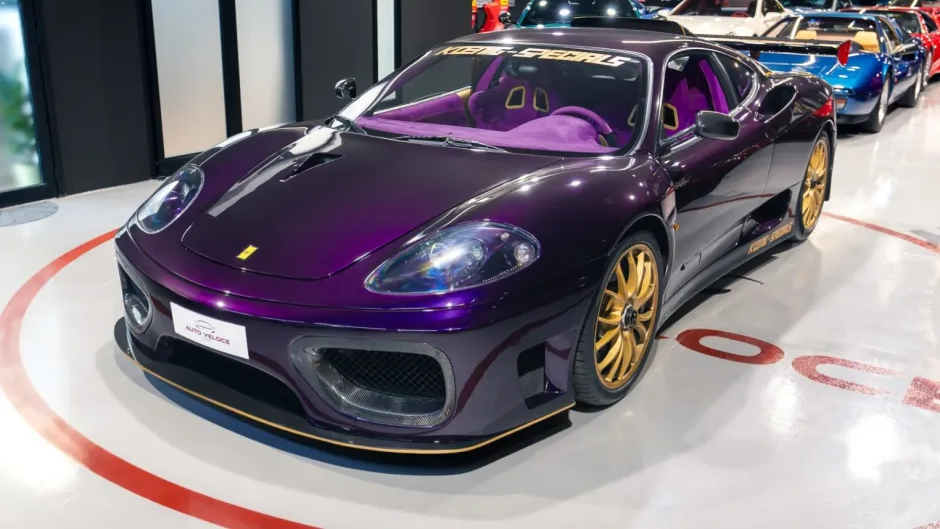
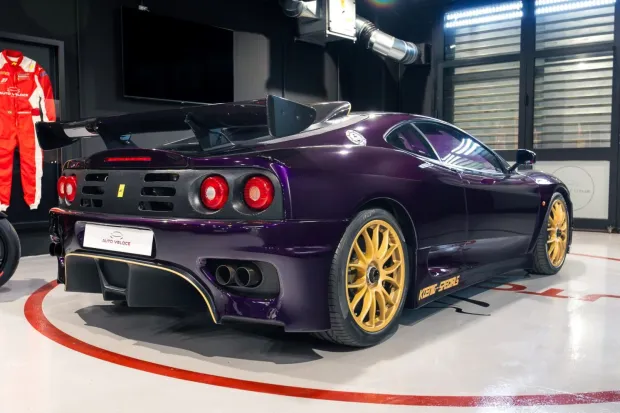
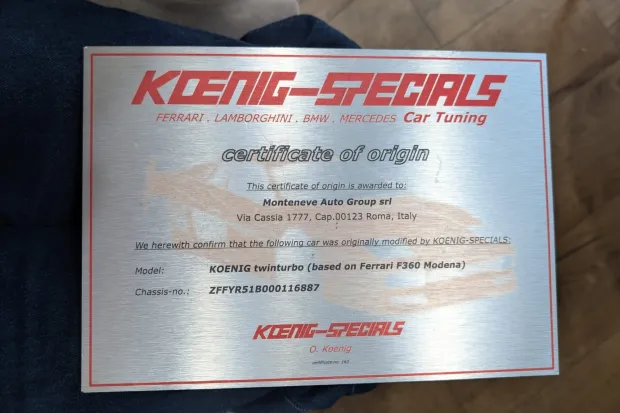
Anyway, Koenig Specials handled this car. It’s a 1999 Ferrari 360 Modena, and in stock form, it’s regarded as one of the brand’s greatest hits, but modified, I’m not too sure anymore. The modifications were done in 2003, which involved a twin-turbocharger setup, a revised rear end, a carbon fiber roof intake, and an N-GT-Style body kit that changed up the 360’s face.
While the engine modifications and the body modifications may pass scrutiny, it’s the color palette that was chosen that might leave some questions. Finished in Viola Hong Kong paint, which is an official Ferrari paint code, it should look good on its own. However, whoever modified the car decided to make it pop more with gold accents on the wheels and on its decals.
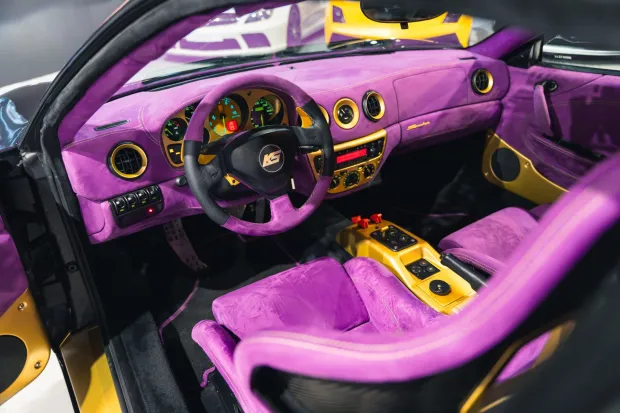
That’s not all, because even the interior received the same treatment. Done in a combination of purple and gold accents, the interior features purple Alcantara and gold-colored inserts. The seats are also aftermarket from Sparco, and there’s even a custom gear lever in the center console. Koenig’s emblem also adorns the steering wheel.
Plot Twist: Ferrari Approved
As consistent as Ferrari has been through the years in enforcing its rule, this is one of the exceptions. It has a factory color from the Prancing Horse, and you’d think that the gold accents may have slid under the radar, but apparently, it was done by Scuderia Baldini & Co., an official Ferrari dealership and luxury car showroom in Rome.
On top of that, Koenig Specials, founded in 1977, is known for “special” projects like this one, and if you’ve followed the brand back then, you might have seen some of its other extreme modifications on popular nameplates from the 80s and 90s era supercars from Porsche, Lamborghini, Mercedes, and, of course, Ferrari.
The real plot twist, however, is that it looks like someone actually put up money to buy this thing on Bring a Trailer. On May 6, 2026, the 360 Modena was sold to A JHHoward for a sum of €150,000 or about $176,000. Prior to that, it looked like there was a bidding war happening. While the paint and color scheme of the car might not be to everyone’s taste, it does have a good bedrock of parts to start from. Considering that the modifications are also Ferrari-approved does carry some weight as well.