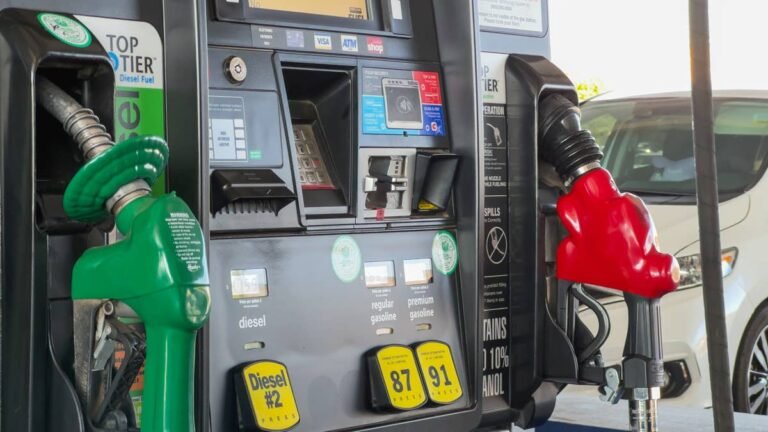
The National Picture: Up Nearly 29% in a Year
If your last fill-up stung, you are not imagining it. The national average reached $4.04 a gallon on June 16, up 28.8% from $3.14 a year earlier, and AAA’s daily tracker now puts the national average near $3.97. Nearly every state posted a double-digit percentage increase over the past year, which is what turns a routine summer bump into a genuine national story. The steepest year-over-year jump landed in New Hampshire, up 41.9%, with New York and Vermont close behind.
Why Prices Jumped
The surge traces back to a single geopolitical shock. Prices climbed sharply after the late-February closure of the Strait of Hormuz, peaking around $4.55 in May before easing slightly into June. Layer summer-blend gasoline and peak travel demand on top, and the pressure holds.
California: Still the Most Expensive in the Nation
No surprise to anyone who drives here. AAA’s California average is about $5.61 a gallon, well above the national figure, a gap of roughly $1.64. The reasons are structural: California layers about 67 cents per gallon in state fuel taxes on top of a unique fuel blend and regional supply constraints. Hawaii and Washington round out the top three priciest states, with four states above $5.00 a gallon.
The Cheapest States to Fill Up
If you are road-tripping across state lines, the savings are real. Indiana has the lowest average at $3.36, followed by Texas at $3.50 and Oklahoma at $3.53. That is more than two dollars a gallon cheaper than in California.
What It Means for Summer Road Trips
On a 1,000-mile trip in a vehicle averaging 25 mpg, the California-versus-Indiana gap works out to roughly $90 more in fuel for the exact same drive. Apps like GasBuddy and AAA’s fuel finder are worth a check before you commit to a route, especially near state borders.
What to Watch Next
The wildcard remains crude. Any further disruption to global supply could push the national average back toward its May peak, and California is always first to feel it. For now, prices are holding rather than spiking.