
d3sign/Getty Images
- Gen X, the economy’s middle child, is contending with rising credit card debt.
- The Federal Reserve’s latest accounting of consumer finances found their balances soared.
- That comes even as Gen X makes even more money, but sees shrinking net worths.
Gen Xers are putting their credit cards to work.
The Federal Reserve’s latest accounting of consumer finances finds that as of 2025, 45 to 54-year-olds had the largest credit card balances among age groups, surpassing 64 to 75-year-olds. At the same time, their younger millennial peers have been paying down debt, with balances for 35 to 44-year-olds falling.
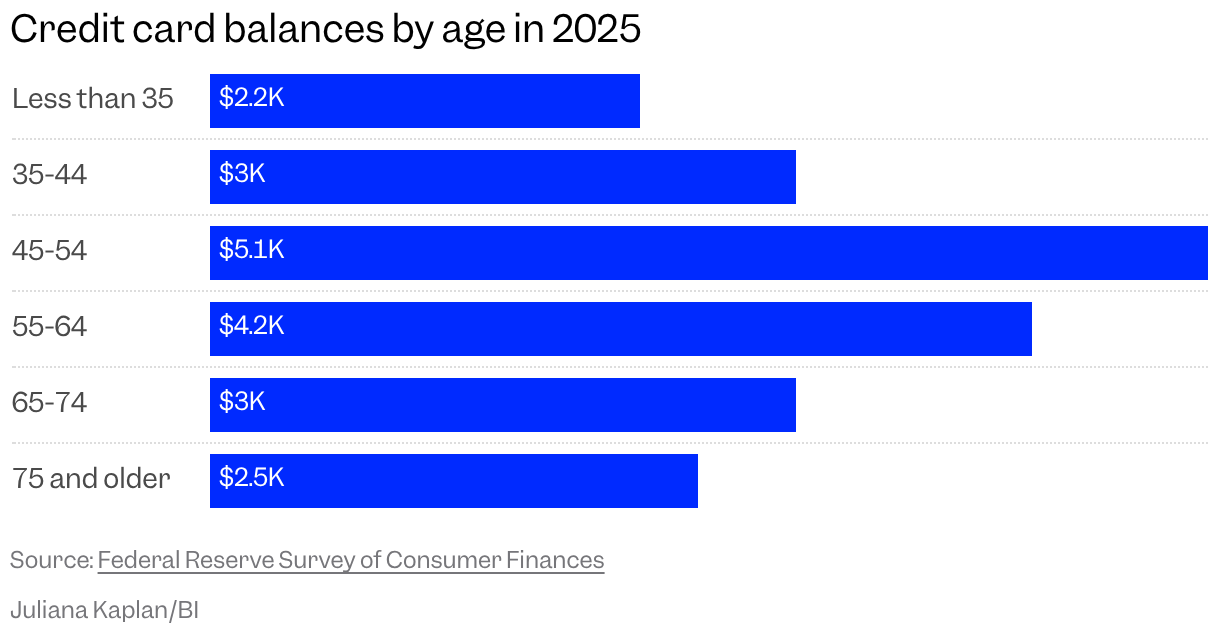
The latest data comes as the country’s forgotten middle-child generation contends with its own mixed financial fortunes. Consumer sentiment is lowest among Americans ages 35 to 54, according to the University of Michigan’s index, with sentiment among that millennial-Gen X cohort sliding below both their younger and older counterparts in the same period that their credit card balances began to tick up.
For 45- to 54-year-olds, inflation-adjusted balances rose from around $3,300 in 2022 to around $5,100 in 2025, bringing them above their older peers, who previously had the highest debt.
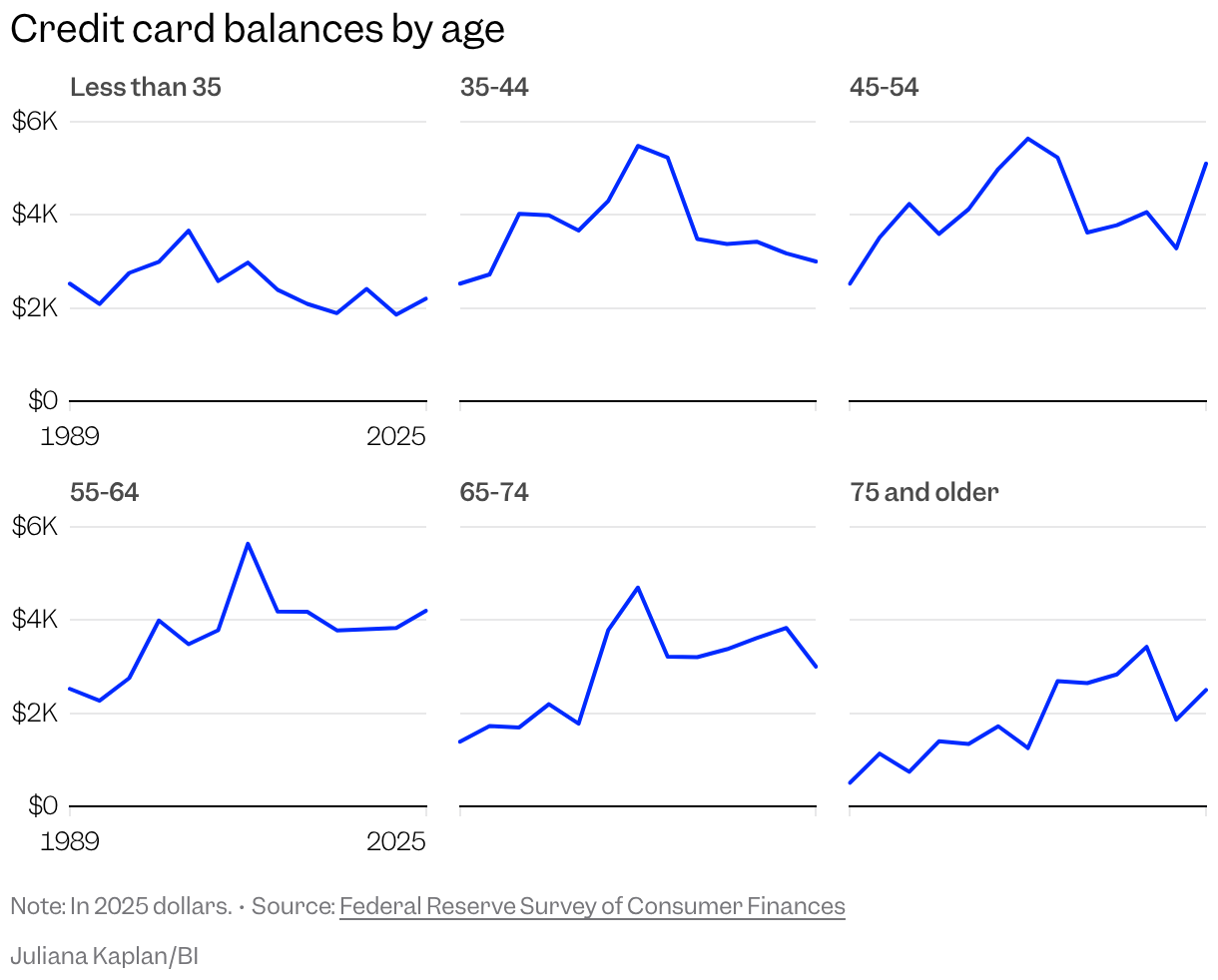
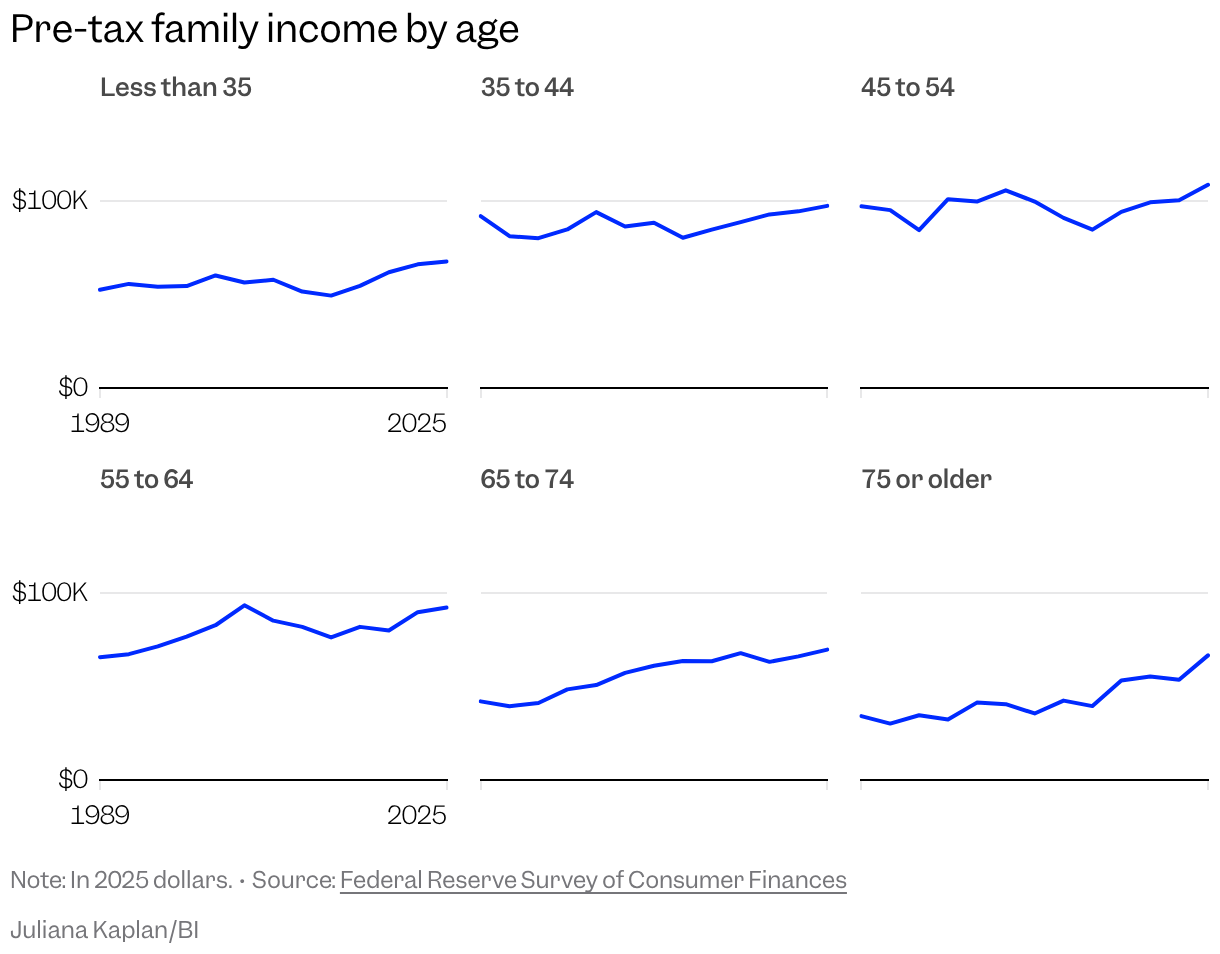
Even so, the 45- to 54-year-old cohort remains the highest paid in the economy. Per the Survey of Consumer Finances, their median pre-tax income is nearly $109,000, the highest among all age groups; it’s also the largest median income ever recorded in the dataset after adjusting for inflation, meaning that Gen Xers are reaching new earnings heights.
One source of stress for the Gen X cohort could be lagging overall wealth, despite their high incomes. Their older peers’ median assets, which include things like stocks, bonds, and retirement accounts, have risen since 2022, bolstering their net worths. In particular, the median value of directly held stocks by the oldest Americans has soared by nearly $15,000 since 2022, while the value of stocks for 45 to 54-year-olds remains below 2019 levels.
That means that the wealthiest Americans aren’t those earning the highest incomes. Instead, it’s the retirement-aged group holding onto increasingly valuable stocks and retirement accounts. The median net worth of those 75 and older rose from around $366,000 to nearly $505,000, while the 45-54 group saw its median edge down from around $270,000 to $255,000.
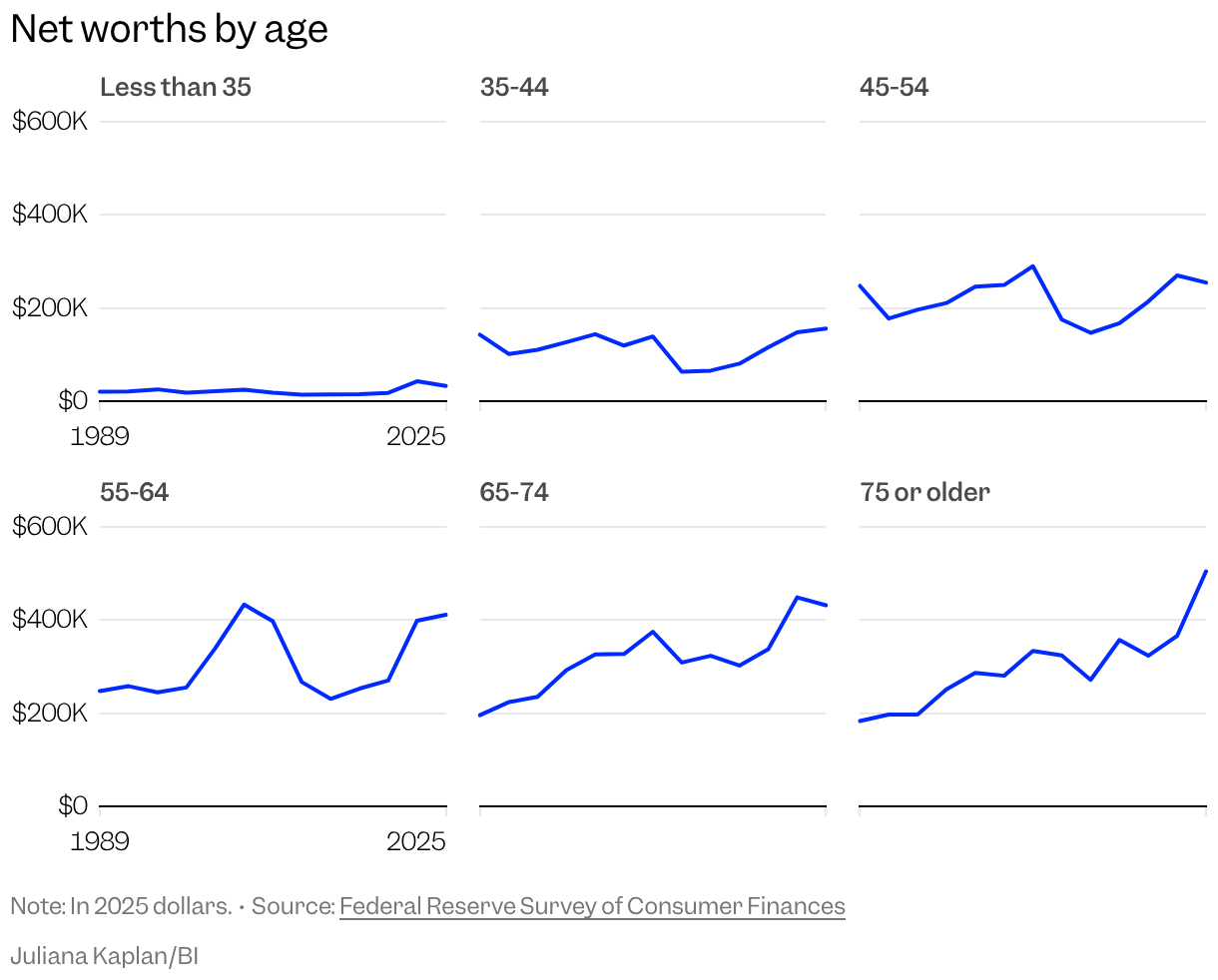
And so, the generational wealth gap might be playing out not through the checks that workers are bringing home, but in the stock market and in the moments when Gen Xers find themselves swiping plastic in the face of rising costs.
Are you a Gen Xer struggling with rising costs or credit card balances? Share your story with this reporter at jkaplan@businessinsider.com.