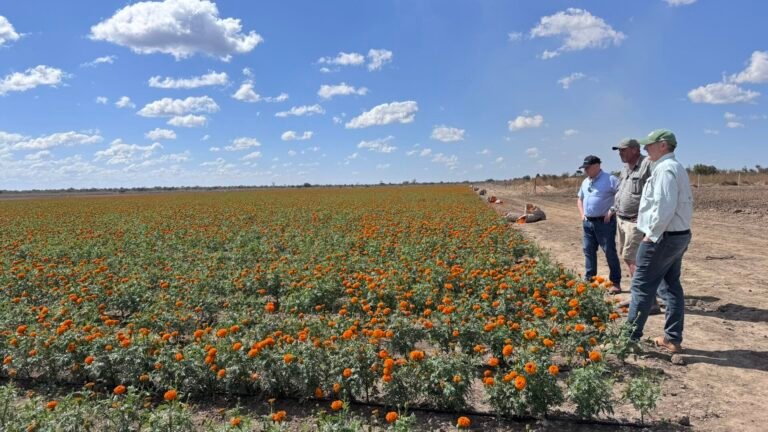
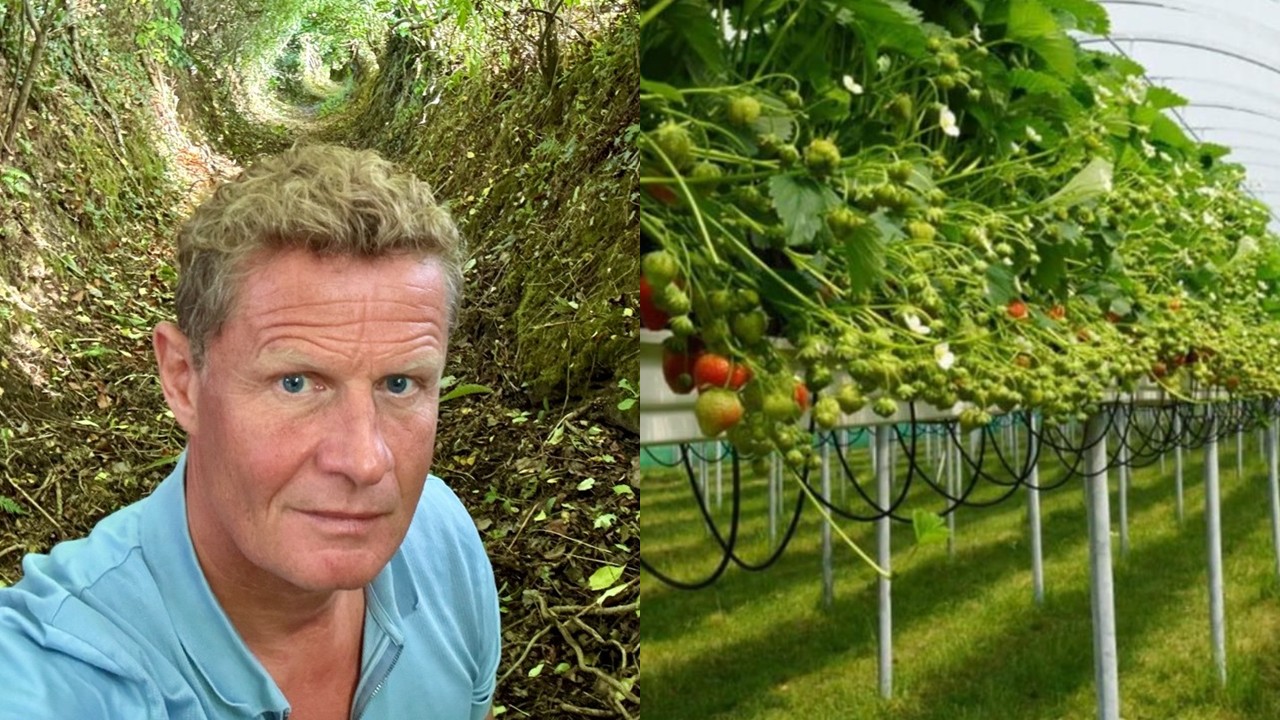
Editor’s note: Rob Ward is the CEO and cofounder of Vitagri Org Ltd, a UK agtech company building measurement and verification infrastructure for nutrient-dense food production.
The views expressed in this guest article are the author’s own and do not necessarily represent those of AgFunderNews.
Walk into any farming conference today, and you’ll hear the same conversations: AI will transform yields. Machine learning and algorithms can optimize everything.
But this type of talk only perpetuates what I call “data phobia” among those who must gather and implement this information: the growers.
Data phobia is why most farmers still make decisions based on gut instinct and traditional wisdom, rather than measurable evidence. The reluctance isn’t born of stubbornness or incompetence. It’s born of reality: the agriculture industry has never been properly taught what data actually is, how it works, or why it matters.
Far from being just a technical challenge, solving the data-phobia problem means helping the industry overcome reluctance to engage with structured information, statistical thinking, and predictive modeling. Until this is done systematically, agriculture’s data revolution will remain trapped in expensive pilots and marginal gains rather than delivering real productivity gains.
Grasping the data understanding gap
Having worked directly as a farmer and alongside agricultural professionals throughout my career, I’ve repeatedly witnessed the same pattern: a sophisticated product launches with impressive capabilities; the solution makes perfect sense to everyone except those who need to use it.
Most agricultural professionals have never been taught that data isn’t opinions or guesses but numbers written down in a structured way. Think soil pH (6.7), wheat iron content (4.3 mg/100g), and cover crop usage (yes/no).
When farmers see a spreadsheet with 200 rows of measurements, many don’t know how to extract meaning. They don’t realize that measurements cluster around averages, that the “mean” between 4.2 and 4.8 mg/100g of iron might predict significant nutritional differences. They’ve never been shown how farming practices flow into statistical analysis, then into numbers, and, finally, into actionable predictions.
Consider the relationship between farming practices and the nutritional value of food. Research now shows a measurable, bidirectional link between how food is grown and the nutritional value it delivers. Within the same crop type, antioxidant levels can vary by 200-fold depending on soil biology, mycorrhizal networks, and farming methods.
This is revolutionary. If we can predict which farming practices produce more nutritious food, we can reward growers for health outcomes, not just yield. We can help consumers identify truly nutritious produce and build food systems optimized for human health, not just economic efficiency.
But turning this possibility into reality requires farmers and agronomists to understand statistical relationships between soil measurements, biological indicators, and nutritional outcomes. They need to grasp how near-infrared spectroscopy rapidly tests nutrient density and interpret when a predictive model shows 92% confidence that certain practices will increase antioxidant levels by 40%.
Without this understanding, sophisticated nutrient-density predictions become just another technology that generates numbers farmers don’t trust or act on.
Open-source solutions are imperative
Most agtech companies recognize this education gap and respond with programs for their specific platforms, such as training webinars and how-to guides and tutorials.
But data literacy cannot be vendor-specific, because statistical thinking, measurement principles, and model interpretation transcend individual tools. When education is tied to specific products, practitioners learn to use those products but don’t develop an underlying understanding to evaluate alternatives, identify unreliable results, or improve systems based on experience.
The result: farmers might operate three software platforms but still can’t look at datasets and understand what the numbers tell them about their operations.
The solution must be open source, collaborative, and vendor-neutral. Data literacy is too important for any single company to control. Foundational skills, understanding averages and ranges, recognizing insufficient data quality, and interpreting confidence levels, should be freely available to every agricultural professional.
At Vitagri, for example, we’ve created the free Academy, an interactive, practical platform developed with the Bionutrient Institute. It teaches data-driven agriculture through structured, plain English modules anyone can access, regardless of which technologies they implement.
Beyond the data phobia
The goal here is to build an industry where data fluency enables practitioners to demand better tools, identify limitations, and improve systems. When farmers understand confidence intervals, they can evaluate whether recommendations are reliable for their conditions. When agronomists grasp the relationship between sample size and prediction accuracy, they design better data collection protocols.
This collective advancement benefits everyone, from developers making the tools to farmers making decisions to the food companies that need to measure and verify desired qualities in crops.
The future depends not just on better algorithms, but better-informed practitioners unlocking their potential. That’s worth building together, openly, for everyone’s benefit.
The post Guest article: Open-source education is key to helping agriculture overcome its data phobia appeared first on AgFunderNews.