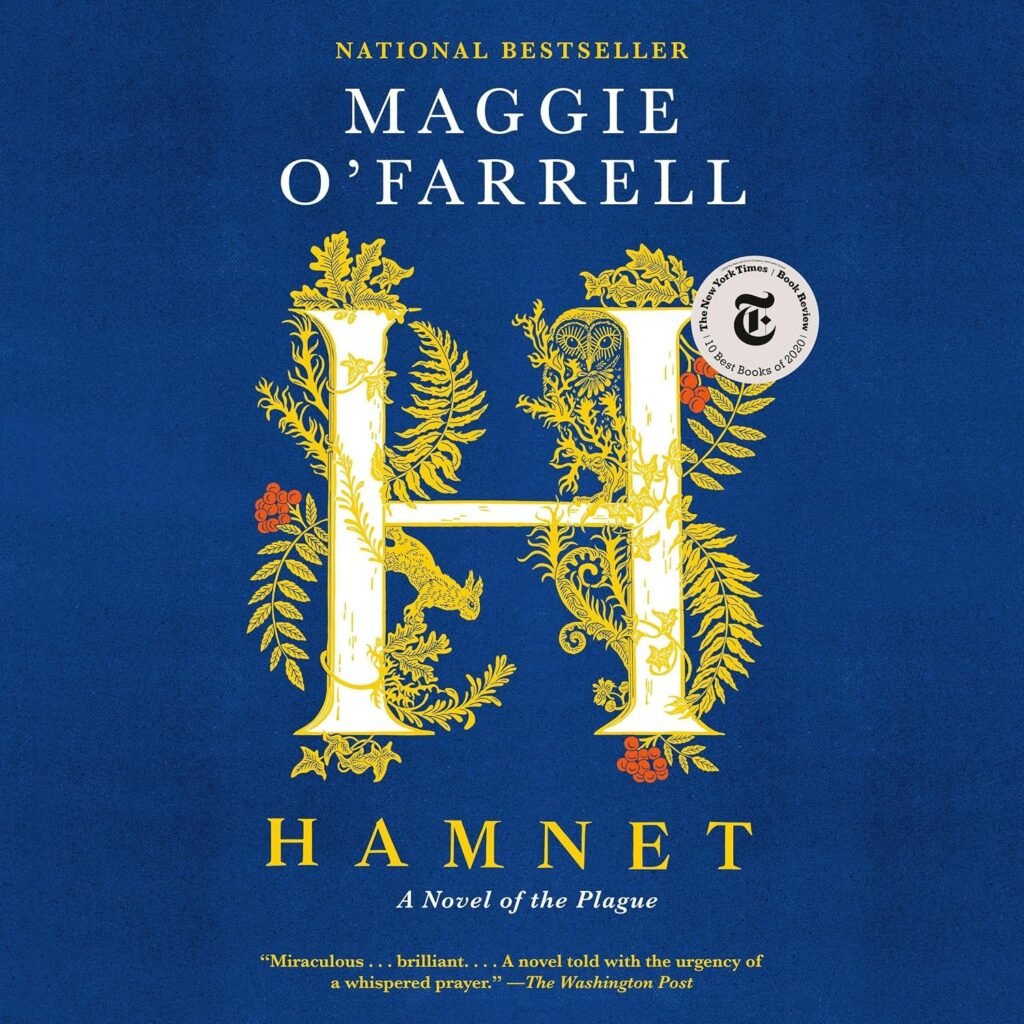
Hamnet had been on my radar ever since Jessie Buckley received so much attention for her portrayal of Agnes in the film adaptation. She’s such a talented actress that I figured she must have excellent taste in material.
I started my Maggie O’Farrell journey with Land (read my review here). After that exquisite listen, I went back to the well for Hamnet.
Having already experienced O’Farrell’s willingness to sacrifice characters I loved, I was prepared for heartbreak. And there’s no spoiler here. We know from the beginning that Shakespeare’s young son dies.
But knowing what’s coming doesn’t make it any easier.

The Woman Behind Shakespeare
Hamnet is really the story of Agnes (or Anne, as she’s generally known in the history books). But this isn’t a history book. It’s a love story.
The love of a mother, the love between twins, and the love bound up in a marriage.
O’Farrell makes Agnes wonderfully witchy and independent. She’s a woman deeply connected to nature, with an almost mystical understanding of plants, animals, and the people around her. She doesn’t need a man to complete her, though she certainly isn’t immune to their charms.
When she and “the tutor” meet, sparks fly almost immediately.
Their marriage isn’t easy (that tracks), but it is passionate and deeply connected. The love story is gorgeous and powerful, especially in its early chapters.
As the children arrive and Shakespeare’s talent emerges, husband and wife are pulled in two very different directions.
Shakespeare heads to London and the stage. Agnes stays home, caring for her children, tending her medicinal garden, and living an active life surrounded by nature. She needs nature. He needs an audience. Theirs is a complicated union.
It works. Until it doesn’t.
A Little Shakespearean History
Here’s what we actually know. William Shakespeare married Anne Hathaway in 1582. He was 18; she was 26. They had three children: Susanna and twins Judith and Hamnet.
In 1596, Hamnet died at just 11 years old. We know remarkably little about how he died or how his family coped. A few years later, Shakespeare wrote Hamlet.
Was the play inspired by the death of his only son? Nobody knows.
And that’s where O’Farrell works her magic, filling in the enormous gaps in the historical record with an imagined family that feels astonishingly real.
One of her smartest choices is that she never gives Shakespeare his famous name in the main narrative. He’s the tutor, the husband, the father. Agnes is the center of this story, not the world’s most famous playwright.
I loved that decision. It gives us permission to forget the literary giant and see the complicated man instead.
A Mother’s Grief
When the twins become ill, Agnes does everything she can to nurse them back to health. She fails and her precious son is dead.
For a woman who has spent her life understanding the natural world and healing those around her, this loss is particularly devastating. Everything she believes about her ability to protect her family is shattered. Her grief becomes like a third member of the marriage and that is a hard way to live.
The final part of the book is about finding a way through grief and depression. It’s slow and messy. There’s no quick resolution, no convenient moment when everyone decides to move on.
Agnes retreats into her sorrow. Shakespeare retreats into his work. In O’Farrell’s telling, he takes his grief to the London stage and writes Hamlet, transforming an unbearable personal loss into one of the most famous plays ever written.
And somehow, this masterpiece and ghost story becomes a bridge between husband and wife. Who knows if any of it is true? And really, who cares? The writing is the point.

Maggie O’Farrell’s Extraordinary Storytelling
What O’Farrell has done with this tiny sliver of recorded history is extraordinary. She’s built an entire world around people we know almost nothing about. The details of Agnes’s garden, the bustle of the household, the intimacy of the marriage, and the almost physical presence of grief make this story feel lived rather than invented.
Her Agnes was too real to be a fictional character. And that’s the thing about great historical fiction. You know an author is imagining much of what you’re reading, but the emotional truth feels undeniable.
Final Thoughts
Hamnet is a masterpiece of historical fiction, but more than that, it’s a profoundly moving exploration of love, motherhood, marriage, and grief.
O’Farrell takes a famous man’s largely forgotten family and gives them a rich, complicated, unforgettable life. She makes Agnes so real that I found myself thinking about her long after the book ended.
Frankly, I need more stars to tell you how I feel about this book.
One-line takeaway: Hamnet is a masterpiece of historical fiction, made even more unforgettable by Ell Potter’s extraordinary audiobook narration. Get it on Amazon here.
For fans of: Maggie O’Farrell, Ann Patchett, literary historical fiction, beautifully complicated marriages, unforgettable female characters, and exceptional audiobooks.
Where I read it: Listened to the audiobook, narrated by Ell Potter. An exquisite performance that brought Agnes and her world vividly to life.
You can find this—and everything else I’m reading this year—on my running 2026 book list.
The post Hamnet Book Review: Maggie O’Farrell’s Masterpiece of Love and Loss appeared first on Mom Trends.