VENICE — The buzz during the Venice Biennale opening week was that the real United States pavilion was not the banality cobbled together by Trump’s acolytes in the Giardini, but Helter Skelter, a show of Arthur Jafa and Richard Prince, sponsored by the Fondazione Prada and curated by Nancy Spector. That assessment is correct, for better and for worse. The show pairs two artists — one Black, one White — who have trained their vision for decades on both the US’s foundational violences and its rarer, complicated moments of beauty, through strategies of appropriation. Taken together, their work becomes a bracing indictment-slash-love letter to a deeply flawed nation.
But to my mind, what makes the exhibition even more quintessentially American is the fact that the curator seems — almost perversely — unable to face (or at least name) the racial implications of her own curatorial conceit. That conceit, in a nutshell, is that through a set of shared conceptual and formal strategies, Prince offers a portrait of (White) America and Jafa offers one of Black America. This results in a de facto segregation of their concerns in defiance of the way both artists reveal — in their individual practices, and in dialogue with each other — how Blackness and whiteness haunt each other in the American psyche.
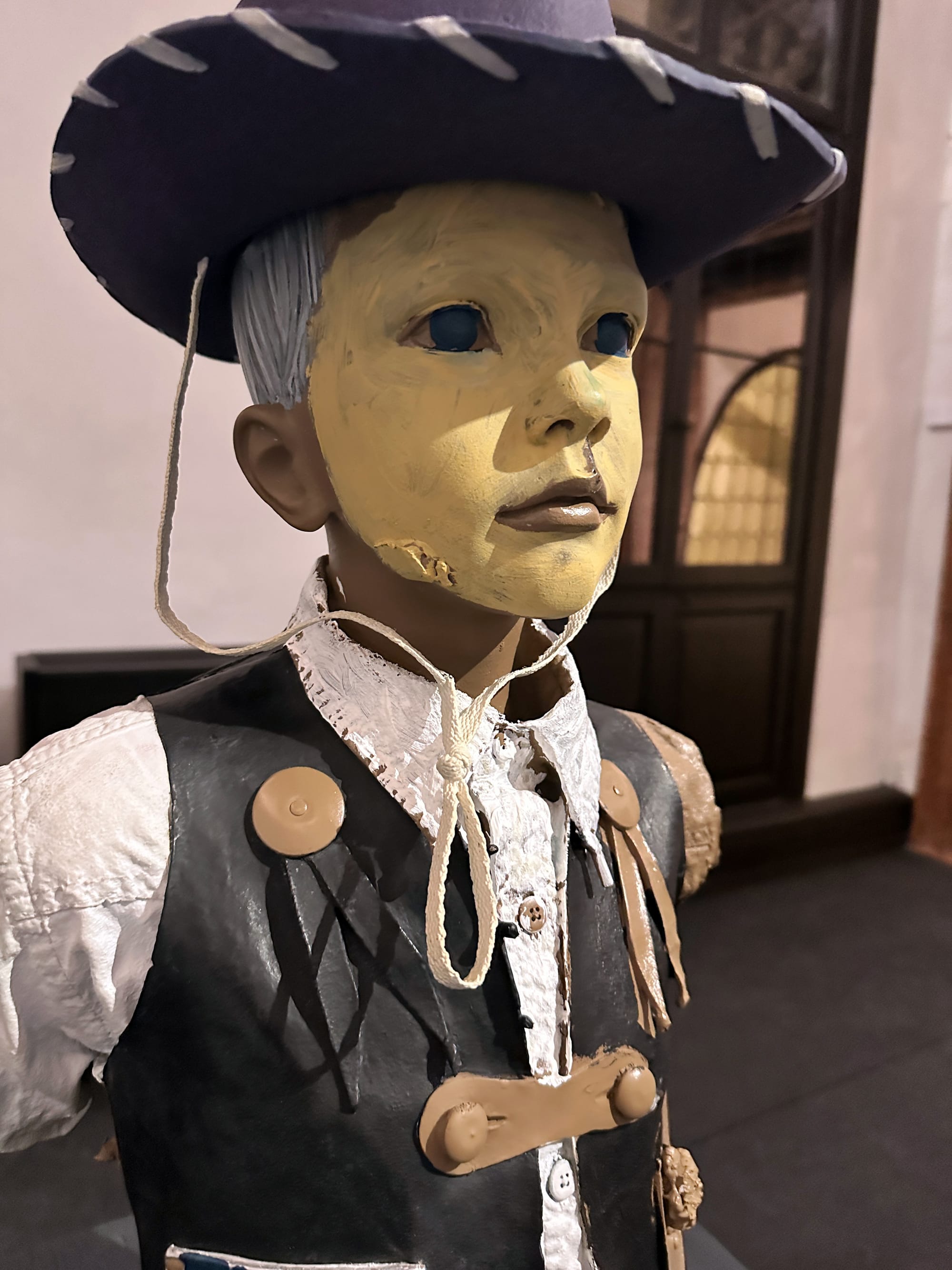
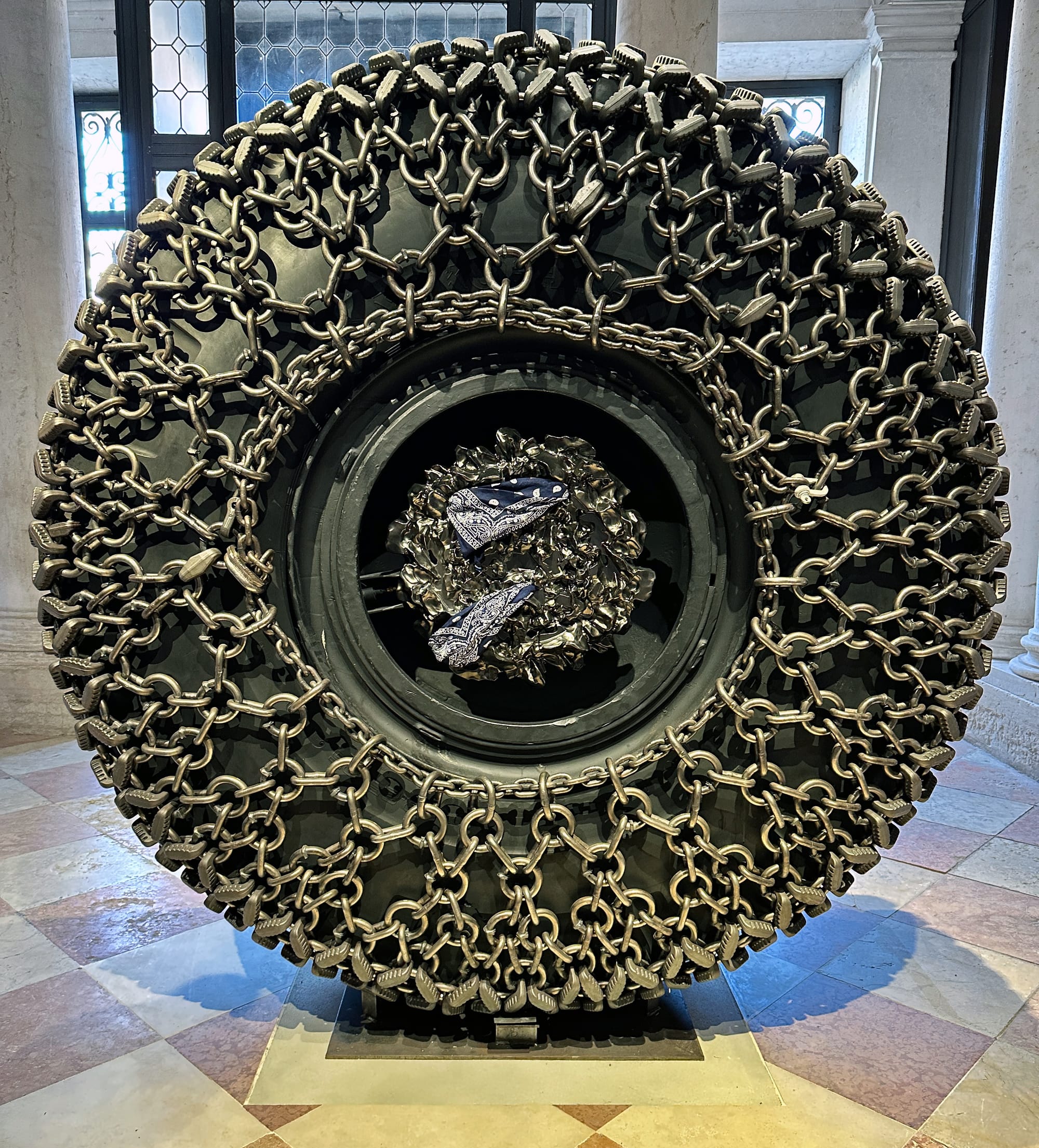
Left: Richard Prince, “Untitled (Cowboy)” (2016); right: Arthur Jafa, “Big Wheel II” (2018), chains, rim, hubcap, and tire
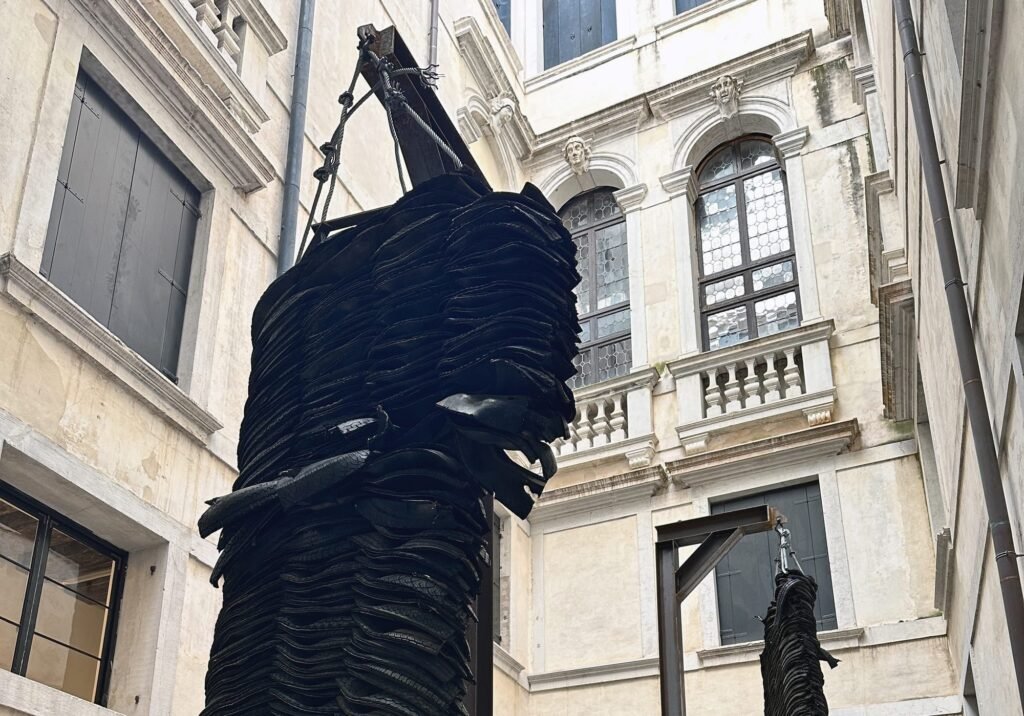
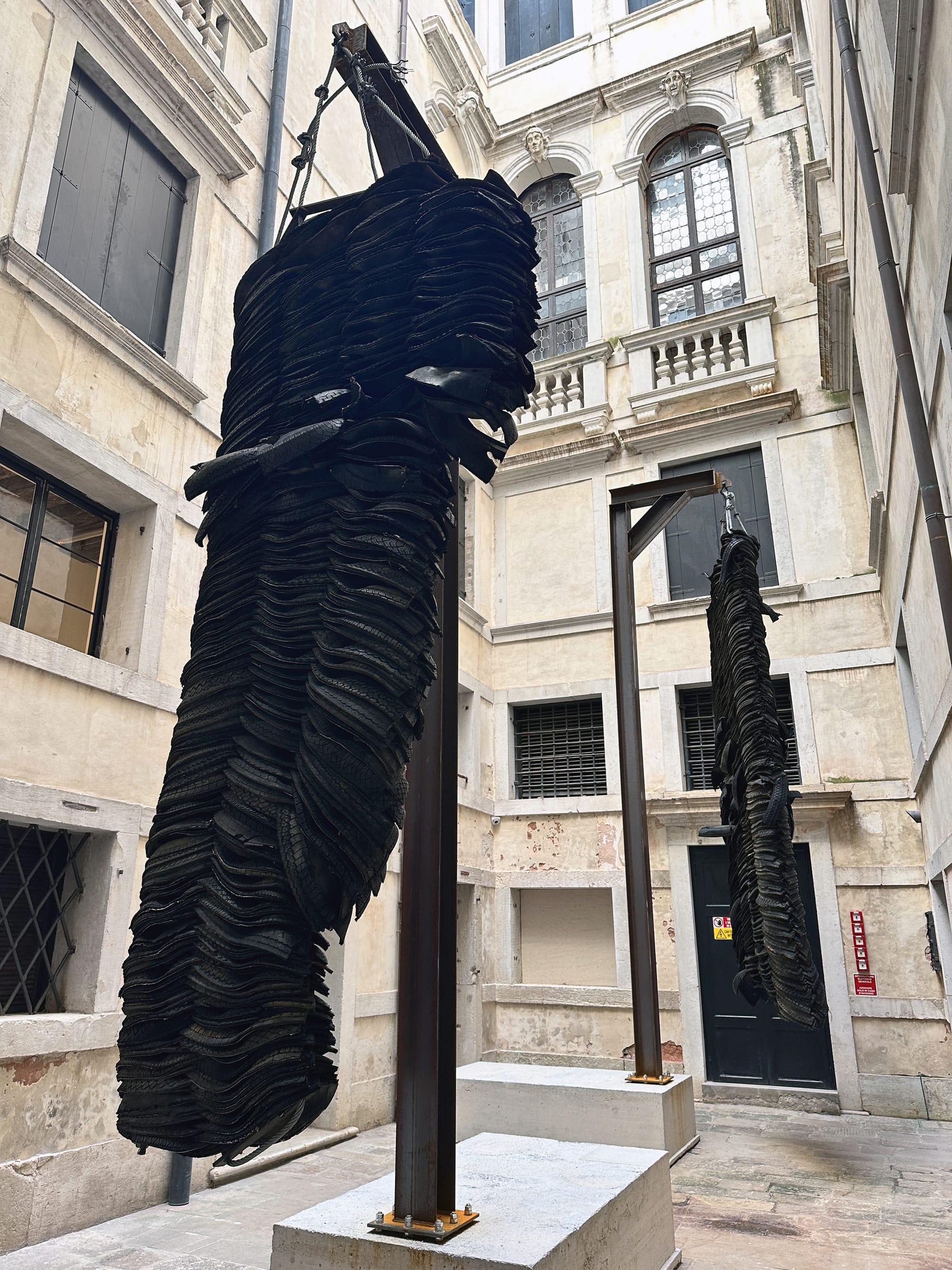
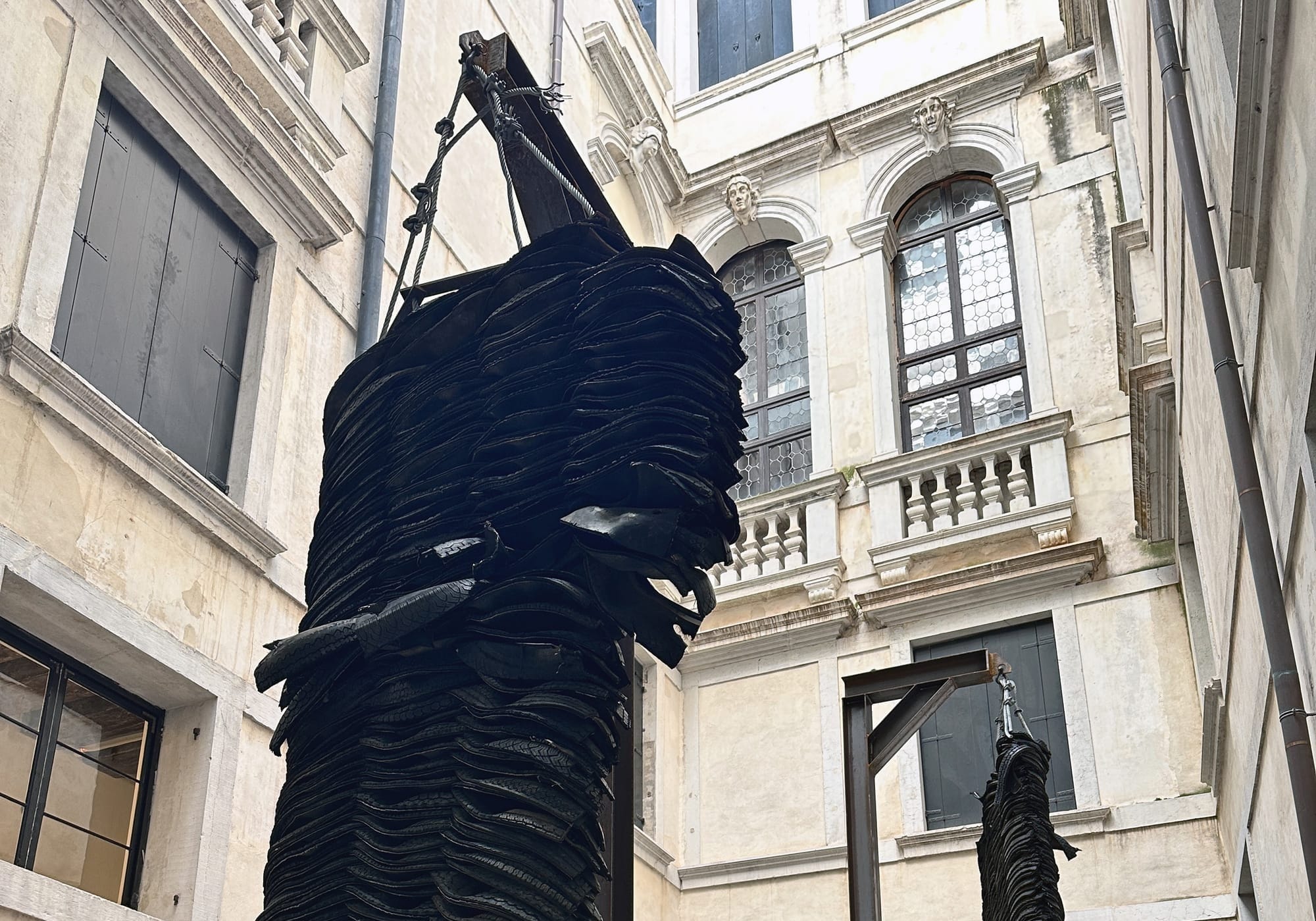
Spector’s avoidance is apparent in her framing of the otherwise rather brilliant pairing that opens the show: “Folk Songs” (2006) by Prince, composed of rubber blasting mats used to isolate explosives in highway construction, stacked tight and hung from two metal stanchions; and “Big Wheel II” (2018) by Jafa, a monster truck tire wrapped in metal chains. They are both about American car culture, and the aggressive masculinity that is its source and consequence, Spector tells us in the wall labels; Jafa’s sculpture is inflected as well by issues specific to Black experience (the auto industry and Black labor, the shackles of slavery, and so on).
What Spector doesn’t seem to acknowledge is that Prince’s “Folk Songs” evokes two hanging Black bodies. That reading may only have occurred to me thanks to the juxtaposition with Jafa’s work — props to the curator on that — but once I saw it, I couldn’t unsee it.
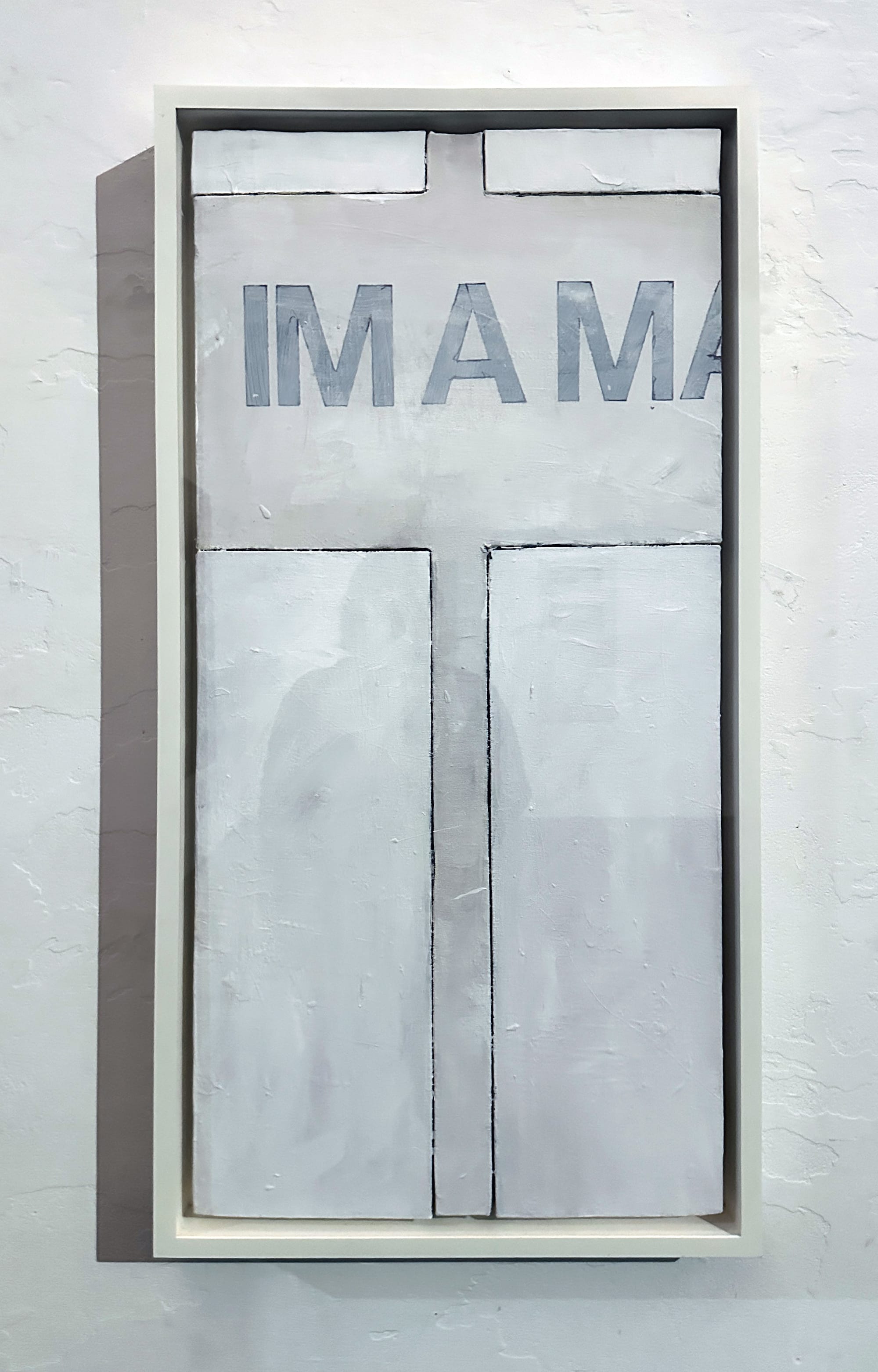
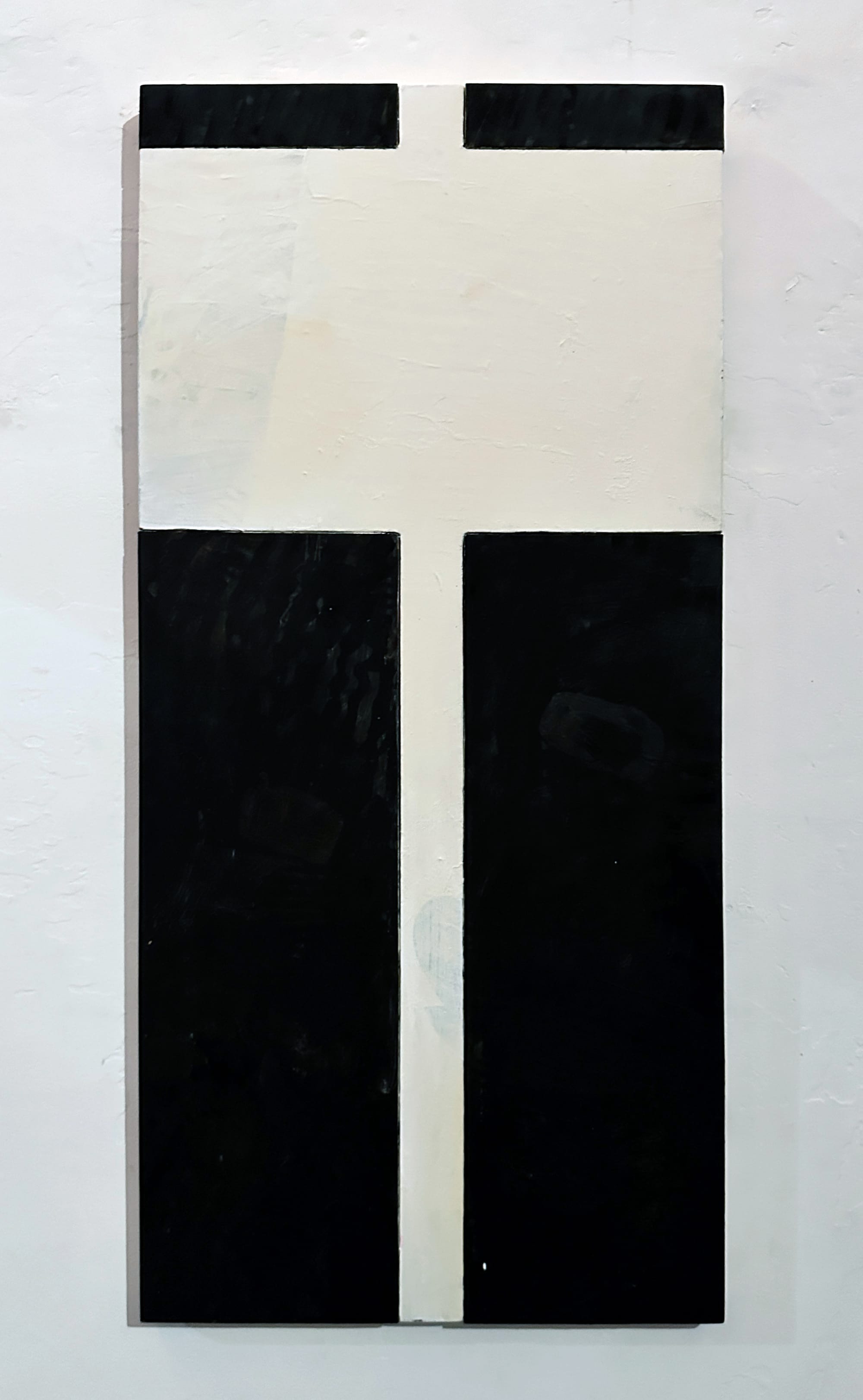
Works from Richard Prince’s Protest Paintings (1989–94)
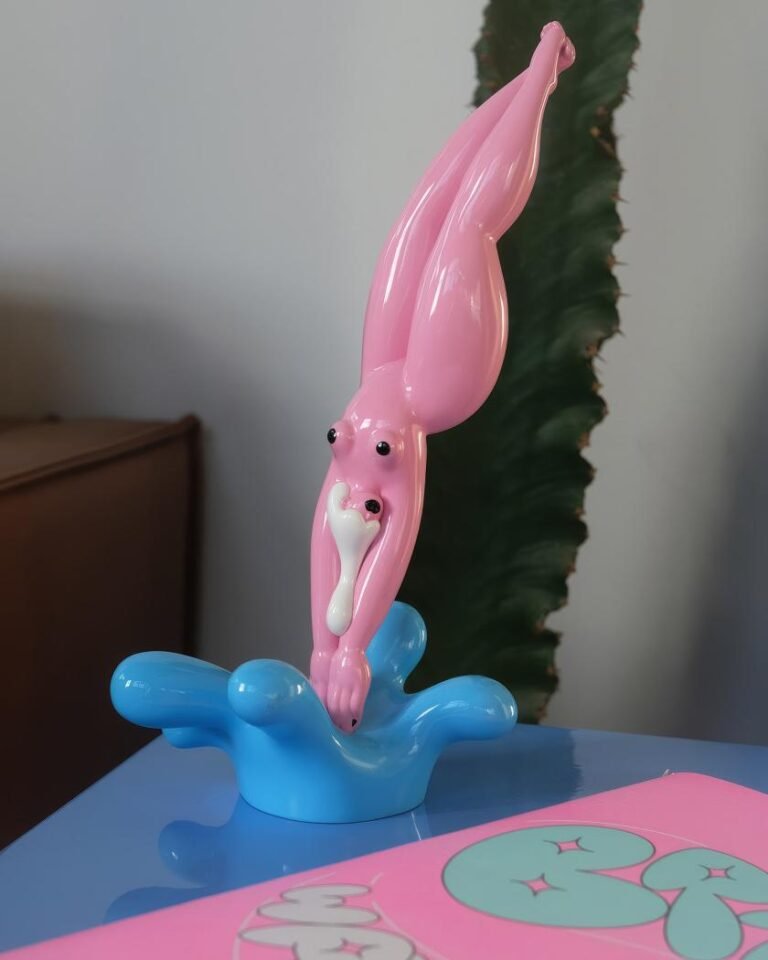
In another gallery, we find two of Prince’s Protest Paintings (1989–94), including a white-on-white one from 1994 inscribed, in an incomplete and stuttering way, with letters from the Civil Rights era slogan “I AM A MAN.” Spector takes pains to explain this picture as an anomaly in the artist’s oeuvre. But in the context of this show, it becomes clear that it is not an aberration — see “Graduation” (2008), Prince’s appropriation of Patrick Cariou’s photo of a Rastafarian, his face covered with blue circles and an electric guitar collaged into his hands, or the bronze sculpture “Untitled (Cowboy)” (2016), a brown-skinned boy whose face is painted a fleshy, jaundiced yellow. Would I have clocked the latter’s presentation of how Blackness lurks under White culture if it hadn’t been shown in the context of Jafa’s work?
Spector seems to shy away from the real radicality of both Jafa’s and Prince’s work in her installation. She pairs Jafa’s “Love is the Message, The Message is Death” (2016) — a montage of filmed and found images of Blackness in America, set to Kanye West’s “Ultralight Beam” — with Prince’s “Untitled (Sunsets)” (1981–82). She makes the comparison based on the recurring image of the burning sun in Jafa’s film — strangely specific and not very illuminating. More pointed would have been a comparison of Jafa’s mode of sampling and piracy with Prince’s Girlfriends (1986–ongoing), for which he rephotographed readers’ pictures of their girlfriends posing sexily with their bikes submitted to motorcycle magazines. Prince’s gesture replicates the theme of possession implicit in the original photos (biker submits photo to prove he owns both bike and woman, and Prince steals it from biker in a new claim of ownership). Jafa, on the other hand, scavenges images from social media and copyrighted sources, defying anyone to assert that they have the right to possess (pictures of) Black individuals. (Spector does raise the issue of appropriation as theft in a different gallery of the show.)
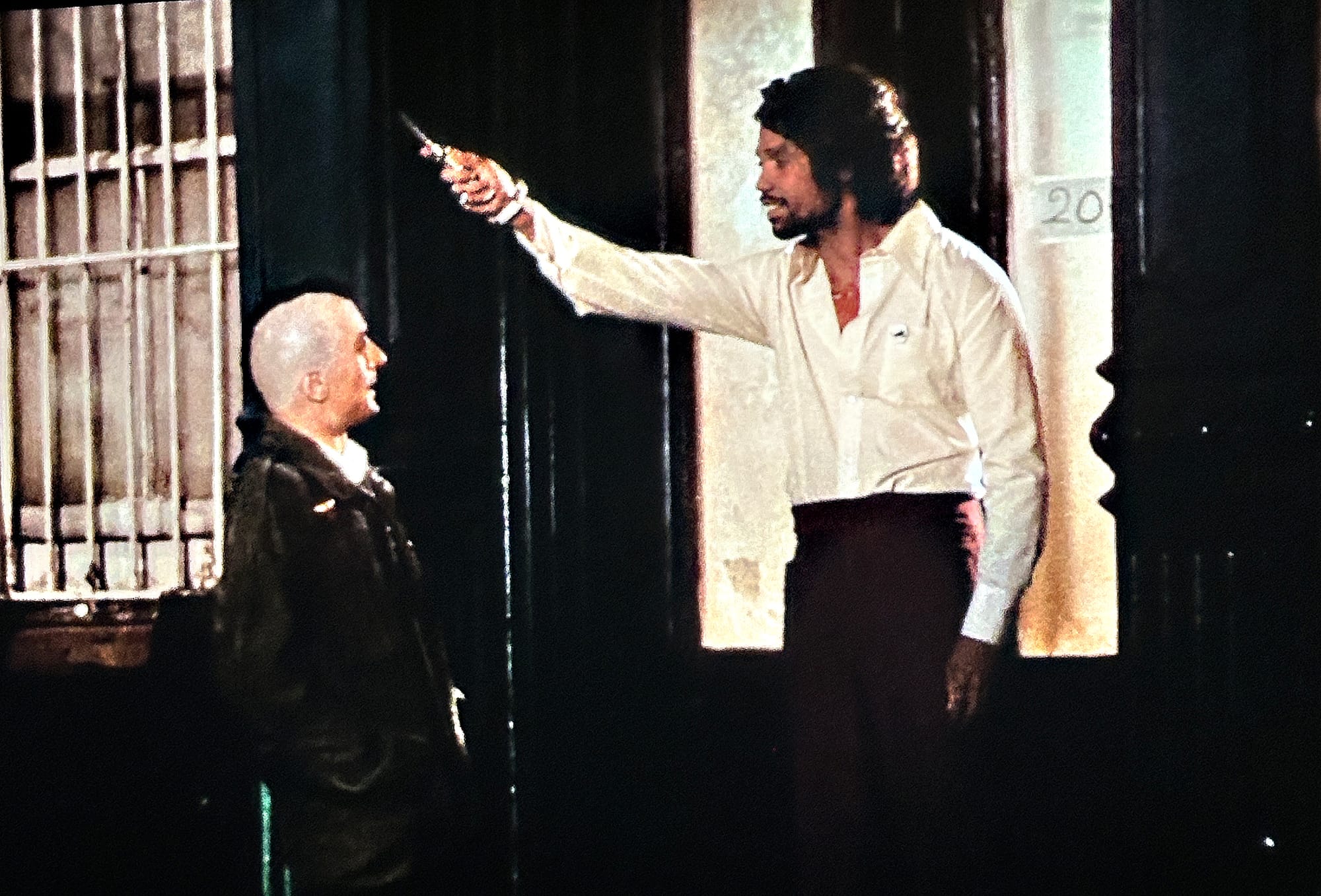
At another point, Spector connects Jafa’s “BEN GAZARRA” (2024) with a stand-in for Prince’s infamous “Spiritual America” (1983). In the former, Jafa painstakingly recreated the climactic scene from Martin Scorsese’s Taxi Driver (1976). The first screenplay called for a Black actor to play the pimp of a child victim of sex trafficking (then 12-year-old Jodie Foster), but the studio insisted on a White one instead; by inserting a Black actor in the scene, Jafa’s work restores the racial dynamics of the unredacted original. Prince’s “Spiritual America,” meanwhile, is a rephotographed version of a photo by Gary Gross of a naked Brooke Shields, taken when she was only 10 years old. Both works raise questions of pedophilia and the unsavory desires of viewers. (Jafa once told me that he believed the studio pushed for recasting because the idea of a Black pimp having sex with a White child was so beyond the pale for White folks that it would have been impossible to present.)
Not able to include Prince’s photo because of audience sensitivities, Spector instead displays the picture from which the artist appropriated its title, and which he now owns: Alfred Stieglitz’s image of an ungelded Parisian horse, which Stieglitz meant as an indictment of American puritanism (gelding horses was a particularly US-centric practice). Leaning on the evidence of the Stieglitz photo, Spector tells us that in his act of appropriation, Prince sought “to prove that in the US there was a time that freedom of expression eclipsed legal suppression.”
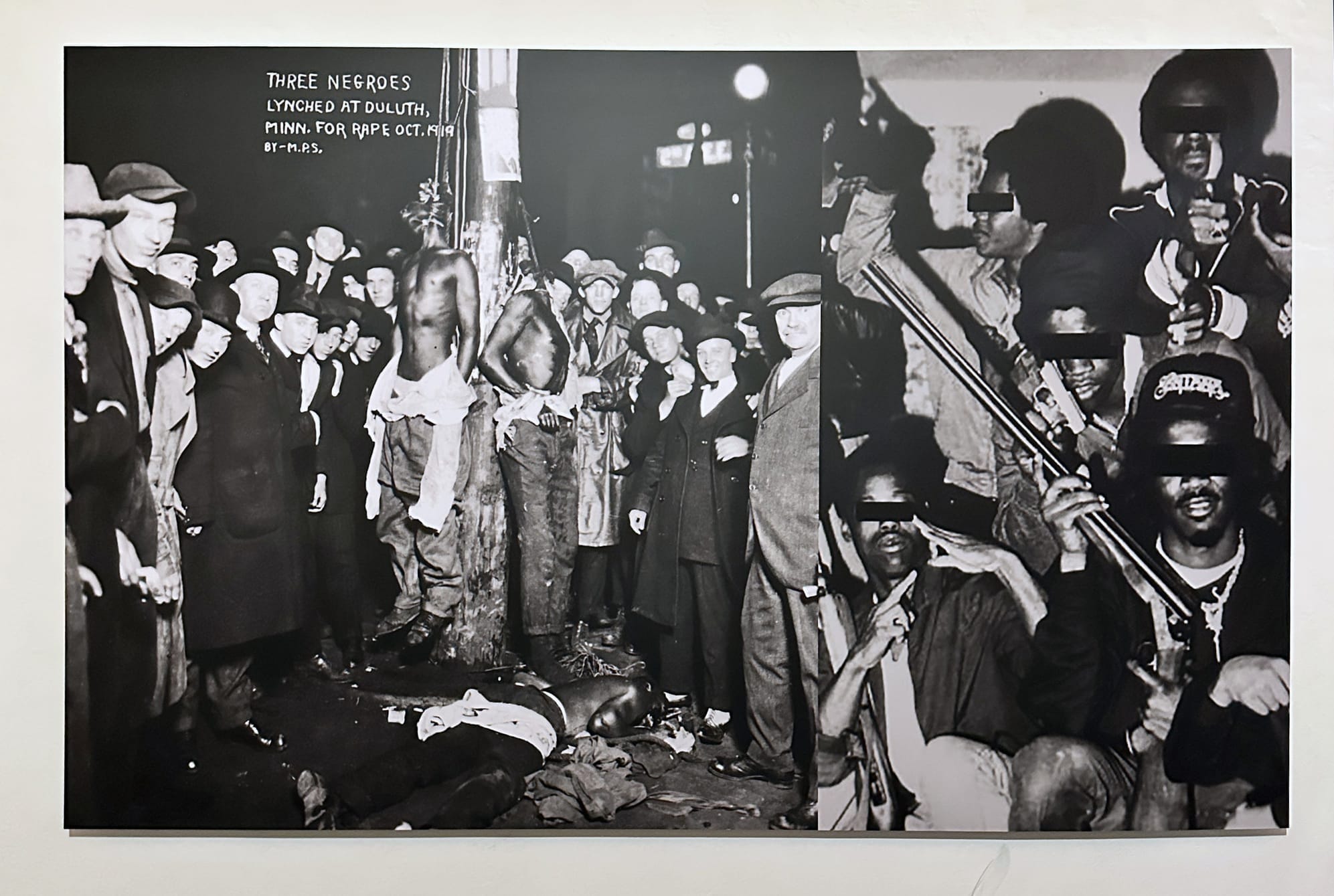
But by avoiding the question of whether Prince’s argument had to be made via a photograph of a child who had no meaningful ability to consent, Spector collapses the two works in unhelpful ways. Jafa’s act of appropriation wasn’t a challenge to the limits of freedom of expression, but an unearthing of the ways in which artists (in this case, Scorsese et al.) self-censor because of their inability to confront anti-Blackness head-on, instead allowing it to remain as an unspoken, corrosive substrate of the work.
In an interview in Gagosian’s magazine conducted before the exhibition opened, Spector jokingly expressed fear about how it was going to land — would it be too radical for audiences? I feel I can safely say that it is not too radical at all — not because of Prince or Jafa, artists whose practices, in dialogue, push forward conversations that are bracingly, and at times troublingly, necessary. Rather, because in Spector’s curatorial presentation, those ideas are consistently defanged, even muted.
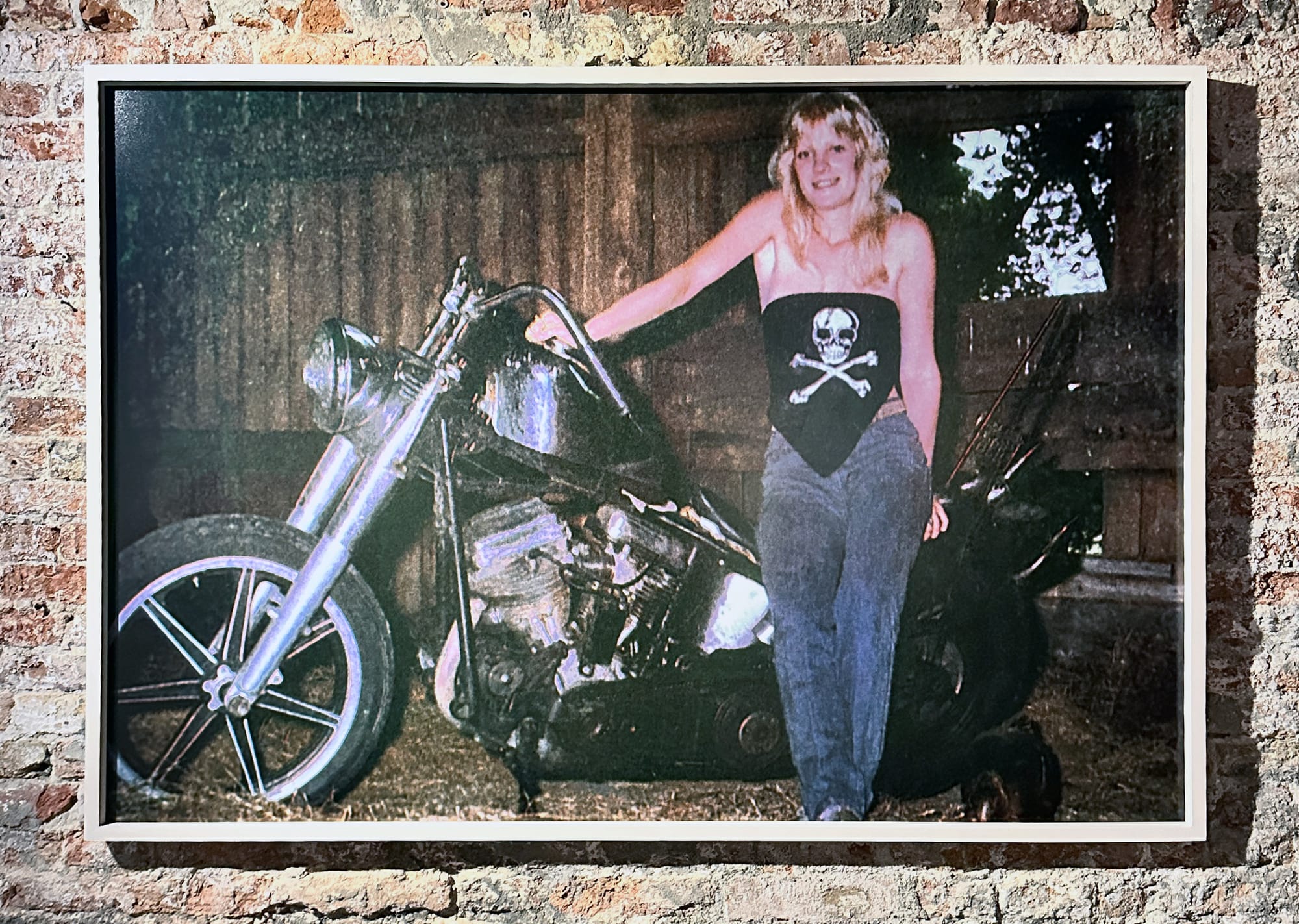
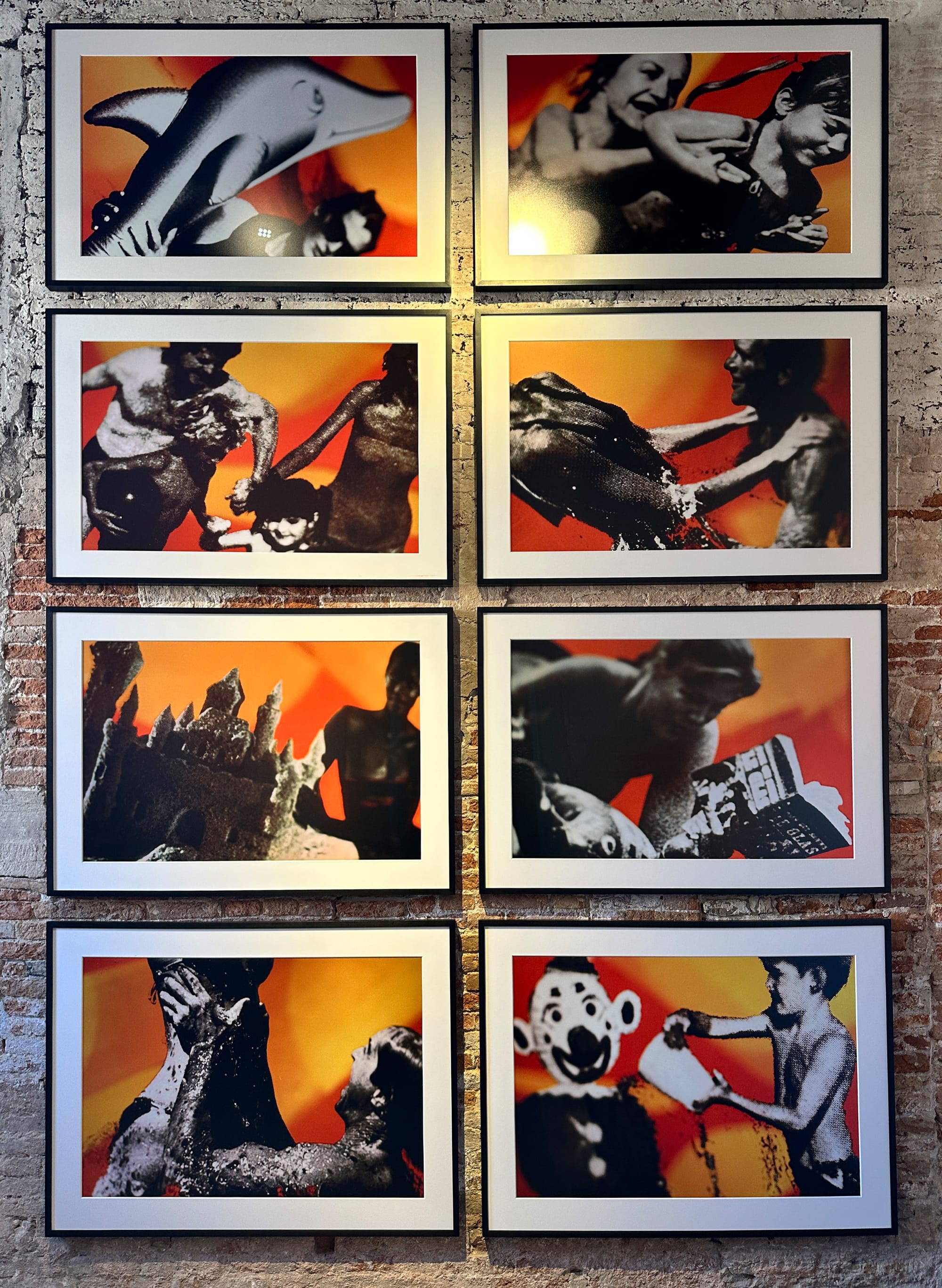
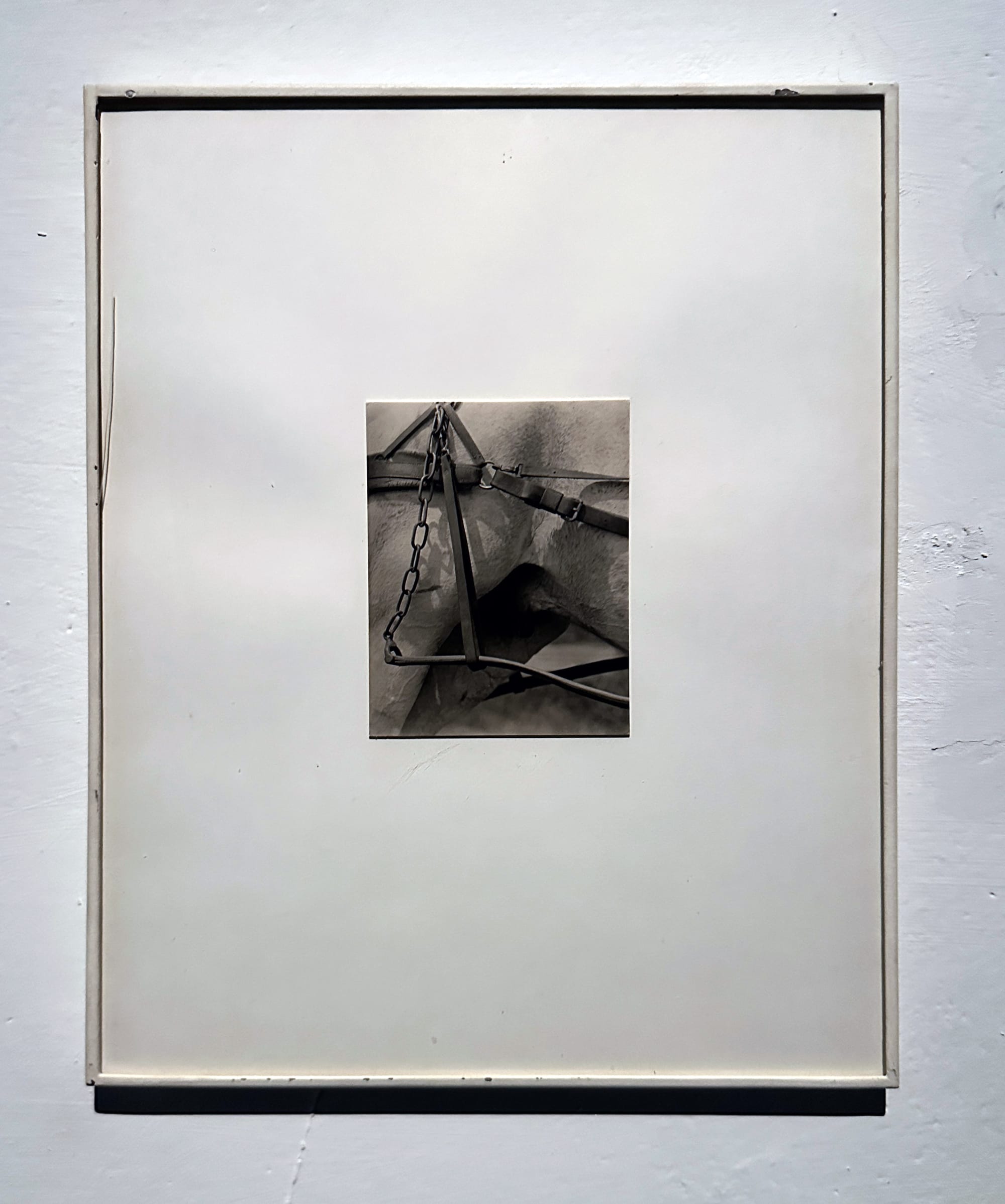
Left: Richard Prince, works from Untitled (Sunsets) (1981–82), C-Prints; right: Alfred Stieglitz, “Spiritual America” (1923), gelatin silver print
Helter Skelter: Arthur Jafa and Richard Prince continues at the Ca’ Corner della Regina (C. de Ca’ Corner, Venice) through November 23. The exhibition was organized by the Fondazione Prada and curated by Nancy Spector.