Inyo County, California, seems an unlikely place to find a thriving regenerative agriculture operation. Situated between the Sierra Nevada mountain range and the Nevada state line, it’s a remote, high-desert region prone to extreme temperature swings and high winds. Soil fertility is often a battle. Water access is an all-out war thanks to the Los Angeles Department of Water and Power owning 90% of the county’s private land.
Rachel Kulchin, farmer and owner of Blue Heron Farm, says she can count on one hand the number of people in the area growing food. That hasn’t stopped her from turning a Covid-era backyard garden plot into a 10-acre regenerative operation, bringing some level of food security to a region that relies almost entirely on imports.
“There’s only three roads in and out of this area, and they were all shut down at the same time [during Covid lockdowns],” she tells AgFunderNews. “And 99% of our food is imported in this valley, so when the shelves went bare during covid, it was like, Oh snap, we are really a fragile community.”
From ‘black market CSA’ to 10,000 acres
Kulchen’s farm began life in 2020, in her backyard, as a response to pandemic lockdowns. Known at that time as the Blue Heron Project, it was essentially what she calls “a black market CSA,” providing fresh produce each week to six families in the community.
The next four years saw neighbors offer up their own yards to Kulchin for vegetable production and CSA (community-supported agriculture) membership grow to 25 families.
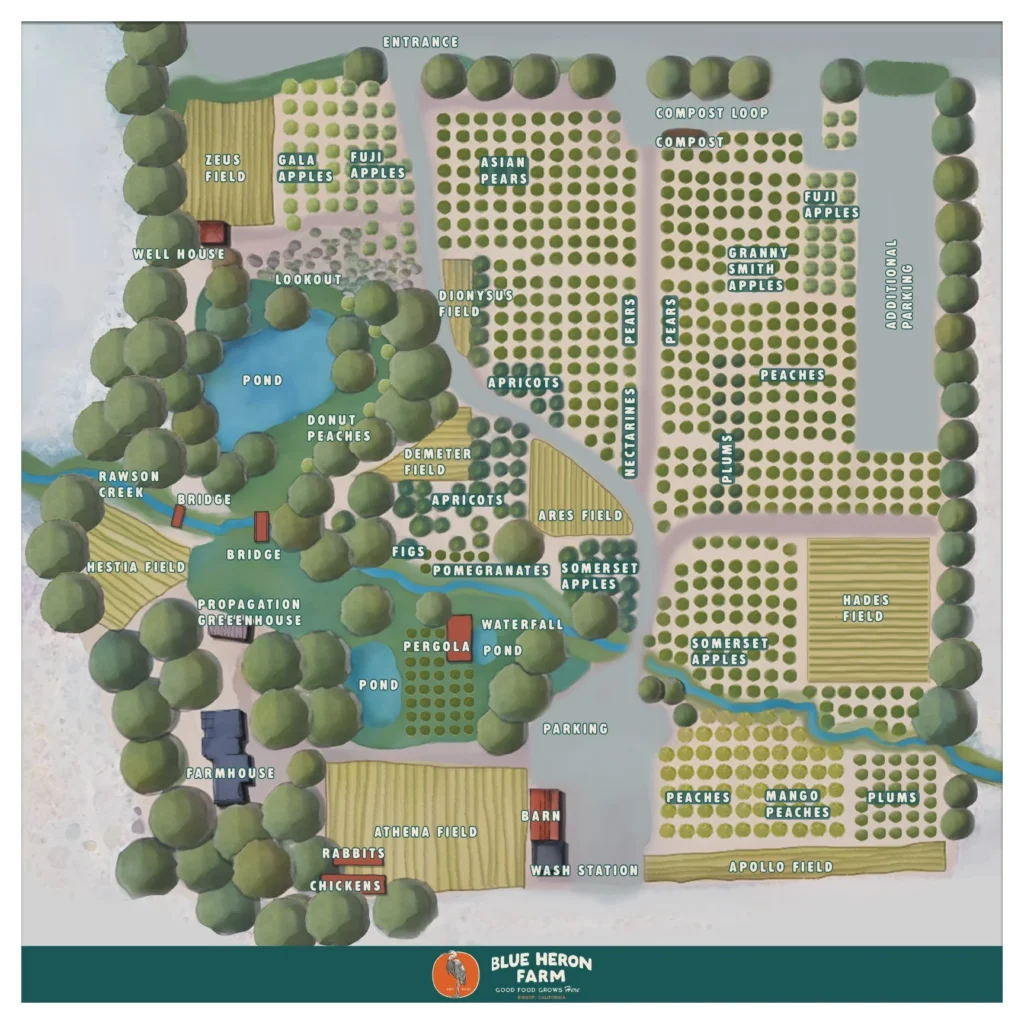
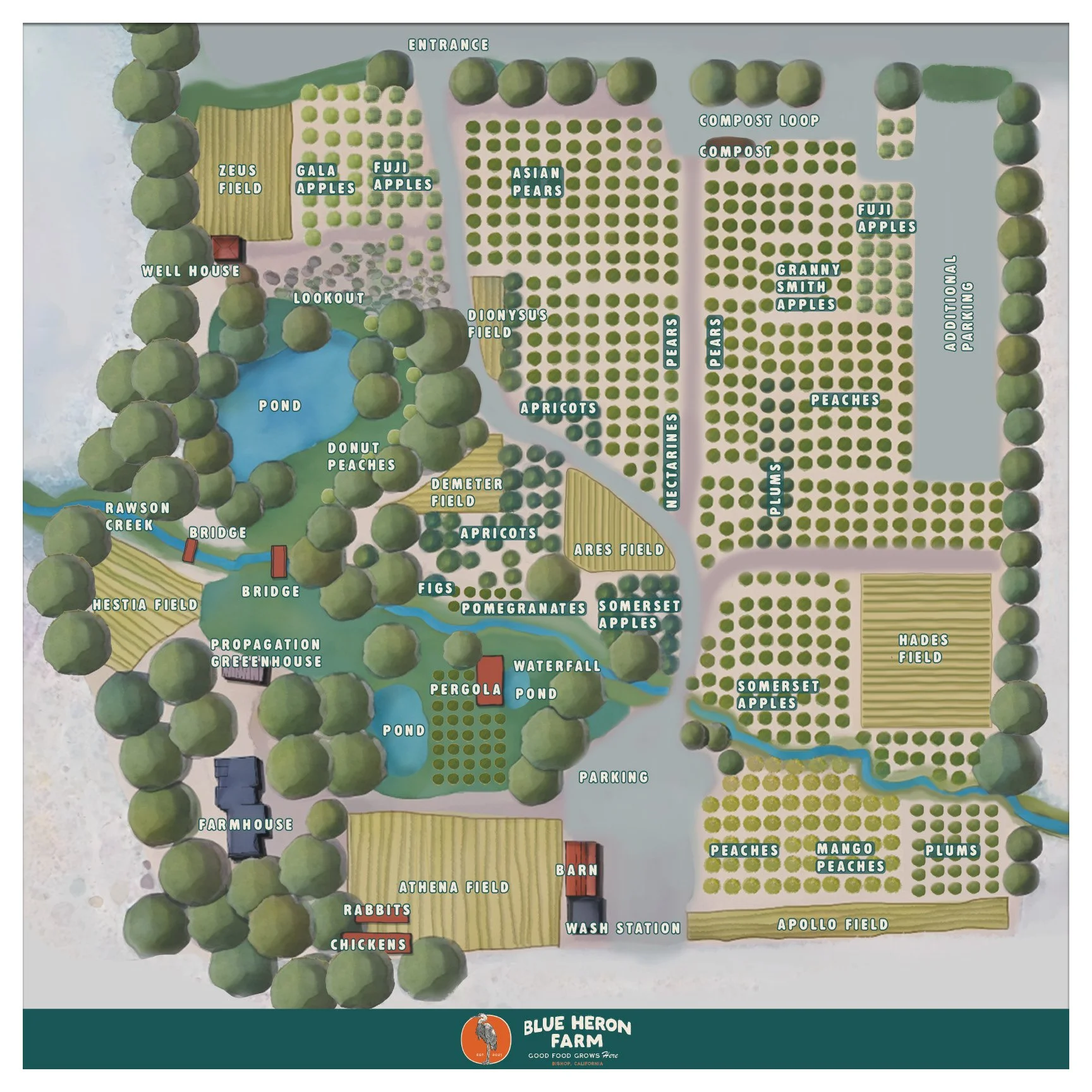
Kulchin and her co-owner, Aki Stankoski, purchased a 10-acre parcel of land in 2025 in Bishop, California, one of the few cities in Inyo County. Now called Blue Heron Farm, the mixed orchard and vegetable operation cultivates more than 1,000 fruit trees and crops; it produced 47,000 pounds of food in its first season alone.
Kulchin, who holds a degree in agroecology, says she has always farmed regeneratively. “I have always been about closed-loop farming as sustainably as possible.”
‘If you don’t have water, you have nothing’
That’s no small feat in the high desert. Kulchin says the temperature can swing 40 degrees from day to night, and that high winds are common.
Water access is a constant concern. The LA DWP, which has extracted and imported water from the region to Los Angeles since the early 20th century, owns the bulk of private land in the region and thus the bulk of its water rights. Farmers and ranchers can lease that land from DWP, but it comes with restrictions to water that have been the subject of countless legal battles and investigative reports over the last several decades.
Kulchin calls Blue Heron Farm “a unicorn” because the property ownership actually came with water rights.
“You could have land, but if you don’t have water, you have nothing,” she notes.
You certainly can’t implement regenerative systems with thriving biodiversity, healthy soils, and year-round vegetation. Even with water rights, Blue Heron Farm’s biggest priority right now is getting the irrigation infrastructure in place.
“We have to fix our water system because all of the other regenerative practices sit on the foundation of water.”
Once in place, that infrastructure will allow Kulchin and her team to build native pollinator gardens and hedgerows, construct hoop houses, and implement cover crops, all of which will enable year-round farming.
Inspiring a community
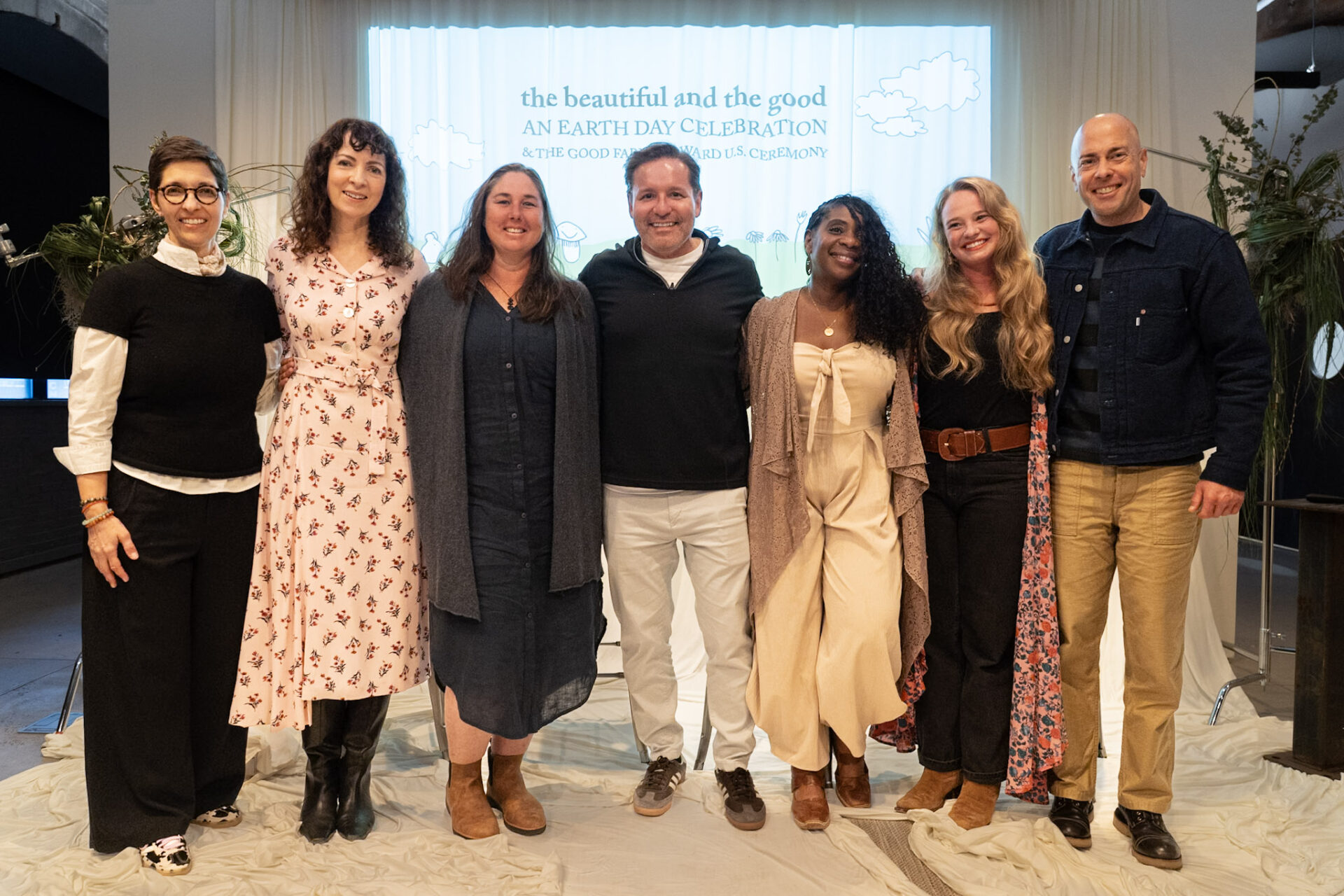
A recent $10,000 award from Rodale Institute and Davines Group via their The Good Farmer Award program will go far in helping this, she says.
Now in its second year, the award recognizes farmers making “positive environmental and social contributions to agriculture through regenerative organic practices.”
“Rachel embodies the resilient, systems approach that regenerative organic agriculture demands,” says Jeff Tkach, CEO of Rodale Institute. “In just one year, she has built a thriving 10-acre operation that is not only producing nutrient-dense food and restoring soil health, but also inspiring an entire community to reimagine what’s possible for local food security. Her work proves that small farms can be economically viable and ecologically sound, even in the most challenging climates.”
For her part, Kulchin sees Blue Heron Farm as one small piece of a much larger mission.
“One farm is not a resilient food system. A lot of my work right now actually is trying to imagine how we build something and bring local ag back to the region. It’s access to land, access to water. Those, those two questions come side by side. It’s a big hurdle.”
You can’t, she adds, have a resilient community without a resilient food system.
“We’ve started the conversation. We’ve got a long, long way to go.”
Asked what advice she would give to others hoping to farm regeneratively, she simply says to “start messy.”
“If you wait to start something when it’s perfect, you’ll just never start, because it’s never going to be perfect. Start with that black market, underground, CSA, start small.
“Going from my backyard to two backyards to four to eight was incredibly beneficial for me. What was originally a huge constraint (‘you’re never going to find land here’) actually turned into one of my best assets.”
The post How a ‘black market CSA’ became a 10-acre regenerative farm building food security in Eastern California appeared first on AgFunderNews.