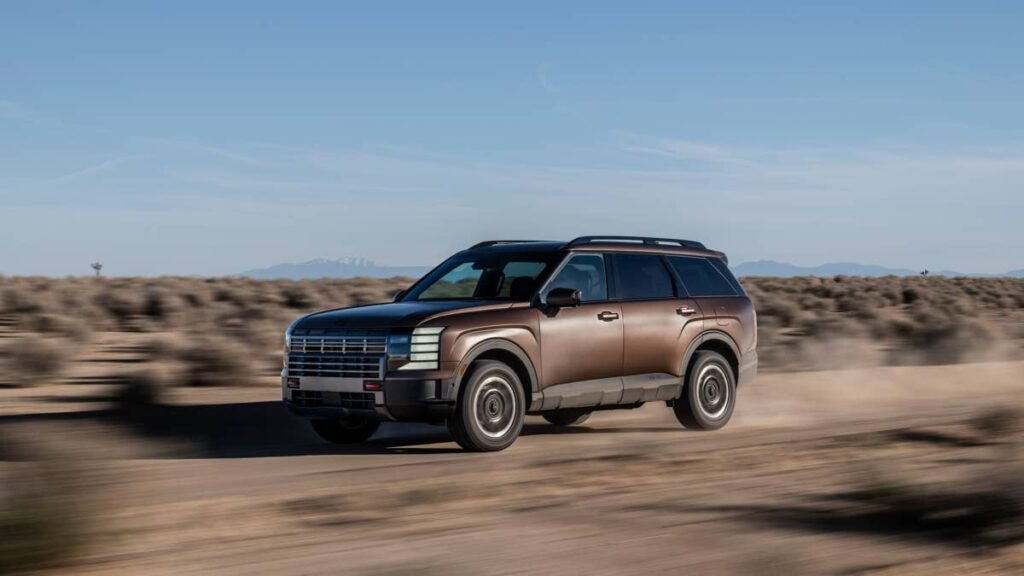
High-Speed Off-Roading
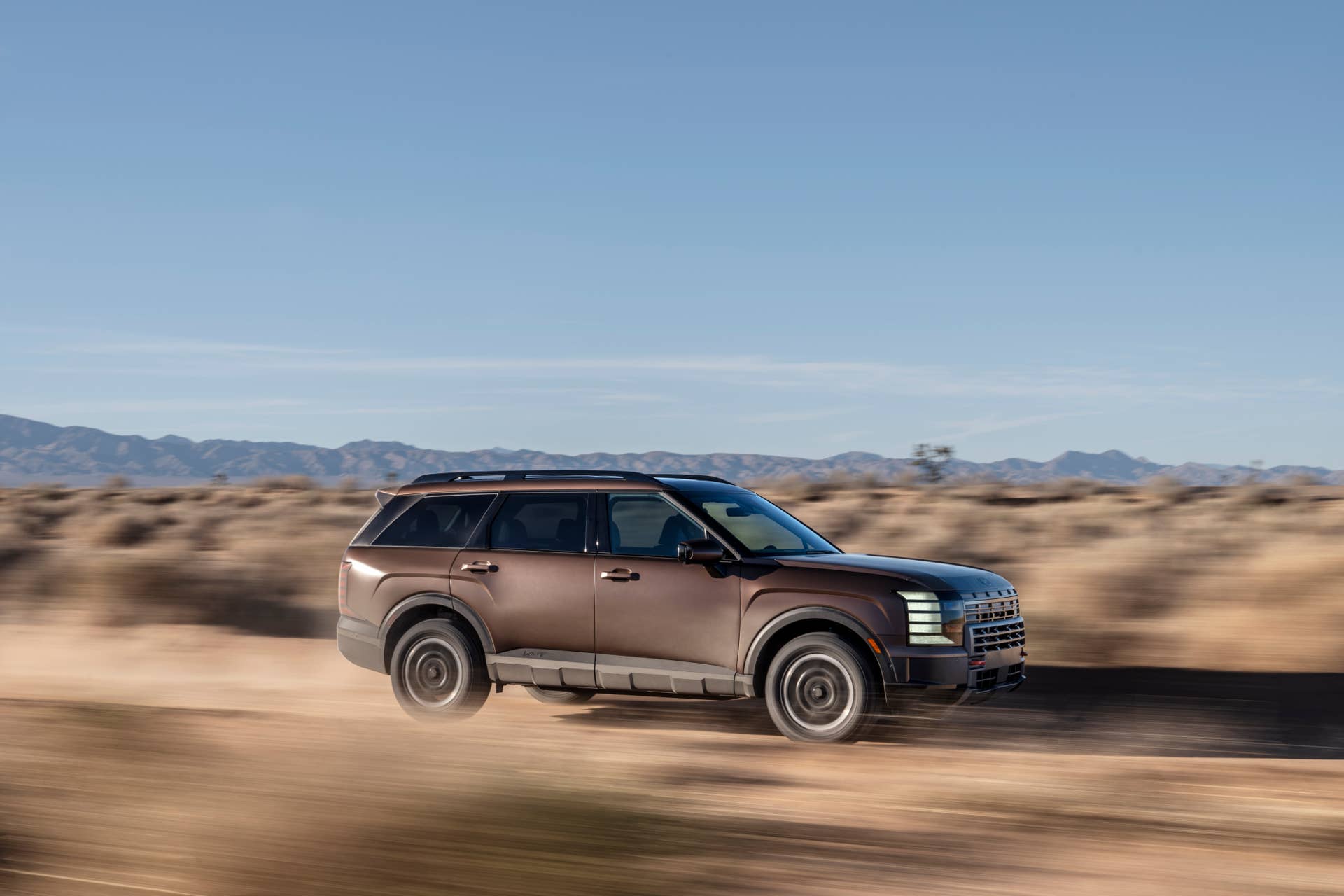
The Hyundai Palisade XRT Pro is the Korean marque’s most off-road-oriented SUV to date, but it doesn’t stick to the usual ladder-frame recipe you’d find in a Toyota Land Cruiser or Ford Bronco. Instead, Hyundai is betting on its monocoque platform to deliver a different kind of advantage on gravel roads.
Rather than chasing low-speed rock crawling, Hyundai tuned the Palisade XRT Pro for high-speed gravel runs. That’s where the unibody setup comes into its own, feeling more planted and responsive than the heavier, old-school ladder-frame SUVs.
Hyundai’s N performance team also had a hand in shaping how the XRT Pro drives. It’s a far cry from the Ioniq 6 N, but some of that focus on driver engagement and chassis feel made its way into this family SUV.
Hyundai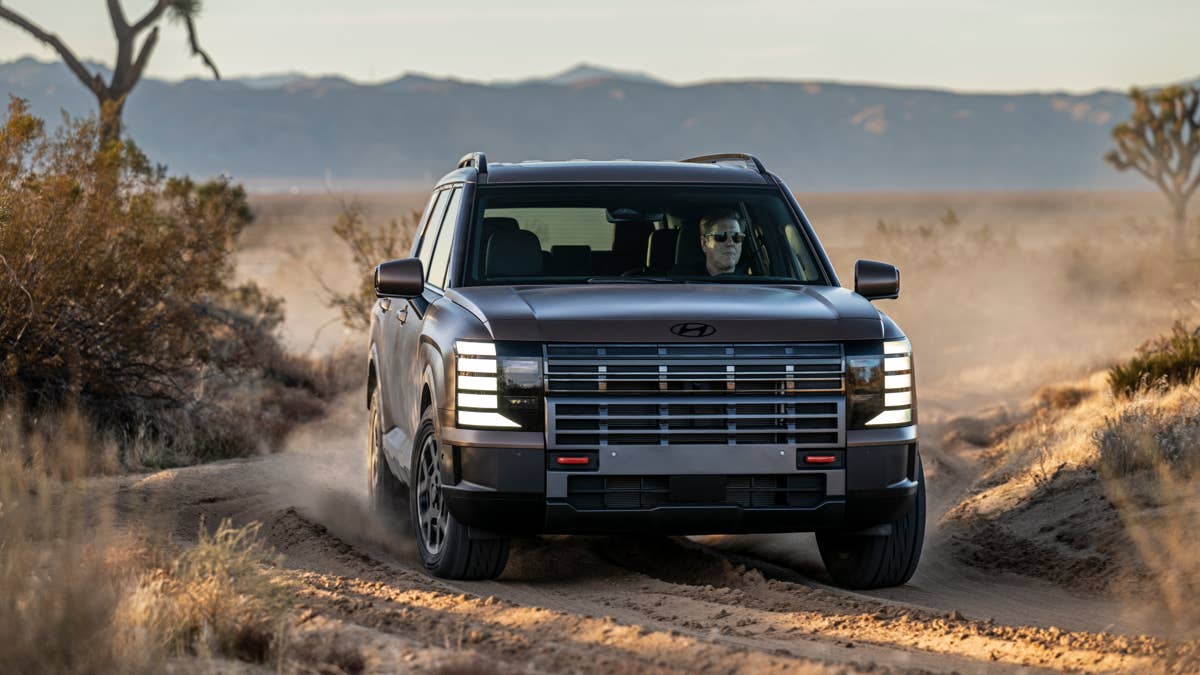
“A Little Bit of N About It”
Speaking to Carsales, Hyundai Australia product planning and development manager Tim Rodgers explained that the company intentionally leaned into the Palisade’s monocoque’s strengths.
“XRT Pro is a very different formula, but funnily enough, when we get to the actual product and the qualities it delivers, and the experience it delivers, it’s actually got a little bit of N about it,” Rodgers told the publication.
Rodgers pointed out that while the XRT Pro can tackle some classic off-road challenges, Hyundai built it for the kind of driving most owners actually do – long stretches on gravel and fast dirt roads, not just crawling over rocks or fording rivers.
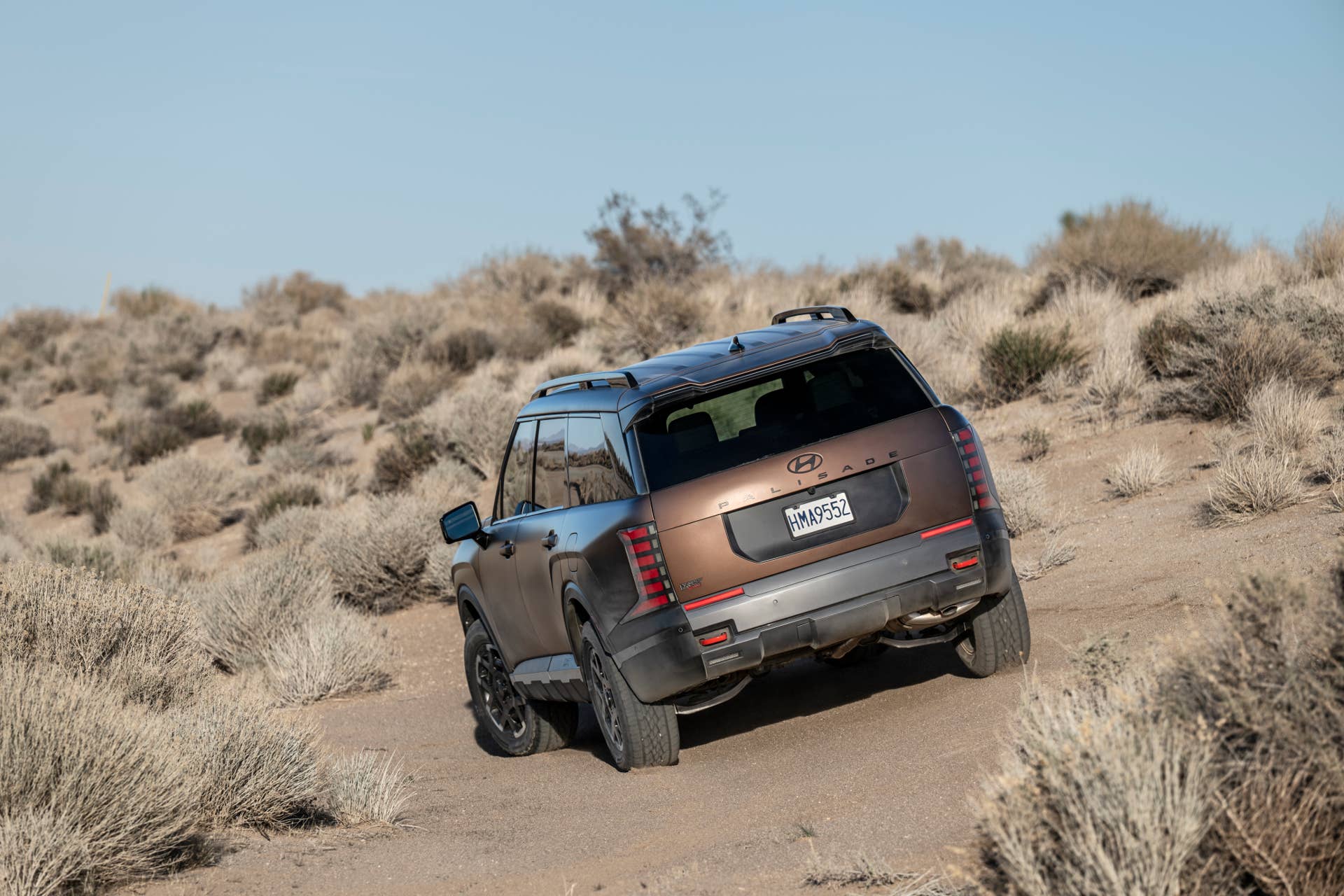
The Limits of a Monocoque Off-Roader Still Exist
The debate between monocoque and ladder-frame isn’t going anywhere. Unibody SUVs like the Palisade usually ride better on pavement and feel more stable at speed on loose surfaces, but they can’t quite match the brute strength of ladder-frame trucks when the going gets truly rough or when heavy towing is involved.
That’s where the Palisade XRT Pro will eventually meet its limits. It’s quick and comfortable on rough roads, but if you’re after the kind of durability you’d expect from a Land Cruiser deep in the wilderness, a body-on-frame SUV is still the safer bet.
However, Hyundai’s approach makes sense for how most people use their SUVs. The reality is, most adventure vehicles spend more time eating up highway miles and cruising gravel than scaling boulders. For that, a lighter, more car-like platform could actually be the smarter everyday choice.
Hyundai