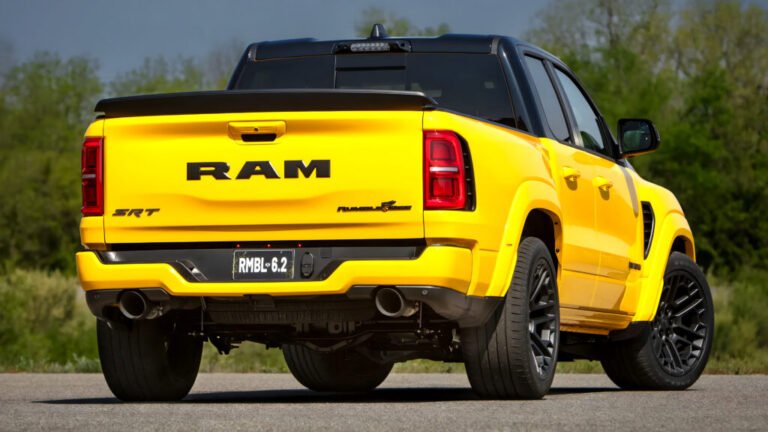
Right now, investors are overrun with pitch decks promising companies that run themselves. Agents work the operations and the AI layer does the managing. The pitch promises a startup will hit a billion dollars with 12 people and a swarm of bots. The premise is always the same. Humans are the bottleneck, and the machines are finally ready to take them out of the loop. While I should be the last person to argue against self-driving companies, I can’t help but be truthful: Driving a company is nothing like driving a truck.
The important difference is the destination. A truck always has one. You know the address before you turn the key, and the whole job is getting there safely, on time, and in a cost-efficient manner. A company has no such address. Where is a company supposed to be going? That is just a slighter version of the oldest questions we have: Who are we, where did we come from, and where are we going? The going is the point.
I won’t tell every company how to run itself, but I am trying to build a great one. Napoleon said every soldier carries a marshal’s baton in his pack. I am that soldier. And a great company is the one you can’t put on autopilot. Automate where it is headed, and you delete the only thing that made it great.
WHAT IS A COMPANY?
So if AI is not the driver, what is it?
Start with what a company actually is. It is not a machine waiting to be taken over by an algorithm, but a living thing: a crowd of free wills that collide, light each other up, and water each other. The best ideas never fall out of a central optimizer. They come from two people arguing and discovering a solution from a disagreement neither could have reached alone. The best conversations happen spontaneously at the water cooler.
Think of Kind of Blue. Miles Davis cut the greatest jazz album ever made with no rehearsal and no real score. The musicians got a sketch of a few scales and played, and nearly every track is a first take. That chemistry could not be designed, it had to organically be allowed to happen. A great company should sound like that.
AI is not the driver; it is the amplifier. It does not replace the players, but makes them louder, by building avatars of humans. In AI, we call this distillation. The model takes in a person’s thinking drop by drop and condenses it. The result is an avatar that holds that person’s knowledge, their judgment, even their verbal tics, and can answer in their place whenever they are not around.
THE CONVERSATIONS MATTER
The most powerful thing I have watched AI do is enable real communication. Most companies drown in meetings. The calendar fills with pre-planned syncs, and a pre-planned agenda is where real exchange goes to die. If every hour is booked, where is the room left for two minds to collide? That is the room AI clears. In the AI age, most of those meetings should not exist. The low-level work of checking what’s written down can be handed to a model, which frees people for the decisions that matter.
Cutting meetings is the easy part. The hard part is the conversation that no meeting ever forced. AI has no sense of social timing, and it never gets tired or interrupted. So it keeps pressing the questions no one in the room will—the blunt, obvious, unavoidable ones. Every project carries a handful of them. Under that relentless questioning, the art of saying nothing precisely has nowhere left to hide. The amplifier drags these questions into the open early, and makes the people who own them face each other.
We learned this the hard way. In 2025 we built a perfectly automated agent to answer questions about our HR handbook. It became a cyber dust collector within weeks. We had built a driver, when people wanted an amplifier. Nobody argues with a handbook for long. But arguing with a teammate for weeks, over a project that is actually moving, is simply human nature.
What everyone treats as a self-driving problem is really an assisted-driving one, a communication problem.
AMPLIFIERS AND SPARKS
And here is what should make you hopeful rather than anxious. The more capable these amplifiers become, the more valuable the spark that decides where to aim them becomes. And AI can’t supply that spark. That spark is the taste for which problems are worth solving. The nerve to commit to a direction before any number can justify it. That is not being automated away. It is about to become the rarest, most human thing in the building.
A truck needs a destination. A company needs people who are still arguing about where to go. Keep them. Just stop making them wait for each other.
Xiaodi Hou is founder and CEO of Bot Auto.