Rose Gaffney/Loving Local NYC
- Sara Russell took her bath-and-body business full-time after being laid off in 2023.
- She was hesitant to use AI until she started using Claude to help run her business.
- She said AI’s negative impacts could reach a tipping point that would make her stop using it.
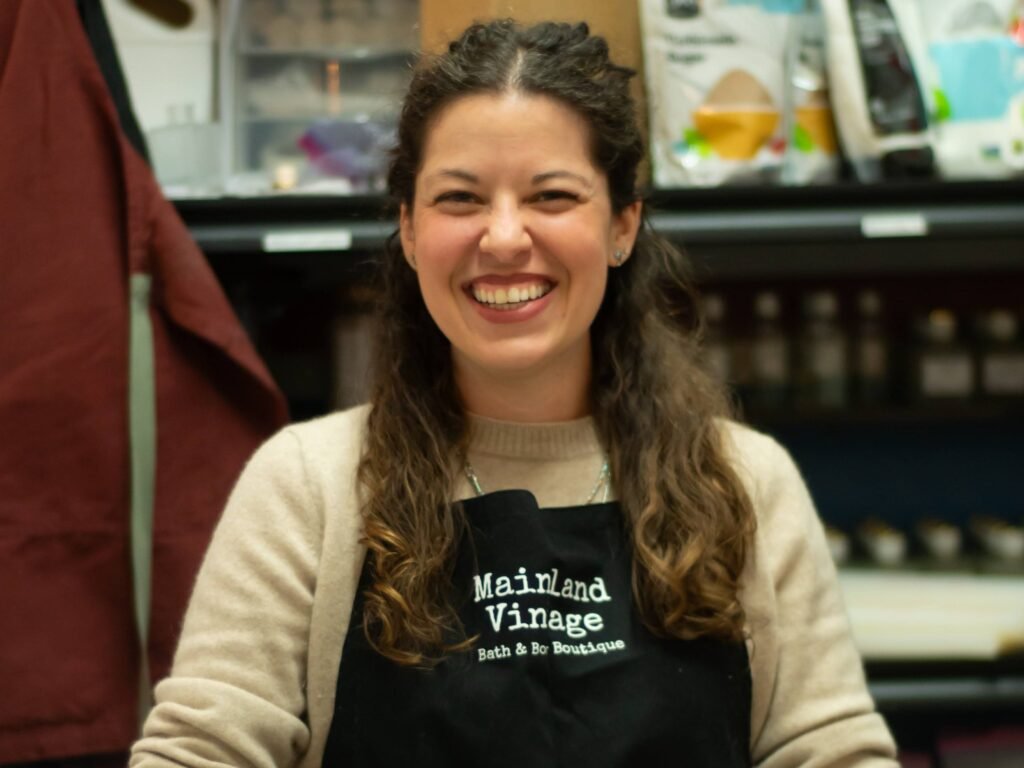
This as-told-to essay is based on a conversation with Sara Russell, a 37-year-old small business founder based in Brooklyn, NY. It’s been edited for length and clarity.
I’ve known about AI for a while, but I was always hesitant to use it. I don’t want it to take away my creative freedom.
I’ve run my small bath-and-body business full-time since 2023, and the creative side of the business has never been a problem for me. Building the foundation for a strong, solid company is the part I had very little experience doing.
After I started using Claude projects in February, I had a light bulb moment. I created Claude projects for every business department I needed, which became a game changer for me. I feel like I’m not just turning a hobby into a small business; I’m building a business that could, in theory, scale.
Still, what’s important to me is how I use AI. It’s always going to be a tool, not a partner.
I took my business full-time after my layoff
In 2020, I was on YouTube, and, like everyone else who wasn’t going outside, I kept coming up with new hobbies to try. I came across a video of this woman making soap, and decided to try it out. After making it the first time, I was obsessed.
I made everyone soap for Christmas that year, and in 2021, I launched an Etsy store, which I ran alongside my full-time marketing job. For two years, I slowly built out different collections of soaps on weekends and after work until January 2023, when I was laid off from my full-time job.
I’m very blessed to have a husband who can pay our bills, so I don’t have to make rent from the number of soaps I’m selling. I had already launched wholesale in 2022, and that was slowly growing. So I decided that, for six months, I was going to try to take this full-time.
I didn’t know how to run a company
After about three months, I realized I never wanted to go back to a different job, but I didn’t really know the logistics of running a company. I knew that SEO and Google Analytics data were important, but I didn’t really know what they were. Same with different products and sales terms.
I spent a lot of time Googling things, taking LinkedIn Learning courses, asking people in small business group chats, and watching YouTube. Often, answers I’d find wouldn’t always apply exactly to my situation. I’d spend three hours researching a topic, only to walk away with one actionable thing that makes sense for me.
I would randomly ask ChatGPT questions or see if it could help me with drafting an Instagram caption, but on the copy side, I hated 75% of what it would spit out, and I was never that organized with it for it to feel especially useful. I also didn’t want to use it for visual design. I wanted to maintain that control over my creative eye.
I had a lightbulb moment with Claude this year
Earlier this year, when Claude was in the news a lot, my husband, who uses it at an enterprise level, told me about how I could use it and organize chats into projects. As we kept talking, I realized that this could be super useful to me in the departments of my business that I don’t know how to run.
There’s a lot of hesitation about using AI in the creative community, especially when you’re diving into design and other creative applications. Creating AI photos and videos is very frowned upon, and so there’s a hesitation about what to use AI for.
On the other side of things, several other business owners in the small-business space have started using it to help with their business frameworks. I’m seeing a lot more people who are open to AI in an organizational aspect. So, I decided to try it.
Courtesy of Sara Russell
How my AI-led business departments work
I created a brand-new Claude account for $20 a month and told it that I wanted each project assigned to a different department within my company. I wanted a marketing department, sales department, finance department, and product development department. I told all the projects that I want them to be collaborative and to defer to me as the CEO of the company. They can give me ideas, but I’m the authority.
The projects themselves are organized like a C-suite, but the output is treated like that of an entry-level employee. I’ll have my CFO project help me interpret sales data analytics that I don’t know how to read, but I don’t let it make any decisions on my behalf.
I also have a specific chat in my marketing project called Instagram Strategy. I’ll share the baseline of where we’re at and the type of content I’m making, and ask it to research all the different best practices and things we could consider to convert that audience into actual customers.
One of the most useful ways I have my infrastructure set up is through an AI chief of staff who sets up a monthly meeting for me. It compiles a monthly recap of all the chats with my different departments into a single document. Then I go through the document and see what I’ve delivered on, what I haven’t, the sales numbers, what’s coming up, and anything else relevant.
It allows me to stay organized and make all my efforts cohesive across every part of my business.
There could be a tipping point where I stop using AI
The main things I think are scary about AI are the lack of government oversight and regulation, and the potential environmental impacts of data centers.
It seems like I’m constantly hearing negative stories about environmental impacts and wealth disparities caused by AI. I’m doing give-back programs for organizations I support, and I’m going to focus my energy where I can control it, rather than trying to stand on a high horse and say, “I’m never going to use AI because I’ve heard bad things about it.”
I want to be mindful of my overall usage. Which is also why I don’t want to upgrade my plan. Having a usage limit helps me be mindful of how and when I’m turning to AI. Still, I think there could be a tipping point at which I no longer feel I can justify using software that can harm the environment, industries, and people.
I think we are still on the frontier of where it will go.
I’d rather hire more people than pay to use more AI
I’m a small self-funded business, and I’m currently applying for grants. I’d rather use that money to hire a couple of part-time employees, or one full-time employee, to take some of this off my plate, instead of upgrading my Claude account to do more.
Seventy-five percent of the stuff I’m doing now with Claude, I wouldn’t have been able to do before. It’s certainly been very beneficial to me, but I’m always going to prioritize human creativity over being able to do more with AI.
Do you have a story to share about how you’re spending AI tokens? If so, please reach out to the reporter at aapplegate@businessinsider.com.