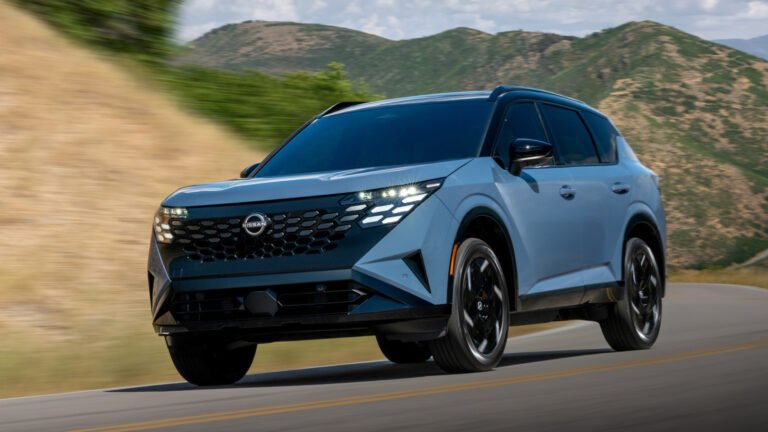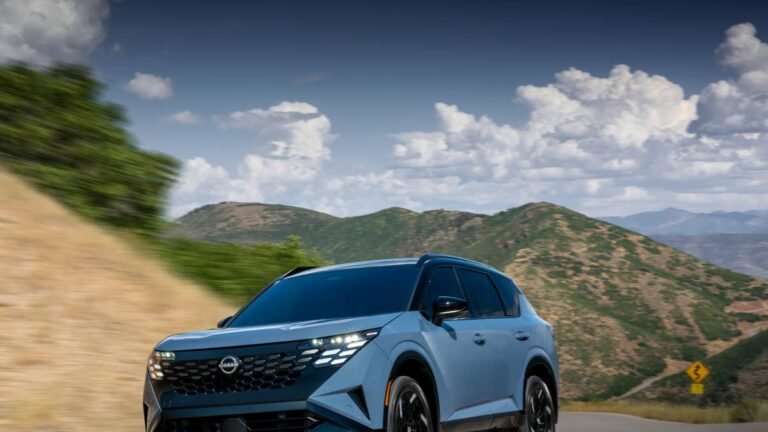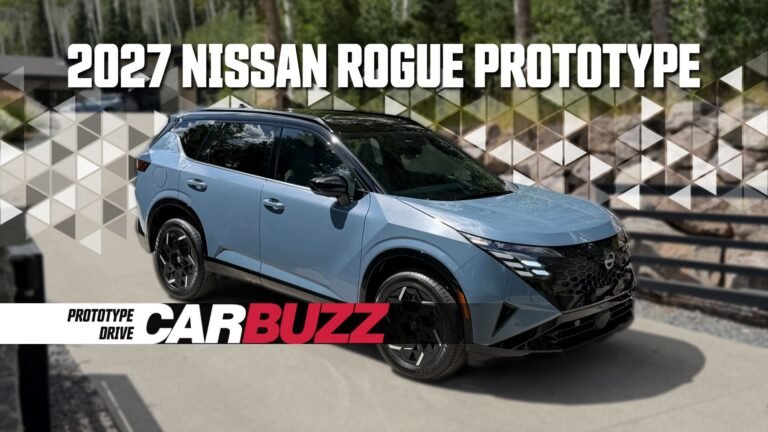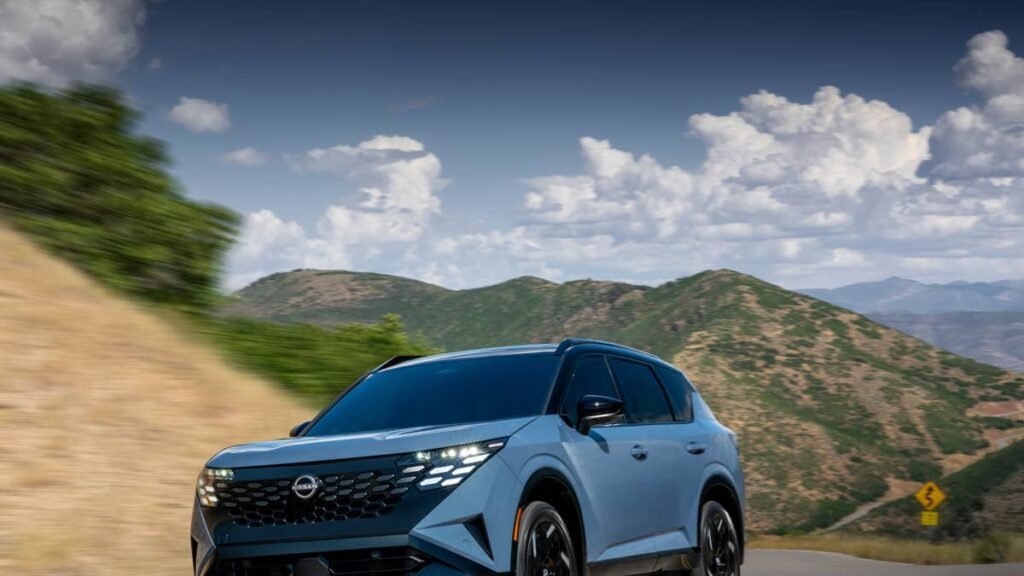
Park City, Utah, is better known for its downhill skiing than for showing off new hybrid crossovers. In the midst of summer, though, its snow-covered slopes turn into lush, green hills, its narrow roads twist through gated mountainside neighborhoods, and the relative silence makes it an ideal place to notice when a coarse gasoline engine interrupts the proceedings. In the all-new 2027 Nissan Rogue Hybrid, that interruption was negligible.
My previous experience with the outgoing Rogue left considerable room for improvement. When I reviewed the 2026 Rogue Rock Creek, I enjoyed its comfortable ride, eager turbocharged engine, and strong value, but its dated cabin and aging underlying architecture were much harder to overlook. The new Rogue Hybrid, however, feels as if Nissan took those criticisms to heart. It looks modern, feels substantially more upscale, and introduces a powertrain unlike anything else in its class. After driving a pre-production example back-to-back with a 2026 Toyota RAV4 Hybrid Limited, I came away thinking Nissan may finally have something capable of unsettling the segment benchmark. I only drove each vehicle for about 10 minutes, so stay tuned for a proper, in-depth verdict, but it was enough time to reveal what I was most curious to discover.
Nissan
How Nissan’s e-POWER hybrid works
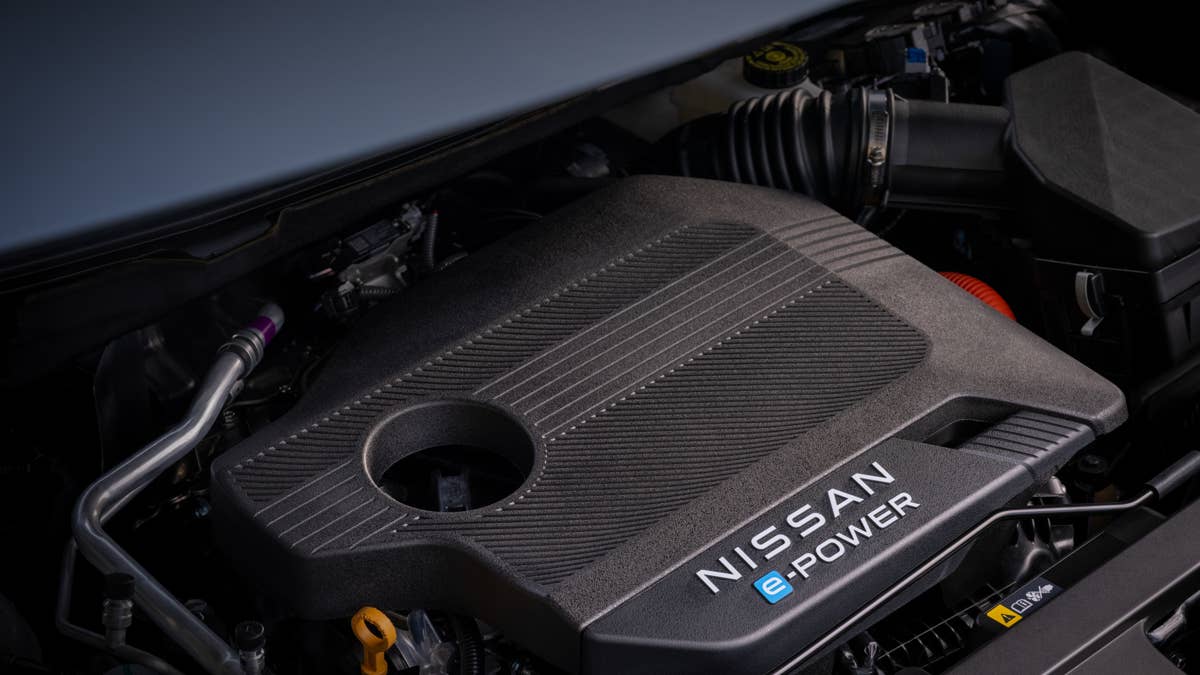
The Rogue’s official name is the 2027 Nissan Rogue Hybrid, while e-POWER refers to the underlying technology that makes it so unique. Unlike a conventional hybrid, the Rogue’s gasoline engine never actually drives the wheels. Its new turbocharged 1.5-liter three-cylinder operates exclusively as a generator, producing electricity for a small lithium-ion battery. Two electric motors—one at each axle—handle all propulsion. That makes the Rogue a series hybrid rather than a conventional power-split hybrid. You fill it with regular gasoline and never plug it in, but from the driver’s seat, it behaves remarkably like a fully electric vehicle.
|
2027 Nissan Rogue Hybrid specification |
Figure |
|---|---|
|
Gas engine |
1.5-liter turbocharged three-cylinder generator |
|
Electric motors |
Front and rear permanent-magnet motors |
|
Total system output |
225 hp |
|
Battery |
1.67 kWh lithium-ion |
|
Drivetrain |
Standard dual-motor AWD |
|
Nissan-estimated fuel economy |
40 city/36 highway/38 combined mpg |
|
Towing capacity |
1,500 lbs |
|
Cargo volume |
31.1–65.9 cu-ft |
|
Starting MSRP |
$35,490 plus $1,575 destination |
The battery’s relatively small capacity raises an obvious question: What happens when its charge gets low? Nissan engineer Christian Spencer, who accompanied me during the drive, explained that the generator can still provide enough electricity to maintain full system output even with a depleted battery. Power should not suddenly fall away as it can in certain plug-in hybrids once their larger batteries are exhausted. Unless the Rogue runs out of gasoline entirely, all 225 horsepower should remain available.
Thinking about selling your car? Get an instant cash offer online now. Click here to get started.
Nissan
It drives more like an EV than a hybrid
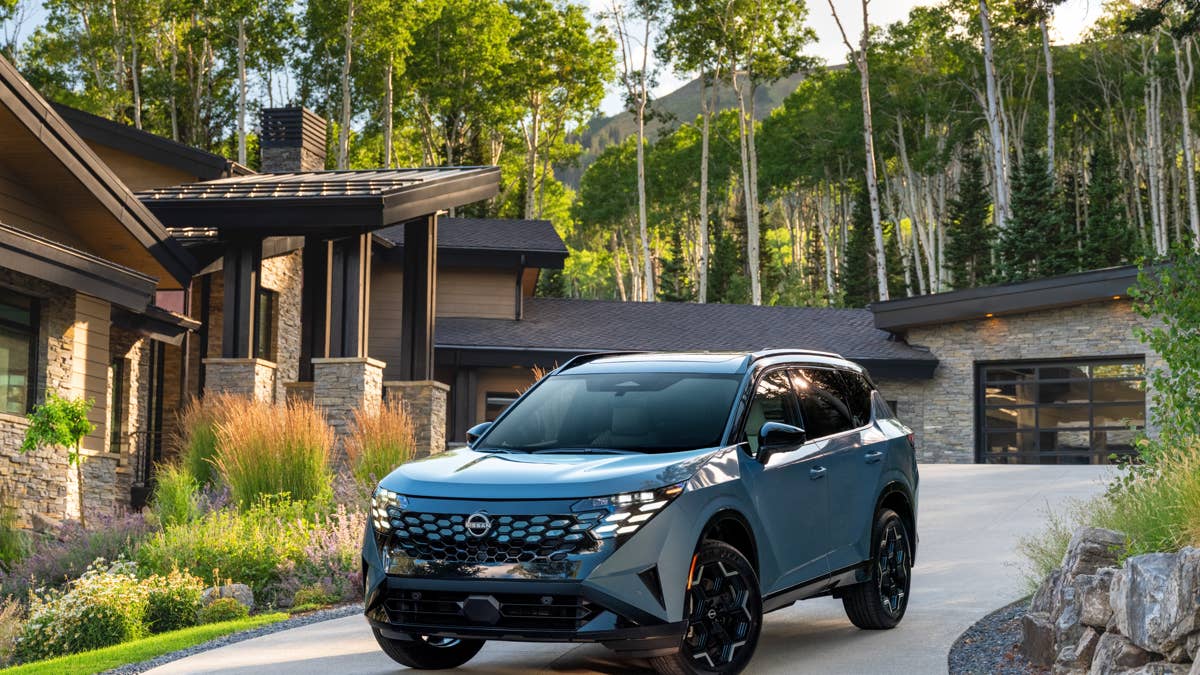
The difference between the Rogue Hybrid and the segment’s longstanding gold standard became apparent as soon as I pressed the accelerator. Power arrived immediately, yet it was still followed by smooth progression, without having to wait for the engine to build boost, the transmission to select a ratio, or the revs to rise. The Rogue pulled away more smoothly and quietly than the RAV4, with a distinctly electric sense of responsiveness.
Its gas engine still activates when more electricity is required, but it ran less frequently during my drive than the Toyota’s engine did. Importantly, it remained much less intrusive even when it did run. Going uphill, the RAV4’s engine revved noticeably as it helped propel the vehicle. The Rogue’s engine only needed to generate electricity, allowing it to operate more discreetly in the background as if it were merely idling. The RAV4 felt lighter from behind the wheel, which some drivers may prefer, but the Nissan nevertheless felt more substantial and refined. Its steering carried greater weight, returned more information, and exhibited more accurate on-center response. Even the leather around the wheel felt richer.
The roads were mostly smooth, so I can’t say much about either vehicle’s ability to absorb more severe impacts and unpaved surfaces. On the limited route available, though, the Rogue remained composed, and its regenerative and friction brakes blended naturally. The Toyota did nothing seriously wrong; the Nissan just felt as if it didn’t need to work as hard.
Nissan
The “Smooth Stop” feature is more interesting than it sounds
One of the Rogue’s most intriguing technologies has one of its least glamorous names. Smooth Stop automatically modulates brake pressure during the final moment of an ordinary stop. Instead of coming to rest and allowing the suspension to pitch forward before settling backward, the Rogue manages that weight transfer so the body rests more gracefully. I experienced the feature repeatedly, and it worked remarkably well. It doesn’t eliminate weight transfer or create an unnatural floating sensation—it simply removes the small head toss that drivers and passengers often accept as an unavoidable part of stopping.
The system doesn’t interfere with emergency braking. During a harder stop, Smooth Stop stayed out of the way and allowed the Rogue to halt as abruptly as the situation demanded. Nissan’s e-Pedal also provides genuine one-pedal driving and can bring the Rogue to a complete stop through regenerative braking. In that mode, deceleration was already sufficiently gradual that Smooth Stop was largely unnecessary. I noticed the feature most clearly when using the brake pedal conventionally. It sounds minor, but that is precisely why it works. Rather than demanding attention, it makes an everyday action feel more seamless.
Shopping for a new car? Click here to get a great deal on your next vehicle. Powered by Carvana, no haggle pricing, 100% online.
Nissan
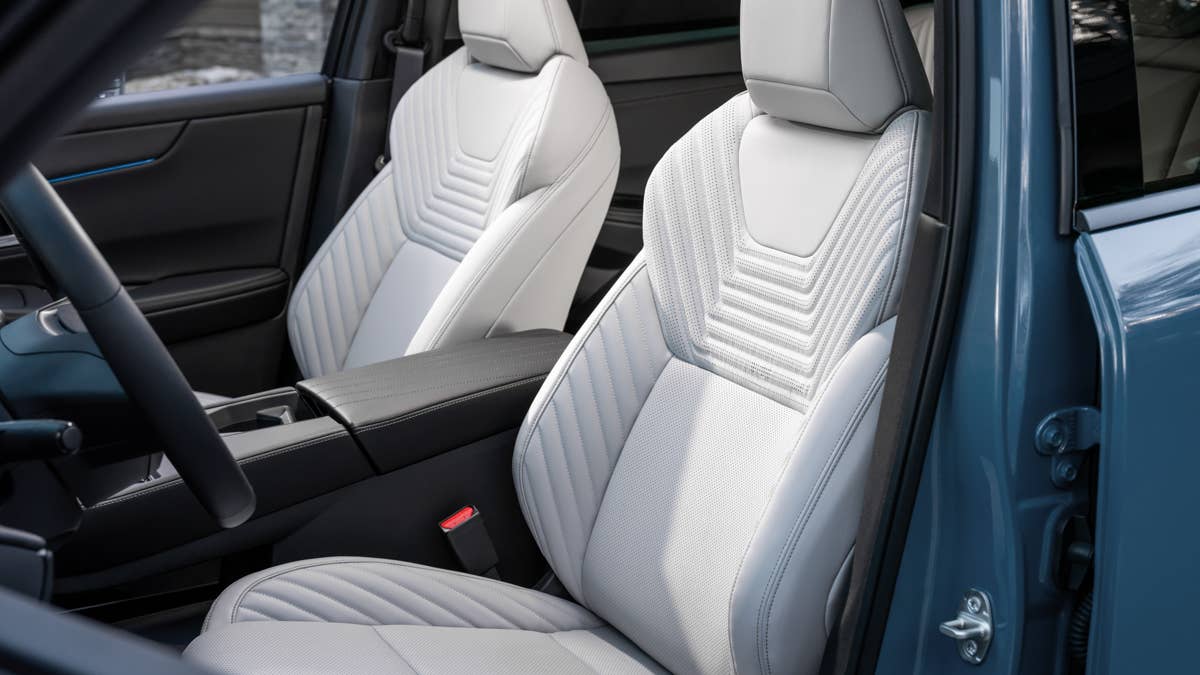
Nissan
A Rogue interior that finally feels current
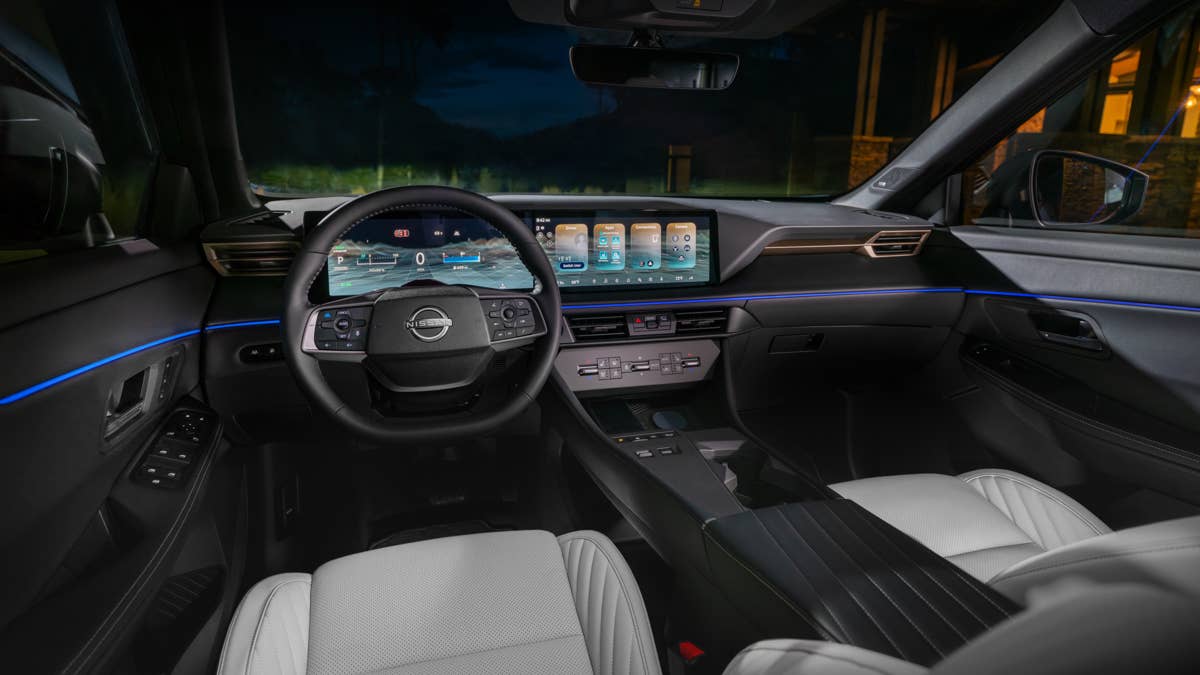
Some of the prototype’s interior panels were covered, but Nissan also displayed production-ready vehicles with uncovered interiors. What I could see represented an enormous improvement over the outgoing Rogue. The new cabin feels modern, airy, and surprisingly upscale. A 12.3-inch touchscreen comes standard, while SR Technology Package and Platinum models receive a 14.3-inch display with Google built-in and Google Gemini. Nissan also retained physical climate controls, an increasingly welcome decision. Available features include ventilated front seats, heated rear seats, 64-color ambient lighting, dual Qi2 wireless charging pads, and a 10-speaker Bose system. An available 3D around-view monitor can render the Rogue translucent, helping drivers see curbs and other obstacles around or beneath it, though I did not personally test that system.
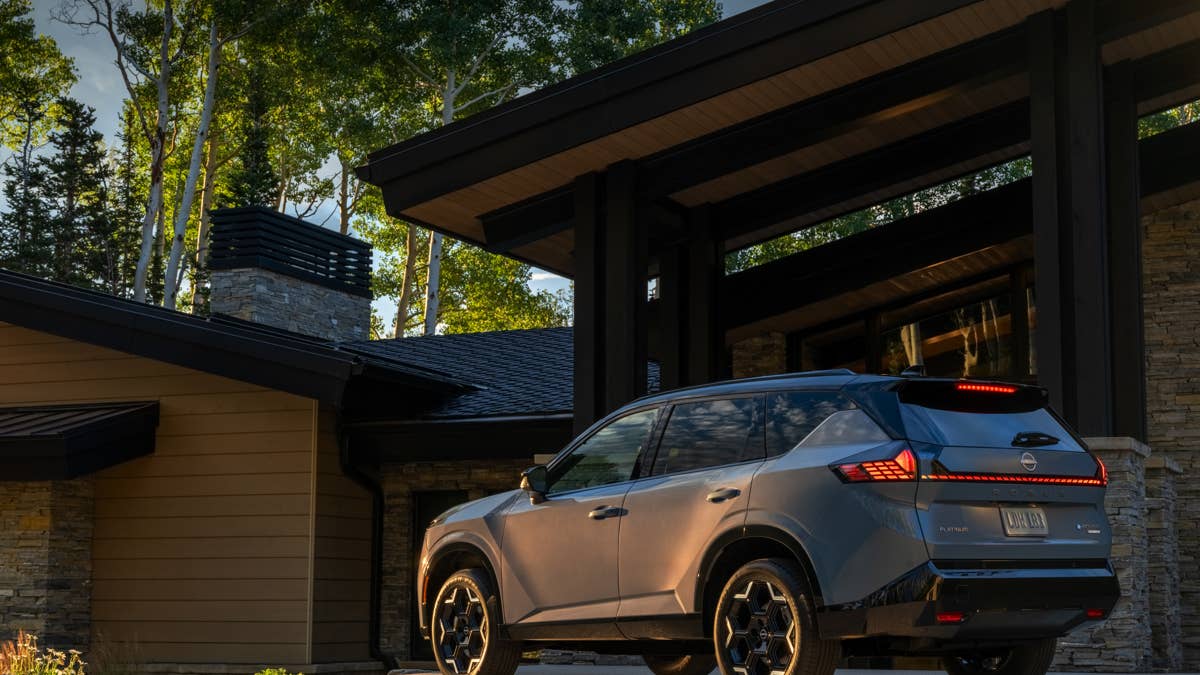
Outside, the redesign adds genuine distinction without abandoning the Rogue’s identity. The blue paint photographed in Park City features a subtle gold flake that comes alive under the Utah sun, while the geometric grille and lighting signatures make the crossover look more expensive than before. Pricing begins at $35,490 for the SV AWD. The first version to reach dealers will be the $41,490 SR AWD with Technology Package in fall 2026. The complete SV, SR, and Platinum range follows in early 2027, topping out at $43,490 before destination and options. Nissan says a gasoline-powered version will eventually join the lineup, although timing remains unknown.
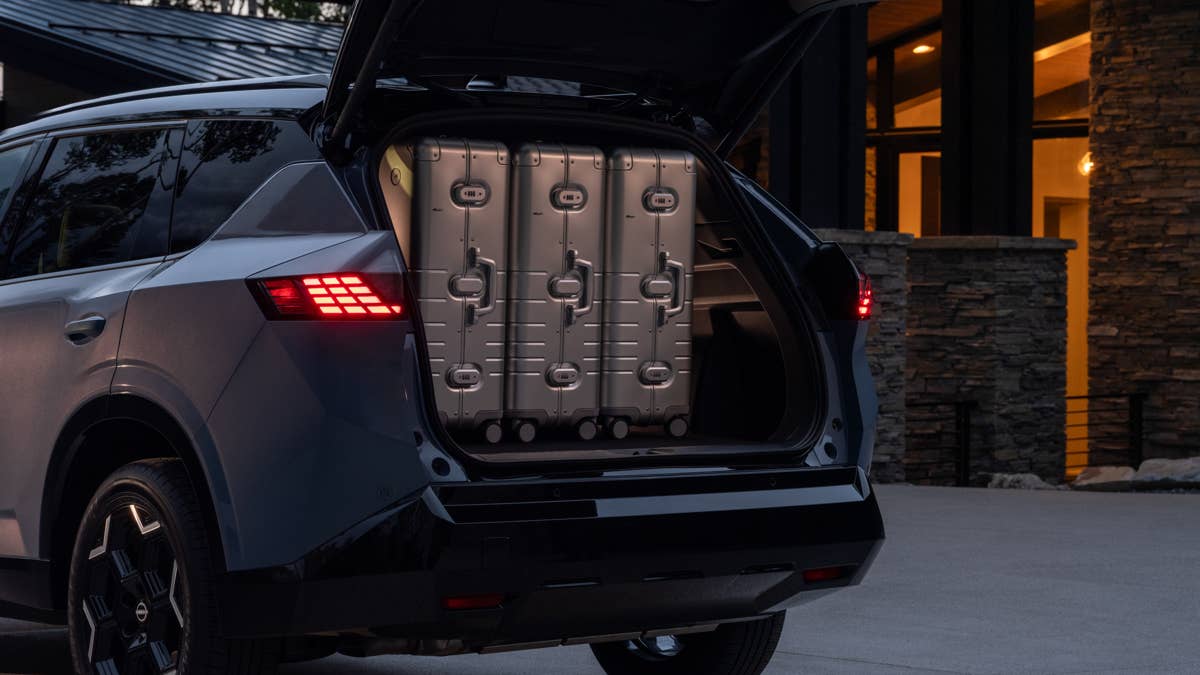
Nissan
A promising first impression—not yet a final verdict
Ten minutes can’t quite answer the sort of questions that matter most to prospective owners. Nissan’s targeted 38-mpg combined rating still requires EPA confirmation, and only an extended test can reveal how often the engine runs during sustained highway driving or how the system behaves in severe weather. Long-term reliability is another unknown. Nissan has sold nearly two million e-POWER vehicles globally since 2016, but this is the technology’s first application in a U.S.-market Nissan, and the first to power all four wheels.
The RAV4 also has an enormous advantage in terms of reputation and familiarity. It would be premature to declare the Rogue the better hybrid after one short drive through a gated neighborhood. What I can say is that the Rogue felt more refined, more responsive, and more convincing than I expected. Its cabin finally feels worthy of Nissan’s most important crossover, and its unusual powertrain produces a genuinely EV-like experience without requiring owners to change how or where they refuel. Nissan will need to explain e-POWER carefully. Better yet, it needs to get potential buyers behind the wheel, because the benefits become much easier to understand once they’re felt firsthand. The new Rogue Hybrid doesn’t just add electrification to an existing formula—based on this promising first encounter, it might fundamentally improve how an everyday hybrid feels.
Autoblog aims to feature only the best products and services. If you buy something via one of our links, we may earn a commission.