ssavelyeva1/Shutterstock
- The Institute for Economics & Peace released its annual Global Peace Index last month.
- Iceland topped the list for the 19th consecutive year, beating New Zealand and Switzerland.
- The country doesn’t have a traditional military and enjoys political and social stability.
Every country is home to crime and conflict, but as indicated by the Institute for Economics & Peace’s 2026 Global Peace Index (GPI), the extent of that violence and instability varies widely.
Business Insider recently compiled a list of the world’s most peaceful countries, based on the GPI. The report, released in June, evaluated 163 countries across 23 peacefulness indicators, split across three domains: ongoing conflicts, societal safety and security, and militarization.
While European countries made up the majority of the top 10, Iceland stood above the rest by a large margin.
The island nation received the best score in the ongoing domestic and international conflict and militarization domains, and it placed third, behind Finland and Norway, in societal safety and security.
Overall, it was named the most peaceful country in the world, upholding the title for a 19th consecutive year.
Iceland’s ranking reflects its lack of ongoing conflict, low level of militarization, and comparatively high level of domestic safety.
Iceland is the only NATO member without a standing army
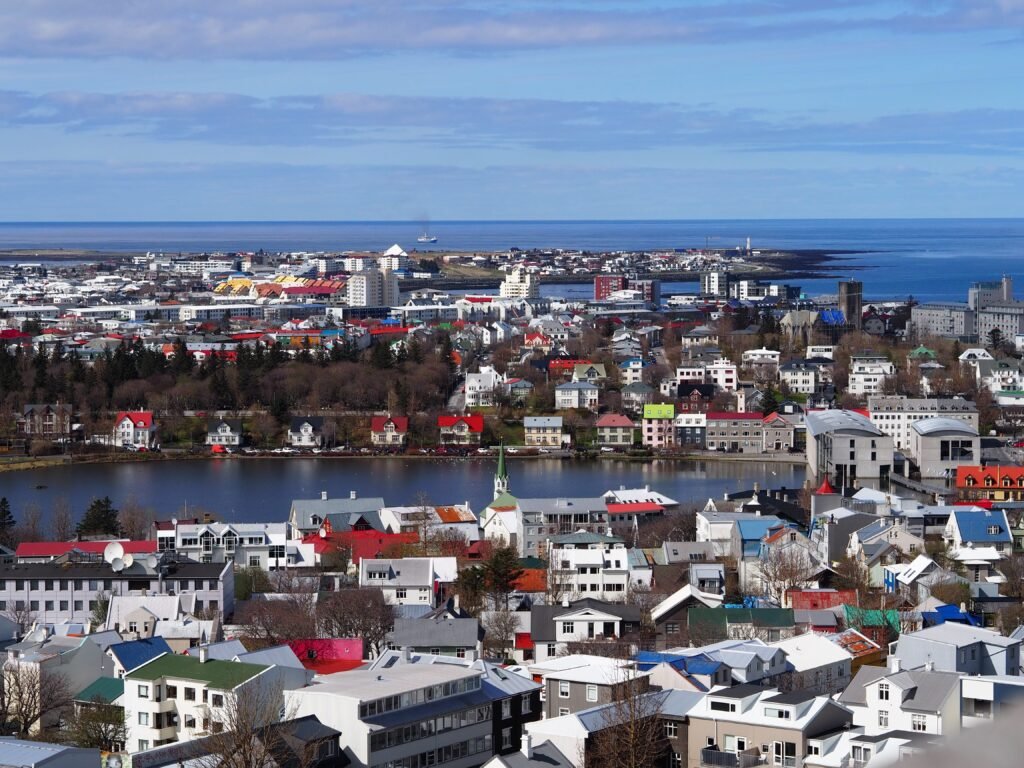
The country, which has a population of around 395,000, has no army, navy, or air force.
Security is handled by the Coast Guard, which has three boats and an air-defense system, and a police force that includes a small 50-person special unit, informally known as the Viking Squad. These armed officers are trained for high-risk scenarios, such as counter-terrorism and arrests in violent crime cases, according to the Icelandic government.
Instead, Iceland, a founding member of NATO, relies on NATO, occasional deployments by its partners, and a defense arrangement with the United States for its security.
Palmi Gudmundsson/Shutterstock
As part of this arrangement, the US had a military presence in Iceland beginning in 1951, but all permanent US forces left by 2006.
In Iceland’s modern history, it has never fought in any conventional wars.
Iceland’s most serious modern confrontations with other nations were the Cod Wars, a series of mid-20th-century disputes with Britain. Although war was not formally declared, these conflicts saw Iceland’s Coast Guard clash with British vessels over fishing rights, according to Imperial War Museums.
The country also generally enjoys peace domestically
Iceland’s score in the GPI’s violent demonstrations metric improved by 43%, indicating that demonstrations were less violent than in the previous measurement period.
This was despite the metric trending in the opposite direction overall: The report cited violent demonstrations as one of the three indicators that have seen the biggest deterioration since 2008. In the US, the report said, violent demonstrations “increased substantially.”
In comparison with the rest of the world, Iceland also has a low intentional homicide rate. The country recorded one homicide per 100,000 people in 2023, the latest World Bank data shows.
The world average in 2023 was five, and the US average was six.
Iceland also scores highly on measures of social inclusion
Palmi Gudmundsson/Shutterstock
While not metrics considered by the GPI, the country consistently ranks highly on indexes of gender equality and LGBTQ+ legal protections.
In the World Economic Forum’s 2025 Global Gender Gap Index, Iceland ranked first for a 16th consecutive year.
The country is also frequently cited as a global leader in LGBTQ+ acceptance. In ILGA Europe’s 2026 Rainbow Map report, which measures 49 European countries on LGBTQ+ rights, Iceland ranked third.