This article is part of a series focusing on underrepresented craft histories, researched and written by the 2025 Craft Archive Fellows, and organized in collaboration with the Center for Craft.
I come from a family of both tradition and the trades. Work, even something as simple as mopping, was often coupled with the saying échale arte — to add art to the utilitarian. Craft, artesanía in Mexico, was never entirely separate from work, necessity, or the everyday. It is a knowledge embedded in the hands.
Hands are central themes in my research on Mexican-American altars as craftwork. These altar-makers’ hands — often just as accustomed to labor as to craft — are capable of transforming displacement and recreating home. Craft attempts to abarcar, or encompass, something more than the aesthetic. It grasps the symbols, skills, histories, and inherited knowledge that make handiwork dense with meaning. A crafted object evidences not only the hands that made it, but generations of repeated gestures carried forward through those hands.
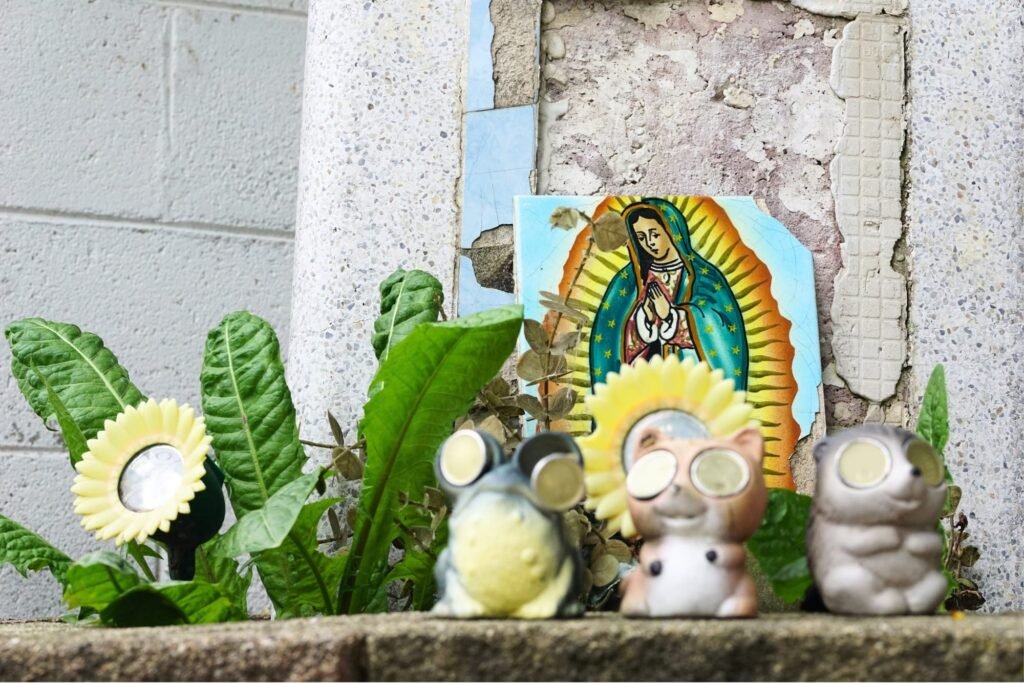
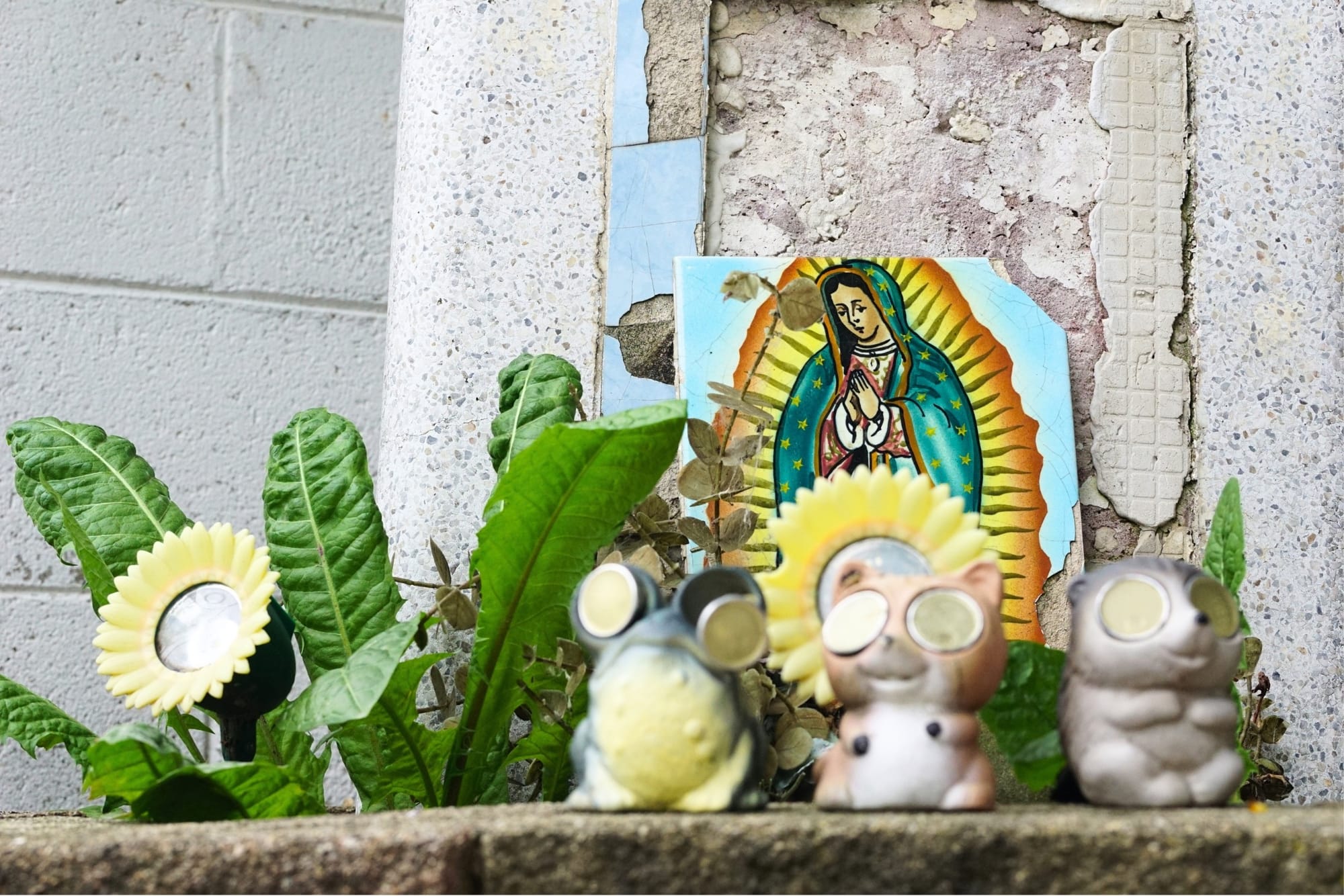
Much of folk craft begins with the home: made in the home, for the home, and essential to constituting what a home is. This becomes particularly meaningful in migration, when home must be remade. Among Mexican migrants in the United States, part of that remaking is altar-raising (levantar un altar) to La Virgen de Guadalupe. Collectively, these altars form their own archive of an overlooked American craft tradition — one rooted in the migrant and homesteading experiences of recreating home in new, even hostile environments.
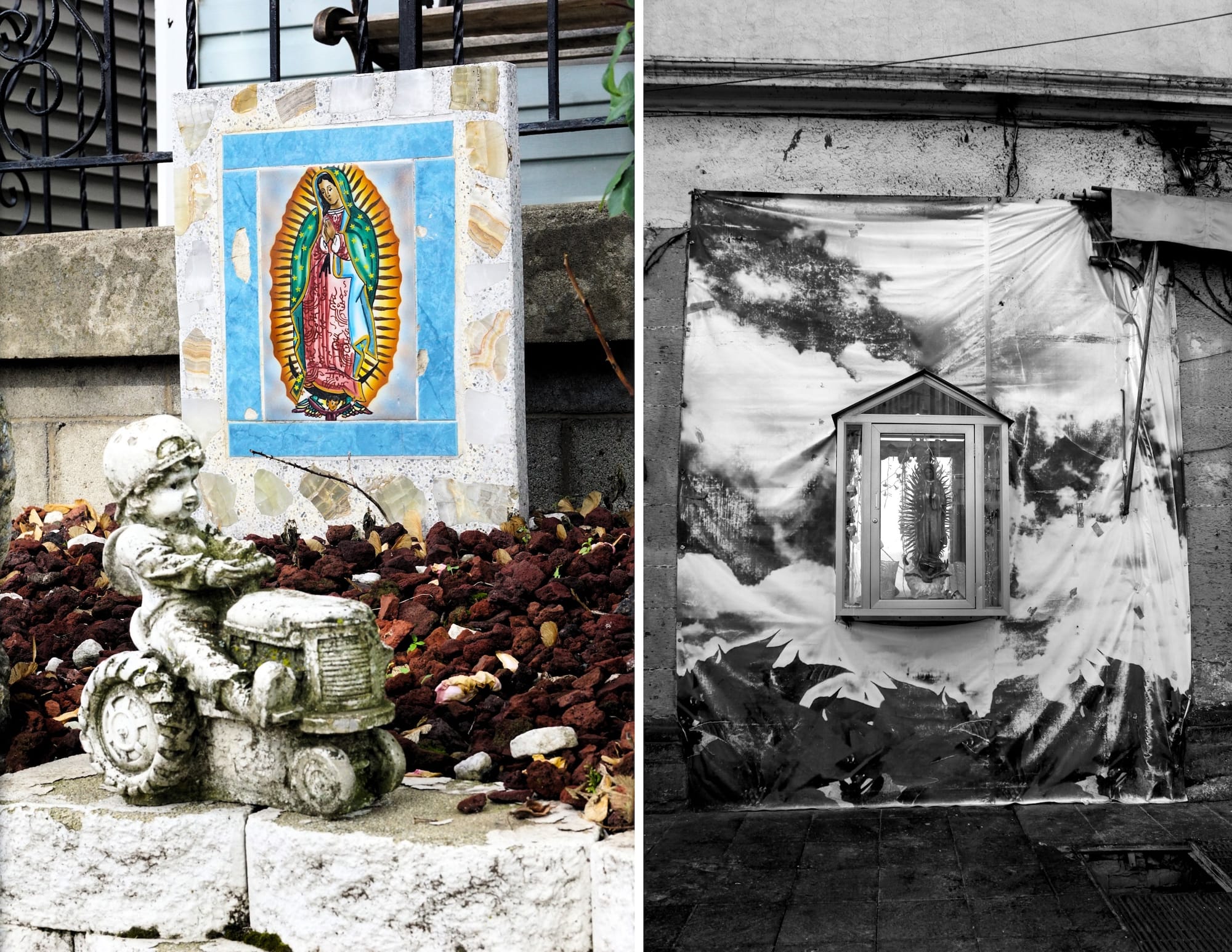
Mexican altar-making is not entirely absent from institutional spaces. Chicago’s National Museum of Mexican Art, for example, has presented an annual Día de Muertos exhibition for four decades, placing ofrendas from Mexico and the United States alongside folk and other forms of visual art. Yet the everyday devotional altars raised to La Virgen de Guadalupe on porches, in gardens, storefronts, windows, and along streets in Mexican neighborhoods have received far less institutional attention.
I turn first to my personal archive of photography. For nearly 15 years, I have been documenting public altars, often without thinking of the photographs as an archive at all. I was simply drawn to altars and their frequency. For this project, I returned to those images while also refreshing my collection, walking through South Chicago and Pilsen, Illinois, both historically Mexican neighborhoods, to document the altars that exist today.