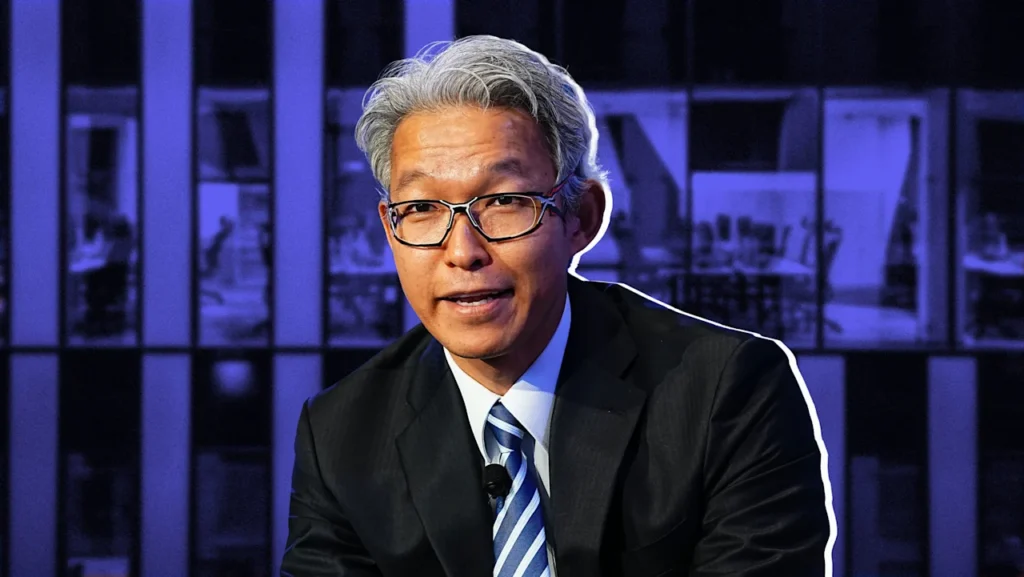
Most business leaders are laser-focused on the existential threat that AI poses, with many of them citing it as a reason for major layoffs. At an event this week, however, Indeed CEO Hisayuki “Deko” Idekoba suggested there was another force that would wreak havoc on the labor market—one that he argued was more pressing.
“Actually, what is happening in all developed countries, including European countries and the U.S., what is happening is a big demographic change: an aging labor market,” Idekoba said at Semafor’s World Economy Summit on Wednesday, as Business Insider reported this week. He said the sheer number of workers aging out of the workforce and retiring would have a “way bigger impact”—and a more immediate impact—than the changes fueled by AI.
Idekoba cited some of Indeed’s research on workforce changes in the U.S., which found that there would be a decline of about 20 million workers within the next 15 years. (He said this would represent about a 5% drop in the overall workforce.) According to Indeed, only 20% of those people will leave the workforce due to AI displacement. The vast majority of that decline in workers—about 80%—will be attributed to people aging out of the workforce.
In countries like Japan, concerns over an aging workforce and declining birth rates have driven efforts to bring more women into the workforce. As the Trump administration has cracked down on immigration, however, the U.S. may be left without an influx of new workers to fill many jobs, including those held by older employees who are likely to exit the workforce soon.
This looming labor shortage would likely be particularly acute in the trades, Idekoba said, where the U.S. was already struggling to keep up with demand. “What’s happening literally is there are so many open positions: construction jobs, plumbers, healthcare jobs, electricians,” he said. “Such fundamentally important jobs. But we don’t have a good pipeline.”
Some employers see automation as a potential solution for these woes, as more people retire and leave the workforce. An analysis by Yale University’s Budget Lab last year found that AI could mitigate labor shortages in certain industries; legal secretaries and administrative assistants, for example, represent jobs that are more exposed to AI and also dominated by older workers.
But as Idekoba points out, there are plenty of jobs that are less likely to be rapidly reshaped by automation—and AI won’t necessarily help bridge those gaps, let alone replace workers outright.