
Federico Casalegno has been thinking about ears. Billions of ears. “Ears are almost like fingerprints. Every one of us has a different one,” says Casalegno, executive vice president of design at Samsung.
It’s a pertinent topic for Samsung, maker of a variety of earbuds, and for Casalegno, who’s in charge of figuring out how to make those earbuds—along with a deep portfolio of wearable technology products like smartwatches and smart rings—as comfortable and useful as possible.

Wrapping one’s head around billions of ears—or wrists or fingers or, indeed, entire heads—is a tricky prospect, but also an increasingly important part of Samsung’s business, which brought in more than $215 million in revenue in 2025. That’s why Casalegno has led Samsung’s designers and product developers to fully embrace the problem-solving scale of computational design. Using the power of machine learning, digital modeling, and a deep pool of data, Casalegno is helping Samsung reinvent how it designs its products to better meet the needs of an increasingly diverse global market.
This approach has increased the speed at which Samsung can evolve its wearable products. Casalegno says that not many years ago the company, like any other major product maker, was limited by conventional design tools and computer models. For something like an earbud, translating the biomorphological data of a large group of users into a design might have taken an entire month to model. Now one of those simulations can take 10 minutes.
“We literally run thousands of simulations in a very short period of time, and we have millions of data points, which was inconceivable before,” Casalegno says. It all adds up to faster product development timelines, and greater product diversity. “Computational design, 100%, is helping to improve our product portfolio as was never possible before, but at the same time it’s making new opportunities to create new products,” he says.
As a pioneer in computational design, Casalegno brings more than 25 years of experience he honed over a long tenure at the MIT Media Lab, and, since 2018, as one of the top designers within Samsung. On top of being a seasoned designer, he also has a PhD in sociology.
After taking over as head of Samsung’s global design studios last November, Casalegno made computational design a central tenet of the company’s product development strategy. He also sees it as a way to make products like Samsung’s wearables more, well, wearable. “I’ve always been driven by designing for humans and bringing forward this human-centered design approach,” he says.

Even for something as seemingly simple as an earbud, wearability is a complicated goal to aim for. Casalegno says computational design has allowed his team to combine advanced computing, machine learning, and AI to design earbuds that fit better and feature more precisely placed sensors. Furthermore, it enables them to make data-driven decisions about how designs need to be adjusted to meet the real-world demands of users.
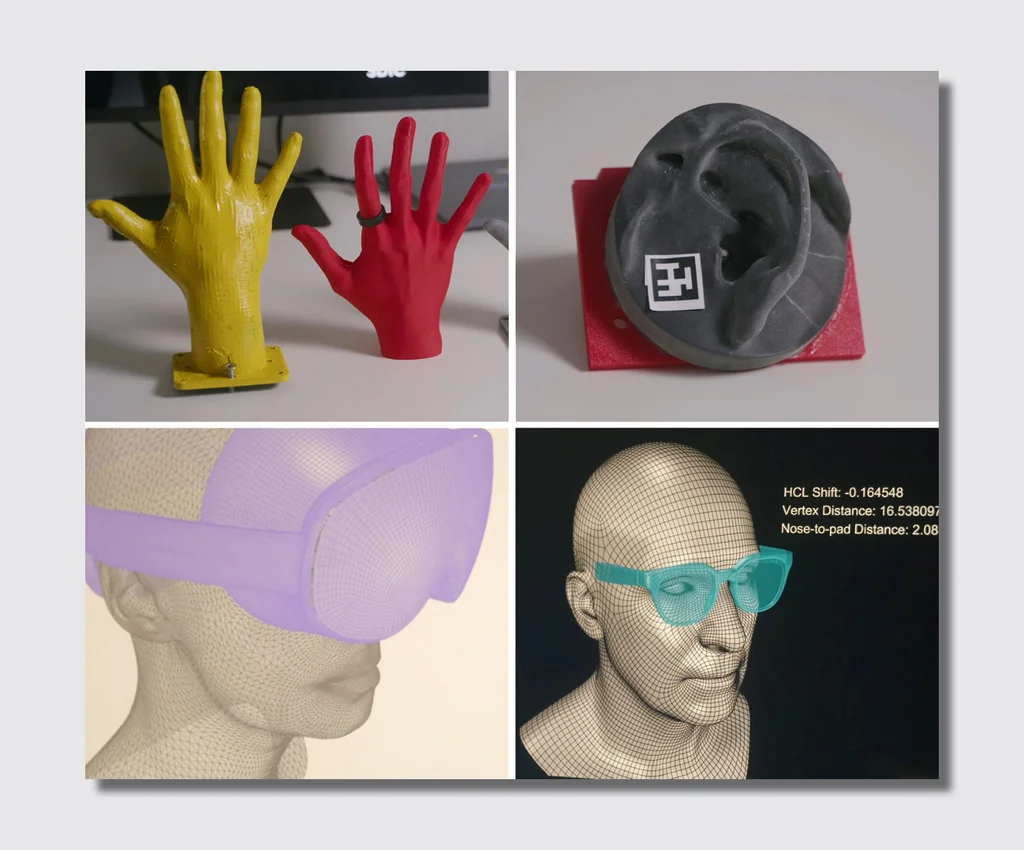
Casalegno says the new product development process involves collecting a large set of 3D data on human ears—the fingerprints of the head—and creating digital twins for each one. “This allows us to work with a set of data that is uniquely curated, that is precise, and this helps us to design accordingly for different demographics.”

Then, using digital models of new earbud designs, the team simulates how those earbuds fit inside many differently sized ears. The designs are adjusted to make them fit better and more comfortably in as many digital ears as possible. Compared with previous development paths, when products could only be tested in the ears of a small group of test subjects, this approach enables the designers to adjust their designs to serve a much wider range of users.
Next, the products move into the physical realm. Casalegno says Samsung has been using 3D-printed earbuds and ear models to check the physical fit. (It’s also using 3D printing to optimize the location of sensors on products like smartwatches.) They’re put through rigorous testing using robots, checking to see how well an earbud stays inside an ear during movement like walking, running, and jumping. Prototype versions are also tested with real people. Data collected during this testing is then fed back into the design.
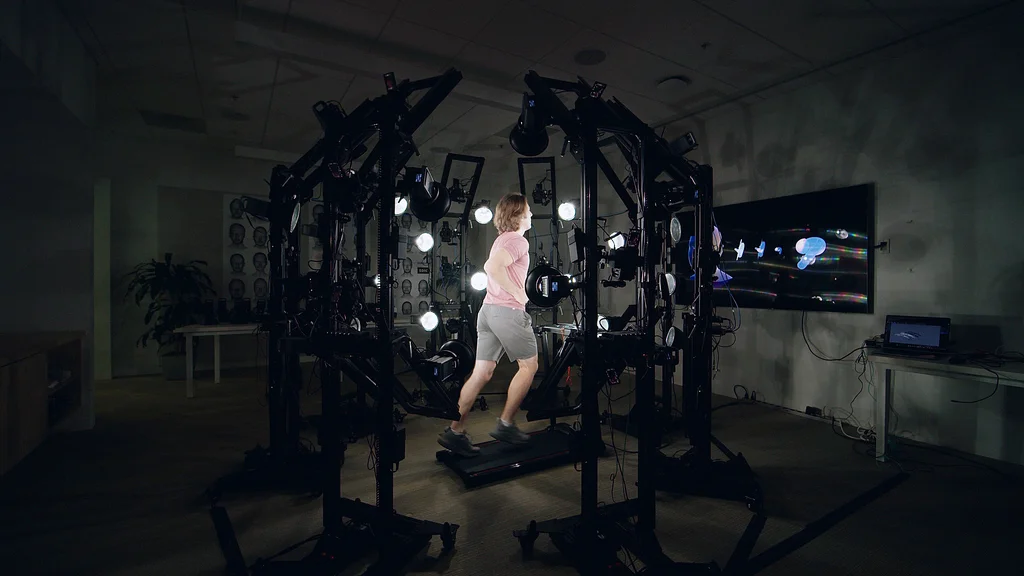
“And then we very quickly iterate and create a lot of design variations using AI and our tools to improve the product’s performance,” Casalegno says.
As new products like the latest version of Samsung’s Galaxy Buds come out later this year, Casalegno says consumers will start to experience some of the influence this computational design approach is having, even if the changes are at the sub-millimeter scale. “You will feel the effect of how computational design supports our product development,” he says. “Because at the end of the day, they feel more comfortable and you hear better.”