Exclusivity Is the Name of the Game
When it comes to quintessential sports car brands, Ferrari is perhaps the most iconic, with Lamborghini and Porsche also deserving to be part of the conversation. Ferrari has built its reputation on exclusivity, limiting production rather than chasing sales volume, and even taking issue with certain customer modifications to its Prancing Horse-badged cars.
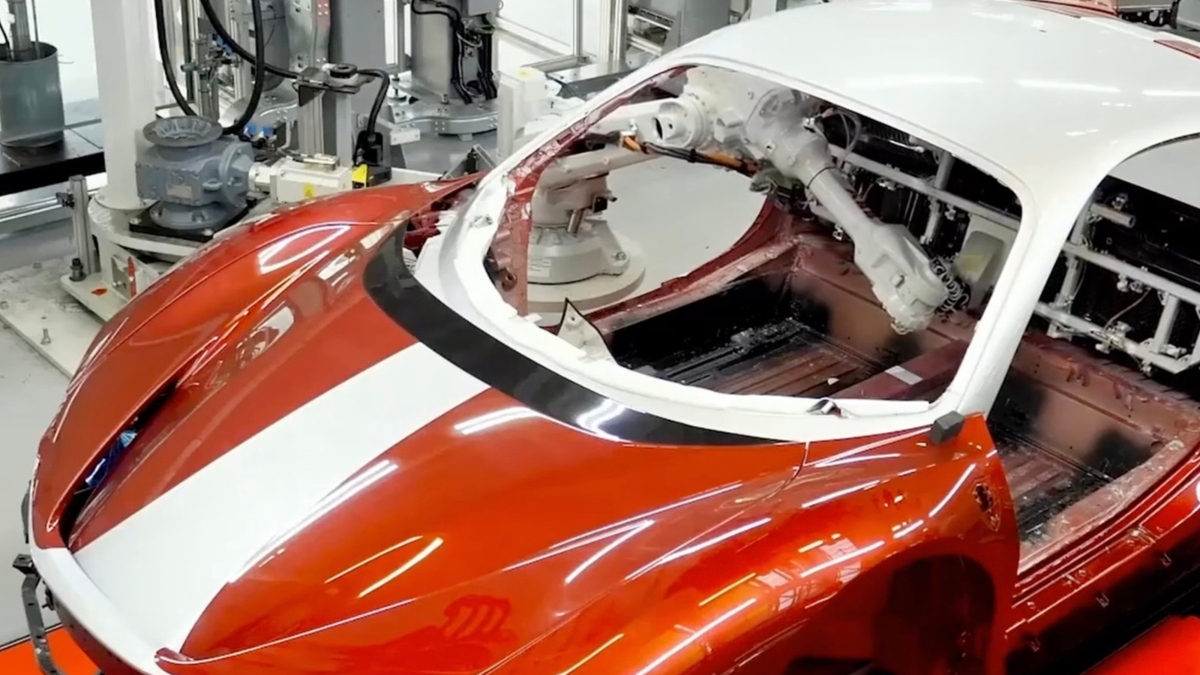
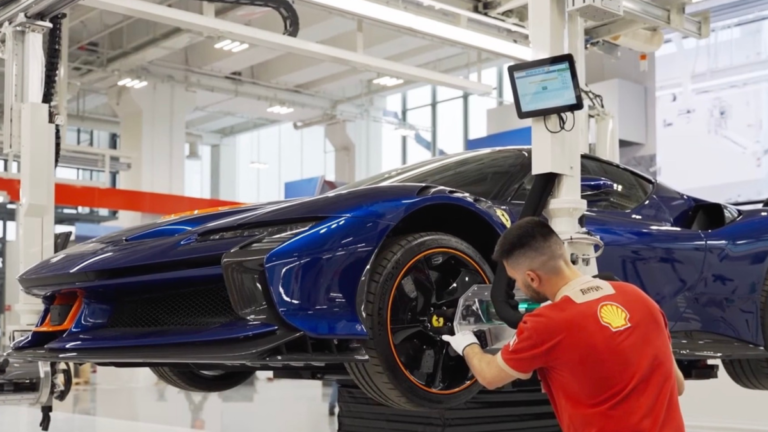
All Ferrari vehicles undergo final assembly at its Maranello factory in Italy. Last year, the Italian marque shipped 13,640 vehicles, including the Purosangue, though the model is intended to account for less than 20% of the brand’s average annual shipments over its lifecycle to prevent the SUV from dominating its lineup. A video from FRAME on YouTube offers a behind-the-scenes look at how these vehicles are made before they hit the road.
Where the Magic Happens
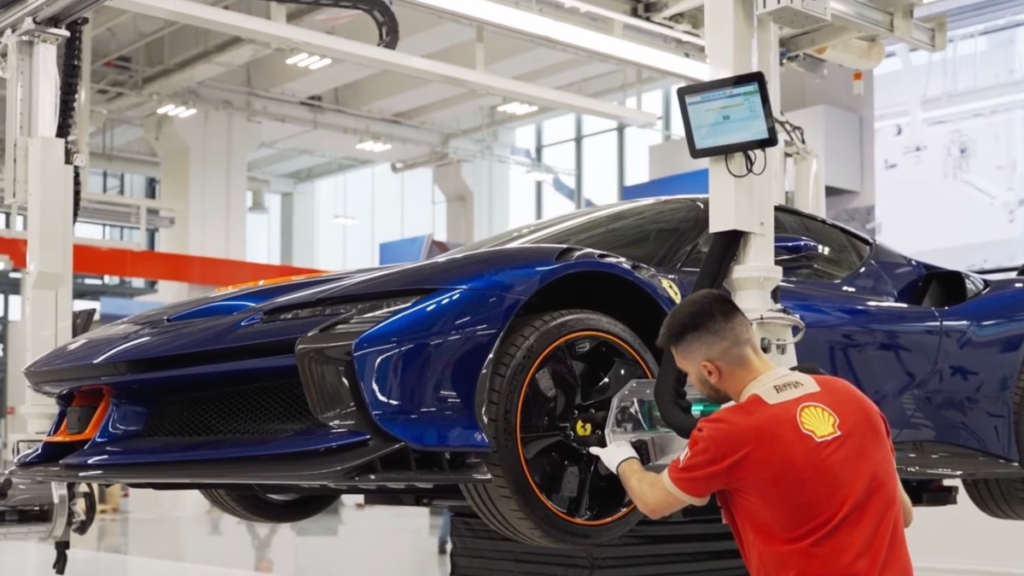
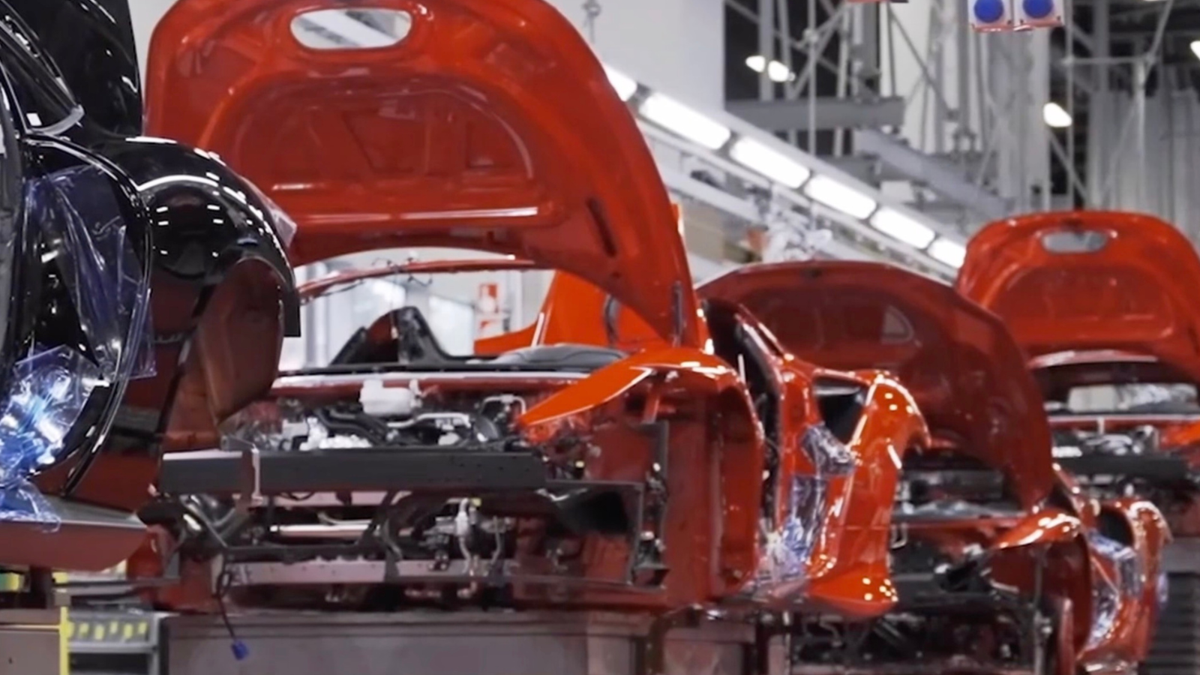
Like most automotive plants, Ferrari uses robotic systems to weld and assemble structural components into the body-in-white (BIW) at its nearby Modena facility. Assisting the robots are skilled technicians dressed in red uniforms, reminiscent of the race suits worn by Ferrari’s racing drivers and pit crews.
The Maranello factory complex also produces the brand’s diverse engines, including V8s, V12s, and more recently, V6s found in models like the 296 GTB. In 2024, the automaker inaugurated the e-building, which produces electrified components for hybrid supercars like the F80. Additionally, the brand’s first all-electric model, the Luce, joined the lineup this year.
The engines are bench-tested in-house, while Automated Guided Vehicles (AGVs) help transport heavy components between stations. According to the factory walkthrough, leather upholstery is also manufactured in-house to ensure consistent quality, though the automaker sources leather from external suppliers, including Poltrona Frau.
The Road Ahead
By 2030, Ferrari plans to establish a lineup with 40% gas-only, 40% hybrid, and 20% fully electric models. That’s a revised powertrain mix from the previous target of 20% gas-only, 40% hybrid, and 40% fully electric models, reflecting changing market trends. Direct rival Lamborghini even dropped its all-electric plans for its fourth core model, which will instead use a plug-in hybrid setup.
As Ferrari cars continue to be assembled in Maranello, the company can preserve its brand exclusivity rather than building cars elsewhere in the world to meet regional demand. Doing so can also help maintain stronger quality control and easier coordination between departments. On the flip side, concentrating production in one area increases exposure to local disruptions and trade restrictions, including in the U.S., where imported European cars face a 15% tariff.