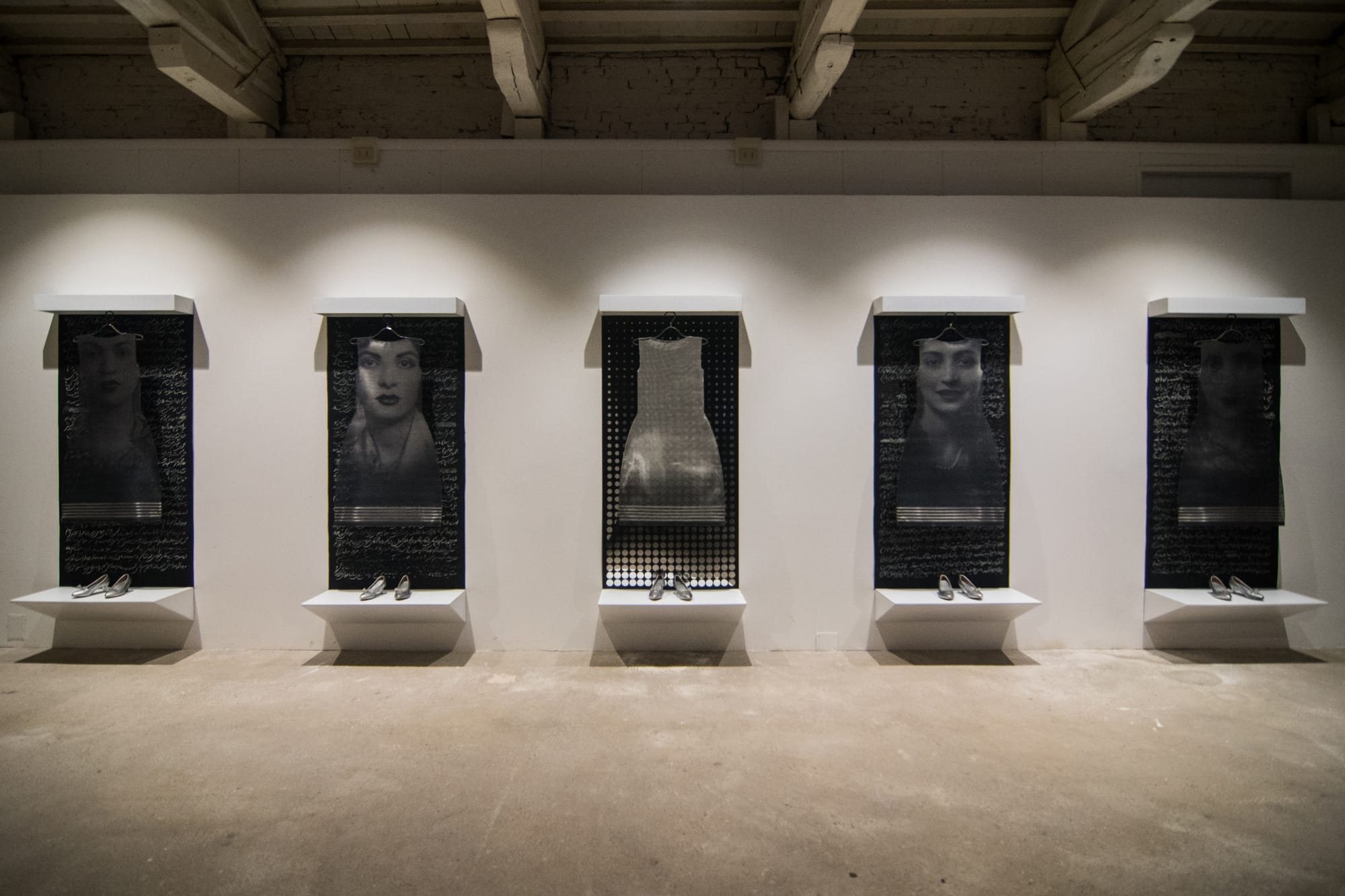
With a single day remaining before the 61st Venice Biennale opens for previews this week, the Biennale Foundation announced today that Iran will not be participating in the national pavilion exhibition.
The news comes two months after the United States and Israel first launched strikes across Iran, and coincides with resumed attacks along the Strait of Hormuz as tensions throughout the temporary ceasefire bubbled over in the last 24 hours.
Little information is available about the pavilion exhibition aside from the fact that Aydin Mehdizadeh Tehrani, the director general of the visual arts office in the Iranian Ministry of Culture, was listed as the commissioner as of March 4.
“With regard to the National Participations in the 61st International Art Exhibition, In Minor Keys by Koyo Kouoh (9 May – 22 November 2026), it has been announced that the Islamic Republic of Iran will not participate,” a May 4 press release on the Biennale’s website simply reads.
The statement notes that the event now comprises 100 national participants, including the United Republic of Tanzania and the Republic of Seychelles, which were added in March.
Hyperallergic has reached out to the Biennale Foundation and Mehdizadeh Tehrani for comment.
Without owning a pavilion in the Giardini, Iran has had a spotty attendance at the Venice Biennale since 1958. Though there was a marked absence between the 1960s and 2003 attributed to the lead-up to and aftermath of the 1979 Islamic Revolution, Iran has mounted national exhibitions at the Biennale semi-consistently throughout the last two decades — most recently participating in the 2024 edition.
The 2026 Venice Biennale has drawn criticism for its inclusion of both Russia and Israel, with cultural figures around the globe pledging boycotts and protest actions. Hundreds of artists, curators, and staff participating in the 61st edition signed letters calling on organizers to exclude Israel over its ongoing genocide in Palestine.
The Biennale awards jury recently resigned en masse in tune with its initial decision to omit Israel and Russia from consideration for the Golden Lion awards, prompting the Foundation to institute the “Visitor Lions,” prizes awarded by public vote at the end of the Biennale, last week.