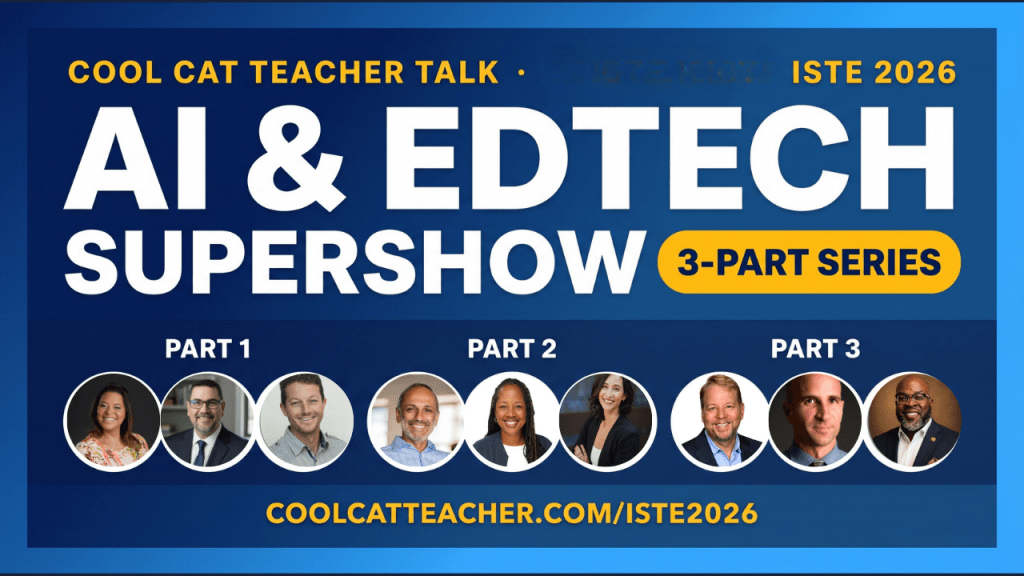
From the Cool Cat Teacher Blog by Vicki Davis
Subscribe to the 10 Minute Teacher Podcast and Cool Cat Teacher Talk anywhere you listen to podcasts.
This summer of 2026, as we enjoy our break, we’re also having conversations. AI. The pushback against technology. Cell phone policies. AI assessment. And more. So, I headed to Orlando for ISTE/ASCD 2026. I sat down with nine people involved in this work at all different levels. Teachers. Superintendents. Edtech Leaders. Thinkers. While I wrote about what I learned and shared, this post brings together the content I’ve released on television and FM radio, both in the US and abroad, on Cool Cat Teacher Talk.
Subscribe to Cool Cat Teacher on YouTube
Chapters — Part 1
- 00:00 Introduction & series welcome
- 01:31 Dr. Carmalita Seitz: what teachers need to understand about AI
- 04:19 Joy, co-learning & teacher burnout
- 06:16 The endless scroll & digital wellness
- 08:23 ISTE 2026 hot topics: leadership, PBL & “brain rot”
- 09:58 When best practices become buzzwords
- 14:11 Getting the most out of a conference
- 17:13 Keeping humans in the loop
- 18:09 Steven Swanson: building an AI grading tool
- 21:10 Is undisclosed AI feedback dishonest?
- 22:30 Why he deleted the auto-grade button
- 25:17 The question to ask: where does student data go?
- 29:12 A 30-second checklist before you use AI grading
- 32:33 Space is now: Artemis II
- 33:56 Dr. Mark Wagner: from edtech to the space economy
- 36:26 The space economy needs every kind of learner
- 42:00 Four mindsets students need for space
- 47:14 AI, space & why his kids reject AI
- 51:57 The overview effect
- 54:37 Where to start: summits, courses & field trips
- 56:31 Close: one idea for your classroom
Key Takeaways — Part 1
Dr. Carmalita Seitz — what educators are really talking about
- Start with the outcome, not the tool. “What are you trying to do? What is your outcome for your learners?” Then pick technology — or paper and pencil.
- Apply the supersede test. If learning the tool takes so long it overshadows the learning, don’t use it.
- Model co-learning. It is completely fine to walk into a lesson not knowing the tool and figure it out alongside your students.
- Watch the buzzwords. Sometimes a “revolutionary” new practice is something elementary teachers have done for twenty years. (Her stations story in the transcript is worth the read.)
- Teach students to change their algorithm. Her 13-year-old deliberately watches puppies and cats to flush the sad videos out of her feed. And check whether the adults in your building model the phone habits they demand.
- Work a conference on purpose: put the phone down and talk to the person in line, save overlapping sessions to harvest the digital backpack, and hit the poster sessions and Idea Labs to see real student work.
Steven Swanson — what every teacher needs to know about AI grading
- He deleted his own auto-return feature. Every AI-suggested grade and comment should pass in front of a teacher’s eyes and be editable before it reaches a student.
- Disclose it. Put a line in your syllabus saying you use an AI grading assist. That was his administrator’s suggestion, and it matches the ethics point Dr. Christian Miller made on our honest-AI show.
- Write the rubric first. The more context you give it, the closer the result lands to what you’d have given yourself.
- Check three things before you trust any tool: does Google throw an “unverified app” warning at sign-in, is there a real privacy agreement, and will the vendor sign a data privacy agreement with your district?
- The first time you use an AI grader, grade the whole set yourself anyway and compare. How far off is it from what you’d have given? You wouldn’t trust a brand-new human grader blindly either.
Steven’s full solo interview is here: AI Assisted Grading: A Teacher’s 30-Second Checklist.
Dr. Mark Wagner — teaching the space economy
- The space economy needs everyone, not just scientists and astronauts — welders, machinists, marketers, HR, finance, even fashion and interior designers for spacecraft.
- If you ignore space, you’re as behind as ignoring the internet. GPS and communication satellites already touch every industry.
- Teach four mindsets: the explorer’s mindset (comfort with the unknown), moonshot thinking (think big before you iterate), design thinking, and the operational mindset — “it’s not all about you, but you are critically important to the mission.”
- Moonshot thinking has to come before design thinking, or design just gets people a slightly better version of what they already imagined.
- Let kids design the experiment. Classroom sensor kits let students build their own experiments and high-altitude balloon payloads — some of which reach orbit.
- Use your own expertise as an AI calibration test. If AI gets things wrong in the area you know cold, be skeptical everywhere else.
Mark’s full solo interview is here: How to Teach About Space in the Classroom with Mark Wagner.
Research Note
Artemis II launched April 1, 2026 and splashed down April 10, carrying Reid Wiseman, Victor Glover, Christina Koch, and Jeremy Hansen 252,756 miles from Earth — farther than any humans in history, past the record Apollo 13 set in 1970. NASA
About the Guests — Part 1
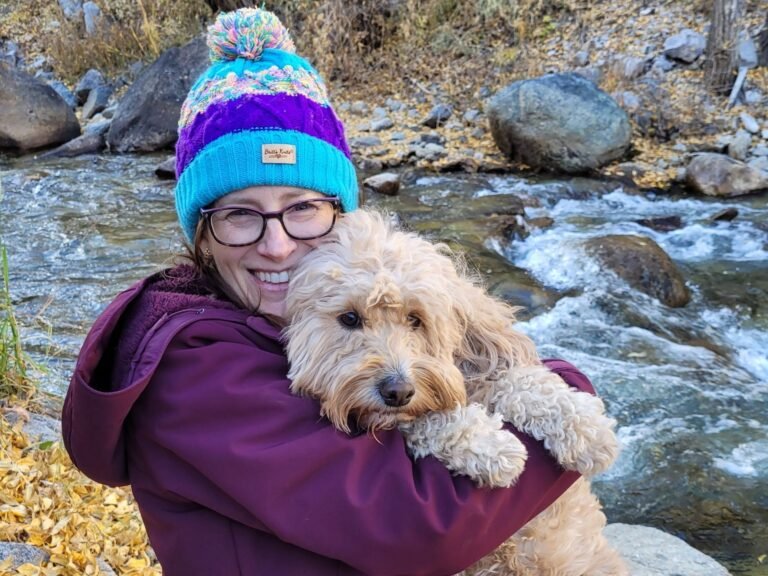
Dr. Carmalita Seitz
“You cannot have good tech use without good pedagogy. And in this day and age, good pedagogy also means good tech use.”
Dr. Carmalita Seitz
Managing Director, Online Learning & Digital Innovation, ISTE+ASCD

Carmalita North Seitz is an education executive with almost 30 years of experience leading the full product life cycle for educator credentials and online learning solutions. As Managing Director of Online Learning & Digital Innovation at ISTE+ASCD, she leads a team of staff and external partners to develop, launch, and scale innovative professional learning products grounded in adult learning theory and data-informed decision-making.
Her work is driven by a conviction that educators deserve professional learning grounded in adult learning theory and research, designed to build durable skills and support genuine pedagogical transformation rather than tool-focused training. She also leads the development and maintenance of the organization’s credential portfolio, including the ISTE+ASCD EdTech Leader and ISTE+ASCD EdTech Teacher certifications, both built on a competency-based model that honors educator expertise and supports meaningful growth. Carmalita builds strategic partnerships with organizations such as Google, Apple, Microsoft, and Adobe to advance shared commitments to high-quality professional learning and educator transformation.
Carmalita holds a Doctor of Education in Educational Leadership from the University of New England, a Master of Science in Education from the University of New England, and a Bachelor of Science in Elementary Education from the University at Buffalo, SUNY. She is an ISTE Certified Educator and received the ISTE Making It Happen Award in 2018.
Connect with Carmalita: LinkedIn
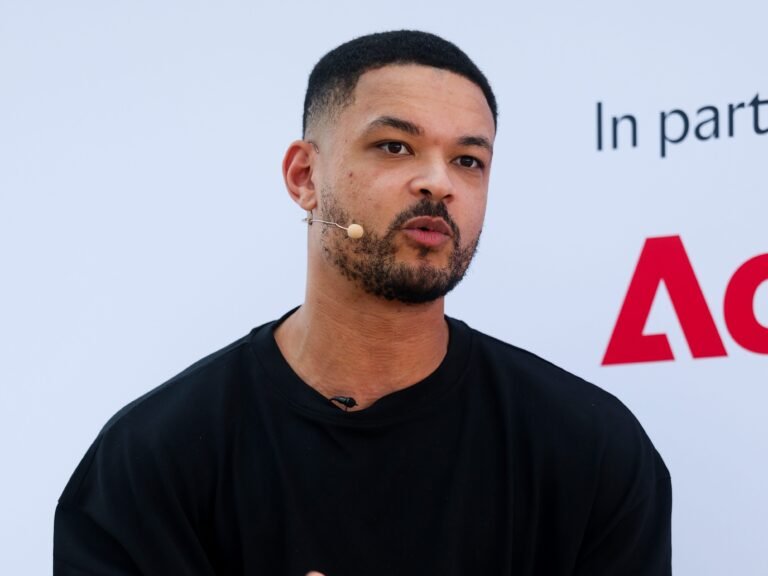
Steven Swanson
“Because we’re the final say in the grade, I think every single assignment, every comment, should pass through our eyes and be editable so we can change it.”
Steven Swanson
Engineering Teacher, Whittier High School; Founder, Evolved Academics

Steven Swanson teaches engineering in the four-year engineering academy at Whittier High School (California) — design/drafting, mechatronics, and senior capstone. He also teaches AP Computer Science and AP Physics online. Steven is the founder of Evolved Academics, LLC and the builder of ClassLens, the only K-12 AI grading tool with Google’s restricted-scope OAuth verification, SOC 2 Type I attested, CASA Tier 2, and CISA Secure by Design Pledge signatory. He built ClassLens while teaching full time, because he needed it for his own gradebook.
Connect with Steven: X @mrswansonai · Instagram @mrswanson.ai · YouTube @mrswansonai
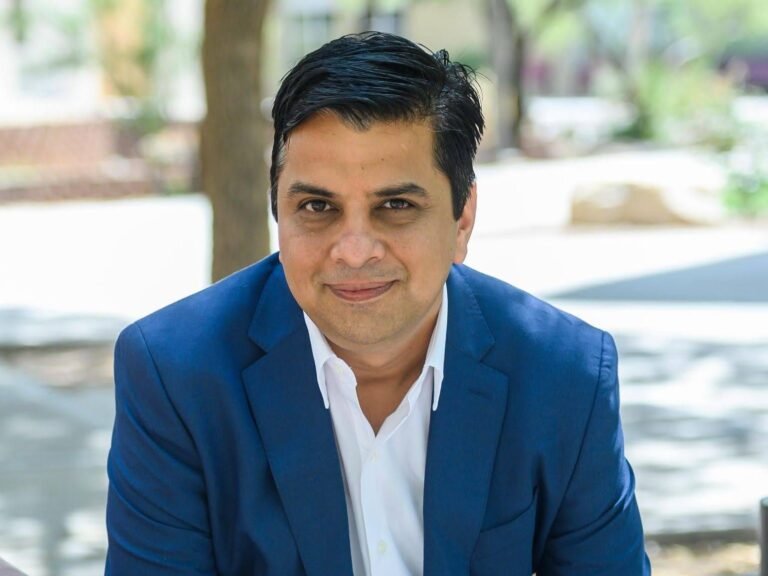
Dr. Mark Wagner
“Don’t be caught being a passenger on Spaceship Earth.”
Dr. Mark Wagner
CEO & Co-Founder, ARES Learning

Dr. Mark Wagner is CEO and co-founder of ARES Learning, a public benefit corporation dedicated to preparing for humanity’s future in space. In this capacity he leads a space education online course for teachers, co-leads an astrogeology for educators field experience, and co-hosts a free online space education summit. He has served as President of the Space Prize Foundation, Director of Education Partnerships at the Aldrin Family Foundation, and in a similar role with Slooh: The Cosmic Classroom.
Mark has a Ph.D. in Educational Technology and a master’s degree in Cross-Cultural Education. He also holds graduate certificates in Space Education and Space Philosophy. He is the co-author, with Frank White, of Space Education: Preparing Students for Humanity’s Multi-Planet Future (2022) and the author of More Now: A Message from The Future for The Educators of Today (2018).
Connect with Mark: LinkedIn · X @markwagner · Facebook · Instagram · areslearning.com
Part 2 — Humans Teaching Humans About the Machine
Cool Cat Teacher Talk, Season 7 Episode 1 — with Karim Meghji (CodeAI), Kimmie Fink (BBC Learning Hub), and Brandie Wright (YELLOWHAB). Recorded on the conference floor in Orlando, June 29–30, 2026. Runtime 57:58. Sponsored by CodeAI and BBC Learning. Premiere: July 30, 2026 6:00 pm

Watch this video on YouTube.Subscribe to the Cool Cat Teacher Channel on YouTube
Subscribe to Cool Cat Teacher on YouTube
Chapters — Part 2
- 00:00 Cold open: I just hope the student is real
- 02:06 ISTE’s new name: the T now stands for Transforming
- 02:57 Learning detectors, not AI detectors
- 04:13 Karim Meghji, CodeAI: why Code.org became CodeAI
- 06:52 The healthy meal that showed its bias
- 08:16 “Who is in control, you or the AI?”
- 09:17 Your blind spots are where AI is most dangerous
- 11:49 Eighteen years of AI education: what does a graduate look like?
- 14:17 Humans teaching humans about the machine
- 15:58 The guardrails: what happens before a kid’s prompt reaches the AI
- 17:22 Where a teacher should actually start
- 24:22 Kimmie Fink, BBC Learning Hub: building the resources she wished she had
- 26:33 Leveled articles, writing prompts & Walking with Dinosaurs
- 29:03 The paleontologist field journal & virtual field trips
- 30:18 Bluey, body language & fifteen free lessons
- 31:09 Planet Earth, Attenborough & the passport
- 34:27 The daily news bite: media literacy in five minutes
- 36:34 Math, Numberblocks & the Global Knowledge Framework
- 40:01 Brandie Wright, YELLOWHAB: the ISTE keynote on curiosity
- 42:52 Meet Kamari: crew, football & the whiteboard marker
- 46:48 Inside the Portrait of an AI-Ready Graduate pavilion
- 49:16 Why do we have to prove we’re human?
- 50:45 The french fry analogy
- 52:46 AI should help us be better humans, not pretend to be human
- 55:48 Close: you can’t boil the ocean
Key Takeaways — Part 2
Karim Meghji — teaching kids what the machine is doing
- Build the failure in on purpose. CodeAI lessons deliberately produce biased or wrong output so students experience the flaw instead of being told about it.
- The curriculum isn’t the screen — it’s the discussion beside it. “A lot of our work is not just the curriculum online, it’s actually the discussions that occur next to the curriculum.”
- Upgrade “human in the loop” to human in the driver’s seat. Being in the loop could mean sitting in the passenger seat.
- Teach the mechanism, not just the interface — probabilities, training data, what a good data set looks like. You don’t have to be a mechanic to drive a car, but you need to understand a bit of what’s happening under the hood.
- Teachers, start with the free PD course, then run the student curriculum yourself. As Karim said: we’re all beginners at this point — even CodeAI.
Karim’s full solo interview is here: How to Teach AI in Any Classroom, Not Just CS Class.
Kimmie Fink — free, classroom-ready resources you can use Monday
- Take what you need. Every asset works standalone — one baby-triceratops video, one leveled article, one Bluey lesson. The full unit is optional.
- Leveled text solves a real problem: just because it’s labeled a fifth grade classroom doesn’t mean everybody’s reading at a fifth grade level. Articles come at grades 3–5, 6–8, and 9–12 with built-in vocabulary.
- Start Monday with a news bite — a five-minute daily clip plus questions, built for the media literacy gap.
- Virtual field trips beat real digs for reliability. The Walking with Dinosaurs dig-site exploration runs 45–60 minutes with a paleontologist field journal and an interactive map.
- Log in once. It’s free either way, but a free account unlocks printables, custom playlists, and Google Classroom assignment.
“And somebody asked me, she said, ‘So is there a free version in addition to a paid version?’ And I said, ‘No. There’s only free.’”
Kimmie Fink
Senior Editor, BBC Learning Hub
Brandie Wright — curiosity, crew, and the human in the room
- Structure relationships, don’t hope for them. “Crew” keeps the same adult with the same kids morning and afternoon, on field trips, and across years — four years with Kamari.
- Curiosity has to be fed or it dwindles. “If we starve that from them, if we keep it from them, then it’ll dwindle. They won’t have it anymore. So we’ve got to keep it.”
- Small classes are the AI strategy. There’s power in small groups so kids don’t get lost — and don’t end up depending on the technology.
- Kids still reach for the marker. Kamari wasn’t even in her math class anymore and still grabbed a whiteboard marker during crew: “Miss Brandie, give me some multiplication facts.”
- Run PD like a science fair, not a lecture. “You’re not here to stand and just do a presentation. Show me how you did that.”
Brandie’s full solo interview is here: A Real Teacher Sparking Curiosity Makes All the Difference.
About the Guests — Part 2
Karim Meghji
“It starts with humans teaching humans about what the machine is doing.”
Karim Meghji
President & CEO, CodeAI

With a career rooted in tech innovation, Karim Meghji leads Code.org’s product strategy at a time when computer science and artificial intelligence are becoming essential skills for students.
Karim is a seasoned product and technology leader and entrepreneur who has helped build and scale successful businesses based on the belief that a strong customer focus, an iterative approach to product and technology, and an empowering people culture are critical to an organization’s success.
He is focused on scaling the nonprofit’s platform to reach millions more students and integrating emerging technologies (like AI-driven learning tools) to enhance how kids learn. Karim’s goal is to ensure that today’s learners not only gain AI and computer science skills but also understand and wield the technologies defining the future.
Editor’s note: Code.org rebranded as CodeAI on June 2, 2026. The website remains code.org.
Kimmie Fink
“I don’t think it takes away from getting the information as a reader. I think it amplifies it.”
Kimmie Fink
Senior Editor, BBC Learning Hub

Kimmie Fink is the Senior Editor of the BBC Learning Hub. She has 13 years of classroom teaching experience, holds a Master of Education in Curriculum and Instruction, and was the 2009 Puget Sound Teacher of the Year.
Connect: bbclearninghub.com · Instagram @bbclearninghub · Facebook @bbclearninghub
Brandie Wright
“So I have a question for you. If you didn’t know that he was real, would it change the impact of my story?”
Brandie Wright
Educator, YELLOWHAB

Brandie Wright is an educator at YELLOWHAB, the tuition-free micro-school Pharrell Williams founded through his YELLOW nonprofit, located in Norfolk, Virginia on the campus of Norfolk State University. She holds an M.Ed. from Regent University and a B.A. from Liberty University, and previously taught middle-school technology education in Newport News Public Schools, where she served as CyberSTEAM Lead and STEM Coordinator. She delivered a storytelling performance on the ISTELive 26 opening mainstage as part of the Spark Curiosity keynote.
Connect with Brandie: LinkedIn
Part 3 — AI With Intention: What Leaders Decide and Teachers Do
Cool Cat Teacher Talk, Season 7 Episode 2 — with Dr. Jeremy Owoh (superintendent and ISTE+ASCD board president), Tony Frontier (author of AI with Intention), and Todd Brekhus (Renaissance). Recorded in the ISTE media center and on the expo floor. Sponsored by Renaissance Intelligence.
Premiere: July 31, 2026

Watch this video on YouTube.Subscribe to the Cool Cat Teacher Channel on YouTube
Subscribe to Cool Cat Teacher on YouTube
Chapters — Part 3
- 00:00 Intro + free AI tools for U.S. teachers
- 02:58 Dr. Jeremy Owoh — relationships first: leadership in the age of AI
- 18:49 Tony Frontier — AI with intention: learning detection, not AI detection
- 39:25 Todd Brekhus — Renaissance Intelligence: keep the teacher in the middle
- 56:45 Close — the craftsmanship of teaching is human
Key Takeaways — Part 3
Dr. Jeremy Owoh — leadership in the age of AI
- Relationship is the precondition, not the garnish. When you connect with them, they connect with you, and then learning starts.
- Audit your tech policy for “don’ts.” If it’s a list of prohibitions, rewrite it — and rewrite it with a committee that includes students and teachers.
- Bring the whole team to learn together — curriculum people and infrastructure people in the same room, so decisions don’t collide when everyone gets home.
- Pilot everything, and judge it on qualitative data too. Talk to the students and the teachers, not just the score report.
- Argue screen value, not screen time. Vetting what goes in front of kids is the job AI can’t do — everything companies put out there is not what’s best for kids.
Tony Frontier — using AI with intention
- Stop writing cheating policies and start writing integrity policies. The question shifts from “did the student do the work?” (which you have to prove) to “does this work represent what you actually know?” (which you share).
- Put three things in place: guidelines and boundaries; explicit definitions of effective, ineffective, and inappropriate use; and core commitments of integrity, transparency, and explainability.
- Normalize disclosure from kindergarten. “Who helped you with this?” Mom, a sibling, a tutor, Google, an AI — same question.
- Teachers owe the same three back: fidelity to priorities, transparency about the tools they use, and the ability to explain and justify anything they put in front of kids.
- Protect the inner voice. “I’m stuck, I don’t get it” is a powerful signal. When the next voice becomes “I must not be smart,” the kid stops trying — and that can happen by the end of first grade. Teach kids to use AI as a tutor (“teach me the difference between this and this”), not an answer vending machine.
Frontier’s figure that students report using AI for roughly 25–40% of their schoolwork comes from his own focus groups in urban, suburban, rural, public, private, and parochial high schools. It is his finding, not a national statistic.
Todd Brekhus — building tools that keep the teacher in the middle
- They built student-facing AI and pulled it back — because it lied and rushed kids past the productive struggle. The AI went to the teacher’s side first.
- Kill the back-of-the-room headphones model. Twenty-five years of pulling kids out of the core instruction is disconnected and stigmatizing — everybody knew that kid needed something extra.
- Say “personalized teaching and learning.” Putting the teaching back in is the whole point; unattended personalization is how kids get off track.
- Coherence plus agility: assessment data tied to the textbook tied to the supplemental resources, so a teacher can see that twelve kids already have it and twelve don’t — and adapt that morning.
- The difference from a wrapper app is bringing the student’s own assessment data into the recommendation and handing it to the teacher to act on.
Classroom Takeaway
The through-line across all three shows, said back to me nine different ways: the craftsmanship of teaching is human. Every time. Pick one thing from this page and take it into your room this week. You can’t boil the ocean — innovate like a turtle.
About the Guests — Part 3
Dr. Jeremy S. Owoh
“Our students are our students. And it’s not like our parents are choosing a set of students to send to us each day. They’re sending the students they have at home. And our job is to teach them.”
Dr. Jeremy S. Owoh
Superintendent, Jacksonville North Pulaski School District; President, ISTE+ASCD Board of Directors

Dr. Jeremy S. Owoh began his career in 2003 as an English teacher at Parkview Magnet High School in the Little Rock School District. In 2017, Dr. Owoh was named the Assistant Commissioner of Educator Effectiveness and Licensure and was later appointed as the Superintendent of Schools for the Pine Bluff School District. Currently, Dr. Owoh serves as the Superintendent for the Jacksonville North Pulaski School District. Dr. Owoh serves as the President for the ISTE+ASCD Board of Directors.
More about Jeremy: ascd.org/people/jeremy-owoh
Dr. Tony Frontier
“That’s a kid who has confused learning with compliance. Right? And we did that to that kid.”
Dr. Tony Frontier
Director, AI Center for Effective Teaching and Learning

Dr. Tony Frontier was a teacher in Milwaukee Public Schools and a high school principal, K-12 curriculum director, and University Professor. He is currently the Director of the AI Center for Effective Teaching and Learning where he works with schools and districts to ensure AI tools are used in ways that support, rather than undermine, effective teaching and learning. He is author of 6 books and numerous articles. His most recent book, AI with Intention: Principles and Action Steps for Teachers and School Leaders, with a foreword by Jay McTighe, has been praised by John Hattie as “the best book I have read to introduce all to optimize the power of AI.”
Connect with Tony: tonyfrontier.com · LinkedIn · ASCD · AI Center for Effective Teaching and Learning
Todd Brekhus
“How about the teacher is differentiating in the moment? … that’s where the power of the human and the AI and the data come together.”
Todd Brekhus
Chief Product Officer, Renaissance & General Manager, Nearpod

Todd Brekhus is chief product officer at Renaissance. A former educator, he is the co-founder of multiple education technology solutions, including the myON digital literacy platform.
He is the recipient of the SIIA CODiE Award for Lifetime Achievement and many other accolades in recognition of his contributions to the field of education technology.
Learn more: Renaissance Intelligence · Nearpod
Every Book, Tool, and Link from All Three Shows
Books mentioned in the series
- AI with Intention: Principles and Action Steps for Teachers and School Leaders by Tony Frontier — the book John Hattie called “the best book I have read to introduce all to optimize the power of AI” (Part 3)
- Teaching with Clarity by Tony Frontier
- Five Levers to Improve Learning by Tony Frontier and James Rickabaugh
- Space Education: Preparing Students for Humanity’s Multi-Planet Future by Mark Wagner and Frank White (Part 1)
- The Overview Effect: Space Exploration and Human Evolution by Frank White — 4th edition; White coined “the overview effect” in 1987
- The Cosma Hypothesis by Frank White — the third book in White’s overview trilogy
- Sharing Space: An Astronaut’s Guide to Mission, Wonder, and Making Change by Cady Coleman — Wagner’s source for the “operational mindset”
- The Next 500 Years: Engineering Life to Reach New Worlds by Christopher Mason
- The Anxious Generation by Jonathan Haidt — cited by Karim Meghji on over-protecting kids physically and under-protecting them digitally
- More Now: A Message from The Future for The Educators of Today by Mark Wagner (2018)
- Agentic Artificial Intelligence by Pascal Bornet, Jochen Wirtz, Thomas Davenport and colleagues — Vicki’s on-air reference on human oversight of AI agents
- The Honesty Crisis by Dr. Christian Miller — Steven Swanson referenced Miller’s point about disclosing AI feedback; Miller was our guest on Honest Conversations About AI
Free resources you can use Now
- CodeAI (formerly Code.org) — Hour of AI, Hour of Code, AI for Oceans, and free professional development courses for teachers. Their first AI curriculum shipped in 2018.
- BBC Learning Hub — entirely free (a free account unlocks printables): Walking with Dinosaurs with a paleontologist field journal and interactive dig-site map, a Planet Earth passport built on the eight most popular episodes, fifteen free Bluey lessons, leveled articles at grades 3–5 / 6–8 / 9–12 from Science Focus, History Extra and Discover Wildlife, Numberblocks and Alphablocks math printables, a writing prompt on every video, and a five-minute daily news bite for media literacy.
- Free AI for Teachers — how to claim Claude for Teachers (free for verified U.S. K-12 educators; sign up by June 30, 2027 for a full year, and it includes Cowork) and ChatGPT for Teachers (free through June 2027, in a private workspace that isn’t used to train models by default).
- ISTE+ASCD Profile of an AI-Ready Graduate — six roles: Learner, Researcher, Synthesizer, Problem Solver, Connector, and Storyteller. (This fourth role was originally published as “Ideator” in 2025 and now appears as “Problem Solver.”) See also ISTE Generation AI and its communities of practice, which Brandie Wright facilitates for the STEAM strand, grades 4–12.
- AI Center for Effective Teaching and Learning — Tony Frontier’s AI Implementation Toolkit, including sentence-level example definitions of effective, ineffective, and inappropriate AI use.
- ARES Learning — Mark Wagner’s free online Space Education Summit (it opens with an astronaut panel), a YouTube channel with about a hundred past sessions, educator courses, and the Earth and Space Experience field trip with planetary geologist Dr. Kirby Runyon.
- The AI & EdTech Power Hour SuperShare page — every tool my six panelists shared on Monday morning, in one place.
- My AI Terms Every Student Should Know – shared in my 50+ AI and Edtech Tools for Your Classroom Session at ISTE 2026
Tools, programs, and organizations named on the shows
- ISTE + ASCD — iste.org · ascd.org. ISTE Certified Educator, the EdTech Leader and EdTech Teacher certifications, ISTE Connect, Idea Labs and poster sessions.
- Renaissance Intelligence — announced February 19, 2026 and generally available July 1, 2026; unifies Renaissance applications with core curriculum and assessment data. Related: Nearpod, myON, Freckle, Accelerated Reader, STAR, and FastBridge. Built to the Council of Chief State School Officers coherence guidance.
- YELLOWHAB — Pharrell Williams’ tuition-free micro-school in Norfolk, Virginia on the Norfolk State University campus, serving grades 6–10 on a competency-based “skill not age” model, with the “crew” structure Brandie describes.
- Space education kits and programs — MaxIQ.space and DataBot sensors for student-built experiments and high-altitude balloon payloads; the Space Exploration Educators Conference (SEEC), now past its 30th year; the Space Prize Foundation; the Challenger Center in Las Cruces, Spaceport America, and the New Mexico Museum of Space History near White Sands.
- Baruti Kafele — the instructional-leadership voice Carmalita points teachers to.
- “Brain Rot: Tech Well-Being for Teens” by Megan Tidler — the ISTE 2026 session Carmalita flagged.
- Draftback — the Google Docs revision-history tool Tony Frontier names, along with the countermeasure tools that fake a revision history.
- Privacy vocabulary worth knowing before any tool touches student work: Google OAuth restricted-scope verification (the “Google hasn’t verified this app” warning), FERPA, and whether the vendor will sign a National Data Privacy Agreement with your district. See a full vocab list.
People and ideas referenced
- Richard Culatta — CEO, ISTE+ASCD; announced the new name from the main stage with Jeremy Owoh.
- Jay McTighe (backward design, foreword to AI with Intention) and John Hattie (alignment and effect research).
- Justin Reich (MIT Teaching Systems Lab) — “subtraction not addition,” and his point that it took roughly 25 years to settle best practices for teaching with the internet. He was our guest on Honest Conversations About AI.
- Jonathan Haidt — The Anxious Generation, cited by Karim Meghji.
- Vint Cerf — Todd Brekhus built teacher training programs alongside him at MCI in the 1990s. Read his bio on the Internet hall of fame.
- Frank White (coined “the overview effect”)
- Cady Coleman (astronaut, “operational mindset”) – I recommend her interview on the HBR Podcast.
- Christopher Mason (geneticist) – he’s asking the question Can We Genetically Engineer Humans to Survive Missions to Mars?
- Dr. Kirby Runyon (planetary geologist, New Horizons).
- David Warlick — Vicki’s “blicky thing” (blog + wiki) story, and the grace it teaches us to extend to beginners.
- Sir David Attenborough (who turned 100 on May 8, 2026) – see the “Best of Sir David Attenborough” on BBC Learning Hub
- Jane Goodall were both referenced by Kimmie Fink in the BBC archive. See Jane Goodall and the Fight for Chimpanzees
- Pharrell Williams — founder of YELLOW, the nonprofit behind YELLOWHAB.
- Key Concepts:
- The four space mindsets (Wagner): explorer’s mindset, moonshot thinking, design thinking, operational mindset.
- Glass box vs. black box (Meghji).
- Learning detection, not AI detection (Davis).
- Screen value over screen time (Owoh).
- Personalized teaching and learning (Brekhus).
Research Note
A 2026 Stanford paper — Marked Pedagogies: Examining Linguistic Biases in Personalized Automated Writing Feedback, led by Mei Tan and presented at the Learning Analytics and Knowledge conference — found AI writing-feedback tools showed “positive feedback bias and feedback withholding bias” for students marked by race, language, or disability: more praise, less substantive critique, and assumptions of limited ability. The harm is the withheld feedback. Read the paper
My ISTE 2026 Sessions, Slides, and Daily Roundups
I was named a Featured Voice at ISTELive 26 and presented three sessions. All the slides, resources, and the two games my students and I vibe-coded are still up:
- My ISTE 2026 sessions and resources — the AI & EdTech Power Hour panel, Digital Storytelling from Pitch to Publish, and 50+ AI/EdTech Tools and Teaching Tips, with links to every handout.
- What I learned on Day 1 — smart glasses and accessibility, Hall Davidson on low-cost creativity, and Heather McGowan’s keynote on the loneliness epidemic and productive friction.
- What I learned on Day 2 — the full SuperShare tool list from all six panelists, the Profile of an AI-Ready Graduate pavilion, and my own confession about getting burned by a Google AI summary.
- What I learned on Day 3 — more from the floor, including Brandie Wright and Kamari.
Bring Me to Your Conference, School, or District
I’ve been in schools since 2002 — Computer Science and Digital Film teacher, IT director, and now an instructional technology coach who is still in classrooms with real teachers and real students every week. That’s why the examples on this page are concrete instead of theoretical. When I speak, teachers leave with tools they can use Monday, not a slide deck of predictions.
- 19 ISTE conferences; Featured Voice at ISTELive 26
- Blogging since 2005 at the Cool Cat Teacher Blog; host of the 10 Minute Teacher Podcast and Cool Cat Teacher Talk, carried on FM radio and public access TV across the U.S. and now in the UK
- I bring a full production crew and turn the event into content — interviews, shorts, and a resource page like this one that keeps working long after the last session
- Sessions on AI literacy, digital storytelling, vibe coding, classroom tools, and a humans-first approach to technology
Let’s talk: vicki@coolcatteacher.com · Speaking and booking information
Subscribe to Cool Cat Teacher Talk
- Apple Podcasts
- Spotify
- YouTube
- All Cool Cat Teacher Talk episodes
- Classroom Matters — my weekly newsletter with the newest AI tools and edtech announcements
Other Shows for Teachers Like You
- Honest Conversations About AI: The Need for Truth — with Justin Reich (MIT) and Dr. Christian Miller
- Vibe Coding, Agentic AI, and What Schools Must Teach Now
- Heart First, Tools Second: How to Teach and Use Tech in Today’s World
- What AI Can’t Do: Being Beautifully Human
Full Transcripts
These transcripts were generated with AI assistance and then corrected by a human against the final edit. Speaker names, proper nouns, and organization names have been verified. Timestamps match the published episodes.
Read the full transcript — Part 1: Hot Conversations (S6E10)
Vicki Davis (00:00)
In today’s show, we’re discussing technologies that education is talking about. This is part of a multi-part ISTE (International Society for Technology in Education), EdTech, and AI Super Series. Part one.
Announcer (00:13)
Ever wondered how remarkable teaching happens? Find out right now at Cool Cat Teacher Talk with award-winning teacher Vicki Davis. Get insights from top educators, tips and inspiration to elevate your teaching.
Vicki Davis (00:26)
First, we’ll hear from Dr. Carmalita Seitz, who leads certification for ISTE and ASCD (Association for Supervision and Curriculum Development) — the big ISTE and ASCD conferences every June. And this year, in 2026, I’m a featured speaker and am so excited. I hope I can see some of you there. Then we’re going to talk to Steve Swanson, a teacher and app developer, about some vital things we all need to know about AI assessment and privacy.
Vicki Davis (00:52)
And then my friend Mark Wagner joins us to talk about space and what we should be teaching our kids about the space economy we’re moving towards. But first, we’re going to talk about one of my favorite conferences, ISTE. Continuous learning and growth isn’t a bonus. It’s part of who we are as educators. And our need is so great to be able to bring new ideas into the classroom and combine them with the old things that work.
Vicki Davis (01:23)
First, we’re going to talk to Dr. Carmalita Seitz. Let’s listen.
Announcer (01:27)
Cool Cat Teacher Talk with award-winning teacher Vicki Davis.
Vicki Davis (01:31)
Today we’re talking with Dr. Carmalita Seitz. She’s the managing director of online learning and digital innovation at ISTE plus ASCD. Carmalita has spent 20 years coaching teachers and she leads ISTE certification. The big ISTE Live and ASCD conference is coming up in June 2026. As we record this, one of the big things that we’re grappling with everywhere is artificial intelligence. What is it that you need to understand about AI?
Carmalita Seitz (02:00)
AI is new, but the idea of innovation and change in ed tech is not. And so we’ve been through this before. We’ve been through this in Web 2.0 — the interactive and the digital tools in the classroom. We’ve been through this with school closures. The idea of something new is not new; AI in itself is. And I think for educators, it’s embracing their ability to question, it’s embracing their ability to play around with it and test it out and to challenge what is coming in. And to really — I think it all grounds in just good teaching and learning and what’s good for students. And whether or not it’s AI or another digital tool, really just anticipating what’s the best outcome for learning for students, and does this work?
Vicki Davis (02:52)
I just had Justin Reich from MIT on my show, and he said it took us 25 years to get best practices for how to teach with the internet.
Carmalita Seitz (02:52)
Yes.
Vicki Davis (02:52)
And we’re not going to have best practices for a long time with artificial intelligence. So we have to be able to test in our individual classrooms and determine what works.
Vicki Davis (03:11)
That word “question,” Carm, is such a good one. Do you feel like — when you tell teachers to question — that people feel like, oh, you’re trying to assert authority, or like a negative vibe? Or is this something that people realize is part of our world today?
Carmalita Seitz (03:11)
I think they’re starting to realize it more. I’m hearing a lot with school districts opening conversations to include teachers and students and parents. I know that that is the way to go, and maybe we didn’t do it as much in the past, but this is the time to do it. The teachers are in the classroom. They’re right in there — the good and the bad. They hear what’s going on all of the time, and they’re hearing what their students are struggling with.
Carmalita Seitz (03:54)
Having them come to the table to present that, I think, is an important piece right now. No longer is the voice just in the classroom; the voice needs to be on committees, PLCs (professional learning communities), policy work — to ask those questions about does this work? And is this effective in the classroom? Or to show that it does, so that you can help diminish that fear in others, because the change is happening so fast.
Vicki Davis (04:19)
What are educators telling you?
Carmalita Seitz (04:21)
So there’s some great stories, and then there are some ones that still make my heart go, “we’re still here.” So some that I’m hearing is this, from some educators: this is a great time that I can explore and use my talents and allow students to be creative and change the way that my classrooms are happening — and different conversations.
Carmalita Seitz (04:43)
So in one pocket, I hear such joy around the change, which I love. Co-learning is a big thing for me. It’s okay to go in not knowing the tool. Learn alongside your students. Let them teach you; you teach them. So I see a lot of that and it just inspires me. And then on the other end, we’re still hearing burnout.
Carmalita Seitz (05:02)
So many educators are burnt out. They feel like there are just so many new things and they don’t know where to go, how to start. Pockets of “we don’t get enough professional development that allows me to implement it in my classrooms,” you know? So I hear some of that, and then — whether we want to bring it up or not —
Carmalita Seitz (05:22)
there’s the real conversation around tech backlash. Is there too much technology in schools right now? For some teachers, that’s concerning, because it’s less of the seat time in tech and more of how are we using it in the classroom. So again, I’m just going to sum it up: most of the classroom teachers I’m hearing — and even our coaches — they just want to come to the table when these decisions are being made and discuss, be able to have that leadership voice. Burnout is big.
Carmalita Seitz (05:53)
Sustained PD (professional development) is what teachers want. There are so many initiatives going on in schools — and ones that are needed. But how do we balance and ensure that teachers have the time to implement them? And you’ve got some great pockets of educators just doing their thing. So how do we highlight the good of ed tech use when it’s done effectively and right?
Vicki Davis (06:16)
You know, Carm, I couldn’t live without my formative assessment tools and checking every eight minutes. On the other hand, the algorithms that our students are exposed to — and us — I mean, how many of us have been sucked into the endless scroll? If I could turn off endless scroll in all of my apps, my life would be better, because it’s the most addictive algorithm ever invented.
Vicki Davis (06:42)
We have this “hey, I want to teach, I want to use these tools” — and they’re addicted. So what are we going to do?
Carmalita Seitz (06:49)
There’s a couple things there. I just had this conversation with my 13-year-old about the algorithms and changing her algorithm, and she’s like, “what do you mean?” It’s based on how you interact and what you watch and all of that. And it was an interesting conversation with her. And now she’ll tell me when I’m sad —
Carmalita Seitz (07:05)
the next day when I’m not sad, I intentionally look at videos of puppies and cats so it gets the sad videos out. It’s the awareness. Digital health, digital wellness and balance is essential right now in school systems, and it should be something — as a hug from parents and community. In schools, we really have to go back to “it takes a village.”
Carmalita Seitz (07:26)
We really need to go back to that phrase again. This is no longer the school doing this and the parents doing something at home, differently in the community. If we want well-rounded children, we need to come together. So that to me is a big piece. It’s a really interesting time right now where adults and students are on the same platforms.
Carmalita Seitz (07:46)
They’re interested in the same things, they’re watching the same types of videos, which historically wasn’t like that when it came to children and adults. So I think we as adults have to really understand what we’re doing and how that affects our children and students. Then in the classroom — because you were talking about your formative assessment tools and all of this — we have to, as educators, really think about objectives and lessons and what is the learning, what are the outcomes we want, and how do we get there, tech or non-tech?
Vicki Davis (08:23)
I’ve been going to ISTE since 2006.
Carmalita Seitz (08:26)
Yes, yes.
Vicki Davis (08:27)
So what do you think, looking at 2026, that those conversations are going to be?
Carmalita Seitz (08:33)
One big thing that I know we’re also focused on is instructional leadership — around leaders in our buildings and our districts, and even our coaches who support teachers, having a strong instructional focus. We shouldn’t lead with the tool; lead with good instruction. I’m seeing a lot of conversations around that. AI is going to be a hot topic. It’s definitely a featured topic — AI in the sense of skepticism and building trust.
Carmalita Seitz (09:01)
The tech backlash is a big one right now. And project-based learning — because of this — is starting to. I don’t think it ever went away. I believe because of assessments. I just was on a podcast where a teacher asked a question about homework: “Why do we even give homework? Because the kids are using AI to do it.” And so project-based learning is starting to come back up, which I think is great. Passion projects, genius hour —
Carmalita Seitz (09:28)
those things that we dabbled with a few years ago. Now I’m glad we did dabble, because now we’re like, this is where we should be going, instead of something that easily can be answered on the internet. So we’re going to see a lot of that. And then that balance — I see we have a featured session on brain rot.
Carmalita Seitz (09:47)
I love that title — “Brain Rot: Tech Well-Being for Teens” by Megan Tidler. And so a lot of those are also conversations that are happening because of the doom scrolling, as you were bringing up.
Vicki Davis (09:58)
Do you ever feel like that best practices get hijacked by buzzwords?
Carmalita Seitz (10:03)
Yeah.
Vicki Davis (10:04)
Because gold-standard project-based learning is like the way to teach. And a lot of us have been doing it for over 20 years.
Carmalita Seitz (10:10)
Speaking of buzzwords, sometimes I think the buzzwords are just new words for what we’ve already been doing, like you said, for 20 years. And it stirs up some dust where there’s some unease; and then once you realize really what it is, you’re like, oh, I’ve been doing that for 15, 20 years. Maybe it’s just a tweak. I remember doing a professional development in a district probably about 15, 20 years ago, and it was with high school teachers, and one high school teacher comes in at the beginning of the day and she’s like, oh my gosh, I went to a PD yesterday and I just need to tell everybody about this PD.
Carmalita Seitz (10:42)
And she starts describing what the PD was about. And she’s like, okay, you take a group of desks and you put them over here and you have an activity. And then you take a group of desks and you put them over here and you have a different activity. Could be technology or not, but it’s on the same theme.
Carmalita Seitz (10:57)
And then you have a group. And as she’s going — because I’m traditionally from elementary, right? — so as she’s going, I go, “Stations? Are you talking about—” No, no, no, no. And she called it something else. And everybody
Carmalita Seitz (11:11)
was like, “That’s amazing.” And I’m like, those are stations. Elementary’s been doing it for years. And so sometimes we just rebrand something to make it flashy. And it’s really still just good teaching, pedagogical practices. I would hesitate to gravitate towards the buzzwords and just stay grounded in good pedagogical principles. And that’s where the merger of ISTE and ASCD, to me, is the perfect combination, because you cannot have good tech use without good pedagogy.
Carmalita Seitz (11:46)
And in this day and age, good pedagogy also means good tech use.
Vicki Davis (11:51)
If you look at all of us IT directors, for the last 24 years, my closest person I’ve worked with on the admin side has always been the curriculum director. Yes. Many years ago when I got my start at GAETC (Georgia Educational Technology Conference), I talked to amazing educator David Warlick. I went up to him — and this is embarrassing — I’m like, what should I use in my classroom? I’ve heard about this “blicky” thing. I mixed the word blog and wiki. I was in Web 2.0.
Vicki Davis (12:11)
And it was like this “blicky” thing, and he just looks at me, and he was so nice and so respectful, and he didn’t make me feel like a dummy — because I wouldn’t be sitting here today. He looked at me and he said, okay, so back up: what do you want to do in your classroom? And I said, I want cooperative learning, student voice. I want project-based learning. He helped me pick. We never pick technology for the technology’s sake. What are you trying to do? For example, I’ve always been really big on helping my students test and compare different models of AI. What does this model do better? What does this model do better?
Vicki Davis (12:54)
What is this? And they would create scenarios. It’s not using AI for the sake of AI. It’s just compare and contrast and test.
Carmalita Seitz (13:01)
It seems like a simple statement you made, but it is the most important: what are you trying to do? What is your outcome for your learners? And when teachers, educators — anyone in education in the building — can answer that question, then it’s finding the right resources. And I say that very general: whether it’s non-tech, because paper and pencil is still something to use. If you’re choosing technology, does the technology supersede the learning?
Carmalita Seitz (13:33)
Right? So is it going to take so long for you and the students to learn the technology to do the outcome, that it doesn’t warrant using it? Don’t use it. If it enhances it and helps students be more creative with the comparing — the AI helps them critically think, if that’s your end objective; helps them create something at a higher level that they wouldn’t be able to,
Carmalita Seitz (13:54)
helps them connect with other students or adults in other countries to get a different perspective — then it warrants bringing it in. But if it’s going to overshadow the learning because there’s so much to learn about just using the tool, maybe that’s not the most effective.
Vicki Davis (14:11)
I encourage teachers to have a toolkit of, you know, 5 to 7 things. And very early in the year, when we’re teaching our classroom procedures, my tech toolkit would kind of be part of those classroom procedures. And it doesn’t become about the tool; it becomes about the learning. Now, I think that so many of us feel like islands in education. And one of the things that I’ve always gotten out of the amazing tech conferences, like ISTE and ASCD, is that it gets you off the island. You come back empowered, you get those ideas, and you feel like you’re not alone.
Vicki Davis (14:46)
What would you say about getting the most out of a conference?
Carmalita Seitz (14:50)
Talk to somebody in line. Sometimes as we’re waiting to get into sessions, as we’re waiting for our ticket to be handed in — all of those lovely things. Put down your phone. Put it aside. Don’t scroll. Spark up a conversation with somebody in front of you and behind you. That person could be from another country, another state, a different role, and you have the opportunity to just talk to them and ask them, what are you planning on going to?
Carmalita Seitz (15:16)
What is something that’s interesting? The next thing I would say to get the most out of it is: save a bunch of different sessions, even at the same time — things that you’re interested in — because a lot of times there’s a digital backpack with resources. Sometimes they’ll even put in the slide deck. So you might not be able to attend that session, but you’ll be able to get the resources afterwards.
Carmalita Seitz (15:36)
And it’s going to help extend your learning. So definitely do that. Don’t think that there’s anything wrong with that. And lastly, don’t let the conference end and not still stay connected. There are other ways to connect on the virtual platform for the conference.
Vicki Davis (15:53)
One thing that I absolutely love is the poster sessions. And these are places where you have just a table and somebody standing there. A lot of times there are students from all over the world that are bringing in the things they’ve done.
Carmalita Seitz (16:08)
The poster sessions are by far some of my favorite. Have you been to the Idea Labs?
Vicki Davis (16:14)
Tell me about them.
Carmalita Seitz (16:15)
I had a group of students trap me with candy. They’re like, “we have candy.” And I was like, oh, I needed a piece of candy at that time as I was walking. Chocolate. Yeah, it was a little bit of chocolate. I am not going to lie — it motivates me. So I actually went there. They talked about what they were doing,
Carmalita Seitz (16:32)
they talked about the learning experience and then had a little activity. But it was great because it was for those that
Carmalita Seitz (16:39)
need that little extra. It really comes into my mind better when I’m applying it. The Idea Labs are great for that — being able to get in and get handsy and get into it. And a lot of interacting.
Vicki Davis (16:53)
Today we’ve been talking with Dr. Carmalita Seitz, managing director of online learning and digital innovation at ISTE plus ASCD. She has 20 years coaching teachers and leads the certification program. Carmalita, thank you for this conversation.
Announcer (17:09)
Cool Cat Teacher Talk with award-winning teacher Vicki Davis.
Vicki Davis (17:13)
I love that Carmalita keeps coming back to one-word question. Don’t lead with the tool, lead with good teaching and ask what’s best for our students. Nowhere does that matter more than when we let AI near our students’ work. I was recently reading a book about agentic artificial intelligence by Pascal Bornet and his colleagues. And he recommended in this book that strict human oversight remains essential, because AI agents are not fully reliable. The lack of accuracy and control requires close human supervision. For this reason, I strongly recommend against letting AI grade everything without human supervision. As the teacher, we should be involved in that process. And you’re going to learn why.
Vicki Davis (18:09)
As we talk about keeping humans in the loop, Steve Swanson, a classroom teacher who built his own AI grading tool, will share with you why he wants to keep the human in the loop and why he made a decision that most AI assessment tools are not willing to do. Today, we’re talking with Steven Swanson. He is a high school engineering teacher at Whittier High School and also an AP (Advanced Placement) computer science and AP physics teacher.
Vicki Davis (18:39)
You built a tool called ClassLens, an AI grading tool he made because he needed it for his own gradebook. He is unique in the fact that he deleted a feature to automatically return AI-generated grades to students, and that requires that teachers review everything the AI has suggested for feedback. And we’re going to get into that. Steve, ClassLens started because you needed it for your own gradebook. I want you to take me back to the moment in your teaching where you said, “Can’t keep doing this. There’s a better way, and I can build it.”
Steven Swanson (19:11)
I think the very first day that hit me was — I take a lot of days off because I run an academy. I’m off maybe 15 days a year for field trips and different things, and I missed one or two days in a row because sometimes we do our field trips back to back. And I remember I gave one extra assignment than usual to my sophomores, and I did that because they can be a little squirrelly. I thought, this better keep them a little bit more busy. So I gave that extra one, and when I came back, I said, you know what? Let me grade this the night before. I went back, actually, and I started grading. I saw there was like 150 individual things to look at. I started looking at them. A lot of teachers, we try to become efficient.
Steven Swanson (19:31)
Well, sometimes give credit or no credit — like, if they turn this in and they did the work. Sometimes homework is like that; I just check whether they do it or not. And then they have the high-stakes assignments where you’re checking every little thing. But I don’t feel like that was valuable. I felt like, hey, they were doing this.
Steven Swanson (20:00)
They were drawing CAD drawings — computer-aided drafting, for those who were wondering what CAD is. I teach engineering in this class, and I looked at them and I want them to be not only accountable, but mainly I wanted to know what they did wrong. If they were doing something wrong — they spent two hours doing it — I wanted them to know.
Steven Swanson (20:17)
So I started it and I said, this is going to take me all night — hours — if I want to actually give feedback, to think about that, like writing each individual kid. I have 150-something students. So I was like, this is going to take a long time. So I thought, let me try to create something that maybe I could just take a glance at and give them a comment on whether they did it right or not.
Steven Swanson (20:35)
So that’s where it started.
Vicki Davis (20:37)
And, you know, I’ve written lots of things to help me. I always review it, but when you have something and you have a lot of little boxes to check, if it can at least check the boxes for you, then that tells you where to guide, and it just speeds it up.
Steven Swanson (20:52)
Through all my work I did on it, I did find most recently that making them rubrics — so if you build a very good rubric. Not just grading tools, but any AI that you use — the large language models — the more context you give them, the better they can give you output. So if you write a really good rubric, they’ll grade it pretty much spot on to what you’re asking.
Vicki Davis (21:10)
Recently I had Christian Miller, author of The Honesty Crisis, on my show, and he says that when students get feedback from the teacher and aren’t told that AI did it, and it looks like it’s coming from the teacher — he said, quote, “It’s not right. They’re actually being dishonest towards their students, and that’s a violation of trust.” What’s your opinion on what he said?
Steven Swanson (21:33)
I 100% agree. In fact, I talked to an administrator about it, and we were chatting as I was building it. He said, I can see this as a really good tool, and I see it as a great tool for low-stakes, high-volume assignments where you just want to give a little bit more back to the kid, but you just don’t have the time. He suggested,
Steven Swanson (21:49)
I think this is a good idea, but I think teachers who use this should put something in their syllabus that says, hey, I do use an AI grading tool on assignments, and sometimes the feedback may be given back for assignments and whatnot. So, definitely that’s a great idea. And I think that’s always the case. I think even the grade itself — even if it’s assisted — even though I got rid of the auto-return feature, it passes in front of me and I’m looking at each grade and I’m looking at each comment.
Steven Swanson (22:15)
I still think there should be something. I don’t know if it’s per assignment. I don’t know if you need to have every single one say “this was written by an AI.” I don’t know about that. That could be argued either way. But definitely it should be stated somewhere — whether it’s on your website, syllabus, or assigned paper.
Vicki Davis (22:30)
So you just said something that we’re going to dig into. So you turned off the auto-grade. I hate to use the word “grade,” because for me, I feel like, as the teacher, every grade passes through me. Now, feedback — I can have it help me, right? And then I need to adjust it. But I should look at everything, which is basically what you’ve done.
Vicki Davis (22:51)
But most AI-assisted grading tools allow a teacher just to hit a button and just send it back. Take me through the mental process of, okay, I’m going to turn this off — and I know everybody else does it — well, this is why.
Steven Swanson (23:05)
First off, for some of the listeners, it’s called “human in the loop” now. That’s what it’s often called, where some AI tools will have human in the loop or they do not. Does this pass through human inspection or not? I don’t want to say it was a mental thought — it was more of a gut feeling. So in the process of building this, you start building feature upon feature upon feature.
Steven Swanson (23:24)
And when you’re in product development — and this is for any product — what you want to do is just make the easiest environment for the end user who’s using this, a teacher or whoever it is. And then you think, how can I make their life the easiest, where everything is efficient and everything is done for you? Because automation is key to a lot of things.
Steven Swanson (23:40)
As you’re pushing the envelope of development, I could get to a point where I could say, hey, I could just push a button. It sucks all the assignments out of whatever you’re using — a Google Classroom, let’s say. And it pulls the assignments out, grades them all, and then sends them right back to the student. That’s sort of like what you would call a black box.
Steven Swanson (23:57)
You don’t see it happening. Upon creating it, it almost felt immediately wrong — hey, this doesn’t feel right. That’s not only the thinking process; it’s 22 years of teaching as well. Just doesn’t feel right.
Vicki Davis (24:07)
We want help. We want to save time. But we also — I mean, we have a relationship with students. That’s a relationship of trust. Even when I’m not there, when my sub is there and I’m not, I want to know what went on. I don’t like to just hand something over with no supervision. Do you think that’s why maybe it felt icky? Or have you talked to other teachers and how they feel about it?
Steven Swanson (24:29)
I did talk to another teacher about it, but I think if you think of like a multiple choice — I can push a button that grades them all. But you have faith that when I say the correct answer is A, then a student chooses A, it would get it right; and if they chose B, they will get it wrong.
Steven Swanson (24:44)
And you have faith in that. Correct? If you had that same faith with an AI — and nobody does right now — it’s going to do everything right every single time. And that faith doesn’t exist right now. It’s building that way. Could they get to that point where you just go, wow, everything it does is correct? Maybe ten years from now?
Steven Swanson (25:02)
I don’t know, but it’s not here today. It can make mistakes, that’s for sure. And I think you have to have trust that it will grade by the rubric. And for the most part it does. You have to approve a rubric, because it abides by the rubric pretty darn strictly.
Vicki Davis (25:17)
So I want to say ClassLens is not sponsoring this. The reason I accepted your pitch — to me, you’re a teacher, and in your email you said something that I really want to know the answer to. You said there is one question every teacher needs to ask before any AI tool, before they let it grade student work. What is that question?
Steven Swanson (25:38)
When you’re doing it, you want to know what’s happening to it. Like, where does it go? Where is it stored? I know when I built it — just because I know about FERPA (Family Educational Rights and Privacy Act) and privacy with student data, I built that from the ground up. That’s where I started. And then I realized, okay, where is this going to go?
Steven Swanson (25:53)
And then I realized, no, it’s not going to go anywhere. It’s not going to even be stored on my server. It goes to a special AI — an LLM (large language model) company that is trusted, made by Google, because Google Classroom created it. I chose that one. And they also are one of the only companies that will approve a zero, where they hold none of your data and it immediately deletes it.
Steven Swanson (26:15)
And I delete it from my server immediately after grading. And the teacher approves it, and it goes back in. And on my end, I don’t need to sell it. I don’t need to collect data. That’s not my forte. I’m a teacher full-time, so I don’t have time to even worry about that. And I definitely don’t have the money to pay—
Vicki Davis (26:29)
for all the server space.
Steven Swanson (26:31)
But no, definitely that was something you should always look at. And for the most part, a lot of districts, before they even approve the use of this, will actually look at that for you. They’re going to look and say, okay — they want to know every spot of where this is stored, what is being stored. Is it their name? What is it?
Steven Swanson (26:43)
The only thing I do store is — it’s like an obscure number that Google assigns to each student. And I only keep that because I’m planning the next feature, which is: if a student wanted to opt out, you would be able to check that box for the student, so when the grades pass through, it doesn’t do anything for that student.
Steven Swanson (26:59)
I can foresee that happening in the future, where districts might allow opting out, or even a state might say it’s required.
Vicki Davis (27:06)
So what does that mean for a teacher in a classroom — that you have done OAuth verification? And there’s a lot of apps out there that people are building, because there is vibe coding, right? So what’s the difference between one that’s OAuth verified and one that’s not?
Steven Swanson (27:19)
When you sign into Google, you can click on it and it would warn you and say, hey, this is not authorized by Google. So Google will let you know, it’ll warn you, and it’ll say you can still proceed, but Google has not verified this app. So definitely that’s something to look for.
Vicki Davis (27:34)
So if you could change one thing about how the ed tech industry sells AI to schools right now, what would it be?
Steven Swanson (27:41)
I haven’t thought too much about that, but I do know that it’s being flooded. They’re adding AI tools to everything. I would say that — and if this isn’t already true for the company — I think they have to have human in the loop for teacher stuff. I mean, if it involves students and their grades, and the grades they’re getting—
Steven Swanson (27:57)
I think human in the loop has to be every part of it. And that’s why I pretty much reached out to you — that you need to have a teacher look at this stuff. You can suggest whatever you want: here’s a comment it should be, here’s a grade that I think it should be, but all of those should be editable by the teacher before they click okay.
Steven Swanson (28:14)
I agree to all this, and then send it to my students. That’s how ClassLens does it. It just lists all the grades, the comments, and you can click on them and see the work and double-check and say — every once in a while you’ll see something that’s a little low grade, and let me see, why is that getting such a low grade?
Steven Swanson (28:28)
Let me look at that assignment and see if I agree with that grade. You definitely want that. Can you have somebody suggest grades? Sure. People have forever used — what, teaching assistants? Colleges use that, where they have somebody grade a lot of their professors’ work. But because we’re the final say in the grade, I think every single assignment, every comment, should pass through our eyes and be editable so we can change it.
Vicki Davis (28:50)
That’s such a great analogy, because I was a TA (teaching assistant) in college, and I graded everything and then wrote my notes and gave it to the professor. But he had the ultimate say — obviously, I wasn’t the professor. So what a great analogy, because we have used people to help us. It’s that most of us classroom teachers in K–12, most of us don’t qualify for any help.
Vicki Davis (29:12)
And so we’re so desperate, overworked, that we want that help. Let’s shift to this. Pretend that a teacher is listening to this in their car, and they’re saying, okay, I think I’m going to try to use an AI tool to grade work tomorrow. Could you give them a 30-second checklist? Like, what should they be looking for as they prepare to do that?
Steven Swanson (29:36)
One, obviously, make sure of the Google OAuth — we talked about that. Make sure that when you sign into Google there’s no warnings or anything like that. Make sure there is a privacy agreement that they’re not doing anything with the data. And I think the best advice I can give them is: the first time you use it—
Steven Swanson (29:52)
and I know this may not be what… hopefully nobody’s using it in a bind and they need their grades turned in 30 minutes. But you should be able to provide yourself with enough time. When you’re using this for the first time, grade it. Read every single comment. Read every — even if you go, hey, this is just as long as grading.
Steven Swanson (30:06)
Yes, but you want to make sure it grades correctly. So look at every grade, look at all their work, look at all the comments, and go, how off is this from what I would have given? Do that. Don’t just trust it right off the bat, and do that for as many assignments as it takes before you start to feel comfortable with it.
Steven Swanson (30:22)
Like, if you passed this work onto a human, like we just talked about, would you trust them right off the bat? I know I wouldn’t — even if the district said, hey, I got somebody who’ll grade your stuff for you, they’ll sit right next to you. I know that’s never going to happen, but… and they’ll grade your stuff — yeah, I would still want to glance through it and look through it and kind of try to grasp whether they were doing it correctly, or the way I would have been assigning them. So I think they should do the same thing.
Vicki Davis (30:45)
So Steve, you’ve been really emphatic — human in the loop. Is there anything else about the movement to try to give us AI assistance for assessment that makes you angry or really concerns you?
Steven Swanson (30:58)
I wouldn’t say angry. This is science in general — I think they’re building very quickly. They’re almost trying to fly a plane while they build it at the same time. I’m talking — the AI companies are actually building them, and it’s like an arms race. I take that quote where he says, “Your scientists are too busy thinking whether they can do it rather than if they should.”
Vicki Davis (31:18)
Jurassic Park.
Steven Swanson (31:19)
Jurassic Park, there you go.
Vicki Davis (31:20)
I love that one too.
Steven Swanson (31:21)
Yeah. And it sometimes feels like that. It’s like, hey, we have stuff — let’s try to figure out, just, how can we use them right now? Where are we going with this? What is the plan next? A lot of people don’t know that. And I know that’s uneasy for everybody, and it’s uneasy for me. And I think most of your listeners — and probably you — would agree: if I could snap my fingers and just go back before AI and say there was no AI, that life was easier.
Steven Swanson (31:45)
It’s only going to get more complex as these AI models get more powerful and sharper and more capable. Now you just take an LLM — a large language model, that’s what they’re called — you give it tools, they can do stuff, and then you call them agents, and then, you know what’s next? So I guess that’s the stuff where it’s uncertainty, and everybody is uncomfortable with uncertainty.
Steven Swanson (32:08)
We don’t know where this is all heading. I know where it is now, but I think the thing that keeps me up at night is, where does this all go?
Vicki Davis (32:14)
So we’ve been talking to Steven Swanson. He’s a high school engineering teacher at Whittier High School and AP computer science and AP physics teacher, and he created ClassLens. Steve, thanks for coming on the show and sharing your perspective.
Announcer (32:28)
Cool Cat Teacher Talk with award-winning teacher Vicki Davis.
Vicki Davis (32:33)
In the loop. Let’s hold on to that and let’s keep that central. Every grade should pass through the educator in the classroom. Now we’re going to shift to another hot topic right now — space. As we’re recording in 2026, the Artemis II crew came home. Reid Wiseman, Victor Glover, Christina Koch, and Jeremy Hansen flew further than any human beings in history. Space isn’t science fiction — it’s now. And scientists estimate there are at least 100 billion galaxies in the universe.
Vicki Davis (32:59)
And by some estimates, as many as two trillion. That’s more than ten galaxies for every single one of us on Earth. Now, I’ll never forget a professor I had when I was at Georgia Tech. He drew a big, huge circle on one side of the board and a little tiny X in the top right corner, and this is what he said.
Vicki Davis (33:31)
He pointed at the X and he said, “This is you.” And he pointed at the circle and he said, “And this is the universe. I want you to notice something: you” — as he pointed at the X — “are not the center of the universe.” Now, this was a great point, and it’s always stuck with me, because it’s such a big universe, and we have so many things for us to do and to serve others.
Vicki Davis (33:56)
Our universe is vast, and it’s full of exciting opportunities for us and our students to explore. I hope you’re going to learn some new things about space from my fellow educator friend, Mark Wagner, as he shares what we need to teach our kids about space. Today, I’m talking with an old friend, Dr. Mark Wagner. He is CEO and co-founder of ARES Learning, president of the Space Prize Foundation, and author of Space Education: Preparing Students for Humanity’s Multi-Planet Future.
Vicki Davis (34:33)
Mark founded EdTechTeam back in 2006 and helped shape how a whole generation of us learned to use technology in the classroom. But now he’s turned his attention to preparing students for the growing space economy and for a future that may include the moon, Mars, and beyond.
Mark Wagner (34:53)
When you reached out to me, you were talking about how excited everyone is about the Artemis mission. I’m so excited to see it taking a hold of people’s imaginations in a much broader way than even the exciting headlines in the last couple of years.
Vicki Davis (35:06)
So let’s talk about how space took a hold of your imagination. You spent all this time in Web 2.0, and then you were like, space is going to be big and I need to shift. Why? What was the story?
Mark Wagner (35:17)
It makes my 20-year education technology career almost a side story. I went to Space Camp a couple times as a kid, in sixth grade and again in 11th grade. I originally went to school to be an astronaut engineer, but I realized at the time that the stories — science fiction stories — that inspired me were really important, and I ended up jumping ship and studying literature and teaching high school English, which is what got me into ed tech to begin with. In 2020, right before the pandemic, I really had the opportunity to start thinking about what’s next, and kind of bringing both those worlds full circle, so that I could apply my ed tech career to what was happening in space.
Mark Wagner (35:50)
Between you and me, I saw a lot of parallels of how excited people were in 2006 about Google for Education and how little support there was for teachers. And if you look at 2019, there was starting to be some real excitement around SpaceX and Blue Origin and Virgin Galactic, and everything was starting to hit the headlines in terms of human spaceflight and commercial spaceflight.
Mark Wagner (36:14)
Very little support for it in schools. So literally, right before COVID, some of my partners and I were talking about how to use space as an element to engage and motivate kids and teach just about anything, really.
Vicki Davis (36:26)
So you talk a lot about the space economy. Interestingly, there’s an AP course where they had to talk about the issues of lower-orbit satellites and the lack of regulation in that area, for an AP Lit class. That was actually one of the things they analyzed this year. And I was thinking, wow, people are starting to talk about space.
Vicki Davis (36:45)
I mean, is it just Artemis, or is it the fact people realize, hey, this is part of who we are on this earth — is space?
Mark Wagner (36:53)
Yeah. And it’s interesting — not necessarily a funding priority for schools just yet, at least not at large scale, but absolutely, over the last five or six years, I’ve seen that interest notching up and a growing community of educators. Some of them have been there for decades. The Space Exploration Educators Conference, or SEEK, hit its 30th year a couple of years ago.
Mark Wagner (37:13)
So there are some people that have been doing this a really long time, but really seeing a rise in the number of people that are interested in it. And for me, especially coming out of tech — kids learning socially, no matter who you are, what your strengths are, what your interests are, and this goes for teachers and students — space can be that element of engaging, motivating, hooking, being the gateway to all kinds of learning.
Mark Wagner (37:32)
And you mentioned — this is kind of the other big hook, especially at a societal level or a policy level — is the growing space economy. A couple of years ago, we passed a milestone of about $400 billion a year. At the time, they were saying it would reach $1 trillion by 2040. But real quick, those projections look like $1 trillion by 2030.
Mark Wagner (37:52)
And I think we’re still on track for that. The idea that, hey, aerospace is growing — for scientists, engineers, astronauts, there’s never been more opportunities to be a part of it. There’s this growing space economy where, whatever your strengths and interests are, they need you. A lot of people talk about the barista at Spaceport America, where Virgin Galactic flies, but even more so, I play hockey with guys that never got a degree — welders and machinists.
Mark Wagner (38:16)
And their biggest client is SpaceX in Hawthorne. I love telling the story of one of them telling me at hockey one Saturday morning — like, “Mark, those guys are the dumbest smart people I know. I’ve got to teach them the most basic stuff.” Whether you’re a welder or a barista or you’re in marketing — I know space marketers.
Mark Wagner (38:32)
I know people in charge of finances — space finances. I’ve interviewed a space fashion designer and an interior designer who works on luxury spacecraft. These are all real jobs today. There’s a whole lot of opportunity in this wider space economy. I also like to joke that the opposite is true: even if you’re not interested in space, you’d better understand the opportunities that are coming out of space.
Mark Wagner (38:56)
So the same way, you know, in the ’90s we had to convince people that learning about the internet was maybe a good idea, and now it’s just a given. Satellites — particularly GPS, but communications satellites, Earth observation satellites — impact every industry, from agriculture to crime fighting. If you’re not up to speed with what’s happening with space technology, it’s pretty equivalent to not being up to speed with what’s happening with the internet.
Mark Wagner (39:22)
You’re missing out on big opportunities, and you’re not really fully participating in today’s economy.
Vicki Davis (39:26)
Folks who look at all this may say, well, why is everybody rushing to have these low-orbit satellites? But there really is a space race to cover the whole world with the internet, right?
Mark Wagner (39:37)
Also true. Yes. And we’re seeing that obviously the last couple of years with SpaceX and Starlink. We’re already in a world where internet access can happen regardless of borders and despots. They’ve used Starlink in emergency situations after hurricanes, after the fires in LA. They put Starlink base stations out for first responders, behind enemy lines in Ukraine and elsewhere.
Mark Wagner (40:00)
Now you’re in a new position where, like, oh, this big company controls the internet. But we’re certainly in a position where you can sidestep borders. You don’t need the kind of infrastructure you needed in the past. Never mind copper lines — we don’t even need cell towers going forward.
Vicki Davis (40:14)
What are the experts saying about how long it’s going to be to have global internet? We talk about the digital divide all the time — the haves and the have-nots. And there’s still a lot of places that don’t have. So what’s the timeline you’ve heard?
Mark Wagner (40:28)
You and I remember the time of OLPC — one laptop per child. And it turns out, even putting in $1 billion or something like that doesn’t solve the problem. We have come a long way in terms of narrowing the gap of who’s got access to broadband and who’s got access to basic computing — at least handheld computing.
Mark Wagner (40:44)
But there’s no easy solution to that. And today, the kinds of handhelds that are available in countries that don’t have that infrastructure probably can’t talk to Starlink. So there’s still some room to grow. But it’s interesting to me to roll back 13 years or so. We had a guy named Rich DeVaul keynote one of the Google Education summits up in Silicon Valley, and he worked for the X Lab at the time — their moonshot factory.
Mark Wagner (41:08)
He had this great idea that he pitched to Larry and Sergey, as the story goes, and they said, that’s a great idea, but it’s going to benefit the next billion people to get online most — fix that problem first. And that’s when Project Loon was born. And the idea at the time was to put balloons into the stratosphere, basically with 5G cell technology on them, to beam internet down to the planet.
Mark Wagner (41:33)
Great success story there, and a great sort of failing-forward story there. But long story short, Project Loon’s gone, because somebody thought 10x that and thought even bigger. And now we’ve got thousands of satellites in orbit doing that job. Amazon’s coming in with competition. And last I heard, Rwanda wants to launch 300,000 satellites with a similar capacity. But if you’ve got African countries launching their own constellations, that barrier to entry is coming down.
Vicki Davis (42:00)
So, ARES Learning — you talk about the skill sets and the mindsets that students need for the space economy. What are some of those skill sets and mindsets?
Mark Wagner (42:09)
I have four that I like to go to, because they come up a lot. When you talk to astronauts, they’re critical for the way NASA works or SpaceX works. The sort of mindsets that are good for, say, an astronaut or an engineer or scientist turn out to also be good for, say, an entrepreneur or a social-change agent trying to solve big problems here on Earth.
Mark Wagner (42:28)
So I start with the explorer’s mindset. Things like comfort with the unknown, right? The idea that if you encounter an obstacle out there, you might not know the way around it, but you have a degree of faith that you can find the way around it. And there’s a sense of an abundance mindset kind of wrapped into that.
Mark Wagner (42:48)
Also, that there are solutions for all of us out there. And it kind of also tends to tap into that idea that people who are explorers tend to develop a greater sense of stewardship for the environment and for the Earth. And that tends to be true of space explorers, too. But getting people to that point where they can tap into their own love of discovery and comfort with risk-taking, with the unknown, and develop that abundance mindset—
Mark Wagner (43:12)
those are all things that I think are important about the explorer’s mindset. And so we start there. I like to bring in moonshot thinking, which you probably heard me talk about even back in the tech days. And it came from the work we were doing adjacent to Silicon Valley, really. Anyway — we went to the moon the first time in the ’60s.
Mark Wagner (43:27)
We didn’t know how we were going to do it when Kennedy said we were going to do that in this decade. But we did it anyway. And this idea that we were going to learn by failing forward — even though failure was not an option in those days, right — they very much took on those challenges and iterated and pivoted their way forward.
Mark Wagner (43:44)
Moonshot thinking encourages people, encourages kids and educators, to think big, to think outside the box, to tackle problems bigger than they might have tackled otherwise. It was a 19-year-old that solved the Great Pacific plastic garbage patch, right? Most people are capable of much more than they think possible. So it’s maybe not a situation where any kid could be anything they wanted, but most people are capable of much more than they think possible.
Mark Wagner (44:08)
Once you get out of the box, once you start thinking big, once you’re tackling big problems and imagining big solutions, then you can turn to a system like design thinking to iterate on that and prototype and test and improve from there. So to me, those are almost a trilogy, right? It’s like the explorer’s mindset, moonshot thinking, and design thinking.
Mark Wagner (44:26)
I’ve played around with other mindsets that we kind of marry to that in the courses that we do for teachers. But my favorite one now is to go into what Cady Coleman calls “operational mindset.” In the business world, that means something else. But to her, it means: it’s not all about you, but you are critically important to the mission.
Mark Wagner (44:46)
And I think there are some really cool parallels between that and the way a classroom works. Like, for any given kid — or the teacher, for that matter — it’s not all about you, but you are critically important to the learning environment. Everybody is responsible. And if you take even one more step back, or zoom out a step more, that’s what people mean when they say we’re all crew on Spaceship Earth.
Mark Wagner (45:07)
Think of Earth as our life support system and our vehicle through the cosmos, right? If you were in a spaceship, you would need to all get along. You’d need to take very good care of the ship — your environmental control and life support systems. To us down here, that’s taking care of the forests and the oceans and our cities, and being sure that we’re doing that in an ethical, sustainable way.
Mark Wagner (45:29)
For me, getting around to that operational mindset, the way Cady Coleman means it in her book, Sharing Space — those are four that I think are really important to start with.
Vicki Davis (45:41)
Where do you think that schools are falling short out of those four, the most?
Mark Wagner (45:47)
Boy, that has not changed a whole lot, I don’t think, in the time that you and I have been doing our work. And I don’t want to sell things short — you see a lot more project-based learning. You see a ton of design learning in schools, design thinking, design methodology. And that was true a decade ago, too.
Mark Wagner (46:01)
I think moonshot thinking, or thinking big, is really hard. And I think giving kids the freedom to explore is really hard for schools. There’s really cool, innovative stuff happening out there in a lot of places. But as a general rule, schools don’t allow kids to discover on their own, wander in the wilderness a little bit — metaphorically or literally — to find their own way.
Mark Wagner (46:23)
Even something as simple as bringing a map into the classroom — you can tap into that element of exploration without giving a kid the answers, right? Letting them discover the answers on their own. That could be physical problem-solving in a maker space. Or — I love DataBot or MaxIQ.space. They make sensors that kids can use to create their own classroom experiments. They can create their own high-altitude balloon payloads. They can even send them to space with various partners.
Mark Wagner (47:02)
So there’s this opportunity to let kids create the experiment and create the hypothesis and figure out a way to get their hardware up into the stratosphere, up into space even. There are opportunities to do that for kids to actually get their experiments up to the ISS or up into orbit on other vehicles. They’re not necessarily cheap, but there are some great opportunities out there.
Vicki Davis (47:14)
How does the AI revolution intersect with what’s going on with space?
Mark Wagner (47:18)
It’s interesting. I’m a writer, so I’m usually underwhelmed by AI. And it gets better every day, dramatically better every day. But what I’ve found is, whenever I’m an expert in something, I’m pretty disappointed in the AI response or AI-generated material, and sometimes find things that are dramatically wrong. And it takes a little bit of background knowledge to identify those times.
Mark Wagner (47:42)
And even I get stuck in the trap where I just trust it on topics that I’m not an expert in. But if I think about how bad the AI responses are in things that I’m an expert in, I’m like, well, I really shouldn’t trust it for much of anything — other than, it came up with ten good ideas and I can pick the two best.
Mark Wagner (47:57)
I was working on an activity based on something I did at Space Camp years ago, where you throw some chaos at the people participating in a simulation, and I wanted to know how many reaction control thrusters are on a Dragon capsule. So these are the little thrusters that steer in microgravity. And what’s the minimum number needed to operate the spacecraft?
Mark Wagner (48:20)
The AI — I think I was using Gemini at the time, which is great because at least it cites its sources — but Gemini came back and said there’s, I think, 21 on the spacecraft, and the minimum is four or seven in an emergency. And I thought, why would it be more? Why would the minimum be higher in an emergency? Like, there’s something wrong with this data.
Mark Wagner (48:36)
And Gemini does cite its sources. So I went back and looked, and it was from a Wiki page. And nowhere did it talk about the number of thrusters, but off in a side column, the crew was four or seven in an emergency. So it just pulled some other numbers off the page and gave me those.
Mark Wagner (48:53)
So as a general rule, I’m underwhelmed. Also — you remember our friend Chris Betcher, the edu-blogger from Australia. Chris recently posted something about being back in the classroom and being surprised the kids were rejecting AI, and I responded, because my own kids unequivocally, absolutely reject anything AI-generated. Absolutely, hands down, no questions about it. And these are kids that grew up with that tech, and they code and they do Roblox.
Mark Wagner (49:19)
They’re geeky kids. You should see their Linux laptops, right? I came to understand why — one of my kids loves sketching. They both love programming. My other kid enjoys music. And if you’re growing up, if you’re a kid, you’re a teenager, you’re about to enter the workforce, you’re just coming into your own, maybe as an artist or a musician — and here comes this thing that’s going to just do it for you.
Mark Wagner (49:44)
I’m just not impressed, and neither are the kids, and that’s okay. I think AI — like the internet, like Google, like space technologies — is going to be one tool in our tool belt. I mean, there are things I do use it for, but so far it’s not taking away the need for human communication. But I’m seeing in our kids a rejection of not just AI, but also some of the things that you and I fought for for decades — computers in classrooms.
Mark Wagner (50:10)
We’re seeing a big pendulum swing against that, right? I think the ideal classroom has got kids using computers and AI in meaningful, authentic ways to solve problems and help others. But you’re definitely seeing a rejection of that. And my point in bringing up the stories is, it seems like a retcon when you see Star Trek stories from the ’60s and they don’t have gene-modified humans and they don’t have AI like we have today. And then you think, but there is a future where maybe we reject those things.
Mark Wagner (50:39)
Maybe we decide we want humans like us in the next generation. The flip side, I think, is, as we settle the solar system and beyond, I think we will be the aliens long before we run into aliens from other planets. You think about that. There’s a book I’ll recommend — The Next 500 Years by Christopher Mason.
Mark Wagner (50:57)
He’s a microbiologist, and we already have put tardigrade DNA into human tissue to make it radiation-resistant. We already know 247 gene edits or whatever it is — something like that — to cause a human to create their own vitamin C. And if we’re going to survive the trip to Mars and back — just literally a couple years ago, we learned that our kidneys won’t make it, just hands down, won’t make it; the radiation is going to kill us.
Mark Wagner (51:24)
So we need much heavier ships with a lot more shielding, or we’re going to need to modify ourselves genetically. So I’m making two points here. A, I think we’re going to be much more alien than we imagine, much faster than we imagined. But I’m also not going to be surprised if there’s a significant portion of the population that embraces art made by humans, spacecraft designed by humans.
Mark Wagner (51:47)
Even though, of course, it’s great to have computers when you’re designing spacecraft and landing reusable rockets, right? So, not a black-or-white answer from my perspective.
Vicki Davis (51:57)
Your book, Space Education, was written with Frank White — and he coined the term “the overview effect.” For teachers who want to dive deeper into this, what is the first chapter you would point them to in your book, and why?
Mark Wagner (52:10)
It looks at everything from spinoff technologies to avoiding existential threats and achieving our higher aspirations. One of the things that kind of falls under the higher-aspirations category for me — actually, a number of things come from Frank White’s work. One is, he talks about the overview effect, and the overview effect is the title of the book, which came out in 1987.
Mark Wagner (52:31)
It’s in its fourth edition now. Only about this much of it is Frank’s book, and then he keeps all the primary materials — the interview transcripts of the interviews with the astronauts are all in there. It’s just — what a historical record. But in the book, he coined the term to capture the change in perspective that people tend to experience when they look down on the Earth from space, or look back at the Earth from space.
Mark Wagner (52:57)
They don’t see borders, they don’t see tribes, they don’t see our conflict, and they see the stark reality that the Earth is a relatively small and fragile ball of life, hanging in the forbidding black void of space, and that thin, thin blue line of atmosphere. Everybody I’ve spoken to about it says it’s thinner than you think. You can see the pictures of the thin blue line, and it’s thinner than you think.
Mark Wagner (53:24)
And you think about, like, every living thing aside from maybe some things in the ocean are in that blue line. That blue line is what’s protecting us. So people look down, they don’t see borders, typically. Although my interview with So-yeon Yi from South Korea was interesting, because they see a border from space. But typically people don’t see borders, they don’t see conflicts, they don’t see our tribes.
Mark Wagner (53:43)
They see that we’re all in this together on Spaceship Earth. And they kind of tend to come to that realization of, like, we are all crew — or we should be. Don’t be caught being a passenger on Spaceship Earth. And they tend to come back more interested in diplomacy, more interested in protecting the environment. And that changes the way people interact out here.
Mark Wagner (54:00)
And that’s why astronauts have said for years: if only we could pull the politicians up to orbit or up to the moon, so that they can look back on the Earth. So when I talk about avoiding existential threats — it would be a real tragedy if creativity and art and music are all wiped out here on Earth because we did something stupid, or we weren’t prepared for an asteroid impact or a supernova or something like that.
Mark Wagner (54:21)
We’ve got to expand to the Moon and Mars and deep-space habitats. We’ve got to expand to other stars. So Frank’s The Cosma Hypothesis — the third book in his overview trilogy, if you will — talks about that moral mandate to spread consciousness throughout the universe.
Vicki Davis (54:37)
So, the overview effect — we saw that in the interviews with the crew of the Artemis. Tell teachers who are interested some places they can go to get more information and get excited.
Mark Wagner (54:49)
I run a free online space education summit. We’ve opened them all with an astronaut panel to kick off the event. And our YouTube channel — we’ve got about a hundred past sessions up there. If you want to go a little bit deeper, I’ve run a course for educators for several years now: areslearning.com/course. I have a new version of it that kind of embraces the fact that half the people that took my course were not formal educators. So it’s space education for everyone — at areslearning.com/everyone.
Mark Wagner (55:06)
I run an Earth and Space Experience with my friend Dr. Kirby Runyon, who’s a planetary geologist. He was the first person to see the images coming back from Pluto when they discovered there are ice mountains the size of Everest floating in a nitrogen ice sea on Pluto.
Mark Wagner (55:36)
Kirby and I take educators and enthusiasts — I like to say we take them to a simulated mission of ours at the Challenger Center in Las Cruces. Then we head out to Spaceport America and tour Virgin Galactic. The next day, we take them to the Space History Museum near White Sands, which is just rich with nearly a century of space history.
Mark Wagner (55:56)
And then we get them out into the desert, and we explore things like lava flows, sand dunes at White Sands National Park, the craters at places like Aden Crater and Kilbourne Hole — places where Apollo astronauts have trained and Artemis astronauts have trained in geology. A real field learning experience. areslearning.com/earthandspace.
Vicki Davis (56:17)
We’ve been talking with Dr. Mark Wagner, author of Space Education: Preparing Students for Humanity’s Multi-Planet Future. Thanks for coming on the show.
Announcer (56:27)
Cool Cat Teacher Talk with award-winning teacher Vicki Davis.
Vicki Davis (56:31)
As we finish up all of these conversations — they need your voice. AI literacy is fast becoming a core skill for our students. It will even be measured on the international PISA (Programme for International Student Assessment) assessment by 2029. And we teachers and educators everywhere belong at the table, not on the sidelines. I remember what the great basketball coach John Wooden said: “Don’t look for the big, quick improvement. Seek the small improvement one day at a time. That’s the only way it happens. And when it happens, it lasts.”
Vicki Davis (57:00)
So as we finish up today’s show, I want you to pick just one idea you can use in your classroom now. Maybe you’ll plan to go to a technology conference and learn something new. Watch an online course or video.
Vicki Davis (57:22)
Maybe you’ll create your own app like Steve did. Or you could add a little bit of space education to your classroom. If we, as the teachers, are learners, our students will want to be too. You can find this show at coolcatteacher.com/ISTE2026. Thank you for listening to Cool Cat Teacher Talk today, and I hope you’ll tune in next week right here on this station.
Vicki Davis (57:47)
I’m Vicki Davis. See you later, educator.
Announcer (57:49)
Cool Cat Teacher Talk with award-winning teacher Vicki Davis. Follow @coolcatteacher everywhere you connect.
Read the full transcript — Part 2: Humans Teaching Humans About the Machine (S7E1)
Vicki Davis (00:00)
Classroom AI ideas — teaching kids how AI works. ISTE 2026, AI and EdTech Supershow, Part Two. This episode is brought to you by CodeAI and BBC Learning.
Announcer (John Davis) (00:15)
Ever wondered how remarkable teaching happens? Find out right now at Cool Cat Teacher Talk with award-winning teacher Vicki Davis. Get insights from top educators, tech tips, and inspiration to elevate your teaching.
Vicki Davis (00:28)
Back in June, I was sitting at the ISTE keynote on Sunday night, and a teacher named Brandie Wright was telling a story about a student of hers named Kamari. He was such a curious young man. He was a boy who would grab a whiteboard marker and say, “Hey, Miss Brandie, give me some math problems to work for fun.”
Vicki Davis (00:49)
And it was a beautiful story about how she sparked curiosity with him. And while she was telling it, I have to admit something. I was texting my son John, who produces this show, and I typed: “This is an amazing teacher. I just hope the student is real.” I’m not proud of that. But it turns out that I wasn’t alone, either.
Vicki Davis (01:15)
When I finally sat down to interview Brandie two days later for this show, she told me that her friend said the same thing to her — that everybody was asking if she made him up, or if he was real. Well, he was real, because he was sitting on the front row with his dad. And that’s where we are. This is the world we’re teaching in.
Vicki Davis (01:40)
A woman stands on a stage and tells the truth about a real child, and a room full of educators — at least some of us — wonder if a machine wrote it, and if the child was real.
So this is Part Two of our ISTE, EdTech, and AI Supershow. This is recorded at the conference in Orlando on Monday and Tuesday, in between sessions, with a camera and a folding table and a whole lot of coffee.
Vicki Davis (02:06)
And before we go further, you need to know something that happened that Sunday night. ISTE has a new name. Richard Culatta and board president Jeremy Owoh announced it from the main stage. Now, Jeremy is going to be on Part Three of the Supershow.
So ISTE+ASCD — the Association for Curriculum Directors — of course combined several years ago.
Vicki Davis (02:31)
But now it’s the International Society for Transforming Education. So the acronym stays, but the T changes. It used to stand for Technology, and now it stands for Transforming.
So that’s really this conference in one letter. Because here’s what I found walking the halls for four days: the people who are thriving in this new AI world are not the ones with the shiniest tools.
Vicki Davis (02:57)
They’re the humble people. The ones who say “I don’t know.” And the ones who can say “I don’t know yet.”
The ones playing AI whack-a-mole, trying to detect their way out of this — they’re the ones struggling. I’d rather have learning detectors than AI detectors any day. Detecting AI is going to be like detecting oxygen. The question isn’t whether it’s in the room.
Vicki Davis (03:20)
The question is whether a person is breathing.
So let’s talk about how we actually teach kids in this world. First up is Karim Meghji. He’s been on the show before, and he’s president and CEO of CodeAI — that’s the nonprofit that we have known for years as Code.org. They are the folks behind Hour of Code, which is how I first got started with Python. And now they’ve launched Hour of AI.
Vicki Davis (03:48)
But they have tons of free resources available to all of us, all year long. So John and I sat down and actually took one of their classes Monday of the conference. They asked us to generate a healthy meal, and the cultural bias came pouring right out of the machine. That was the design of that lesson.
So let’s learn from Karim.
Announcer (John Davis) (04:10)
Cool Cat Teacher Talk, with award-winning teacher Vicki Davis.
Vicki Davis (04:13)
Our guest today is someone that I first sat down with about a very big idea — that AI literacy belongs in every classroom, not just the computer science lab.
Vicki Davis (04:26)
Karim Meghji is president and CEO of CodeAI, the nonprofit formerly known as Code.org, and the organization behind Hour of Code — which got me started on Python, by the way. Thank you for that. And now, Hour of AI.
When Karim was on the show earlier this year, we dug into why students needed to understand what’s happening under the hood of these tools, and not just use them.
Vicki Davis (04:53)
We talked about computational thinking, unplugged activities, and a wonderful line that you said — that you don’t have to be a mechanic to drive a car, but it does help to know how the car works. So CodeAI has stepped into a brand new chapter, and we are filming this at ISTE 2026, and really trying to help students understand AI and not just use it.
Vicki Davis (05:18)
So Karim, thanks for coming back to the show. So you spent three and a half years in product development for Code.org. What made you decide that, okay, we need to focus on kids understanding AI? Like, now is the time.
Karim Meghji (05:35)
That moment began years before we rebranded. It began when we started thinking about computational thinking and computer science as a foundational skill that every student needed to have as they went through their K–12 experience, given that our world is so digital. And so understanding the world is why we started teaching computer science to begin with. We actually wrote our first AI curriculum in 2018 for middle school students.
Karim Meghji (05:59)
And then another AI activity that we built called AI for Oceans — it’s for slightly younger students. Those moments when we put that curriculum into the classroom in 2018, 2019, 2020, we really saw the power of showing kids how to think about demystifying technology, and how important that is in their lives. As generative AI has come on the scene —
Karim Meghji (06:23)
I think that just underscored even more the need for unboxing this technology. I think when we last talked, we talked a little bit about the glass box versus the black box. And so our brand change is really to reflect that — that now, in addition to demystifying computer science and technology generally speaking, demystifying AI, and getting into a situation where students can look at the glass box and see how it’s working, and maybe have a screwdriver and take it apart, is as important in a world with AI as it was in a world of just computer science.
Vicki Davis (06:52)
So, Karim, I was in your classroom today and I took a class.
Vicki Davis (06:57)
I thought it was really interesting how you designed it because, for example, they had us generate a healthy meal — and there was definite cultural bias to that healthy meal. And we got to talk about the bias that we saw. We can talk to kids all day long, but if they don’t experience it, they don’t understand it. What are your thoughts behind how you designed the AI interactions that you have for free on CodeAI?
Karim Meghji (07:21)
So we do think a lot about not just how AI goes right — works well, answers the question, whatever the case may be that a student may be looking for — but we also try and build into our curriculum moments where it does something that’s worth inspection, worth looking at a little more closely. Whether it’s, in this example, a bias situation, or we have other lessons where we actually have the AI answer incorrectly. The answer to the question is to show them what it would look like when AI doesn’t answer correctly.
Karim Meghji (07:51)
And then we inspect that through the curriculum, through the teacher-led experience, and through the classroom discussion that occurs. And you might have noticed that today, actually, as you went through our curriculum and our little setup — a lot of our work is not just the curriculum online, it’s actually the discussions that occur next to the curriculum. And that’s where there’s a lot of rich activity for students to learn about the nuances, especially in a world where this technology is not deterministic.
Vicki Davis (08:16)
You said a couple of times — they said, “Who is in control, you or the AI?” Where did you come up with that line? I love it.
Karim Meghji (08:24)
A lot of this is about leveraging the language around “human in the loop.” But there’s another step — the human shouldn’t just be in the loop, they should actually be driving. Human in the loop could be sitting in the passenger seat, if we’re going to use the car analogy, which we’ve talked a little bit about, I think, the last time.
Karim Meghji (08:41)
And so this idea that you actually control, direct, steer, guide, lead an AI system to solving a problem, to engaging in a new learning experience — but it should be you, as the student, as the adult, that guides what the outcome is. Not sit passively. We want an active participant, not a passive participant, in this experience.
Karim Meghji (09:03)
At the end of the day, these systems produce so much content. It shows how important it is to teach kids not to accept the first answer — to actually question it, to push on it, to make it better, to sharpen the outcome for their own benefit.
Vicki Davis (09:17)
And understanding that the less I know about a subject, the more likely I am to trust AI. And the more I know, the more I realize it’s wrong.
Vicki Davis (09:26)
So it’s kind of unveiling our own blind spots — that, hey, I don’t know a lot about this. Maybe I shouldn’t be trusting AI, because I don’t know enough to know what I don’t know.
So my student last week — he’s at a college in Georgia, where I’m from — and he was like, “Miss Davis, here’s the difference. I took this class and I was so excited.”
Vicki Davis (09:46)
“Number one, I needed to know spreadsheets. And I was able to interact with AI inside those spreadsheets. So I had a superpower.” And he said, “But the other thing is, we had to use artificial intelligence. And all my friends admitted that all they knew how to do with AI was cheat — just being honest. But I actually understood how AI worked, and so I was able to ace the class.”
Vicki Davis (10:07)
But you’re really talking about there being a difference between a student using AI and a student understanding it. What’s your message to teachers about helping kids understand AI, and not just say, “Oh, I can type in the box”? I mean, there’s such a difference there.
Karim Meghji (10:24)
It starts with understanding what’s happening under the technology itself — demystifying it. It’s not magic. It doesn’t just have the answer. It’s going through a particular mathematical process and structure. Do we need to get to the level of understanding the post-secondary math that’s occurring underneath? No, we don’t need to get to that level. But we need to understand that probabilities are an important component of how AI systems work.
Karim Meghji (10:45)
We have to understand that training incorporates massive amounts of data. Like, what does that look like? And what does a good data set look like? How does that come together to actually produce an AI system that you can interact with? So just the basics of it. You don’t have to be a mechanic to drive a car, but you need to understand what’s happening a bit under the hood. Like — gasoline goes in the car.
Karim Meghji (11:08)
Why? Well, there are these things called pistons, and they generate force, and there are wheels. And I need to change my oil for it to keep going. And there has to be air pressure. You know, these things. That level of understanding is really helpful to think about — how do you take a student from using a tool?
Karim Meghji (11:23)
There’s a baseline there. But then how do you increase their ceiling? How do you actually get back to your student who said, “I could really ace this class because I understood what was going on. I didn’t just know how to use it, I understood the tools.” That level of understanding raises that student’s ceiling. It enables them to do more, push the system further, question it when they actually have an instinct that something doesn’t feel right about this.
Karim Meghji (11:44)
I think these are the kinds of capabilities students get out of learning what’s happening under the tool.
Vicki Davis (11:49)
Karim, eighteen years from now, when somebody’s done CodeAI from kindergarten all the way up — what is that student able to do when they graduate from high school? What does success look like there?
Karim Meghji (11:59)
The first thing is, they will be able to look at outputs from AI and question: What am I seeing? Should I accept the first answer? Should I push it? Should I question it? How do I question the system to produce hopefully a better answer — and an answer that they can maybe actually go validate separately? So, learning the art of validation, which I think is a general media literacy skill. Because they’ll have — skepticism isn’t the right word — but a healthy relationship with the system, because they understand what’s happening under the hood.
Karim Meghji (12:28)
Part of the challenge is that because AI systems sound so authoritative, and they sound so human, as a human — young or old — we accept it. But if you understand it’s a machine, it reduces that level of trust you have with that machine, and gets you to a place where maybe you have a healthier relationship. So I think that’s part one.
Karim Meghji (12:44)
The other thing that I think is going to be really interesting, to your question about what happens after eighteen years of learning about AI — we’re going to see a transformation and democratization of building technical things. There are a lot of students out there who now vibe-code games, or adults who are putting together vibe-coded solutions for products they want to build.
Karim Meghji (13:05)
I was speaking with someone earlier today — an entrepreneur who has no technical background. After just a few courses, a little bit of learning about AI and computer science, just a little bit, now is building a business around a product they’re excited about. Designing the product, designing the marketing, creating videos — all of these things that otherwise they wouldn’t be able to do as a single individual.
Karim Meghji (13:28)
So I think it’s going to really democratize the ability to build and create. Which puts us in a world where, again, what we’re building and creating are technical artifacts. And so understanding how they work is going to be important as they proliferate. I think we’ll have a lot of builders in eighteen years. I think it’s going to look very different.
Karim Meghji (13:45)
And then I think the third thing is — and I think this is the interesting question — we’re going to have AI systems talking to other AI systems. And what does that look like? At some point AI systems are going to interact, and we’ll have to cross that bridge — what that looks like in terms of learning, and how to work in a world that looks like that.
Karim Meghji (14:00)
And part of it, what I mean is not only human-to-human, human-to-AI, but AI-to-AI. What does that all look like? And I think the student who’s gone through their K–12 education learning about AI is going to be more comfortable understanding how to manage and work in that world than the student that doesn’t.
Vicki Davis (14:17)
Karim, you have a panel — as we’re recording this at ISTE 2026 — about putting students at the center, and what responsible, trustworthy AI education looks like. Because I will say this: one of the things that pleased me the most about the class today was your definitions of artificial intelligence. Because I have warned teachers, in a session this morning — if you use AI to write the definitions for AI, it anthropomorphizes itself terribly.
Vicki Davis (14:46)
I loved how you said AI is a machine. And I think that’s trustworthy, as a teacher. So what does it look like for you? What do you want that to be?
Karim Meghji (14:55)
Yeah, I think trustworthy AI education starts with the fact that AI isn’t building the education itself — to your point. If you’re going to start anywhere with AI education, it starts with humans teaching humans about what the machine is doing.
The other thing I was going to say is, there’s a lot of talk, especially at this conference, about safety in the classroom and safety of these tools.
Karim Meghji (15:14)
And I think it’s a really important conversation. There’s an interesting anecdote from Jonathan Haidt’s book, The Anxious Generation, where he talks about how we sometimes over-protect in the physical world and under-protect in the digital world. I think a lot of folks that are listening — that will resonate with them. And I was thinking about the fact that I think the same applies to education.
Karim Meghji (15:35)
I think we might be over-educating in some spaces and under-educating in the digital space. So I see that as an important step to trustworthy and safe AI education — which is, let’s educate our students. Not using the tool. Tool use is not the same as educating students about how these tools work. That, I think, is safety. So I want to see more of that. That’d be my definition.
Vicki Davis (15:58)
I love the prompts today that I did in the class, but I’m curious — what guardrails do you have on the back end to keep kids safe when they’re using your free resources at CodeAI?
Karim Meghji (16:09)
Yeah, so we have a whole set of technology. When a student enters the prompt, there’s a set of filters that that prompt goes through even before it sees an AI system. Then an AI system kicks in to look at the prompt, to check it. Then it goes into the actual model where we’re asking the question. And then, as the response comes back, it has another AI system and filtering.
Karim Meghji (16:33)
So both on the input and the output side, we’re looking at and inspecting what interaction is about to occur. And we test hundreds and hundreds and hundreds of prompts, and set a very high threshold for the success rate — or failure rate, as the case may be. These systems are never going to be at the level where we can get 100% success, because we can’t cover every possible prompt.
Vicki Davis (16:55)
And kids —
Karim Meghji (16:56)
And they’ll break it. We call it jailbreaking. They will jailbreak our products. But by running hundreds of prompts — you put your mind in the context of a young person, and then you try a lot of those prompts, and you automate these things, and then you redo these things again and again and again. So the combination of having a good data set, growing that data set, testing, and then having these — what we call a pre- and post-filter — is how we ensure that we maintain a very high bar on the safety of the product itself.
Vicki Davis (17:22)
I’ve always recommended, for years, Code.org for learning how to code. And now it’s CodeAI — because you’ve already done a lot of really hard work, and it’s not easy to just bring AI in. I would never just bring AI into a school without considering these things. But when we choose not to have a plan, that’s what we’re doing. Because it’s already there.
Vicki Davis (17:47)
I mean, the statistics on how many kids are using AI — it’s up in the 70% range, from what I’ve read recently. They’re using it. So, using your tools at CodeAI — I’m really a fan of the prompt method and all the stuff I went through today. And you can’t do all that in fifty minutes. So if you are talking to a teacher, and they’re not a computer science teacher, but they’re like, “It’s the right thing to do to teach my students about AI” — where do they start on your site?
Karim Meghji (18:17)
Yeah, the first thing that they can do is take our professional development courses. We have a set that just gets teachers going — gets them comfortable. I’m sure a lot of teachers have experimented on their own. But if you want to get to that next level of understanding about what’s happening with these tools, step one is take a little bit of the professional development courses.
Karim Meghji (18:35)
The other thing you can do is actually take the student-facing curriculum, like you did today, and like many teachers have been doing at the conference. The best part about it is, we’re all kind of beginners at this point. It can be difficult to be a teacher in a classroom right now, because we come into that mindset as a teacher that we’ve got to be able to answer the questions that our students are going to ask us.
Karim Meghji (18:54)
This is a moment where — and even CodeAI, we are beginners right now, as we learn how to build curriculum and technology around AI. But the more we’re willing to do it with the community, and the more teachers are willing to do it with their students — I’d say start. That’s the name of the game at this point, right?
Karim Meghji (19:12)
Get in there and learn with your students. I think that’s step one. I think the other thing — if you’re not using AI, you’ve got to start. It’s so simple to say that, but it is important. And I think using the tools is also one great way to understand how these tools can go really well, and where they can go wrong.
Vicki Davis (19:30)
As we finish up — what’s your dream for CodeAI? I mean, you’re leading the organization. Where do you want it to go? What impact do you want it to make in classrooms?
Karim Meghji (19:40)
Yeah, I’m glad you asked that question — especially across the world, I think that’s the piece. You have to have an aspiration that’s sometimes lofty and big and audacious, and one that the organization will keep striving towards. And that is that every student across the globe — K–12, primary and secondary in a lot of markets outside the US — has the opportunity, the ability, and the access to foundational AI education that teaches students not just how to use AI tools, but teaches them how the tools work.
Karim Meghji (20:10)
That’s ours.
Vicki Davis (20:13)
And it’s really a big deal. Because if these kids are making decisions that change our whole world and they don’t understand how artificial intelligence works — I still know so many adults who think AI is a search engine.
Vicki Davis (20:28)
And now we have a search engine that is AI, which is — but you used the word skepticism. Or just that intelligence about how it works. Sometimes it’s right, and it’s really right, and it’s truly wonderful. But these are the things that are going to make a huge difference for our future.
Vicki Davis (20:48)
So what’s your last encouragement for educators everywhere about why it’s time now to bring AI education into their school, and not wait?
Karim Meghji (20:58)
You know, I think a lot about the world that our kids are in today. It’s a digital world. The devices that we have in our pockets, on our desks, in our living rooms, in our cars — we’re surrounded by digital technology. A thousand years ago we worked in a physical world, an agricultural society, or we built things out of rocks and sticks and things around us, and we had to learn about the physical world so we could operate in it.
Karim Meghji (21:22)
And I think it’s an incredible moment right now where the digital world is the world we live in. We need to teach our students about the digital world. So the digital sciences — computer science, AI science, and data science — I think are really critical. That’s the message I would leave with our teachers: if you want your students to succeed in the world that they’re in today, and that they are going to be living in as they enter the workforce, embracing the digital sciences as part of that is going to be important.
Vicki Davis (21:47)
And it doesn’t mean you have to be on the screen all the time.
Karim Meghji (21:50)
It doesn’t mean screens all the time.
Vicki Davis (21:52)
In my AP Computer Science Principles class, we go lids-down a lot of times, and we teach XY coordinates. They’re in costumes, and mapped out with painter’s tape on the floor, making their robot moves.
Karim Meghji (22:03)
So some of the best learning occurs when you actually do something and then discuss it. You have a conversation about it. You have different viewpoints on it. So — absolutely not a screen-oriented activity, but still learning about how the digital world works.
Vicki Davis (22:17)
We’ve been talking with Karim Meghji, head of CodeAI, about artificial intelligence education. They have a lot of great resources. And thanks for talking with us today.
Announcer (John Davis) (22:29)
Cool Cat Teacher Talk, with award-winning teacher Vicki Davis.
Vicki Davis (22:33)
“Humans teaching humans about what the machine is doing.”
Okay. I want to replay that over and over. That is what trustworthy AI education sounds like.
Vicki Davis (22:45)
But here’s the part that I keep thinking about over and over. The less we know about a subject, the more likely we are to trust AI on that topic. The more we know, the faster we spot that it’s wrong. So our blind spots are exactly where the machine is the most dangerous — to us, and to our kids.
Lots of numbers were flying around the conference — anywhere from 40 to 60% of assignments in high school are being done by AI.
Vicki Davis (23:17)
Okay, nobody really knows what that number is. But I think most of us can agree things need to change, because we want to educate. We need learning detectors, not AI detectors.
So this is why “Who’s in control, you or the AI?” is such a good question to hang on our classroom wall.
So teachers, understanding AI is only half of it.
Vicki Davis (23:42)
The other half is what we actually put in front of the kids. The story. The video. The thing that makes a nine-year-old get excited about learning. And good content can get really hard to find. So where can we find some free, safe, quality content? That can be pretty tough.
So I went looking at the expo, and found a booth that was hopping.
Vicki Davis (24:05)
Kimmie Fink taught for thirteen years. She was named Puget Sound Teacher of the Year, and now she’s a senior editor at the BBC Learning Hub. Our next thought leader — let’s learn.
Announcer (John Davis) (24:17)
Cool Cat Teacher Talk, with award-winning teacher Vicki Davis.
Vicki Davis (24:22)
So our next guest knows both sides of the classroom door. Kimmie Fink spent thirteen years teaching. She was named Puget Sound Teacher of the Year, and now she’s senior editor at the BBC Learning Hub. She helps bring BBC’s world-class storytelling — from Planet Earth to Walking with Dinosaurs — to everyday classrooms with free, ready-to-use resources.
Vicki Davis (24:39)
So we’re at ISTE 2026, and we’re going to talk about what great storytelling does to change engagement, and also how a former teacher thinks about building the resources she once wished she had. So thanks for coming on the show. You spent thirteen years in the classroom, and you won a lot of awards.
Vicki Davis (25:05)
So, okay — first of all, these resources are free. And a lot of us teachers, we just need free. So as you’re pulling together content, what did you start looking at to design the content to bring it to classrooms?
Kimmie Fink (25:19)
Yeah. You know, I think for me, getting to work for the BBC is kind of a dream, because there’s so much amazing content out there — and you know that it’s trusted, that it’s accurate, that it’s well produced. And I know how much my students enjoyed engaging with video in particular, and how hard it was to find quality video. Especially on YouTube.
Kimmie Fink (25:43)
It’s full of ads, right? And so having something that is just safe for my students to watch, and that I know is of great quality. We’ve looked through this massive library of BBC content and looked for things that we know are going to be engaging to students. And I am using my experience from the classroom of what I know engages students — also my experience as a mom. I see things like the racer snakes chasing the baby iguanas, and I’m thinking, my eight-year-old is going to eat that up.
Kimmie Fink (26:05)
And I know that all kids will, because that content is so engaging. And so we’re really looking to provide supplemental resources for teachers, but that are just ready to go, like out of the box. So you don’t have to do so much. I also knew that as a teacher I had my curriculum that I was teaching, and so I was really looking for things to supplement, and to make the experience come to life.
Kimmie Fink (26:28)
So the idea that we have this home for that, where you can come, is just really appealing to me.
Vicki Davis (26:33)
Because it used to be you’d find a video and you’re like, okay, I’ve got this lovely video, and now I’ve got to do all this stuff. But when I was at your booth, you had the videos, and you have lesson plans, and you can download it. So describe — if a teacher wanted to use stuff tomorrow, what would be the kind of things he or she could expect to be able to get from your site?
Kimmie Fink (26:53)
Oh gosh, it’s hard to know where to start. But for ELA, we have these wonderful articles that are pulled from BBC magazines like Science Focus, History Extra, and Discover Wildlife. And what we’ve done is we’ve leveled them. So it’s the same article, but it’s written at a grade three-through-five, grade six-through-eight, grade nine-through-twelve level. So your students can access it at whatever level.
Kimmie Fink (27:14)
And we know that in every classroom, just because it’s labeled a fifth grade classroom doesn’t mean everybody’s reading at a fifth grade level, right? But they’re able to access that at any level. I really love that. There’s vocabulary built into that. Every single one of our videos has a writing prompt attached to it. So you just pick something you think your kids are going to be super interested in.
Kimmie Fink (27:31)
Maybe it’s polar bear cubs, right? And there’s a writing prompt that goes with it. So that’s where I would start with ELA. With science — Walking with Dinosaurs came out in 1999, and they came out with a completely new version last year, and we got our hands on it first, which was so exciting. And so it follows six different dinosaurs, and you go back and forth in the episode between the dig site and then the CGI dinosaurs.
Kimmie Fink (27:55)
What I did is I went through it — I got to watch all the episodes and then pick out the learning moments. So I paired a dig site clip with this CGI clip of the actual dinosaur. And then we created a paleontologist field journal.
Vicki Davis (28:08)
I saw that.
Kimmie Fink (28:09)
It’s very cool. It’s so fun. And then we made an interactive map. So students get this interactive map, and you can visit the dig sites in any order, and you watch each of these videos, and you take a quiz on it, and you fill out your paleontologist field journal. And there’s some extra fun content in there.
Kimmie Fink (28:26)
Like, what dinosaur are you? Because obviously you need to do a personality quiz to figure out what kind of dinosaur you are.
Vicki Davis (28:33)
I don’t even know what that is.
Kimmie Fink (28:33)
It is a massive, massive dinosaur. But for me, just having students make that connection and almost put themselves in that role of paleontologist — because they’re showing you the spinosaurus’ tail, and then we’re asking you to make some predictions about what do you think that meant about it.
Kimmie Fink (28:50)
And then you watch it and you realize that the spinosaurus was aquatic. So there’s this real kind of role-playing and figuring things out as you go. And I just think that’s such an exciting experience for kids.
Vicki Davis (29:03)
So a teacher can just go and download all this, have all of this posted in their learning management system, and then their kids can be paleontologists. Now, how long would it take to do the virtual field trip? Is that something where teachers say, hey, one day a week for six weeks — or what’s the time span?
Kimmie Fink (29:22)
I think that we estimated it was sort of a 45-minute to 60-minute exploration for the students themselves. But we also have this full teacher guide, so you can do it as part of a larger unit. Something that I felt like as a teacher I needed was — I need to be able to take the piece that I want and not have to do the whole thing. Because it’s just like, well, I’ve got to print this, and then I’ve got to download this, and it’s too much.
Kimmie Fink (29:43)
So maybe you just want to watch the baby triceratops video. You can do that. You can watch that individually. It’s really “take what you need.” So everything is not like a massive production. But if you want to do the whole thing, you can do the whole thing.
Vicki Davis (29:56)
And they’re free.
Kimmie Fink (29:57)
It’s really fun. Yeah, it’s a really fun job.
Vicki Davis (29:59)
And like you said, you don’t have to worry about the ads and all the stuff that happens when we do YouTube content, because there are things that happen. So we’ve talked about Walking with Dinosaurs. What are some of the other stories that kids love — some of your most popular, that teachers are just like, oh yeah, this is great for my classroom?
Kimmie Fink (30:18)
We are so thrilled to be the home to the only licensed learning materials for Bluey. Bluey has such a massive footprint here with kids. I mean, we’ve been here at ISTE and everybody is coming to our booth. There’s been so much engagement. And the way the show is written, it’s just such a natural way to promote those life skills — friendship, and feelings, and things like that — and doing it, meeting kids where they’re at.
Vicki Davis (30:42)
Body language.
Kimmie Fink (30:44)
Oh, gosh, yes. Recognizing emotions, right? All of that stuff.
Vicki Davis (30:48)
There is something called a nonverbal learning disability, which is a struggle a lot of kids have. And learning to read that body language is just vital to help kids.
Kimmie Fink (30:59)
So we’ve got fifteen lessons. They’re all free.
Vicki Davis (31:01)
They had these cute little books, because I was looking — and you can print them in color or black and white. Either way, but they’re really nice.
Kimmie Fink (31:09)
So that’s been really popular. One of my other favorite experiences has to do with Planet Earth. I mean, if anybody knows Sir David Attenborough — he’s a British national treasure. He’s just incredible. He just celebrated his 100th birthday, and we have so much content from him.
And then we did a collection of the eight most popular Planet Earth videos, and we made a little Planet Earth passport, so that kids can go through and watch the clip on lemurs in Madagascar, and then go into their passport and answer questions and illustrate it, and just kind of explore on their own.
Kimmie Fink (31:42)
So that’s been a really popular one as well.
Vicki Davis (31:44)
So it sounds like the virtual field trips are really popular with teachers.
Kimmie Fink (31:48)
Yeah. That’s really where we’re going — to create more interactive experiences for kids, because I think it’s really important, that student-facing piece, and they can explore on their own. And it really mirrors the way that they’re consuming content outside of an educational setting.
Vicki Davis (32:03)
Well, think about it. You could go to a dig, but archaeological digs are not usually the most exciting places, and you can’t guarantee that they’re going to find something on the day you’re there. Otherwise it’s just going to be dirt, right? So this way you can actually go on a field trip and expect it’s going to be consistent, and you can really do some cool things, and all that material is there — which is just really cool.
Vicki Davis (32:26)
You have a booth here at ISTE, but it has been hopping — largely because of Bluey, but also the other stuff.
Kimmie Fink (32:30)
I think Bluey draws people in, and then we say, here’s everything else that we have — and people kind of go, wow. And somebody asked me, she said, “So is there a free version in addition to a paid version?” And I said, “No. There’s only free.”
Vicki Davis (32:45)
Really? I know it.
Kimmie Fink (32:47)
Yeah. So it’s great.
Vicki Davis (32:48)
It’s free and it’s wonderful. So — you have seen this from both sides of the desk. I want you to describe a time that something really changed in your classroom because you had the right piece of media.
Kimmie Fink (33:03)
I think we were doing — so we had an anthology, a reading anthology for our ELA program, as a lot of people do. And it could be a little dry. And so it was about chimpanzees. And we were engaging with it, and it was fine. But I had found some videos of Jane Goodall in Gombe with the chimpanzees. And I just felt like it made that connection for my kids, because they could actually see this person.
Kimmie Fink (33:32)
And we think about — we’re reading about chimpanzees, and of course the goal is comprehension and things like that. But I also want kids to care about conservation and things like that. And sometimes just seeing that — we talked about storytelling, right? And I feel like it’s the way that we access experiences that we don’t have first-hand knowledge of.
Kimmie Fink (33:50)
And so I think that really high-quality video can do that often. And I don’t think it takes away from getting the information as a reader. I think it amplifies it.
Vicki Davis (34:01)
I’m dating myself here, but I remember the day when we used to go to the library and watch the films. And those were always my favorite days, because I loved the videos. Libraries used to have rows and rows of that, but we don’t have that anymore. We can just access it. But accessing the quality is the challenge.
Vicki Davis (34:19)
And this is a great resource. So when you talk to teachers, and when you’re talking to them at the booth — what are they most excited about, besides Bluey, obviously?
Kimmie Fink (34:27)
I’ve had a lot of excitement around our newsroom. So I think that a lot of people hear BBC and they think news, right? Because of course BBC News is quite well known. And we have just launched our newsroom, and we have a daily news bite. And so you come in every day — every school day, we have a new one.
Kimmie Fink (34:47)
It’s like a five-minute clip. It’s about some kind of relevant news story, and then there are questions that go along with it. And people were really excited about it, because — again, there’s so much on there, and you were asking, where can I start? That’s a great place to start. This is a great way to start my day.
Kimmie Fink (35:01)
And we know that media literacy is so important right now, and, quite frankly, really lacking. And so that’s been something that teachers have been really excited about as well. And then we are planning, as we move into back to school, to really gamify that more. We really want to give teachers that — I mean, I’d play all the New York Times games — give them that Wordle experience, where they can see how they’re doing compared to other classrooms, and they can maybe have a streak or something like that.
Kimmie Fink (35:28)
So that’s coming as well. So we’re getting some good feedback on that.
Vicki Davis (35:30)
So if a teacher says, okay, I want to try out these resources — where do they start for what they could use right away?
Kimmie Fink (35:38)
Yeah, I mean, I think the news bites is something that can be used right away. I would also recommend just go to our homepage. We have a new top nav that we just launched, and I think it does a really good job of showing the breadth of what’s available. So you can go in, and there’s science and environment right at the top.
Kimmie Fink (35:54)
There’s social studies, global, international kind of content. And then we have other topics where you can explore what we have for SEL, math, and ELA, which we are still building out. But I think that’s a good place. And we are always updating. So every month I’ll put something that fits — like we have an article on the Fourth of July, and the history behind that.
Kimmie Fink (36:13)
And so if you go to each of those places, we’ll have things that are germane to whatever time of year it is. And I think that could be a nice entry point as well. So if you’re coming in in October, you’re going to see some videos on bats, because Halloween is coming. Or you’re going to see a Bluey worksheet that’s on Halloween.
Kimmie Fink (36:30)
So we definitely try to have content that’s relevant to the time.
Vicki Davis (36:34)
Okay. Now, you said math. So could you give me at least one example for math? Because a lot of times people don’t think of math as having great videos. But there are some out there.
Kimmie Fink (36:45)
So what we have for math currently — we have Numberblocks. Do you know Numberblocks? No? Okay. So there’s Numberblocks, and Alphablocks are shows that are distributed by the BBC. And we have licensed a lot of their magazine content as printables. So we have a lot of math printables that you can use.
Vicki Davis (37:02)
What kind of guides the content that you select?
Kimmie Fink (37:06)
So we have developed our global knowledge framework, and there are really five pillars to it — things that guide us. You were asking before about how I make selections, right? So I’m looking at these things. The first one is media literacy. And then second we have sustainability and environment, which of course makes a lot of sense with what the BBC produces.
Kimmie Fink (37:24)
We have global citizenship — so knowing more about the world, cultural awareness, cultural relevance. And then financial literacy and digital literacy as well.
Vicki Davis (37:33)
So we’ve been talking with Kimmie Fink from the BBC Learning Hub about their free resources. And they’re free. It’s not just videos — it’s a lot of incredible content. And can teachers sign up, and sign in, and then get announcements when you release anything?
Kimmie Fink (37:50)
Yes, absolutely. So we have a mailing list that you can sign up for and get updates on everything that’s new and everything that’s timely and topical. When you go to the website, you can view all of our videos. You don’t have to be signed in or anything like that. In order to download a printable or something like that —
Kimmie Fink (38:07)
You’re going to go ahead and log in. It’s really easy. It just takes a few minutes, and it’s free. And then when you are logged in, you can do things like create your own playlists. So we have curated playlists — like we have a great penguins playlist. But if you want to do your own, and then assign it to students via Google Classroom, you can do all that.
Kimmie Fink (38:23)
Once you’re logged in, download all the printables that you want, print them off, copy them — you’re good to go.
Vicki Davis (38:29)
Okay. So we’ve been talking with Kimmie from the BBC Learning Hub. Thanks for coming on.
Kimmie Fink (38:34)
Thank you so much for having me.
Announcer (John Davis) (38:36)
Cool Cat Teacher Talk, with award-winning teacher Vicki Davis.
Vicki Davis (38:40)
Walking with Dinosaurs. Planet Earth. Bluey. Leveled articles at three reading levels. A daily news bite for media literacy. Some great free resources.
So now I want to bring you back to that keynote. Because here’s what’s been rattling around in my head ever since. Kimmie’s resources work because a real human being — a teacher, and a mom — sat down and watched every episode and said, “Where’s the learning moment?”
Vicki Davis (39:05)
Karim’s curriculum worked because a human being deliberately built in the moment where the machine gets it wrong, so a teacher could talk about it. The craftsmanship is human. Every single time.
So if we’ve learned anything from the pandemic, it’s that a kid alone with a screen and a set of headphones does not make progress. It’s teachers — artisans and craftsmen who love kids — who help move learning forward, along with supportive parents.
Vicki Davis (39:34)
So let’s go meet the teacher I talked about at the beginning of the show. Brandie Wright is a STEM educator and AI coach at YELLOWHAB, a tuition-free micro school Pharrell Williams founded in Norfolk. And I have to tell you — this conversation went somewhere that I didn’t plan.
Let’s learn from Brandie.
Announcer (John Davis) (39:57)
Cool Cat Teacher Talk, with award-winning teacher Vicki Davis.
Vicki Davis (40:01)
Our next guest believes that every kid deserves a school built around what they can do, not what year they were born. Brandie Wright is a STEM educator and AI coach at YELLOWHAB — the tuition-free micro school Pharrell Williams created in Norfolk, to even the odds for kids the system too often overlooks.
So, Brandie — you took the main stage here at ISTE 2026.
Vicki Davis (40:29)
But you’re at a school. How did you feel when the folks at ISTE emailed you and said, “Hey, we want you to tell your story about how you teach kids”?
Brandie Wright (40:40)
I was blown away. This was actually a dream of mine, to be on the main stage. You come to ISTE each year and you see these people tell these stories. And a few years ago I told my friend, I said, “Take a picture of me in front of the stage. I’m going to do that one day.”
Brandie Wright (40:56)
And I did. But I didn’t know what it would be. Even if it was something as simple as introducing someone — like saying, “Hi, welcome, Vicki Davis. She’s a podcaster, blogger, teacher” — I would have taken that.
But they asked me to share a story around curiosity. I love that topic. People tell me that I ask a lot of questions — and not like in a bad way, but I’m that person in a meeting, in a conversation, whatever it is in the discussion.
Brandie Wright (41:21)
I like to ask questions because I am curious. So when they said, “Well, we want you to talk about curiosity,” I didn’t know — so is this about my curiosity? How do I help students to be curious? But then they said to pick a student.
Brandie Wright (41:34)
They’re like, “We want the teacher’s story. We want —”
Vicki Davis (41:37)
A real story of a real student.
Brandie Wright (41:39)
He was here.
Vicki Davis (41:40)
Oh, he was here.
Vicki Davis (41:42)
So, see — that’s my thing. You know how AI is always making up stories? So when I hear stories, I want — yes.
Brandie Wright (41:50)
A real student. He and his father came, and they were on the front row. That was a last-minute gift from our school. I didn’t know that that was going to be possible. I didn’t think that people would think he wasn’t real, until my friend told me — literally just yesterday. She said, “No, people thought you made him up.” And I said, “Really?”
Brandie Wright (42:07)
So, around the story — once I got the full story and how I wanted to tell it, then I gave them pictures. That picture of him looking up, that’s a real picture that my coworker took. We were in the aquarium, and she took it.
Vicki Davis (42:20)
That’s a whole other issue that we can talk about in a minute. Because I was sitting there, and I was messaging my son John, and I was like, “Okay, this is an amazing person. I just hope the student is real.”
Vicki Davis (42:26)
I did — because of all these stories that are being shared now on social where AI has made up people, and you find out they’re not real.
So tell a little bit about this student. Did you get to use his real name?
Brandie Wright (42:42)
That is his real name.
Vicki Davis (42:44)
So tell a little bit about this student. You don’t have to give the whole keynote — just tell everybody who’s listening a little bit about the student, and we’ll go into the other topic here, because this is an interesting thing.
Brandie Wright (42:52)
First of all, when I first met Kamari — the school had only been open two years. I came in in year two, so he was in third grade. And he’s a twin. He and his twin went there, and I became their new teacher in the middle of the school year, in January.
Brandie Wright (42:58)
So you could imagine — they were already at a new school that just started this new concept of a micro school. What do you mean? I’m coming from a public school, and now I’m in this small school with these kids I don’t know.
Brandie Wright (43:16)
He was just one of those kids. He was very busy, but he was talkative, and I could tell he loved basketball, he loved football — that was the thing, and they always wanted to play. It didn’t take very long for us to really develop a connection. And I think it came around because I also love football.
Vicki Davis (43:31)
Some kids just have connections with different people.
Brandie Wright (43:35)
Yes, they do. And so we have a format at our school — we call it crew. Some schools do this, where it’s not just homeroom. Crew is very much like your school family. So you have a crew leader. I was his crew leader.
Brandie Wright (43:49)
What it is is they come to us first in the morning, but then we also see them at the end of the day. When we go on a field trip or any learning experience, we go by crew. And then they stay with us every year. So he’s been in my crew — this is his fourth year.
Brandie Wright (44:04)
So you could imagine the relationship that we’ve built. Over the years it’s gone from — I came to his football game, and it was like, “Whoa, you’re coming to my football game?” And we just developed a real connection.
And I love how inquisitive he is. Literally, when they came here for the main stage — right outside the main stage there’s a sign.
Brandie Wright (44:25)
And it has this thing standing up, and there are things sticking out of it. And I said, “Let’s go take a picture in front of the sign.” And he looked up and he said, “Do you think they made that?” And I said — see, this is what I’m saying. He sees things and he automatically asks questions. Oh, I love it.
Brandie Wright (44:39)
That’s just his thing. And he doesn’t mind — he knows he can say, “Miss Brandie, what about this?” And that’s really how I was saying my name. That was intentional, because that’s how he says my name. So at our school, they can address us however we allow them to. They don’t have to say “Miss Wright.”
Brandie Wright (44:57)
I thought that was great. And so I told them, they can call me Miss Brandie. I said, “You can call me Miss B.” Most of them say Miss Brandie. And how he says my name, it’s like it’s one word — MissBrandie. I love it. He literally is that inquisitive. He loves to try new foods.
Brandie Wright (45:15)
Anything I say — like, “Let’s try this,” or “What do you think about this?” — and he’s like, “Okay.” Like he’s ready to try it. And math has been a real challenge, where he loves it, but sometimes he gets frustrated. And I have to remind him. I was his math teacher in the beginning, because we had kind of a blended learning environment where all of us taught two classes. Micro schools.
Brandie Wright (45:37)
That’s what happens. So I was teaching missions and numeracy, so I was his numeracy teacher also. But now I’m not his math teacher, and he’ll still, during crew, grab the whiteboard marker — that’s what I mean when I said it’s magical. He’ll go get a whiteboard marker, because our table is a whiteboard, and he’ll say, “Miss Brandie, give me some multiplication facts.”
Brandie Wright (45:55)
“Hey — we’re learning multi-digit, right?” And he’s like, “Can you give me some problems?” If we’re just sitting there, he’s like, “Hey, can you write some problems on that?”
Vicki Davis (46:05)
He goes from a kid who doesn’t like math to just working math for fun.
Brandie Wright (46:08)
He loves it. With you. Loves it. And I’m not even his math teacher anymore.
Brandie Wright (46:10)
But sometimes when he’s in math — she has to really push him in some things and teach him some new things. When he gets frustrated, she sends him to me. Because you have to remember, crew is very much like family. So I’m his school mom, right? And they know. So if you’re having issues with Kamari — if he’s frustrated, if he’s stuck in the mud, if he’s a little rambunctious, maybe he needs to be calmed down —
Brandie Wright (46:29)
They send him to me. Or they’ll say, “Hey, go talk to Miss Brandie about this.” Or they’ll come and talk to me, and then I talk to him. But when he’s learning something new, he’s so excited about math. Like, that is his thing. He’s like, “I can do this, I love it.”
The whiteboard marker — it’s truly magical.
Vicki Davis (46:48)
I’m so glad, Brandie, that I found you yesterday at the Portrait of an AI Graduate pavilion. Now I want to talk about that pavilion, because they have these big posters about what it looks like to be an AI-ready graduate. But then you had a lot of your friends demonstrating.
Vicki Davis (47:04)
So what is happening at this pavilion right as we’re speaking? Because I think this is a really neat thing to do at a conference.
Brandie Wright (47:13)
One hundred percent. So they are highlighting each role. There are six roles. I have had the privilege of facilitating a community of practice for Generation AI. It’s the STEAM one, and they are educators teaching grades four through twelve. So we had two communities of practice, but the STEAM, grades four through twelve — that’s the one I facilitate.
And what they had to do was pick a strand, one of the roles, and they created a proposal to say, “How are you using generative AI to address a particular problem of practice?”
Brandie Wright (47:43)
So they could look at their class, or maybe they’re a coach — they could look at educators that they’re training and say, “I’ve identified this issue, and this is how generative AI can help me with this issue.” So then they go through a design-thinking type process, right? Just like we try to teach students to do. And they had to submit that as a proposal.
Brandie Wright (48:02)
Some of them were actually able to test it, implement it, get data, and show that. Some of them are in the middle — because clearly we started this in February, so maybe they didn’t get a chance. They’re kind of still in the planning phases.
So the way the AI pavilion was set up — I thought this was genius. Whoever created it and designed it is genius.
Brandie Wright (48:21)
So on one side of the board it’ll say “problem solver,” and it has some Chromebooks there for you to go through a little exercise. But on the other side, it was one of our community-of-practice members, and they were showing how they used their problem of practice to do problem solving.
Vicki Davis (48:35)
So it sounds like you might have a team, and sometimes it was three or four. But what I like is — it is the humans communicating with humans about how to use the machine. And I got that quote from Karim Meghji from CodeAI yesterday. But it feels very teachery.
Brandie Wright (48:51)
Absolutely. And people could walk around and ask questions. And we explained to them, this is science-fair style — meaning you’re not here to stand and just do a presentation. You are here so that people feel like, “Oh, that topic — yeah, I’m a science teacher. How did you do that?” Then you get to talk to them. They get to ask questions, they can see your slides, but then they can also just talk to you.
Brandie Wright (49:13)
“Show me how you did that.” So that’s what it was.
Vicki Davis (49:16)
Since I sat there — you, and then the lovely lady after you — I literally texted our cameraman John and was like, “Okay, this would be great, except I think that AI wrote these stories. I think these kids aren’t real.”
Okay, so what makes me, as a teacher, listen to a teacher? And there was nothing about you that was disbelievable.
Vicki Davis (49:35)
You were telling that story like it was real. But what makes me — and others, it sounds like — have to come to you and say, “Was that a real student?” And he was sitting on the front row.
Why do we have to prove we’re human in the age of AI? Why do we have to prove it? That bothers me.
Vicki Davis (49:52)
It bothers me that I made the mistake of thinking that that was not a real student. So why? Why is it where you are telling a story —
Vicki Davis (50:02)
— and you’re having to prove that it’s real?
Brandie Wright (50:04)
And honestly, my answer is probably going to be a little shocking. But it’s because we forget where AI really comes from. The things that are generated, the responses — they are generated by a computer that was programmed by a human. And studied human stories.
So they’re believable, because there was a human that actually programmed the response. It should seem real. But it’s sad that they are so real.
Brandie Wright (50:30)
It’s sad sometimes that it’s so believable, because it makes people think that they don’t need the actual human. That’s the sad part. I agree with you that we should be able to know that this was a real person.
Vicki Davis (50:41)
Are we going to have to have a stamp now? “Real human. Real human story.”
Brandie Wright (50:45)
Like, we shouldn’t have to do that. But, you know, think about food. I’ll give you an analogy. Back in the day, we knew that when we got a potato chip — or when we went to McDonald’s, when we were kids — the french fries were french fries. We knew they were from potatoes.
Brandie Wright (51:00)
Do we think they’re from potatoes now? Who knows? That’s the point. So I would give that same analogy. I think that there was a time where you knew when someone wrote a book that those were their words. You knew when you read a poem that they wrote that poem. You knew when you saw a picture that they painted that picture.
Brandie Wright (51:17)
Now, because of the progression of technology, when you look at it, you do have to wonder. At some point I think it’s going to get to where people won’t care, unfortunately. But now, we have to question. People won’t question — they’ll just say, “Well, maybe it was, maybe it wasn’t.”
Vicki Davis (51:35)
We don’t want to be deceived. I’ve seen so many people reshare stories about “that teacher who quit for that reason.” And it was a fake teacher. And it was a fake reason. And it was just being shared, for whatever reason, to get clicks.
But Brandie — it makes me feel good as a teacher to have a human connection, because we relate. And I do have to say this about one of your founders.
Vicki Davis (51:52)
I’ve been through a couple of hard years with the pandemic, and I’m going to tell you — I’ve probably half funded your school for how many times I have played “Happy.” And my son can attest to that. Because it’s like, I’m having — my parents pass, all the different things — but it’s like, okay, I’m going to be happy. And I would play that song, and if I had a crabby person in my house, I would turn it on and leave.
Vicki Davis (52:14)
Because it’s a decision. And you know so much about thriving in this age.
Brandie Wright (52:19)
Absolutely.
Vicki Davis (52:20)
It’s the decisions that we as humans make, that nobody can make for us. And the human connections we have, and asking the questions. Because — how would I have known? Remember how the keynote speaker said, we have to admit that we don’t know we don’t know? If I hadn’t actually asked you that question —
Brandie Wright (52:37)
Yeah, you would have thought he wasn’t real.
Vicki Davis (52:40)
Then how would I know? Because we’re going to move forward with real conversations and real questions. Being real.
Brandie Wright (52:46)
So I have a question for you. If you didn’t know that he was real, would it change the impact of my story? Did it — when you found out that he was real?
Vicki Davis (52:54)
It does make a difference. Because AI is supposed to help us be better humans — not pretend to be human. And when we feel like there’s something artificial in it —
Because I think we’re so hungry for human connections since the pandemic. We want a connection with a real woman on stage. And see, now, as I’ve talked to you, I have that connection.
Vicki Davis (53:14)
I love the story enough to reach out to the media team to say, “Hey, can I talk to her?” There was enough — because here’s the thing. Even though I wasn’t sure if the story was true, I felt like you were real.
Vicki Davis (53:24)
There had to be a story behind the story. Does that make sense?
Brandie Wright (53:27)
Absolutely. Absolutely. I think even to your credit, doing this — I really strongly encourage you to continue to do this in this age of AI, where tools such as Notebook LM — this is important. Sitting here talking, this is real. The human connection is real. Being able to look at someone is real. You don’t have to guess.
Brandie Wright (53:47)
Like you said, you know this is me. I could have — if you had sent me the questions over email, I could have typed anything.
Vicki Davis (53:54)
They’ll send people the questions for that very reason. See — this is important.
I don’t want AI slop.
Brandie Wright (54:00)
You want the real —
Vicki Davis (54:01)
Real human connections. Because I think we’re hungry for it. And I think our kids are hungry for it. Because your student could all day long interact with AI. He would never be doing math problems on his own, because he interacted with AI.
Vicki Davis (54:15)
It’s the craftsmanship of being a teacher.
Brandie Wright (54:18)
And they prefer that. I will say, I think the kids, they prefer to be with the teacher physically.
Brandie Wright (54:24)
That’s one of the big things about our school. That’s why it’s small. That’s why we keep our classes small. That’s why we understand that there’s power in these small groups and small classes — so that they don’t get lost. They’re not going to depend on the technology. They would much rather grab a whiteboard marker — and that’s most of the kids — and work out the problem.
Brandie Wright (54:44)
We use iReady and IXL and all the things, for a little bit here and there. But that’s not their go-to. It’s not their preference. So we’ve got to maintain that — if we could really maintain their desire and keep feeding it so that they don’t lose it. Because guess what: if we starve that from them, if we keep it from them, then it’ll dwindle.
Brandie Wright (55:03)
They won’t have it anymore. So we’ve got to keep it.
Vicki Davis (55:07)
Well, if we have any proof from the pandemic, it’s that screens and kids by themselves don’t make progress. It’s teachers who are artisans and craftsmen, who are loving the kids and who are helping us move forward.
We have been talking with Brandie Wright, STEM educator and AI coach at YELLOWHAB — a tuition-free micro school Pharrell Williams created in Norfolk. And this has been a joy.
Vicki Davis (55:31)
Thank you for letting me find you yesterday at the AI pavilion, and changing your schedule so we could sit down and talk. This is great. It went in a direction that we didn’t expect.
Announcer (John Davis) (55:44)
Cool Cat Teacher Talk, with award-winning teacher Vicki Davis.
Vicki Davis (55:48)
“AI is supposed to help us be better humans, not pretend to be human.”
Okay, so that’s something I said in that interview, and I meant it. And I think that’s the test for every tool that we’re going to be handed this school year. Is it trying to help us, or is it trying to be us? Because we know AI is not a great teacher.
Vicki Davis (56:08)
I don’t want AI slop, and our kids need better. We want AI that knows what we’re doing and helps us do it better. We want kids who can look at an answer on a screen and say, “Wait — is that right? Should I blindly accept this?” Because AI is a tool, but we need the users of the tool to have taught skills.
Vicki Davis (56:29)
We need them to have the skills of skepticism, and the skills to understand what blind spots are, and how we can make real mistakes when we trust AI in those blind spots. And we are the ones who teach this.
We all know what’s happening right now. You just heard about a curriculum, a library of resources, six AI-ready graduate roles, dinosaur field trips, news bites — and we’re like, my goodness, there’s so much.
Vicki Davis (56:57)
So my husband has a line that he uses on me when I feel like there’s too much going on. He says, “Vicki, you can’t boil the ocean.” So you can’t, and I can’t. So we’re not going to try. We’re going to innovate like a turtle.
Pick one thing from today’s show. Just one. Maybe it’s an AI lesson from CodeAI, where kids see bias for themselves.
Vicki Davis (57:20)
Maybe it’s a short video that’s been curated that you can use on Monday morning. Or maybe it’s — go find the kid that nobody’s connected with yet, and be their Miss Brandie. But do one thing this week. And that’s how it happens. And when it happens, it sticks with us.
You can find the show notes and every link and the rest of this series at coolcatteacher.com/iste2026.
Vicki Davis (57:42)
I’m Vicki Davis, and you’ve been listening to Cool Cat Teacher Talk. See you later, educator.
Announcer (John Davis) (57:50)
Cool Cat Teacher Talk, with award-winning teacher Vicki Davis. Follow @coolcatteacher everywhere you connect.
Read the full transcript — Part 3: AI With Intention (S7E2)
Vicki Davis (00:00)
AI with intention. This is part three of our ISTE AI and EdTech super series, and this show is brought to you by Renaissance Learning.
Announcer (00:11)
Ever wondered how remarkable teaching happens? Find out right now at Cool Cat Teacher Talk with award-winning teacher Vicki Davis. Get insights from top educators, tips and inspiration to elevate your teaching.
Vicki Davis (00:25)
There were so many great things about ISTE 2026 this year. All the people and wonderful things, but I really ended on a high note. In room W312AB on Wednesday at 11:30, it was the last slot and the lunch slot, and the room was packed. Teachers gave up their lunch to sit in a windowless room and hear me run through my 50 plus AI and ed tech tools.
Vicki Davis (00:52)
They came because they wanted to be better. And it was a room full of fired up educators. The thing about an amazing conference is something happens to you. Even if you present and share what you’re doing, you leave sharper than you came in. And sometimes you leave believing again.
Vicki Davis (01:11)
So that’s the energy I brought home from Orlando this year. And it’s the energy behind today’s show, our part three of the AI and Ed Tech super series. But before we go one step further, I’ve got a free gift for you. Well, it’s not from me, but if you teach in the United States, you’re going to be excited anyway. Right after ISTE, Anthropic made their teacher tools free for U.S. K-12 educators.
Vicki Davis (01:36)
This is on top of OpenAI already giving their tools free for K-12 educators. So Claude, including the cowork tool I talk about all the time and I use to help run this show, is free for verified teachers. And ChatGPT is free in a private workspace that doesn’t train on your student data.
Vicki Davis (01:58)
So I put the how to, the links, and who qualifies all in one place. So write this down. coolcatteacher.com forward slash free AI. I’ll come back to that. So this first interview we recorded right in the media room in Orlando. The camera, a folding table, and we all had our bit of coffee. Part two of this series was about teaching kids how AI works. Today It’s about us grown-ups, what the leaders decide, and what the teachers do tomorrow morning, and what the tools should and shouldn’t do. First up, Dr. Jeremy Owoh He started as a high school teacher in Little Rock back in 2003. Today he leads a district in Arkansas and is president of the board of the newly combined ISTE and ASCD, now the International Society For transforming education. I asked him what’s still the same about reaching kids in the age of AI. his answer is the oldest one in the book and the truest. Let’s learn.
Announcer (02:58)
Cool Cat Teacher Talk with award-winning teacher Vicki Davis.
Vicki Davis (03:02)
Our guest today has sat in just about every seat in education. Dr. Jeremy Owoh started as an English teacher in Little Rock, Arkansas in 2003, went on to lead at the state level. And today he serves a district in Arkansas while serving as head of the board for the newly combined ISTE and ASCD. We are at ISTE 2026 talking about leadership in the age of AI. So Jeremy, thanks for coming on the show.
Jeremy Owoh (03:32)
Thanks for having me. It’s a pleasure joining you.
Vicki Davis (03:35)
have sat in every seat, all of them, and you’ve seen a lot of change. What things are still the same about reaching kids?
Jeremy Owoh (03:42)
That it takes a personal relationship to really reach young people. And when you connect with them, they connect with you and then learning starts. But it’s unrealistic to think that learning will happen without that relationship.
Vicki Davis (03:56)
Absolutely. What did we learn from the pandemic? Kids sitting there with a computer alone, all learning. So we need the teachers. And so I’ve heard, you’ve probably heard it, at one point when AI really started coming around after LLMs (large language models) were invented, we’re going to replace teachers with AI. And we heard it with YouTube, didn’t we? So what do you think about the role of the teacher in the classroom in this age of AI?
Jeremy Owoh (04:21)
Well, to me, an effective teacher was always the teacher who facilitated learning, gave the students the opportunity to take ownership. And in today’s time, even now with as much innovation we have, that remains true that educators, we have to be the facilitator and let the students have that spark of creativity, that spark of innovation while using ed tech tools in the classroom. But The teacher can facilitate that. There’s power and facilitation of it because you create the environment for learning to happen. And of course, like you just said, AI can never create that type of environment. I do.
Vicki Davis (04:58)
So you lead a district and you got a little bit of pressure from like leading ISTE, right? So what are you telling all of your principals and your teachers about the role of AI? Because we don’t want kids circumventing their education by using artificial intelligence inappropriately, but a lot of districts aren’t telling people how to use it.
Jeremy Owoh (05:19)
Right. We’re actually doing the opposite. You know, I believe in learning together. So every year I bring a team with me and my team consists of teachers, media center specialists, assistant principals, principals, curriculum staff, and my executive staff, assistant superintendents. And we learn together at ISTE/ASCD We even bring the infrastructure side of technology of our school district with us by bringing technology specialists so that we’re able to have the curriculum conversation, leadership conversation while ensuring that we have the infrastructure for implementation at our district. So learning together is important and they know that’s my philosophy. We’re going to do what’s possible. But I also tell you one of the learning moments for me was when Richard visited my campus and I was just giving them a tour, Richard the C our CEO.
Vicki Davis (05:58)
Richard Culatta.
Jeremy Owoh (06:15)
Mm-hmm. He said, Well, Jeremy, let me look at your technology policy. And I showed him, he said, Hmm, it’s typical. It was a list of don’ts, don’t do this, don’t do this. And so that was about three years ago. And it sparked a really a revolution of how we looked at technology or ed tech because we started revamping our technology policy. We presented it to our board.
Jeremy Owoh (06:31)
But we did that by creating a committee of students and teachers and getting their input on what technology. So instead of running away from AI or innovative technology, we run to it and and make sure that we provide the infrastructure, the training, the learning, consistent, constant learning for our teachers so they’re comfortable with it so that the students are comfortable and they know when to appropriately use it. I do.
Vicki Davis (06:57)
You believe in pilot program.
Vicki Davis (06:59)
I think it’s the only way to implement new stuff. But so talk about your philosophy behind pilot programs. And when do you know that like it’s time to make one?
Jeremy Owoh (07:03)
Always willing to pilot programs. We do it so much, even with a like curriculum or content courses like English and math. When the state comes out with a new program, we’ll pilot like we did high impact tutoring. And really, the high impact tutoring, the state asked us if we would like it. They showed us research behind it and the high impact tutoring we utilized or opted in was AI. And and it was small doses of high impact tutoring. And that was a game changer. So
Vicki Davis (07:37)
So it worked well
Jeremy Owoh (07:37)
It worked very well. And when I tell you it worked well, I always look at not just the quantitative data about any type of implementation, but also qualitative. So I had conversations with my students, conversations with the teachers, leaders, and the feedback was very positive. We’re always in the habit of and always willing to do pilot programs because we never know what’s going to impact the students we have today. The thing that educators have always have to keep in mind, especially leaders at the district level.
Jeremy Owoh (08:07)
that our students change every year, their learning styles, their interests, but also our educators. So you cannot continue to do everything the same way all the time. And so we’re always looking for new ideas, new ways to engage our students, to continue to build the capacity of our educators and stretch us as adults.
Vicki Davis (08:26)
Yeah, I’d like to work for you. I’m not applying for a job. But it requires a dose of humility.
Jeremy Owoh (08:31)
It does. The one recognizing we don’t know everything. Yeah. And that our students may know more than we know. That’s why it’s so important that we facilitate and be okay with our students taking full autonomy, ownership of their learning. Because that’s what’s going to propel them to hire critical thinking, problem solving beyond high
Vicki Davis (08:54)
school. And having the real conversations because so many schools I know you’re talking to feel like they’re just playing AI whack-a-mole. It is pointless.
Jeremy Owoh (09:02)
Pointless. And we have this debate about screen time and what we really have centered on here even at ISTE/ASCD now known as International Society for Transforming Education is is more about screen value, right quality than screen time. And that’s w as educators, that’s our job to vet these ed tech tools or any type of resources that we put in front of our students. That’s why AI can never replace a good teacher because there still has to be a vetting of what’s out there because everything that people or companies put out there is not what’s best for kids.
Vicki Davis (09:49)
You know, I’ve been around long enough in the 1990s was, the Internet’s going to ruin everything. Let’s block it. And then we had social media is ruining everything. Let’s block it. Well, how did blocking the Internet work for us and how did blocking social media work for us?
Jeremy Owoh (10:07)
Is I gave that example about the internet earlier this week, and I’m like, we were so hesitant about using the internet, and now adults, we use it all the time and we see the value. Yeah. Why can we not look at AI like that? Right. And in fact, AI has been around for years and we’ve used it as adults, but now because it’s more modern and mainstream, we’re trying to hinder it. Yeah. Which never really works for us.
Vicki Davis (10:25)
So I do watch Survivor. The blind side is awful when you don’t see it coming. And I think a lot of teachers feel like they’re on an episode of Survivor, that they’re being blindsided. And it goes both ways. You have great writing kids who don’t touch AI. And because it’s great writing, it’s getting flagged as AI. And then you have kids who are deceiving teachers. And nobody likes to feel like they’re wasting their time. And as a teacher, it’s so frustrating when I sit there with a hundred assignments to grade and I’m looking at them and I’m like, some of these don’t line up. Where do I even start? What am I going to do? Because we want to be fair. Like that’s part of what teachers are. So what’s your advice to the superintendents who have a lot of teachers like me who are like, okay, now I just want to teach. Like I want to know that they learn. And I’ve started doing oral assessment, all kinds of things to try to give myself some flexibility because I want to detect learning. don’t want to take AI.
Jeremy Owoh (11:20)
Right. And you shouldn’t have to take time to detect AI. And I think as a former English teacher, I tell you one of the things I’ve learned is that what’s more important? Grading up a five paragraph essay or knowing that your student has learned the skills and the components of the essay. And when you really look at it as a teacher, as an English teacher, my job was to teach the skill, not to have them to literally write a five paragraph essay, but They should know how to create one, how to develop one. You can do a lot of that in class. To me, handwriting still has a place in education. And to me, we need to create an environment where students have a combination of all of it. Technology use, but also just pen to paper. I would always Tell superintendents and leaders, I would not say follow my advice, but what my thoughts have always been is to always remember what it’s like to be a teacher and as you lead, because that’s where the important work happens. But also make sure you leave your office and get into the classroom and have conversations with your teachers, with your students, and see how you can assist, how you can support, and then make well informed decisions. Because you cannot make well informed decisions by sitting behind your computer and telephone.
Vicki Davis (12:38)
because it’s all about people.
Jeremy Owoh (12:39)
Right. And when you engage, if you’re in the classroom and engage with your teachers, you can see what the struggles are and you can have those instructional professional conversations and dialogue and work with your teachers and leaders through those struggles. Because there’s always going to be struggles, reaching kids, engaging kids. Our kids are different. But I think there’s power and dialogue. And absence of that is what creates opportunities for chaos and confusion and distrust. And we can’t have that.
Vicki Davis (13:08)
They always say is we shouldn’t play king or queen of the hill. We should always make a bigger hill. Because it’s going to take a lot of conversations, moving forward, authentic, real honest conversations because AI is different for everybody. And so let’s talk about the name change because ISTE and ASCD several years ago merged and came together. And it’s interesting as the instructional tech coach.
Vicki Davis (13:30)
I’ve always worked closely with the curriculum directors at my school and they would go to the ASCD conference, I would go to ISTE and then we would compare notes and we found out that there was a lot of overlap obviously every year. So what are the thoughts behind the name change? You’re working on the board as you all made those decisions. How does it impact the organization?
Jeremy Owoh (13:53)
And so I was fortunate to start on the ASCD board, but I had always attended ISTE as well. And so as I continue to move up in leadership principal assistant superintendent, I was assistant superintendent for curriculum instruction, then an assistant commissioner, and then I realized that when we had the opportunity, when the first idea of us merging came together, I was like, this makes sense. Because as a superintendent, I’m looking at I have my technology department over here, my curriculum department. And a lot of times they’re making decisions without really corresponding. yeah. And then when they do come to the table, it’s too late because the technology department said, we don’t have the infrastructure for this. We don’t have the capabilities of this, or this doesn’t migrate with this program. And so when we came together as an organization, it was a game changing opportunity for educators, for students, because now As a superintendent, I can bring teams, whole teams, and they could actually curate their own path of learning here, but at the end of the day, we can come together and debrief and have meaningful conversations. And I tell you, it’s important for me because then it’s not a hodgepodge of ideas when we get back to the district. We’ve all learned together, seen the same thing, heard the same thing, and then we can make meaningful decisions in a timely manner.
Jeremy Owoh (14:56)
as I look at the name change and what I tell people that when Richard and I announced the name on stage, it w you can kinda tell it was mixed feeling.
Vicki Davis (15:10)
I mean, curriculum development is so important. they don’t want to get lost. They need a place.
Jeremy Owoh (15:24)
It is they don’t want to get and I told people we may have kept the acronym. We did go through several name changes, options and iterations. We did settle on the acronym, but more so the name change, International Society for Transforming Education. And when we re look when we really look at the heart of transforming education, that’s what all of us should be about. And it’s transforming, which is an ongoing development of what teaching and learning should look like. And ed tech has a role in that. Curriculum and content and development has a role in that. Leadership has a role in it. Right. All educators have a role, both licensed and classified. So when I look at transformational learning, transformational education, that’s inclusive of all of us. And I so I always told people and I I was telling people yesterday that it’s important for us to utilize the entire name because international is just as important as transformation because we had over eighty countries represented to this year, but there’s a lot of great work that’s happening across other continents. And so we have to continue to to bring those educators in and have dialogue back and forth. Learn from them, let us learn from them because there’s power and learning from peer each other. Transforming education to me is really the heart of the work that we need to be doing.
Jeremy Owoh (16:48)
And also what we as educators need to make sure we continue to put out there in the media, in the research, in legislative sessions, because when people are making those decisions that impact us, they need to be well informed. So we have a responsibility as an organization to make sure we let them know what transformational learning looks like and what it needs to be and how it needs to be supported.
Vicki Davis (17:14)
And from the perspective of the heart of a teacher for kids, that’s what I like about meeting leaders like yourself who have been in the classroom and your heart is still in the classroom because the work is happening in the classroom. It is and we have to stay close.
Jeremy Owoh (17:29)
And I tell you, stand close. Thank you for saying that because that’s important. So I still teach adjunct. it’s on a graduate level. What I’ve always told my wife is that I never wanna forget what it’s like to be a teacher. So I still teach.
Vicki Davis (17:42)
I mean, it’s never been easy, but in a time of change, teachers are more important, but can easily get more discouraged because when you have the world talking down to you, you don’t know what you’re doing. Just because you learned one way doesn’t mean that’s the science of learning to reach every child because we can’t choose who walks in our room. The difference between, I started off in business, the difference between business and teaching is if somebody didn’t come, to work, I could fire them. If they don’t come to class, I still got to teach them somehow, right?
Jeremy Owoh (18:12)
Our students are our students. And it’s not like our parents are choosing a set of students to send to us each day. They’re sending the students they have at home. And our job is to teach them.
Vicki Davis (18:17)
That’s right.
Vicki Davis (18:23)
Well, it’s been a delight. Dr. Jeremy Owoh from Arkansas. We’re wrapping up ISTE. And I think the big thing is to remember that our kids, this is about reaching them, it’s about teaching. And thanks for being a voice for the classroom.
Jeremy Owoh (18:42)
And thank you for being a voice across the country. Thank you. Really appreciate the work that you’re doing in the classroom and outside the classroom.
Announcer (18:49)
Cool Cat Teacher Talk with award-winning teacher Vicki Davis.
Vicki Davis (18:53)
Relationship first, learning doesn’t start without it, and a kid alone with a screen and a set of headphones proved that to everybody during the pandemic. So if the relationship comes first, where does the AI go? That is the exact question our next guest has built a center around. Tony Frontier directs the AI Center for Effective Teaching and Learning, and his newest book, AI with Intention, is the one John Hattie.
Vicki Davis (19:19)
calls the best he’s read on optimizing the power of AI. Tony’s been running student focus groups all over the country, and he says you can’t tell one school from another. The story is the same everywhere. Let’s learn.
Vicki Davis (19:37)
So our next guest has spent his whole career on a deceptively simple question. What actually moves learning? Tony Frontier has been a teacher in Milwaukee, a high school principal, a district curriculum director, and university professor, and today he directs the AI Center for Effective Teaching and Learning.
Vicki Davis (19:57)
author of six books. Including Teaching with Clarity and Five Levers to Improve Learning. And his newest is AI with intention. It’s one that John Hattie calls the best book I have read to introduce all to optimize the power.
Vicki Davis (20:13)
of AI and that’s what we’re talking about at IST twenty twenty six. Because the question is not whether AI is in our schools, it is whether we’re using it on purpose in a way that protects productive struggle required to learn. So Tony, you’ve been spending a lot of time talking to people, talking to students about what’s actually happening.
Vicki Davis (20:23)
But what are they saying?
Tony Frontier (20:35)
I’ve been doing focus groups in in high schools around the country, urban, suburban, rural, public, private, parochial. and when you sit down and look at the transcripts, you can’t tell one school from the other. The message is the same. kids are using AI tools. typically kids say they use it twenty-five to forty percent of the time for their school work. Small group of students say they don’t use it, usually ethical reasons or environmental reasons.
Tony Frontier (20:50)
And there’s a group of kids say they use it all the time. I’ve had kids say they haven’t read anything since they were a freshman. They just have AI summarize everything.
Tony Frontier (21:06)
That is very problematic. but the other piece that that students are saying very consistently, they’re not receiving a lot of support or instruction from their teachers. There’s some vague permission, there’s a lot of outright bans, but there’s very little focused, specific lessons. Here’s how, here’s why.
Vicki Davis (21:25)
So AI with intention. What should be a school’s intention? Because some folks are just saying, Hey, let’s forget it, let’s go back to paper, which kind of feels like an ostrich in I don’t know if that’s realistic, but what does it mean to use AI with intention? Is it possible?
Tony Frontier (21:43)
Yep, absolutely. So I’ll start with this. we’re really faced with three choices right now. Because we’ve gone in just a few short years from these tools being a novelty to being available to being unavoidable. If you write if you go on a computer, would you like me to summarize this for you? Would you like help with your writing? Google is changing their search bar for the first time in 25 years to handle longer AI types of questions. So if you have access to a search bar, you have access to an AI.
Tony Frontier (22:02)
tool that can do pretty much all of your homework, kindergarten through PhD.
Tony Frontier (22:07)
what we’re faced with then is we can just let the kids figure it out on their own. A lot of videos out there on TikTok about how to use AI to cheat. we can just let the tech companies decide and tell kids, you know, hey, Use it all the time. or we take the lead, right? We stand up and take the lead. the kids are ahead of us right now and we have to get ahead of the kids. So an intentional approach.
Tony Frontier (22:30)
the way I talk about an intentional approach is intentional learning, looking at some of the cognitivist research from the 80s, specific actions designed with a goal of learning something in mind. So it’s not just Discovery or random, it’s cognitive effort to learn. Intentional teaching, we can draw on John Hattie’s work, right? Just good alignment, good backward design from Jay McTighe. It is aligning opportunity to learn with success criteria, with targeted lessons, et cetera. So when I talk about intentional uses of AI, I mean how are we using AI in ways that support intentional teaching and learning? So if I’m a teacher, how am I going to reach for AI tools in ways that, yes, create some efficient efficiencies, maybe even automate some processes. But if those actions don’t have fidelity, to priorities for teaching and learning, what was really gained? And for students, intentionality is are they using these tools with integrity and with agency?
Tony Frontier (23:24)
So these tools are th they’re a mirror, right? They’re going to reflect our values and if we want to use them to support deeper learning or if they absolutely can be used that way. or they can be used to cut corners. So I’m interested in how do we minimize the corner cutting and right actually find some efficiencies but ensure they’re used with integrity, ensure they’re used to really free us up, some time, but also build our capacity to just engage in those good practices, right, of what we know are effective teaching.
Vicki Davis (23:55)
You know, Tony, so many of teachers feel like it’s up to the teacher to come up with their policy. And that is really a hard place because if you’re not all on the same page, it just sends such such mixed messages. So when you consult with principals and superintendents, what’s your message about AI policy that also gives teachers freedom
Tony Frontier (24:05)
Yeah, okay.
Tony Frontier (24:15)
So there are three things we need to do. We need to put some guidelines and boundaries in place, Guidelines, how should these be used effectively? Bound right boundaries, how do we want to ensure they’re they’re not being used? If we’re just following the letter of the law and ensuring compliance, we’ve got some boundaries in place, but Compliance has nothing to do with effectiveness. Right. Right? So guidelines are what we use to describe what more effective uses of AI look like. So for teachers, aligned and intentional, another AI, right? How do we ensure that if AI tools are being used, they’re being used in ways that ensure aligned and intentional teaching? For kids, those guidelines need to be in place to ensure AI tools are used with agency and integrity. So that’s one piece: guidelines and boundaries. Second piece, we need to define what effective, ineffective, and inappropriate use.
Tony Frontier (24:59)
use looks like for administrators, for teachers, for for kids. So we because these tools are so flexible, right? we can’t just have vague policies in place that don’t give any direction. We can’t be so specific that it’s down to with this specific tool So we have to do it in ways that support teacher autonomy, teacher agency. So there’s a toolkit recently published through the AI Center for Effective Teaching and Learning, and I have examples in there. It just you can do it in a sentence. What does effective use look like? What is ineffective use look like? So for students, that could be superficial use. I used AI to complete my work.
Tony Frontier (25:35)
But I can’t explain the work that I completed, right? That’s ineffective. And then inappropriate, right, they’ve, you know, violated privacy or they’re cheating, things that are completely inappropriate. But we can’t just put that out there as a wish.
Tony Frontier (25:47)
So the third thing we need to put in place are some core commitments, and those core commitments for students are integrity, transparency, and explainability. So we need to put in place a set of expectations for AI use. You can do three levels or four levels, you know, no AI, AI for feedback, whatever it may be. But what’s most important with those pieces then, integrity, Can a student say I used AI tools in ways that are aligned to my teacher’s communicated expectations? Transparency, I document and report any tool or resource I use. And I’ve yet to hear a compelling reason why kindergarten through fifth grade kids should be using LLMs. But but the notion though of transparency, right?
Tony Frontier (26:26)
We should just make it normal starting in kindergarten. Who helped you with this? My mom helped me, or my older sibling helped me, or middle school if a kid has a tutor, right? Because if if I don’t know what you can and can’t do independently, I can’t teach you. And that doesn’t matter if it’s an AI tool that helped or or a parent or a tutor or Google or it doesn’t matter. we need to make it acceptable to just transparently document what tools and resources you used. And then the third is explainability.
Tony Frontier (26:52)
when a student turns in his or her work, they are always accountable to explain, justify, or further explain the work that they did. But that means we need to teach a bit differently, right? We need to assess differently because we have to build those questions and those opportunities to share that transparency and to share that explainability.
Vicki Davis (27:11)
It takes time to have this conversation.
Tony Frontier (27:13)
Absolutely takes time. And if we can do some of that, I mean there’s some things you know, some ways we can use AI to do that, but you know, just that quarter sheet of paper, right? You uploaded your assignments to the content management system last night. here’s a important word in last night’s homework. Why don’t you write your definition of it for me? And what was the main idea? What was your biggest takeaway from last night’s assignment? So Do we have time, especially if we teach middle of school or high school, to, check all hundred and twenty or forty of those all the time? No, but the point is.
Tony Frontier (27:42)
When we communicate a message to our kids that it’s not just getting her done, right? It’s not just turning it in. I want to know what you know. I want to know what you don’t know. I want to know what questions you have. It it starts to shift the culture, right? Where kids say, this teacher is attuned and aware, and they’re gonna hold me accountable for learning. but they also have enough trust in that teacher to know it’s okay to not know, it’s okay to have questions, So then on the teacher end, we’re gonna have those three those Three sets of criteria on the back end as well, and that’s fidelity. So anytime, again, if I’m using AI or not, if I’m putting something in front of students or sending something out to parents, right, I I’m accountable to ensure that this is aligned to stated priorities for teaching and learning, right? That’s what we mean by fidelity. I don’t mean everyone’s on page 263 of the teacher’s manual, right?
Tony Frontier (28:31)
transparency. We need to model the transparency we expect from our kids. Administrators need to model the transparency. So if we’re using AI tools in our own teaching, we need to show kids what that looks like to say, here’s this specific tool I used, and ensuring that it was edited right accordingly. And then finally, explainability. Teachers, just like kids are accountable to explain their work.
Tony Frontier (28:52)
Teachers are accountable, to be able to articulate and and justify an explanation of anything they’re putting in front of kids. So if I used AI to create a slideshow or an assessment I should be able to say, here’s why this specific academic language is here. If there’s a bulleted list that, an AI tool generates, you should be able to say, if a colleague or a student were to ask, are these a range from most important to least important, or least important to most important?
Tony Frontier (29:17)
because we can’t micromanage teachers’ use of of these tools. What we have to do is really emphasize those elements of accountability, not because we’re looking to catch people doing the wrong thing, right? Just because if I’m a teacher And I I’m awake at two AM worried about something, and I know I used AI for something the day before. I want to know that I have administrative support, right? And and I’ve just found in the in the schools and districts we’ve been putting these pieces in place, just being able to say, is this aligned to priorities? What tools or resources did you use? How did you prompt them? And how did you ensure that everything in here you you can explain, it’s prioritized, et cetera. that creates a nice balance between accountability and autonomy, the right to use AI tools as you choose.
Vicki Davis (30:10)
AI detection, that whack-a-mole, to me as a teacher is pretty pointless. I mean I’ve moved to have at least two oral assessments every grade period. but what I take them on is up to me. You know, it’s not playing gotcha. It’s like, hey, let’s have conversations about this. now my A P computer science principals class is little different. be ready to explain every line of code. Well yeah, sure. They should be able to you’re accountable for the code that you have. I feel like that we shouldn’t be about AI detection, we should be about learning detection.
Tony Frontier (30:37)
Exactly.
Tony Frontier (30:42)
Because that’s what we care about. and it’s exactly that switch. And if I’m engaged in trying to catch someone cheating, right, the question that drives that is essentially did the student actually do the work?
Tony Frontier (30:48)
And if I’m going to levy a charge of an accusation of cheating, now it’s on me to prove that you cheated, right?
Tony Frontier (30:55)
I don’t know of any educators who, you know, really wanted to go into law enforcement, but they decided to go into teaching instead. that’s stressful and it takes a lot of time. I mean I’ve been involved in destroying with the false accusation, or if you let things go and other kids know you’re right. It this very difficult line to walk. so catching kids cheating. It’s did the kid actually do the work and can I develop the evidence to prove it? If I’m trying to catch kids learning, that’s about integrity.
Vicki Davis (31:08)
Yeah.
Tony Frontier (31:21)
And integrity is a shared responsibility between the student and the teacher. Because the question we want to answer with integrity is does this work actually represent the student’s true knowledge and skills? Right? Now that’s a partnership, But now we’ve also shifted.
Tony Frontier (31:36)
You have to prove to me that your work has integrity, that your evidence has integrity, right? now we’re we’re back to that transparency and explainability. What sources and resources did you use? Can you explain every bit of this work? Can you justify what you did and why? the the shift there as you get your head around it, and I talk about it in detail in in the book, but What a lot of people realize is their academic integrity policy. It’s really a what we’ll do if we catch you cheating policy. It’s really about what not to do. and we need that, and kids need boundaries, right? but written language, a policy around integrity, right, is going to talk more about What are we, teacher and student, going to do to ensure that any evidence you put in front of me represents what you actually know? If you don’t understand something, you ask questions, that there’s trust.
Tony Frontier (32:25)
that if you need help, I’m here to help you. If you do use an outside resource, it’s okay to tell me because I can’t teach you if I don’t know what you can and can’t do independently. And I have that language in in the book and in some other resources. but I really do find as I work with teachers in schools and districts, what once they’re ahead really clicks in, okay, cheating and integrity are two really different things. it changes the conversation. I just saw the other day there’s a technology tool out there now that will type students’ work and backspace and correct. So if a school is using Draftback or something, it looks like the kid actually did the work.
Tony Frontier (33:03)
yeah, exactly. And this yeah, and this is humanized.
Vicki Davis (33:05)
The only kids who get caught using AI are the ones who don’t know how to use AI.
Tony Frontier (33:10)
I’ve heard kids say that in focus groups. I mean I’ve heard kids go to great lengths to talk about the the lengths they’ll go to to avoid getting caught. I’ve heard kids who are
Vicki Davis (33:16)
Generate then type it.
Tony Frontier (33:22)
yeah, exactly, exactly. But I’ve also from kids, you know, who are kind of tried and true rule rule followers who who come up in AI detectors and now they’re really upset, they’ve been falsely accused. It’s interesting, I’ve had a few kids in a few different schools say, I didn’t use AI, but once I got accused, now I run everything through a humanizer. it’s like the teacher forced them into using AI.
Tony Frontier (33:37)
Exactly.
Tony Frontier (33:51)
but the the technology arms race is always going to be one that the students can win. Simply because there are more of them, than there are of us. So, back to what I said before, if a kid wants to learn some really creative ways to cheat, they’re social media sites that will give that information to them. We’ve got to be ahead of the kids. We need to be using these tools so we understand their limits and and their benefits as well.
Vicki Davis (34:05)
one thing that as a mom of a couple of dysgraphics that gets me upset is that, you know, there are people who can get writing coaches for their kids. And so they pay to get a writing coach and you have a dysgraphic kid and they can’t write clearly or they may have a written expression problem.
Vicki Davis (34:23)
But they have great thoughts. Yep. So they go to a writing coach, they have the back and forth and all of that sort of thing and they type it. And they get that help. They can afford to get that help. Yep. But then you have kids who have parents who can’t afford to get a writing coach or don’t even know that a writing coach exists. but then when we say, well I’m gonna solve this where everybody’s gonna handwrite their paper. how is that right?
Vicki Davis (34:39)
The last twenty years and say, Okay, all of you who can’t spell too bad, you just can’t spell, you can’t get your thoughts on paper, we can’t read your handwriting. we’ll just give you zero. that means now you didn’t write that paper, you typed So as a mom who advocates for dyslexics, dysgraphics, those who struggle with written expression, does it make it okay if you can pay to have a human writing coach? Now that’s okay, but it’s not okay to turn AI into a human writing coach.
Tony Frontier (34:56)
Yeah.
Vicki Davis (35:12)
because it could do some great writing coaches. the kids who struggle where do they fit in because it seems like a lot of are really suffering when they go back to handwriting.
Tony Frontier (35:22)
if it’s a specific situation where there’s an IEP (Individualized Education Program) involved or a student, right, then absolutely they need to have access to those
Vicki Davis (35:28)
they have to handle
Tony Frontier (35:29)
those tools and resources. Yeah. And I would consider that certainly if if I were teaching, I consider that on a case by case basis, right? what you want to work with work with kids to meet them where they are, obviously. There are definitely are places though I think we have gone overboard with for just the general population with turning to technology for everything, right?
Tony Frontier (35:50)
but but the point that you mentioned, you know, from an equity perspective. when my kids came home from school, stuck on their schoolwork, you know, they had a dad with a PhD and a mom with a master’s degree to to help them. And no one ever asked, did your parents help you with this? but we’re hyper concerned now about today I help you with this. Right? we should have been asking those questions all along, right?
Tony Frontier (36:11)
So for me at the intersection of of technology and learning, what I want kids to know are what are those skills they’re going to need to be successful with or without technology. And the notion of of student agency, right? Of can I slow down? the voice inside my head that says, I’m stuck here, I don’t get it. That’s a really powerful voice that we want kids to listen to. But all too often, by the time kids are in second or third grade, some research would say as l as early as the end of first grade. If after the voice that says, I don’t get this, I’m stuck, if the next voice is, I must not be very good at this, I must not be very smart, Right, that’s a kid who is going to stop trying.
Tony Frontier (36:52)
That’s where we lose kids is when they they stop trying. they don’t think it matters if they ask for help. AI tools then present a bit of a a conundrum. and I’ve used AI tools a million ways Because I’ve been playing the role of a student. So some stuff that I’ve forgotten about forever ago, maybe never even fully understood, From high school biology I’ve been jumping back into some of that content. teach me the difference between this and this, right? Now I wouldn’t go to a high school biology teacher and could you teach me, you know, about the Krebs cycle? Because I forgot. But it’s totally appropriate to do that with an AI tool, right? Same thing with our learners. We want them to know if they’re stuck, There’s a tool that, if prompted in certain ways, it’s an amazing job at teaching concepts, at clarifying important distinctions, at giving feedback. but we’ve got to show kids how to think in those ways and how to use tools in those ways. when it’s said and done, right, if a kid is given a task.
Tony Frontier (37:43)
And the only thing they can think of, the only way they can think of using an outside source to complete that is by saying, can you tell me the answer to this question? That’s a kid who has confused learning with compliance. Right? And we did that to that kid. Right? That’s a learner without agency.
Tony Frontier (38:00)
Challenge then is, how do we acknowledge that if we want kids to use AI tools well?
Tony Frontier (38:05)
We need to keep that inner voice of possibility alive, right? We need to teach kids how to be agentic. Agentic learners, they ask questions, they want personal relevance, they’ll ask for more examples, that they’ll want to share things that are of interest to them, right? all really powerful things. And those are all things that AI tools are really good at. If you looked at any resource about how do I prompt AI tools effectively.
Tony Frontier (38:31)
It’s you are in charge. If you don’t like what it’s given you, you say, nope, that’s not what I wanted. I need it differently. Try again, incorporate this, that, the other thing. So I I think an important piece to keep in mind is our students with the greatest level of agency in our schools, there are kindergartners. Right? They come in, they ask questions, they want to know, they want to tell you. That’s how we want kids to interact with AI tools.
Vicki Davis (38:56)
So we’ve been talking with Tony Frontier, AI with intention. I love that you’re talking to kids and then you’re seeing what you’re saying because if you sit down and talk to kids, you understand that this is not a genie you can put back in the bottle. It’s done, it’s out.
Vicki Davis (39:10)
And we have to move forward and figure out how to live in the it it feels so much like conversations in the nineties and then in web two. We had a lot of the same conversations and a lot of the same fears. But thank you for sharing and thanks for keeping students in
Tony Frontier (39:24)
Appreciate it. Thanks for the work you do.
Announcer (39:25)
Cool Cat Teacher Talk with award-winning teacher Vicki Davis.
Vicki Davis (39:29)
Kids are using AI for a quarter to 40% of their schoolwork with almost no guidance from us? Not because we don’t care, but because nobody has really shown us how. I’d rather have learning detectors than AI detectors any day of the week because I want to know if my students are learning. So, what does a tool look like when it’s built to keep the teacher in the middle instead of sending kids to the back of the room? Our next leader has spent 25 years.
Vicki Davis (39:55)
Building the technology students learn with. He’s Chief Product Officer at Renaissance and General Manager of Nearpod. Let’s learn.
Vicki Davis (40:07)
Our guest today, Todd Brekhus has spent over twenty-five years building the technology our students learn with. And like me, he got his start back in the nineteen nineties helping people figure out this brand new thing called the Internet. Todd Brekhus is the chief Product officer at Renaissance and general manager of Nearpod. He’s a former English teacher technology director and the creator of the myON.
Vicki Davis (40:30)
literacy platform. So Renaissance is launching something called Renaissance Intelligence. And we’re sitting down at ISTE 2026 to talk about purposeful AI, technology that brings a fragmented classroom back together and keeps us as the teacher right at the center. So welcome to the show, Todd. So we both got our start in the 1990s. I know teaching people how to use the internet
Todd Brekhus (40:48)
Thank you so much. It’s great to be here.
Todd Brekhus (40:51)
We’re gonna start there.
Todd Brekhus (40:54)
Isn’t that funny now?
Vicki Davis (40:58)
it is. But you know, there are some similarities ’cause we’ve lived through web one, web two, now whatever we want to call it now, the AI age or whatever. But do you see any similarities from when you started teaching the internet and what’s happening now with artificial intelligence?
Todd Brekhus (41:13)
Yes, for sure. And especially in education technology, one is fear, uncertainty. I do I have to throw at everything I learned about teaching to do this? And A lot of technology coming at us at once. So I would say a lot of apps, a lot of things. And in that time I had been teaching for eight years and I’m now out in the field and I’m building for MCI and actually the creator of of the internet, literally, Vint Cerf, TCP/IP protocol. Yeah, I got to run around the country with him for a while in the world. but building a teacher training program that all teachers were able to use at their state level. It was called Marco Polo, then became ThinkFinity.
Todd Brekhus (41:48)
And that program launched to many, many teachers. But I I remember the first worries we had about putting our credit cards on the internet. That was the fear part of it. Am I going to transact business here? how do I think differently? And then we all watched the Pets dot com Super Bowl and the crash and you know the dot com era. But at the same time, I think education was struggling with, wait, how do we put this?
Vicki Davis (42:07)
How do we do Everybody’s saying teaching is over, we’re done. Yeah, the internet’s gonna teach, yeah. Or YouTube’s gonna teach Yeah, how does that work?
Todd Brekhus (42:14)
And I think the AI similarities are we have fear right now is it are the bots taking over? I mean, it’s a robot replacing replacing my job, and clearly that’s silly. And I think we all think education is so human, so fundamentally human. But I think there is advantages like there were back in the 90s, and how could we how much easier has hard lives gotten many ways? And some things we might want to skip that got onto the internet, but I think that’s probably true with AI as well. There’s some things that will last that will impact teaching and learning in a very positive way and there’s a lot of noise and there’s a lot of chaos and there’s a lot of disruption and there’s a lot of uncertainty.
Vicki Davis (42:46)
Well and as us teachers do, because you I feel like once you’re a teacher you’re always a teacher. It goes wild west and then we kinda come in and civilize it. There’s a lot of conversations about, okay, now a lovely tool, but how do we use it with kids?
Todd Brekhus (43:02)
What happens Wednesday morning, right?
Vicki Davis (43:03)
So I will say this is all the conversation about okay, take away their screens and I will admit, ’cause I’ve been using Nearpod since like the beginning. Okay. I love Nearpod. I teach A P computer science principles and I couldn’t live without it because my goal is every six to eight minutes I’m gonna be doing a formative check. Exactly. And it has to I can’t like leave my slides and come back to it or whatever and so time to climb or whatever the tool is. Right. It’s just part of what we do even with my seniors.
Vicki Davis (43:30)
Amazing. So, when people say no screens, I’m like, no, but I use them. Right. Like I use them. So how do we get to there’s a lot of talk here at ISTE 2026 about meaningful use of the screen. Yeah. And so what’s your philosophy on that? Because we’re gonna get into really cool what your product is doing.
Todd Brekhus (43:50)
think it it probably goes back to myON And in two thousand nine, the iPad hadn’t released yet. And I was hired by a publishing company, Capstone Publishers, lar one the largest book publishing companies in children’s books, and they said, Look, we really want to go digital with our with our products. Can you build something digital? And I said, Okay, yeah, I can build something digital. Let’s try this. And so then we built this on idea of an unlimited Literacy environment. And at the time, you had to have a Kindle and you had to have a subscription to a Kindle, and then your Kindle had to have the right connections to the school roster. And you couldn’t give an individual Kindle to multiple groups because the codes were based on how you bought the product, right? Well, that created a very difficult environment to bring digital books to. So we created this amazingly large, it’s now 17,000 books in a digital platform, all interactive. And I think the difference was it wasn’t just that it went to a screen, but that it went to the screen meaningfully in in terms of how do you interact with a book as a student. And one, can I have every version of that book myself? Can I write on the book? Yeah. Can I interact with the book? Can I clip pieces and parts out of it so I can use it in a citation? Can I connect it to my notes and my learning? And so what we were trying to do there is actually, wait, when you go to the library, when I took my kids to the library as an English teacher, they get two books And the kids that didn’t check their book back in, they don’t get any books. That’s right. So there was this balance between why are we shielding all this content in the library and how can we make it unlimited and create a better, more efficacious environment for the classroom teacher to use any book you want. So I remember when I was a my pr myself, I wanted to do a book report on Muhammad Ali, mm-hmm. But I got Amelia Earhart. No, I love Amelia Earhart, really cool, really interesting story. But I like sports.
Todd Brekhus (45:33)
Muhammad Ali. And anyway, the point being is what about kids’ choice? What if you give unlimited access to books? What if you’re not worried about the check-in, check-out, and how do you change and build that model? So that’s just the point of the screen was the ability for us to get this unlimited access. And I think that’s true with Nearpod. You have this unlimited access to connected teaching and learning. And how do you build that rapport and that connection? And how do you get that hundred percent pass rate if you don’t have those capabilities?
Todd Brekhus (46:01)
Now flip side of this, I think there’s a lot of screen time. This is not great screen time. And we’ve forced screen time to an effort that hasn’t shown the efficacy necessary. That’s right. So how do we choose the right models and the right pedagogy and the right instructional design approach for when the screen actually has advantages over the physical print? And I think the case of my example with myON, or the case of your example with Nearpod, are examples like that. I think we’re gonna find the same thing with AI and and Teaching and learning with the new tech.
Vicki Davis (46:30)
So I spent time at your booth yesterday with your amazing folks there and so many teachers work for you, which is refreshing as a teacher.
Vicki Davis (46:38)
So Renaissance Intelligence kicks off July first, twenty twenty six. dig into this screen time piece because it was really something I had never seen before because you’ve got textbooks in there. We do and then the teacher can drill down into the textbook and then they see where are my students according to the standards and then they’re able to like say, Okay, you get some of this and you get some of this and everybody gets some of that.
Vicki Davis (47:01)
like I’ve oversimplified and you know it. So what’s your vision behind how you’re gonna bring AI to the classroom through this new product?
Todd Brekhus (47:09)
I think first all, let just connect the dots on the screen time piece to the Renaissance intelligence launch. What Renaissance Intelligence Launch does for Renaissance is we unify all of our products. We have 20 applications now getting embedded into one singular experience. And in addition to that, as you mentioned, the textbooks, we took to heart what the Council of Chief State School Officers said and in encouraged the industry to get to coherence where the high quality instructional material was your textbook.
Todd Brekhus (47:36)
Would relate to your supplemental, would relate to your assessments, and would provide a more dynamic teaching and learning process. So we took that to heart. And that piece was strong for us in building a coherent connection between the assessment data, the core, and all of our supplemental resources. So now we can create a deep and integrated alignment structure where we can match that student’s information, their data, to maybe a prerequisite skill that came from their textbook, or a supplemental tool that we could give.
Todd Brekhus (48:03)
them like a near pod lesson or another print activity that they might need to go do and deep dive in with a specialist. So the benefit is this operating system model.
Todd Brekhus (48:13)
I think what it’s going to do is remove what we’ve had about 25 years in ed tech is go to the back of the room, put the headphones on and do your stuff and spend 90 minutes on that or 45 minutes and then come back to the classroom. Well, that’s disconnected from the core, that’s disconnected from the high quality instructional process that teachers built. And it almost is this disruption, and it’s kind of the computer lab model that we all taught in for a while.
Vicki Davis (48:21)
Pulling them out of the classroom.
Todd Brekhus (48:38)
Right, and it’s like wait, let’s stick with the standards, let’s skip within the stick within the flow of the textbook. So really how do we just bring this closer and closer together? And I think your screen time conversation is gonna start to go down because you’re you are the teacher in charge of this classroom and you know best how these kids learn and you now have the data and the tools to adapt this learning automatically.
Vicki Davis (49:00)
here’s what I love about doing it inside a tool like this, this student might need this and that that when you took the headphones and you put the kid in the back, everybody knew that kid needed something extra. And it was very isolating and very Yeah. But when you’re doing it a true personalized way, which has always been hard, it’s always been a lot of work. And that’s what I like about the product that I saw yesterday.
Todd Brekhus (49:22)
Vicki, just to interrupt you for a second, I’m saying the word personalized teaching and learning. Just personalized learning. Because personalized learning is like, okay, go to the back of the room and do your thing. Right. And then come back with the rest of the class. But if I’m a teacher and I have these kind of Ironman like tools and I can see and hear and understand and have data and have information, that would be great to adapt to the learner.
Vicki Davis (49:37)
that.
Vicki Davis (49:44)
So let’s talk about personalized teaching and learning. Because you’re saying personalized teaching and learning is important.
Todd Brekhus (49:59)
I yeah, I think I’m making maybe a an important point to put the teaching back into personalized learning. I mean we’ve been here at ISTE for fifteen, ten maybe years talking about blended learning, personalized learning. I think what we thought of then was this is gonna be dynamic. Every student gets their own lesson and every student’s individual. But unfortunately the what the data shows is sometimes kids are off on their own. And so collaborative track
Vicki Davis (50:13)
they get off track and they’re we can’t I mean if kids sitting in a computer worked then we would have had the best learning gains ever during the pandemic. Yeah we did. But we didn’t we had some of the biggest losses ever. So we know that the teacher needs to be involved.
Todd Brekhus (50:31)
Yeah, and think you’re a you’re a real proponent of Nearpod what we’ve learned from watching, and by bringing Nearpod into the center we’ve watched this amazing environment be this collaborative nature of teaching and learning of independent, formative, go work on some things, connect this together, we’re gonna jigsaw this, we’re gonna collaborate. And that’s a a richer environment for ed tech and where it I think has its benefits in an AI driven model.
Todd Brekhus (50:50)
is now the teacher has adaptation to that lesson for everyone and customized to their individual needs. Now the difference that we’re building with Renaissance intelligence, if I could be so bold to say, is we’re providing your assessment data in the mix.
Todd Brekhus (51:05)
there are a lot of magical apps out there today that are doing AI and I respect them. I think that’s amazing. They built them on the wrappers of ChatGPT and other things. What we’re doing quite a bit different than those apps are we’re first bringing the students data, informing the teacher about what’s working, connecting it back to their core, and then providing the AI recommendations for that teacher to adjust the teaching and learning. And so that’s what I mean by personalizing.
Vicki Davis (51:15)
I’m not losing anything ’cause my big question I had to ask privately, I’ll admit it, is does Nearpod go away?
Todd Brekhus (51:37)
Anything, we’re gonna increase the focus on Nearpod for the students and schools that that are using it independently. But we believe in it so much that we brought it into the entire product, so every product interacts around Nearpod now. So imagine having that digital library where you have Nearpod and you have your assessment data with Nearpods and you have personalized teaching opportunities with our applications like Freckle and myON and Accelerated Reader.
Todd Brekhus (51:58)
This becomes a rich dynamic environment for AI and for Nearpod. yeah, a hundred percent. Well you you saw one of our folks demo it. But can customers pilot it? Yes, as of July first, we probably already have about four hundred districts. Our will be starting in July. Yeah.
Vicki Davis (52:02)
So can people demo it?
Vicki Davis (52:09)
That’s wonderful.
Vicki Davis (52:17)
So what are your thoughts about purposeful AI with teachers at the center? Because you keep talking teachers and it sounds like your team won’t let you get away from the teachers because you weren’t.
Todd Brekhus (52:24)
Well, this whole launch has been about the teacher. So what we experimented with some student side of the apps, and we decided it wasn’t time to build an AI-driven student model. And we just felt the AI lies a bit too much, it tries to get to an answer too quickly. And that struggle for learning, that curiosity, that productive struggle, that curiosity, that giving a student a sense of getting to their knowledge of information and synthesizing.
Todd Brekhus (52:56)
It themselves before they’re siccing the bots at this, we thought was more important, and so we pushed that development to the future and we zeroed in on the teacher in the classroom because we’re in about 90% of the districts in some way, shape, or form in with our products. We have a lot of customer testimonials and test beds to work with. So, what we found is that the teachers were saying we want to be closer to our core, we want to deliver our core with efficacy, and we want to use our STAR or FastBridge data.
Todd Brekhus (53:23)
to influence that. And then we want to use Nearpod and our practice applications to embed that instruction along the way at different levels for different learners.
Vicki Davis (53:32)
Silos have been the problem for so long and so you’re kind of getting rid of those silos.
Todd Brekhus (53:37)
Not only that, but we’re bringing others into our into our world. So we’re creating more of an open environment for publishing and teaching and learning. And frankly we’ve had this experience, twenty applications. How do you get twenty applications to become one? And that’s not easy.
Vicki Davis (53:44)
So Todd, you if you went back to your English classroom today and you were using Renaissance intelligence, what’s the first way you would use it?
Todd Brekhus (53:59)
let me see my students in light of the assessment data that I know about them. Let me see last year’s test scores. Let me understand the granularity, what skills they might miss. Because I don’t want to just teach a lesson because I’m told to teach a lesson. I want to teach a lesson because these students will accelerate their learning. And so if I know that twelve of these students already have this information, I want to challenge them with tomorrow’s lesson and give them a hint of what’s coming.
Todd Brekhus (54:25)
Or put a bit deeper thinking process together and let me hone in on these other 12 students who may not have that backbone background and I can adapt my teaching and learning. I can maybe center that, move to between my two centers. I might be able to adapt the specific prerequisite skills and give you some remedial tools to get some tips. I would adapt my learning much more than open up to it’s Monday, I’m doing this lesson, it’s third period, I’m doing this thing. No, let me be a little bit more.
Todd Brekhus (54:51)
Agile. And so I think the word that there’s two words that come out of this experience. Coherence. It connects together. It makes sense. I can unify unify around my standards or my textbook. And the and the set and the second word is agility. I can be agile. And teachers are always agile. They have to be. You got somebody freaking out over here. You got somebody who won’t do a thing for you over here. You’ve got a bunch of kids fighting over here. And you know, that’s our classroom management techniques. But agility.
Todd Brekhus (55:17)
of instruction is different than one size fits all instruction we’re going to give it to you. But I think we’ve misinterpreted as ed tech to go, if it’s not one size fits all, that means it’s on a computer giving it to themselves. Well how about the teacher is differentiating in the moment? That’s right. And that’s I think where the power of the human and the AI and the data come together.
Vicki Davis (55:37)
Todd as we finish up, what is your dream for this product?
Todd Brekhus (55:42)
gosh. I mean my dream for this product is that the students in Georgia, South Georgia, where you live, will read on grade level will grow faster and accelerate their learning and their math skills and we will start to see confidence in teachers and more smiles and more happiness in the classrooms because people are feeling success and they know it’s the impact that they’re making on students. Because if when you see impact, you feel like you love your job. You feel like you can do your job better.
Todd Brekhus (56:10)
at the end of the day let’s see learning get accelerated.
Vicki Davis (56:13)
We’ve been talking to Todd Brekhus, Chief Product Officer at Renaissance and General Manager of Nearpod. And you can tell that he is a former English teacher, still has that teaching heart. I love these applications that artificial intelligence is finally coming into the tools we’ve been using for a long time and making them more useful in safe places and helping out us teachers, which I appreciate. Thanks for coming on the show.
Todd Brekhus (56:26)
Appreciate it.
Todd Brekhus (56:39)
Thank you very much.
Announcer (56:41)
Cool Cat Teacher Talk with award-winning teacher Vicki Davis.
Vicki Davis (56:45)
Todd told me they built student-facing AI and then they pulled it back because, in his words, it lied too much and it rushed kids to the answer. So they put the AI on the teacher’s side first. Keep the teacher in the middle.
Vicki Davis (56:57)
We’ve been talking about this for three episodes now, and every single guest at ISTE said it back to me in their own words. The craftsmanship of teaching is human. And remember the free gift I told you about at the top? Well, here’s your reminder. If you’re a U.S. teacher, go claim it. Claude and ChatGPT, both free for verified educators. Go to coolcatteacher.com forward slash free AI.
Vicki Davis (57:24)
then do what I always ask. Don’t try to boil the ocean. Innovate like a turtle. Pick one thing this week, one tool, one lesson where the kids get to see for themselves what AI gets wrong. Just one. You’ll find every link in the rest of this series at coolcatteacher.com forward slash ISTE2026. I’m Vicki Davis. You’ve been listening to Cool Cat Teacher Talk. See you later, Educator.
Announcer (57:51)
Cool Cat Teacher Talk with award-winning teacher Vicki Davis.
Disclosure of Material Connection: Parts 2 and 3 of this series are sponsored podcast episodes. The companies who sponsored them compensated me via cash payment to include a reference to their product. Part 1 was not sponsored. This page also includes affiliate links — if you choose to buy, I am paid a commission at no additional cost to you. Regardless, I only recommend products or services I believe will be good for my readers and are from companies I can recommend. Sponsors did not receive editorial approval over any segment or over this page. I am disclosing this in accordance with the Federal Trade Commission’s 16 CFR, Part 255: “Guides Concerning the Use of Endorsements and Testimonials in Advertising.”
The post ISTE 2026: What AI and Edtech in K-12 Schools Actually Looks Like Now appeared first on Cool Cat Teacher Blog by Vicki Davis @coolcatteacher helping educators be excellent every day. Meow!
If you’re seeing this on another site, they are “scraping” my feed and taking my content to present it to you so be aware of this.