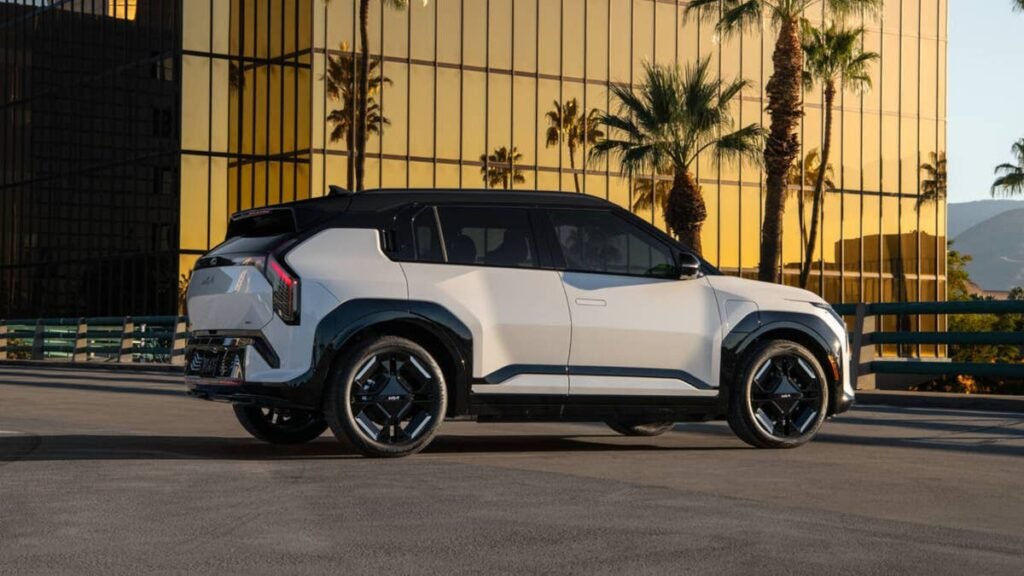
For nearly three decades, Kiaplayed second fiddle to Hyundai in South Korea. That changed in April 2026. For the first time since Hyundai took a controlling stake in Kia back in 1998, the younger brand outsold its corporate parent in their shared home market. It wasn’t a fluke driven by Hyundai stumbling, though a parts supplier fire did dent Hyundai’s output in March. Kia’s growth was its own to claim, built on a string of EVs that consumers are genuinely choosing over the competition.
Kia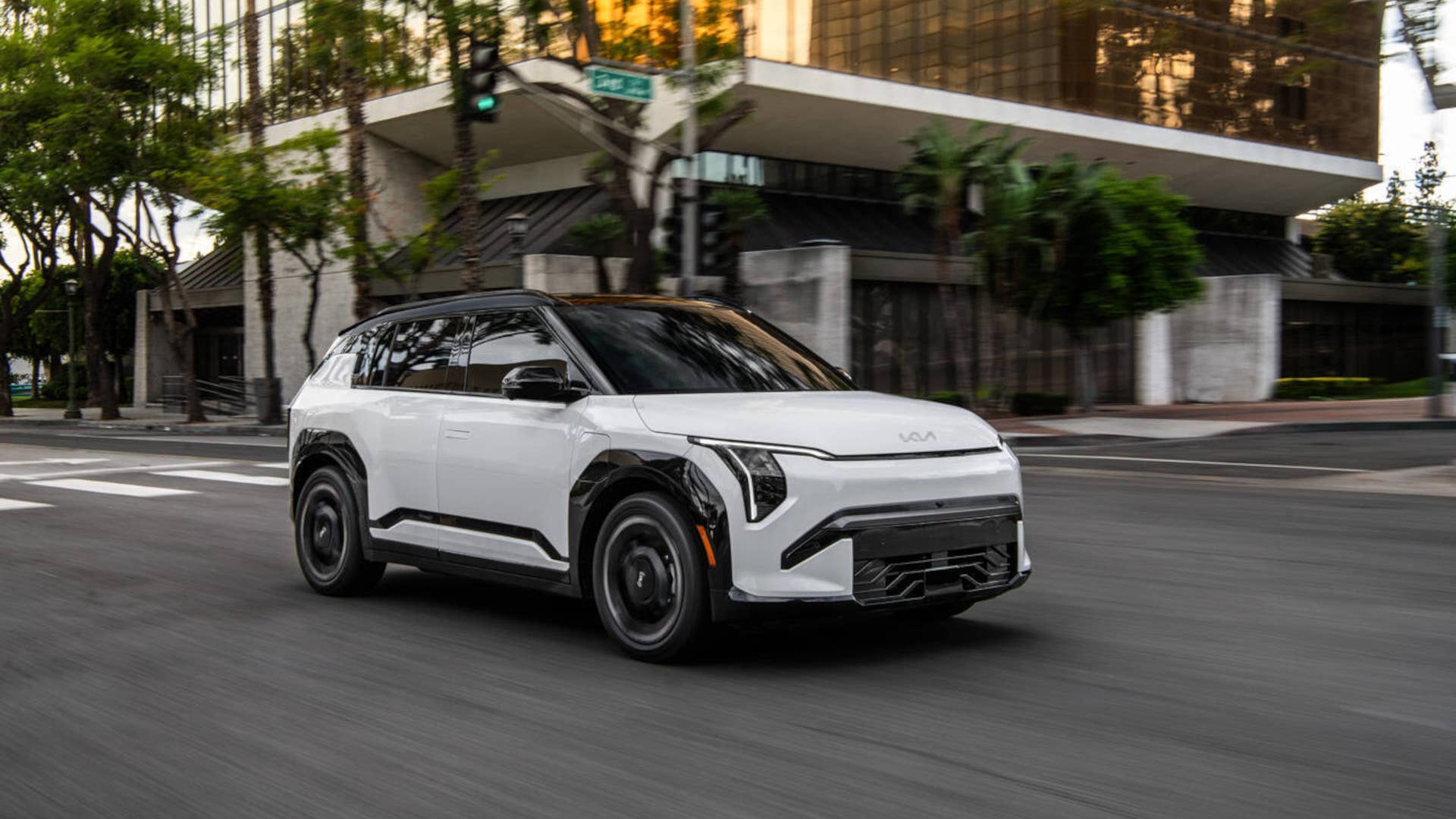
The Numbers Behind the Milestone
Kia’s global sales rose 1 percent in April to 277,188 vehicles. In Korea alone, three models carried most of the weight. The EV3 moved 3,898 units. The PV5 electric van shifted 3,308. The EV5 added 2,262 more. April was Kia’s third straight month crossing 10,000 EV sales in Korea, a threshold only Tesla has matched in that market. Combined, Hyundai and Kia cornered the home market, selling nearly 18,500 EVs domestically that month. Kia accounted for 13,596 of them. Hyundai managed 4,851.
A Global EV Lineup Taking Shape
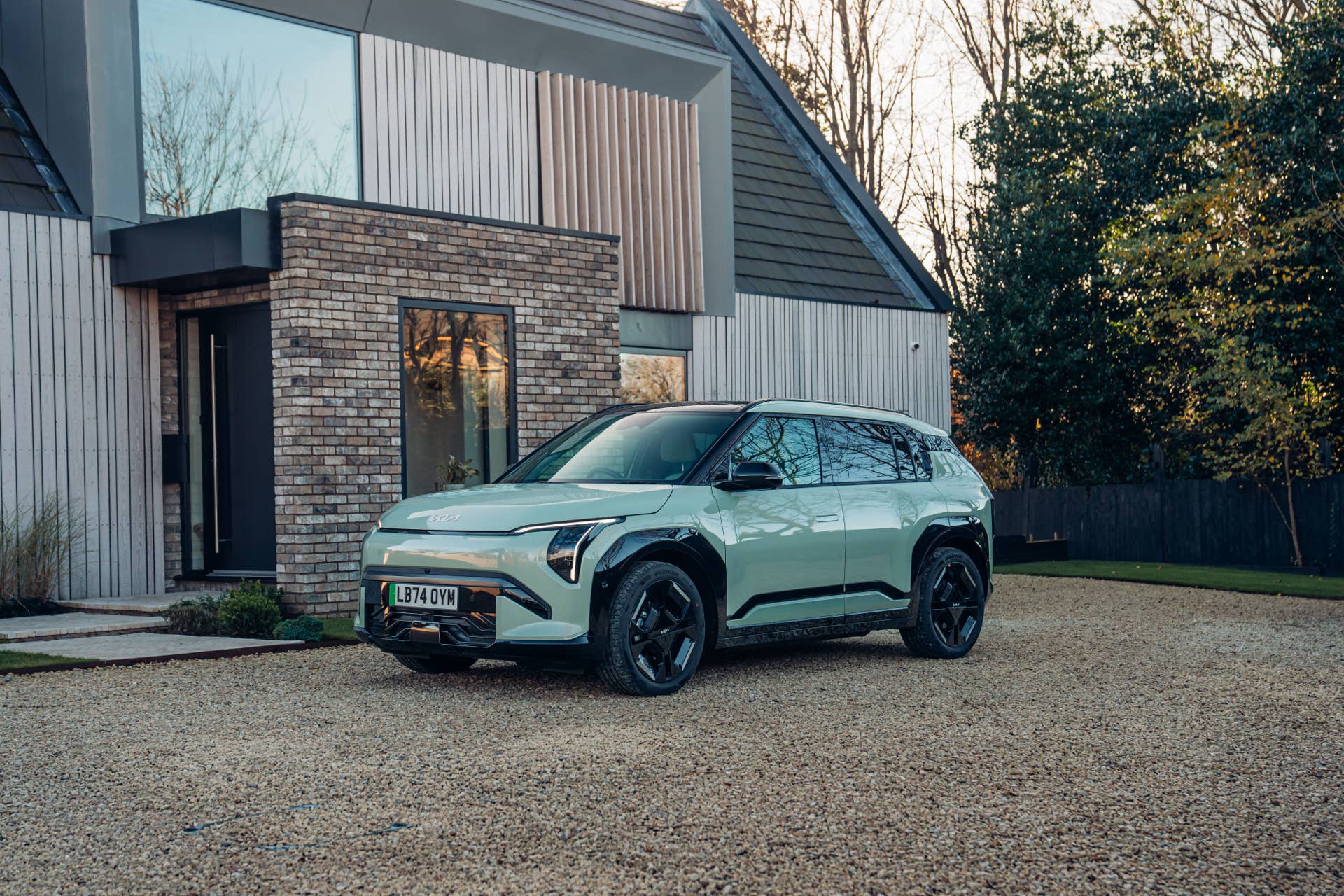
The momentum isn’t just a Korea story. In the UK, Kia sold its 100,000th EV last month, a milestone reached across models stretching from the original Soul EV to the new PV5 van. In Australia, Kia ranks third among EV brands behind BYD and Tesla. The EV5 alone has clocked over 10,000 sales in the first four months of 2026 globally. And in the US, where Kia has leaned on hybrid SUVs, the EV9 posted a 481 percent sales jump in April. The 2027 EV3 arrives later this year, expected to start around $35,000, with up to 320 miles of range on the long-range variant. That pricing puts it squarely against the Chevy Bolt and Nissan Leaf. The younger sibling is growing up fast.