Meta
- Kylie Jenner debuted newly designed Meta glasses.
- Soon, her social media comments were flooded with people calling them “pervert glasses.”
- It shows how controversial the technology can be, even if Meta wants to highlight how it can help the disabled.
Kylie Jenner is very much like Meta’s glasses: You can’t deny they’re popular — but that doesn’t mean they’re not also controversial. (Just ask Club Chalamet. Actually, don’t.)
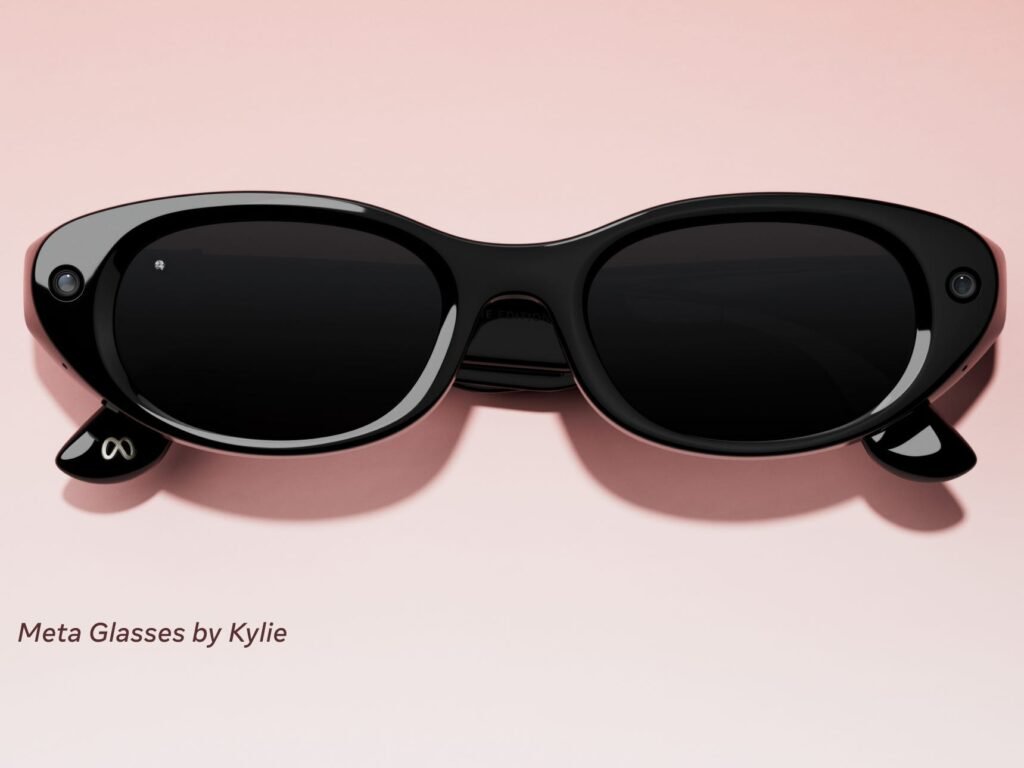
It’s undeniable that the camera-and-video smart glasses have sold — at least 7 million pairs last year. Now, a fresh wave of attention — and scrutiny — has followed the launch of a new style of the glasses: an oval-framed pair designed by Jenner.
When she debuted them late last month, there was an immediate backlash. One person commented, “Predator glasses” on her Instagram announcement. Another said. “Such a scary product for a WOMAN to be supporting.” A British advocacy group bought a bus ad mocking the glasses with Jenner’s image and the slogan “we’re always watching you.” I’ve reached out to Jenner’s team for comment.
The anti-AI glasses sentiment might be getting louder simply because the glasses are getting more popular: They’re a thing young people actually encounter out in the world. (I wrote about “Computah” back in June; he uses Meta’s more traditional Ray-Bans to make funny videos pretending to “program” people.) They can also come with the potential creep factor. There’s a whole genre of pick-up artists who post videos using them. I wrote about other people who do obnoxious pranks on service workers with the glasses and post on TikTok and Reels.
And at a Madrid music festival last week, the pop star Lorde went on an expletive-laden diatribe about them, saying “Don’t get the glasses. Not sexy.”
Interestingly, since the launch of her namesake frames, Jenner doesn’t seem to be wearing them much in public. At the World Cup finals, she wore what appeared to be different tapered oval sunnies, and at a Knicks game, she used an old-school point-and-shoot camera to take photos of her boyfriend, rather than Meta glasses.
She did wear them in a recent Instagram post promoting her swimwear line.
The glasses, which can record video and take hands-free photos, have always been controversial — how could camera glasses not be? But it feels to me like we’re at a new level of the discourse about them, where young people are both bemoaning their impact on society and also buying them.
What seems new here is the AI element, which is being beefed up in the glasses. In general, there’s widespread anti-AI sentiment among young people, yet they continue to use AI. (Life is complicated; no judgment.)
Of course, the most controversial AI element in the glasses is one that doesn’t exist on them (yet): facial recognition. Meta has been dancing around this feature for years. Whether it actually happens could depend on public reception — so it matters right now how Meta and its executives are messaging it.
That’s where Meta’s recent messaging around the glasses comes in.
NameTag would identify people you know
It’s a relatable dilemma: You’re talking to someone at a party, and you can’t for the life of you remember their name. Or, even more brutal, you forget them completely, and they inform you that you’ve met before (oof).
This social agony is what Meta says it aims to solve with facial recognition in its AI-powered smart glasses. It hasn’t launched facial recognition, but it seems to be very interested in doing so. Wired reported that a recent software update for the glasses included code (that wasn’t actually working yet) for a feature called NameTag that could help you identify people you’ve met before.
But is the “cocktail party problem,” as Meta CTO Andrew Bosworth called it in a recent interview on Nicholas Thompson’s podcast, a big enough problem that we should be willing to make the privacy tradeoffs of a world where facial recognition glasses at parties are normalized?
A Meta spokesman told me facial recognition isn’t yet a done deal.
“We haven’t made a decision on the so-called NameTag feature, and it’s not available in glasses people can buy today,” Meta’s Carl Woog said. “Should we decide to make something like this available, it will be our responsibility to do so with a thoughtful approach that protects people’s privacy.”
It feels hard to square the idea of facial recognition in glasses with personal privacy.
In the podcast interview, Bosworth also discusses the benefits of the glasses to the blind, as well as people who have trouble remembering faces or names because of a brain injury or other cognitive issue.
Facial recognition could have real benefits for the blind
That podcast interview wasn’t the first time Meta executives or other company communications mentioned the glasses’ disability benefits as a talking point.
I believe the people working on the glasses at Meta really care about the potential benefits for people with disabilities. The division at Meta that makes the glasses, Reality Labs, has its origins in Meta’s acquisition of CTRL Labs, a company working on neural interface wearables meant to help people who couldn’t type. In June, Meta pledged to provide free glasses to any of the 130,000 blind military veterans who request them.
“There are a lot of people working at Reality Labs who have dedicated their professional careers to building frontier technology that can help people who have real needs, be it limited sight, hearing, or mobility, and we are inspired by these efforts,” Woog said.
Still, Meta glasses are not primarily sold as disability aids — they’re fun toys for general consumers. And the discussion around disabilities also creates a kind of false tension: If you’re worried about the privacy implications of facial recognition glasses, you might be against helping the blind. I have to believe there exists a middle ground; you can care about both things.
Meta knows that public sentiment is crucial to getting widespread acceptance of AI features like facial recognition. For now, it seems it will have to work on its messaging if the recent backlash to the Kylie glasses is any indication.