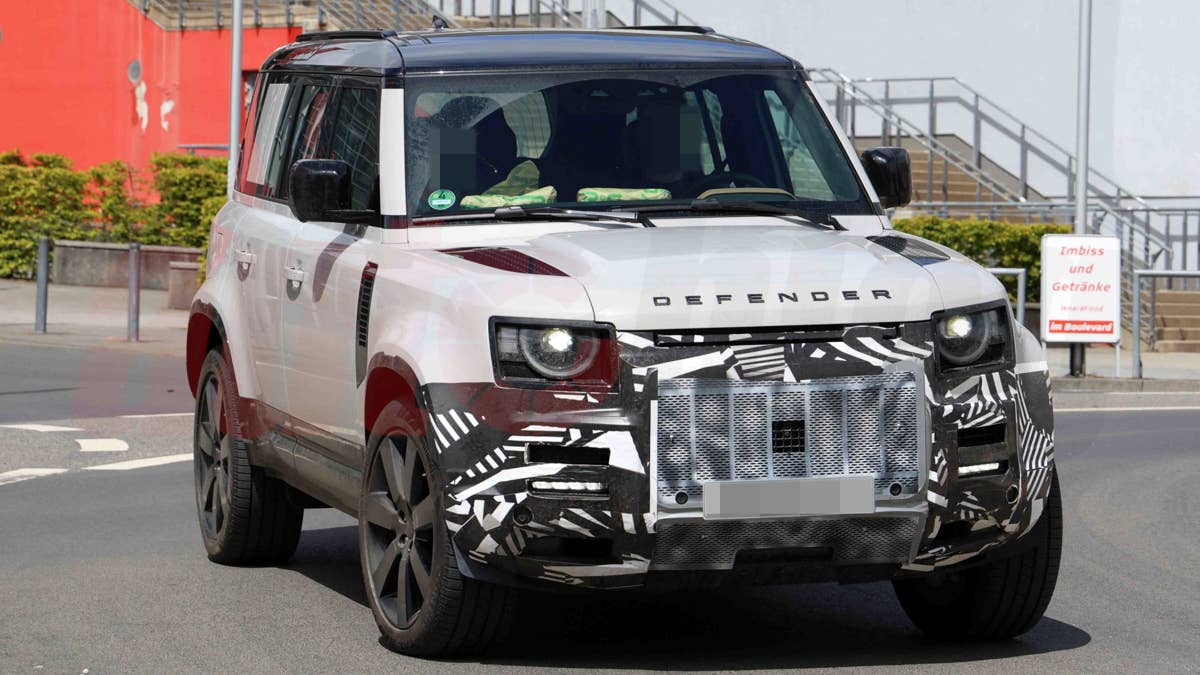
The modern Land Rover Defender is beginning to show its age, with the L663 generation launching in 2019, and it’s nearly time for a refresh inside and out. Land Rover USA’s best-seller by far, the Defender is worthy of being its own brand with three models of the same name distinguished only by the length of their bodies, but it’s a tricky vehicle to improve on. The Defender’s shape is a brand of its own, and it seems JLR won’t be doing too much to mess with it, as camouflage has only been deemed necessary on the front and rear bumpers, with nothing hidden on the body in between.
Mild Exterior Changes for Aging Land Rover Defender
SH Proshots/Autoblog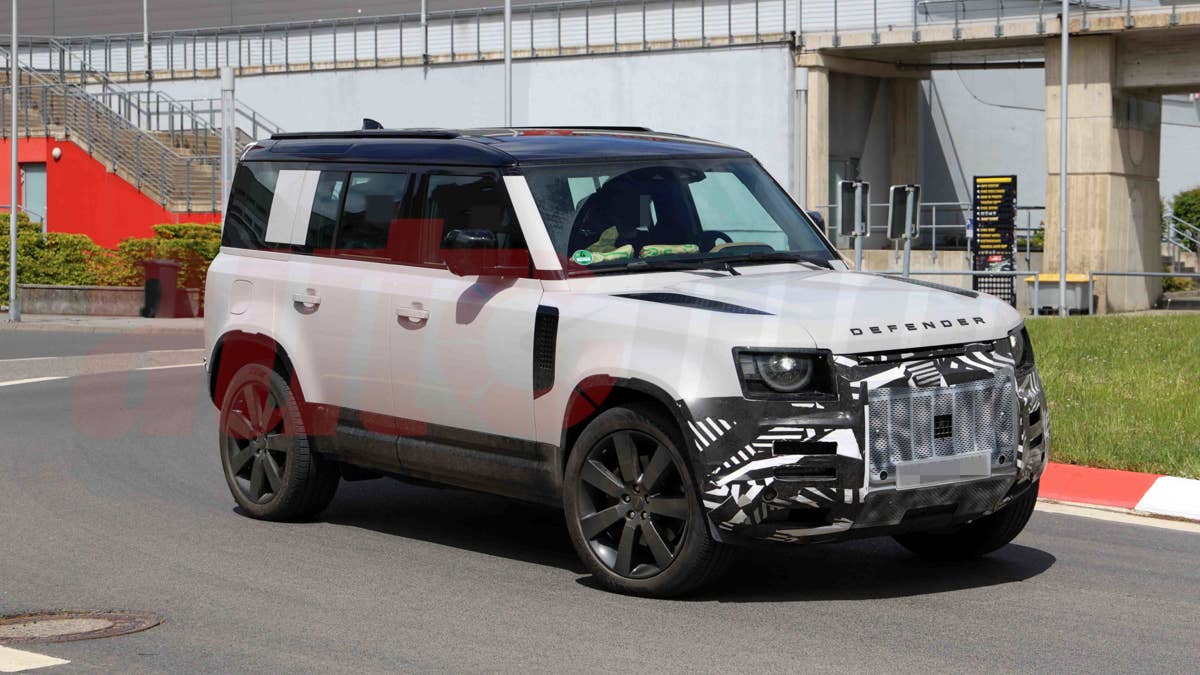
The hood, fenders, glasshouse, doors, and wheels appear to be unchanged, but the front fascia will benefit from a revised look. Thanks to the mesh covering the openings, it’s difficult to see what’s new, but the square-shaped grille pattern will carry over, as will LED daytime running lights in the lower half of the bumper. These will gain small intake openings above them, while the main intake opening appears to have lost the slot that previously sat in the middle of the fascia. A DEFENDER script badge still sits on the hood, and the headlights appear to have been left alone. At the back, more camouflage appears, but in even smaller amounts. The bumper appears to be shallower, and while we can still see at least one towing eye, we can’t be sure if the garnishing in the middle of the bumper of the current Defender is carrying over. The reflector slots don’t appear to be new, but we’ll need a closer look or for the light-bending camo to come off before we can be sure. Finally, the roof spoiler is new, making the rear of the SUV look even less rounded than before. The bottom line is that the cosmetic changes at either end of the updated Defender won’t be making a huge splash.
Updates Coming to Land Rover Defender Interior
SH Proshots/Autoblog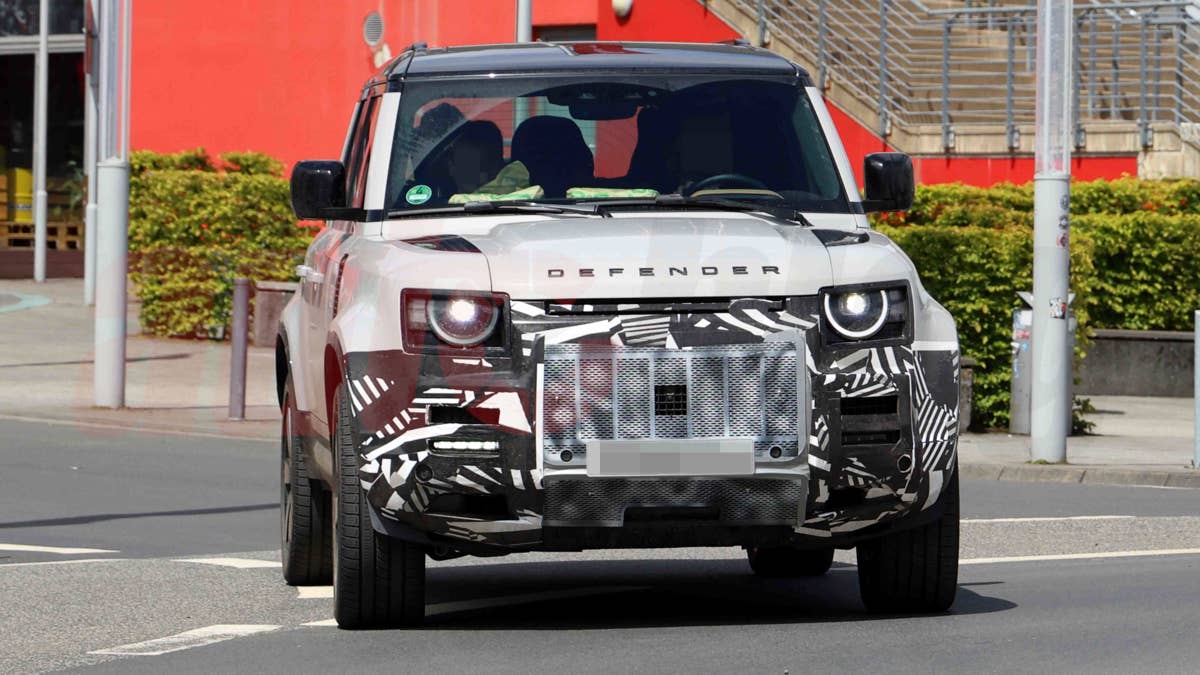
In the cabin, our spies say the refreshed Land Rover Defender will be more luxurious, with individual rear seats said to be coming in place of a rear bench. We suspect this will be an option, with the three-seat rear still available. We also suspect that the more comfortable rear seat setup won’t necessarily be available on all versions of the Defender; the 90 may be too small, but the 110 and 130 are ideal. As for powertrains, it’s possible that there will be changes as we draw closer to Euro 7 emissions deadlines, but we doubt anything will change here in America, where buyers can choose from a 2.0-liter turbocharged four-cylinder (P300) making 296 horsepower, a 3.0-liter straight-six turbo mild-hybrid (P400) with 395 hp, a 4.4-liter BMW-designed twin-turbo V8 (P500) with 493 hp, a 5.0-liter supercharged V8 (P525) making 518 hp, or the engine in the Defender OCTA, which is an upgraded 4.4-liter twin-turbo V8 with 626 hp.
SH Proshots/Autoblog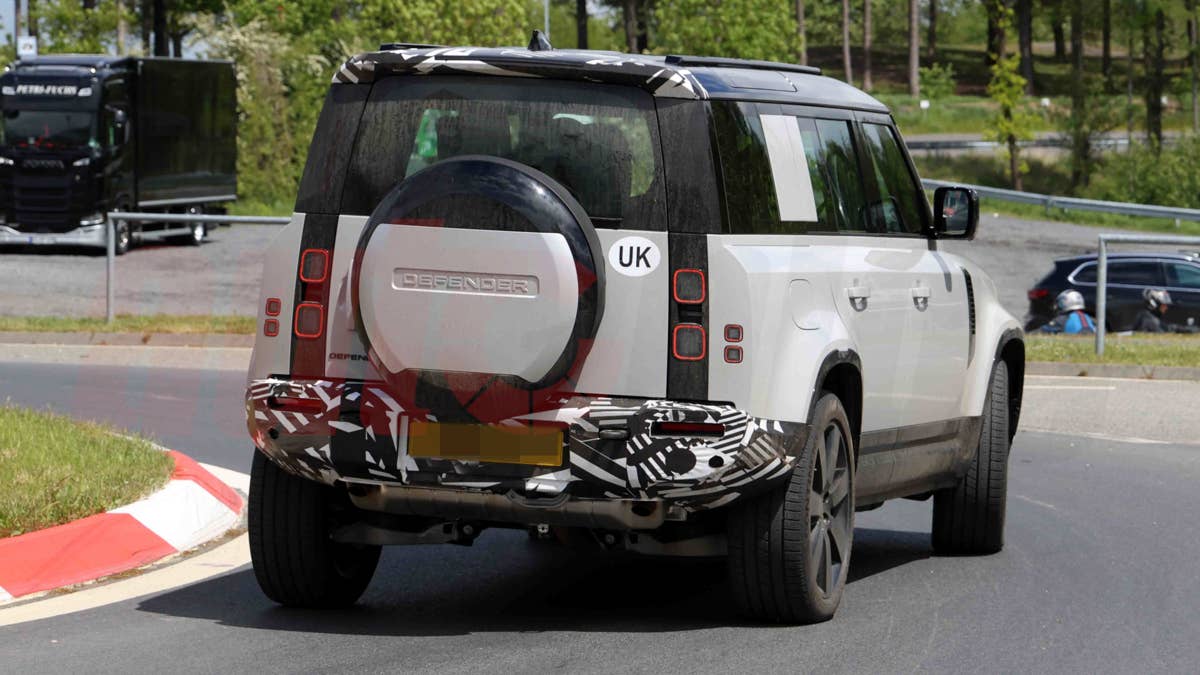
SH Proshots/Autoblog