The receiver of the operator is suing JDS Energy and Mining for breach of contract and negligence over the failure at the Eagle Gold Mine, based on the outcome of the investigation by an Independent Review Board.
Loyal readers will remember a series of posts I made two years ago about a remarkable landslide that affected a heap leach pad at the Eagle gold mine in Yukon, Canada on 24 June 2026. The failure was so large that the operator of the mine, Victoria Gold Corp., was forced into administration.
Yesterday, news reports emerged that the receiver, PWC, is suing JDS Energy and Mining for breach of contract and negligence over the failure. The basis of the claim is the report of the failure published by the Independent Review Board last July. The report is online and openly available, and makes interesting reading. I briefly wrote about the report at the time, but in light of this legal action it worth revisiting it.
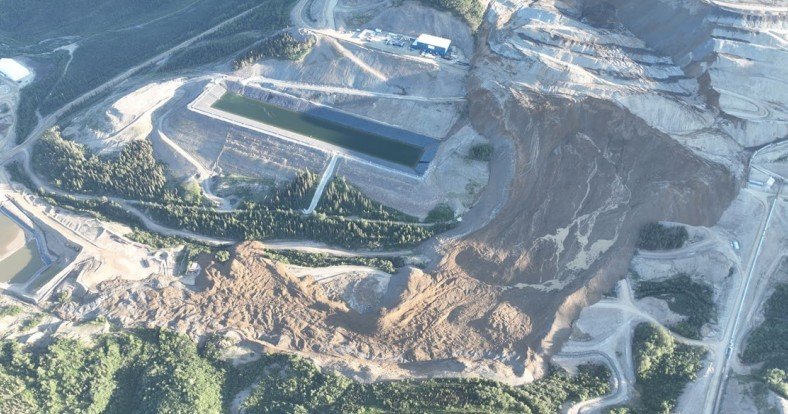
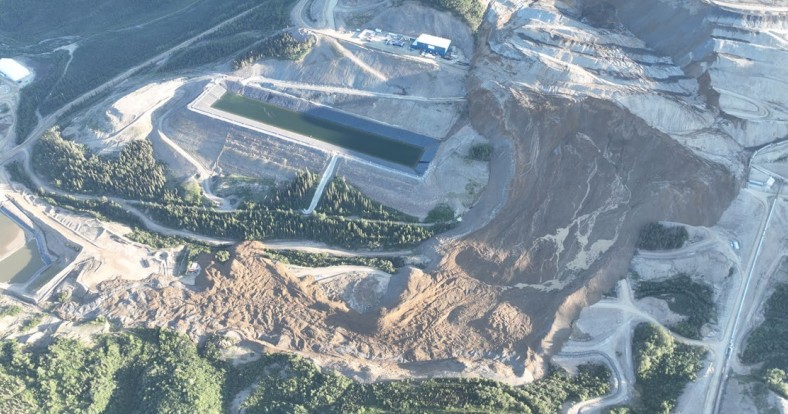
As a reminder, the report provides the best imagery that is available of the aftermath of the failure. This, for example, is the image on the front of the report:-
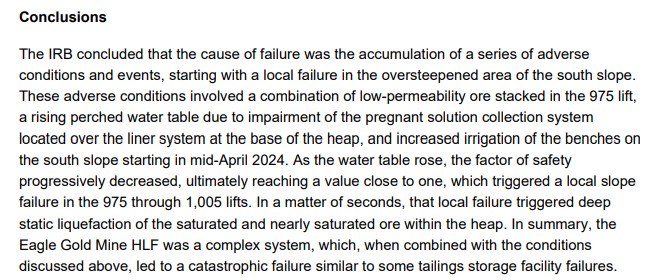
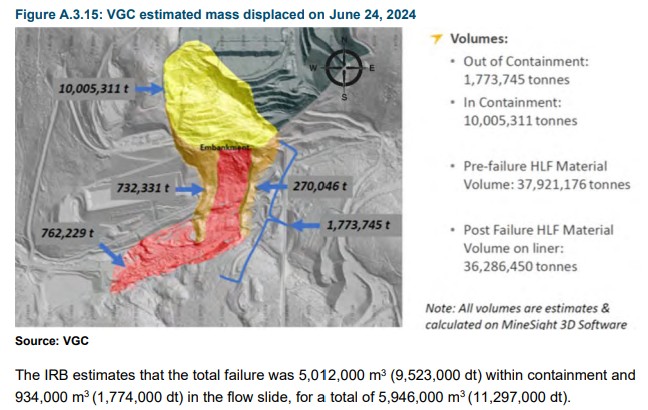
The IRB deduced that the landslide was a liquefaction flow slide that involved 5.96 million m3 of ore. It is worth repeating their main conclusions in full:-
There are a couple of diagrams in the appendix that help to understand this better. The first is a map of the various lifts in the area that failed:-
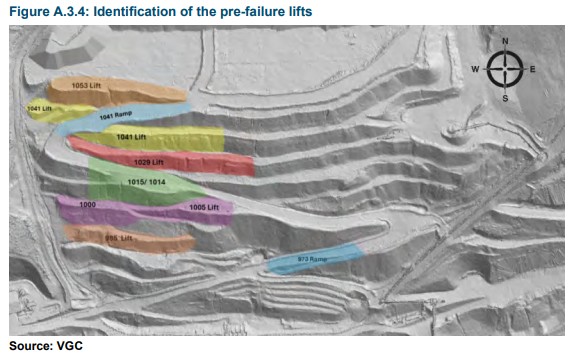
This map pinpoints the location of the initial landslide. The diagram below then compartmentalises the landslide into the larger portion, which remained within the boundaries of the heap leach pad, and the more mobile flow slide, which travelled beyond the boundary:-
The IRB also provides a more detailed summary of the causes of the failure:-
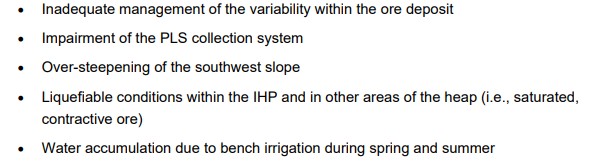
For those who have been following the long and contorted history of tailings failures, there is much that will resonate here. There are common threads around poor understanding (and control) of the material properties of the mineral phases; inadequate management of the geometry of the pile; a failure to recognise the potential for liquefaction; and, critically, a failure to manage the water / pore fluids in the stack.
This is, of course, the basis for the claim. The CBS report describes it thus:
“In the lawsuit, PricewaterhouseCoopers alleges JDS recommended against using a process called cement agglomeration in the heap leach pile. That process binds particles of ore together while allowing water to drain through.”
“The suit also claims JDS ignored the risk of stacking material on the heap leach pad year-round, which created frozen pockets within the stack, contributing to instability. And, the suit claims, JDS did not follow construction plans laid out by another company and purchased a substandard “geomembrane liner” intended to prevent contamination from leaching into the ground.”
Meanwhile, the government is providing CAN$220 million as a loan to the receiver for remediation of the site. It will be interesting to see how much, if any, of this money is recovered. Presumably, the aim of this action is contribute towards these costs. It is so terribly common for the profits of mining to be privatised but the long term costs to sit with the public.
Text © 2026. The authors. CC BY-NC-ND 3.0
Except where otherwise noted, images are subject to copyright. Any reuse without express permission from the copyright owner is prohibited.