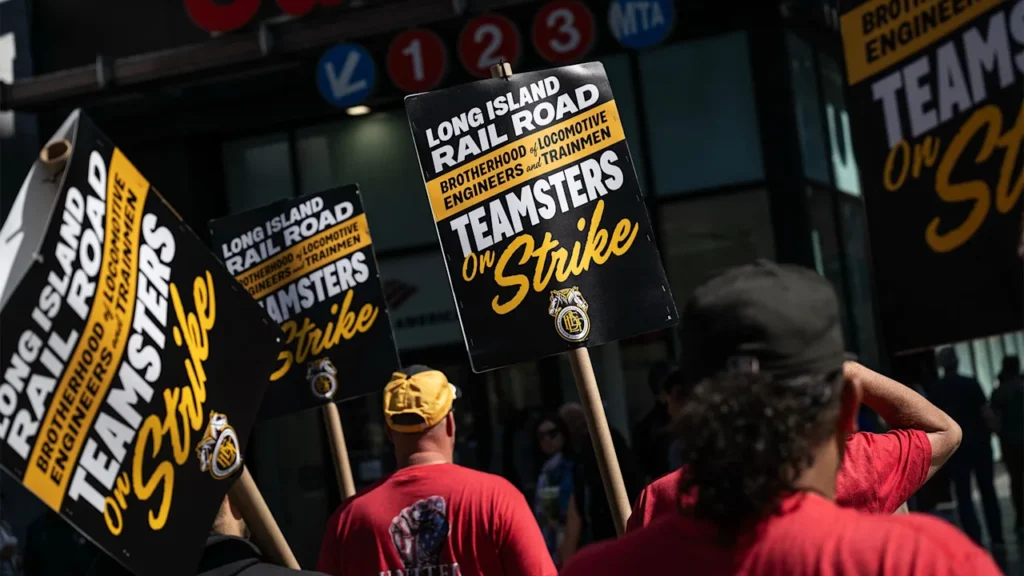
The New York City metro area is facing major travel disruptions as a historic Long Island Rail Road (LIRR) strike entered its third day for the start of the workweek on Monday.
The strike marks the first for LIRR workers since 1994. LIRR is operated by the Metropolitan Transportation Authority (MTA), the region’s public transit company. Here’s the latest and what you need to know:
How many workers are striking?
After negotiations between the unions and the MTA stalled on Saturday, around 3,500 LIRR workers walked off the job.
According to the MTA’s latest service alert, all branches of the Long Island Rail Road are suspended. The trains carry around 250,000 customers each day of the workweek across 947 trains.
“The City is preparing for travel disruptions going into the workweek and New Yorkers should too,” New York City Mayor Zohran Mamdani posted to X on Sunday. “New Yorkers should plan for heavier-than-usual traffic and additional travel time,” he added.
Why are workers striking?
Workers are seeking the same 9.5% retroactive wage increase that the MTA already agreed to for other transit workers. The increase would cover their last three years of employment.
Additionally, they’re asking for a 5% increase for the current year. According to the unions, LIRR workers haven’t been given a raise since 2022. Meanwhile, the MTA says that if they give LIRR workers the pay they are demanding, it could result in up to an 8% fare increase for riders.
In a statement to the New York Times, two of the unions representing machinists and communications workers that are involved in the strike said that their pay isn’t keeping up with the cost of living.
“Waiting four years for a raise is not fair, sustainable or realistic in an era of record inflation and rising housing costs,” they said.
But in addition to a more general raise, workers are also concerned over the MTA’s attempts to get rid of other contract rules that result in higher pay for workers—such as receiving two days’ worth of pay when they switch to operating a different kind of train midday.
Likewise, the MTA has proposed that employees absorb their healthcare costs at a higher rate.
What will happen next?
On Sunday morning, New York Governor Kathy Hochul asked that the unions continue to work with the MTA.
“Just three days of a strike would erase every dollar of additional salary that workers would receive under a new contract. We don’t need to be here. Workers deserve better, but also New Yorkers deserve better,” she said.
Hochul also advised that anyone who is able should work from home Monday.
Additionally, Hochul also blamed President Trump for ending mediations early last fall. In response, Trump blamed the governor and said he could “properly get things done” if necessary.
The MTA, according to the governor, will begin deploying shuttle buses to subway stations in Queens at 4 a.m. on Monday for essential workers.
The governor added that the parking lot at Citi Field is open and that commuters can park there for $6 and take the 7 train.
Regardless, Hochul pressed that it is “impossible to fully replace LIRR service” and urged “getting everyone back to the table” as soon as possible to resolve the dispute.
Disclosure: Mansueto Ventures newsrooms Fast Company and Inc. are represented by the Writers Guild of America, East.