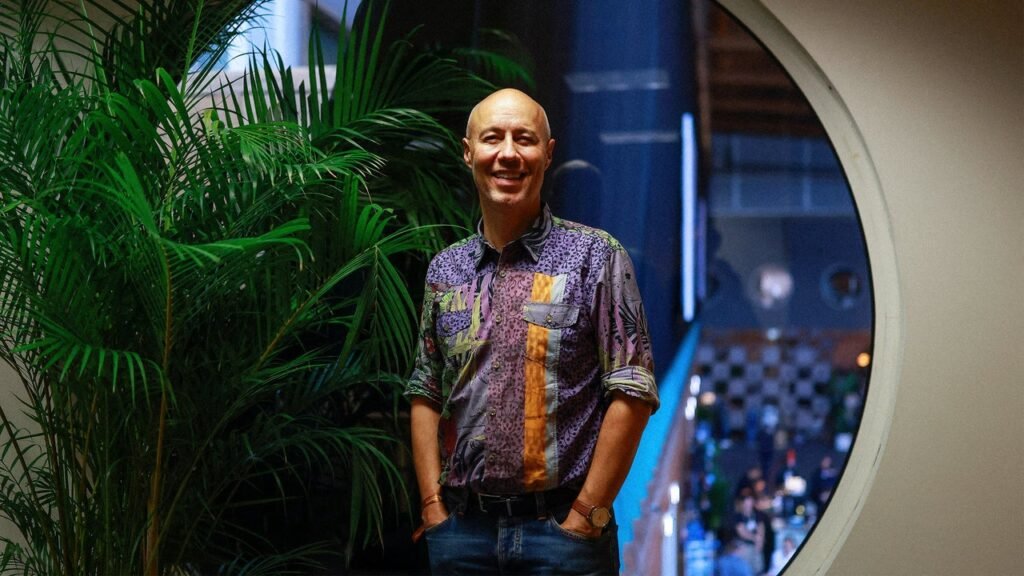
When David Risher was appointed as Lyft’s CEO in 2023, the company was struggling with financial losses and dwindling market share. The rideshare conducted multiple rounds of layoffs to stay afloat. In mid-February, Lyft was valued at $4.2 billion compared to its peak valuation of around $22 billion during its IPO.
Lyft’s financials have since turned around. Its first quarter revenue of the year climbed 14% to $1.65 billion and $14.3 million in profit.
In a recent interview with Wired, the former Microsoft and Amazon executive discussed the company’s path to profitability, and what it took to get there.
“When I came in, we were losing share,” Risher said. “Lyft was 26 or 27%compared to the other guy. We were losing money, $300 million a year. Things were not looking good.”
“I went to the Jeff Bezos school, so when I came in, my whole focus was customer obsession,” he added. “We spent quarter after quarter getting our cost position right, so that we could lower prices. We raised driver rates, because if drivers aren’t getting paid enough, they tend to be very frustrated and don’t provide great service, and drop off the platform.”
In an April press release, Lyft announced it would cap its monthly fee cut to 30% and on average, its fee is “around 14%.” Risher also denied that rideshare companies take too big of a cut from drivers.
“Certainly in the early days of this industry, there were massive effective driver subsidies, and there are still drivers who remember that or have friends who remember those days,” he said. “We will never, ever, ever, ever take more than 30% after insurance is taken out.” (Still, drivers foot the bill for gas prices.)
Since Risher took the helm at Lyft, the company has also expanded its service across Europe, Puerto Rico and Canada. The company has also focused on its AI and autonomous vehicle investments, through partnerships with Waymo and Nvidia.
“Today, we’re profitable,” Risher said. “We have some of the highest driver satisfaction rates we’ve ever had, and our riders are coming back. And our share is now up to about 31 points.”
Still, Lyft stock remains below its historical all-time highs, which Risher acknowledged.
“Our analysts and investors love the fact we’re growing quarter by quarter, but they also see uncertainty in the industry,” Risher said.
One such uncertainty is the disruption of traditional rideshare platforms with autonomous vehicles—which Risher predicts will be a big part of the future of Lyft and ridesharing as a whole.
“In a decade, buying a car without self-driving technology will be like buying a car with manual transmission—you could do it, but you probably won’t,” he told Wired. “Today, if you want to drive on the Lyft platform, you have to do two things: you’ve got to put your car to use, and you’ve got to put your time to use. Ten years from now, in a world where a lot of people have cars that can drive themselves, you just have to put your car to use, and when it comes back, you’re going to want it cleaned and maintained.”