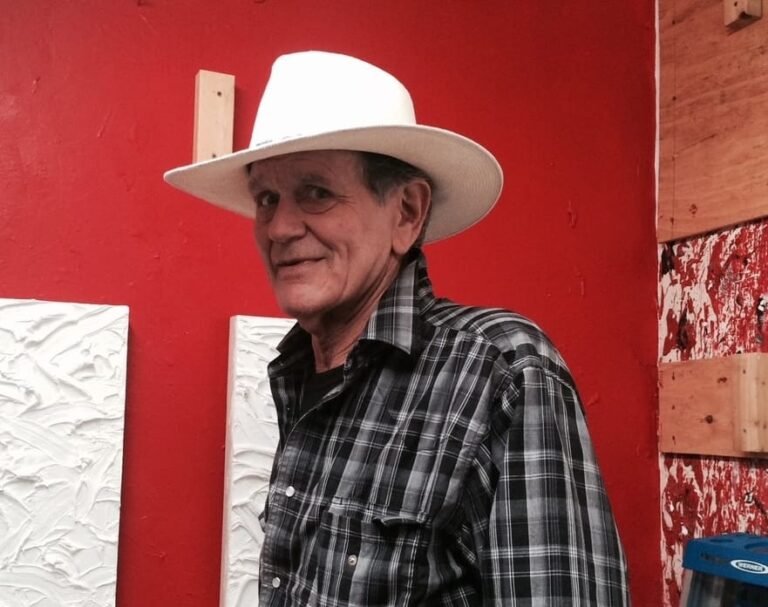
An observational painter, Mark Milroy transports viewers to a circumscribed world where seeing, memory, and imagination are one. He is in his mid-50s and, during the pandemic, began gaining a following for his Instagram posts, website, and two online shows at Nancy Margolis Gallery (2022 and ’23), both accompanied by a digital catalog. After immersing myself in the work I could see online, I sent him an email, which culminated in him visiting me and drawing my portrait shortly after the World Health Organization (WHO) declared that COVID-19 was no longer a global emergency in May 2023. In 2024, he held his first public exhibition at Pamela Salisbury in Hudson, New York, which I reviewed for this publication.
Knowing his work as intimately as I do, I did not realize that Jumbo, at JJ Murphy through May 16, was his debut New York exhibition. It includes 18 paintings ranging between 10 by 8 inches (~25.4 x ~20.3 cm) and 60 by 75 inches (~1.5 x 1.9 m), and 12 colored pencil drawings measuring 12 by 9 inches (~30.5 x 22.9 cm) in a binder on the gallery desk. While the predominant subjects are still lifes and portraits, what Milroy does with these time-worn subjects, especially on a larger scale, is what makes this exhibition special. In a 2013 essay that the poet Douglas Crase wrote about Milroy, he pointed out Cedric Morris, the erudite, self-taught painter and Lucian Freud’s teacher, as an influence. Another of Milroy’s inspirations is the compressed non-perspectival space and warm humanism of 15th-century Florentine painting.
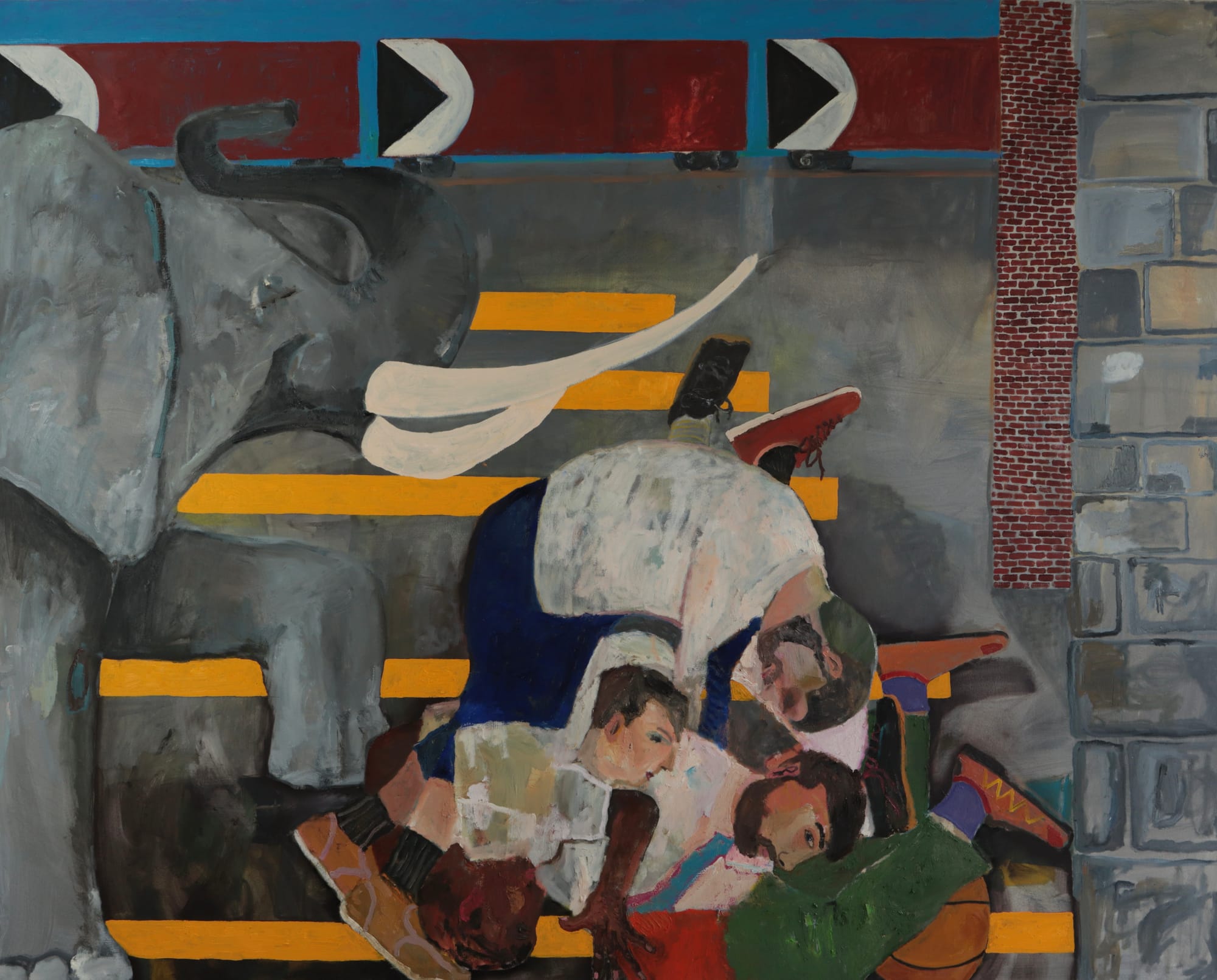
“Jumbo” (2023–26), the titular painting of the exhibition, was the name of the much-loved and abused P.T. Barnum elephant killed by a freight train in St. Thomas, Ontario, Canada, Milroy’s hometown, in 1885. Was his death an accident or deliberate, because he was in failing health? Neither possibility has been conclusively proven. The juxtaposition of Jumbo entering the painting from the left side, front foot raised, as if walking, and the tumultuous pile of adolescent boys in front of him, all fighting, is a meditation on violence and humiliation under the guise of entertainment, fun, and excitement. The painting gets at surface appearances, while hinting at unseen abuse. Is Jumbo about to step or charge into the pyramid of fighting boys? Does Milroy side with Jumbo?
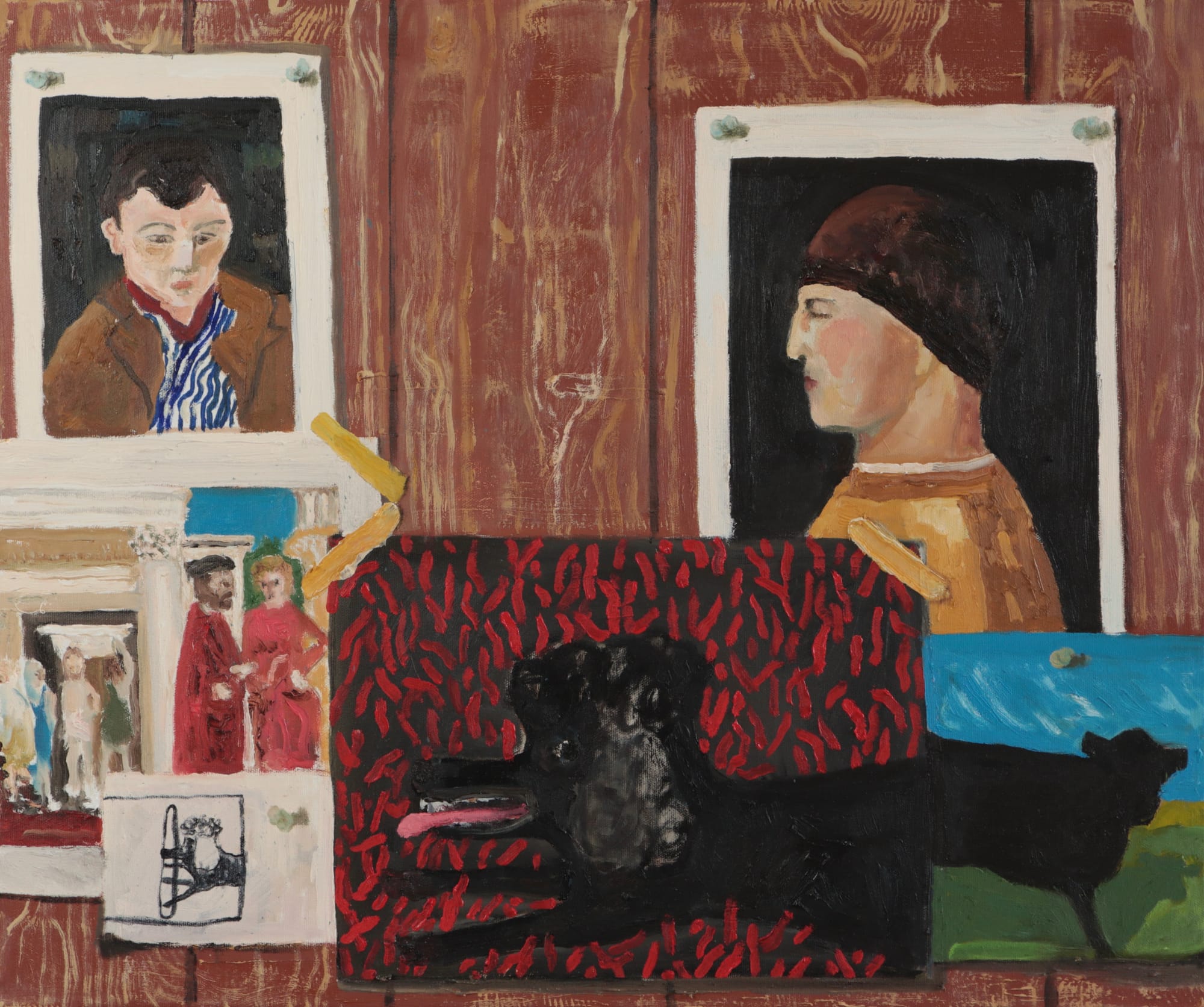
In the trompe l’oeil painting, “Still Life with Poodle and Portraits” (2026), we see postcards, reproductions, and drawings affixed to a red-brown, wide-plank wooden wall, the wood grain visible. On the painting’s left side, Milroy has arranged a reproduction of a man looking down, pinned to the wall. Below him, we see a cropped postcard of Piero della Francesca’s “The Flagellation of Christ” (c. 1455–60) — often called “the greatest small painting in the world” — taped to the wall. Partially covering it is a small linear drawing of a poodle along with a painting on paper of the same dog on a black-and-red ground. Pinned beneath that work in turn are depictions of a black, featureless cow and another Renaissance portrait of a man seen in profile, facing left. This cluster of overlapping images is a summary of the artist’s affections and ambitions, from a personal pet to art historical models to aspire to. The layered space underscores Milroy’s response to the mathematical precision of Della Francesca, cluing us in to the deliberateness of this arrangement.
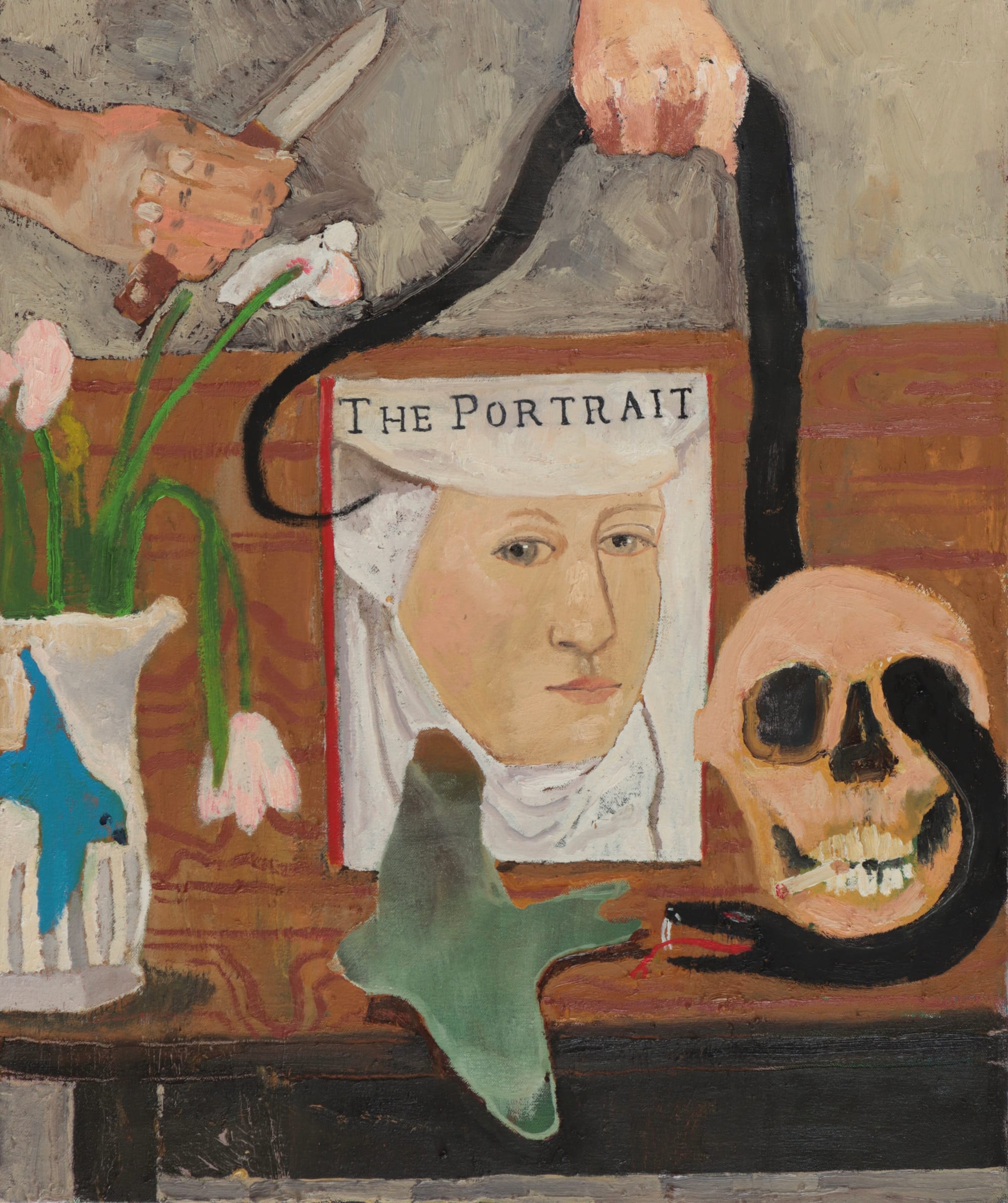
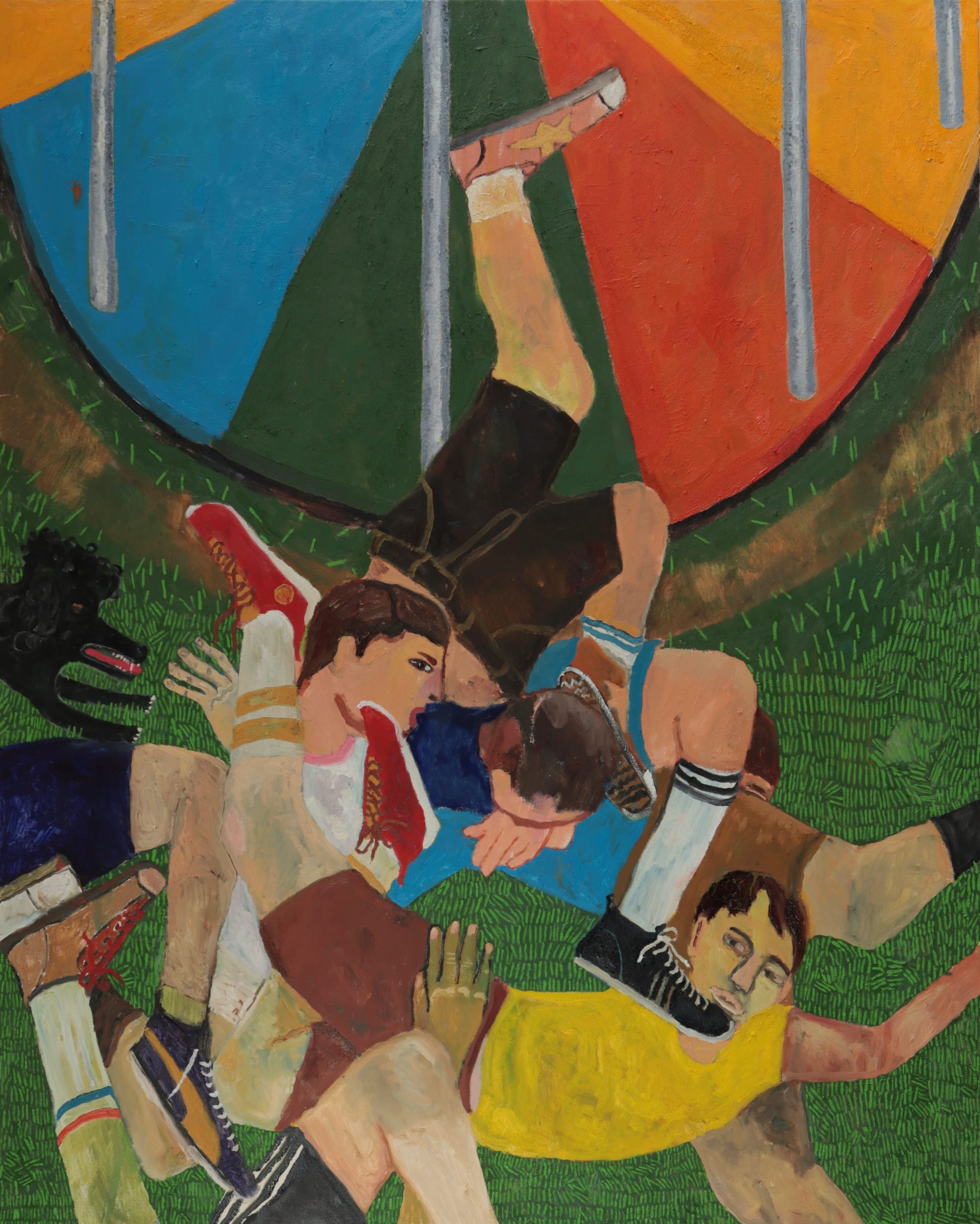
Left: Mark Milroy, “The Portrait” (2026), oil on canvas; right: Mark Milroy, “North Star” (2026), oil on canvas
Milroy, who teaches art to middle schoolers, has drawn inspiration from a wide range of sources. Over the brief period that he has been exhibiting his work, it has become denser with narrative possibilities. The interplay between his colored pencil drawings and paintings and the directness of his marks is notable at a time when faux awkwardness mixed with irony has become commonplace. Milroy’s unabashedly direct paintings and drawings put him in the same company as another great, quirky, American original, Albert York, whose works the poet and critic Bruce Hainley once described as the “pursuit of lyric intensity while negotiating a point-blank confrontation with history.” We see this confrontation in Milroy’s work mixed with painful childhood memories, yearning, and love.
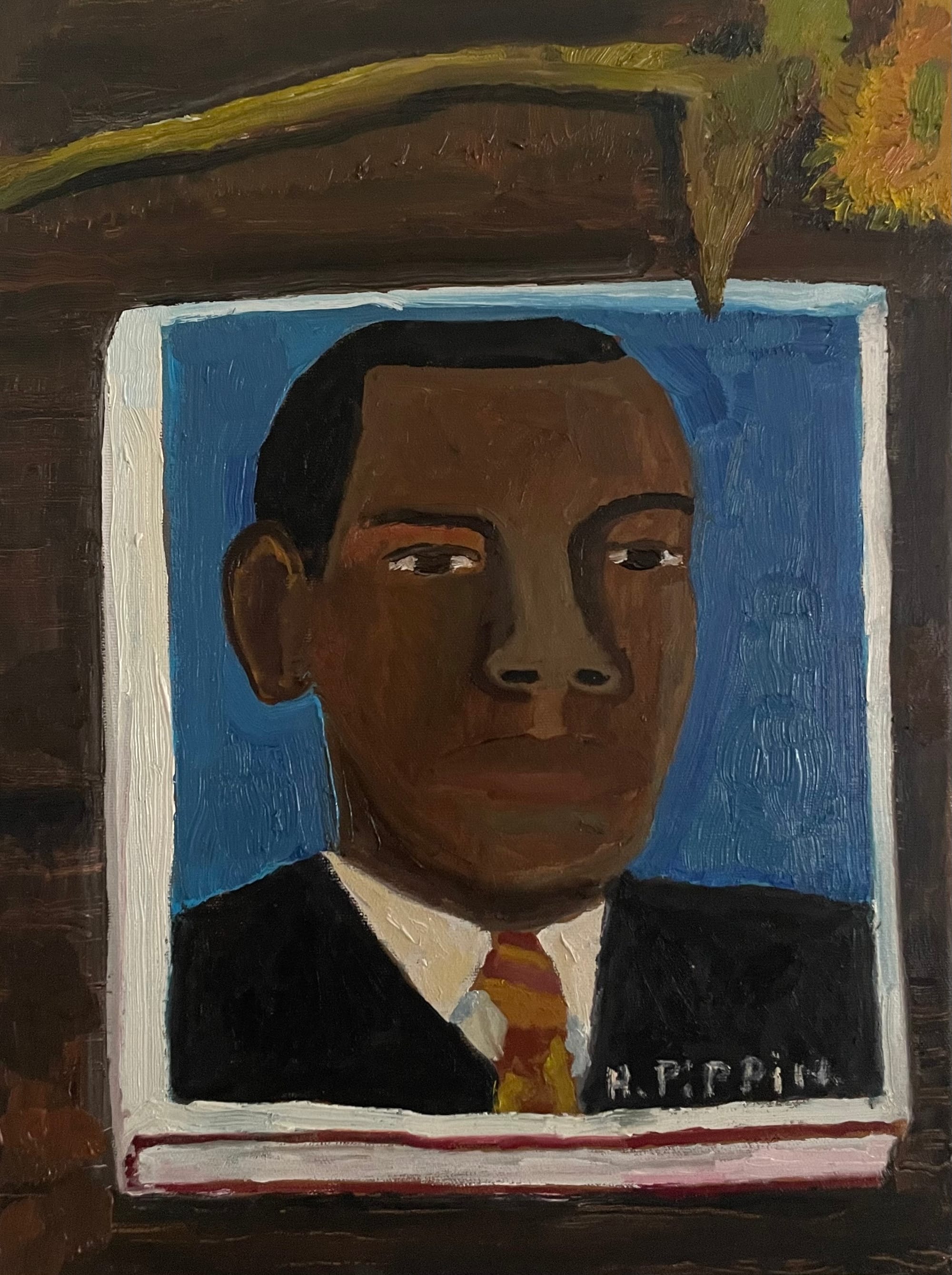
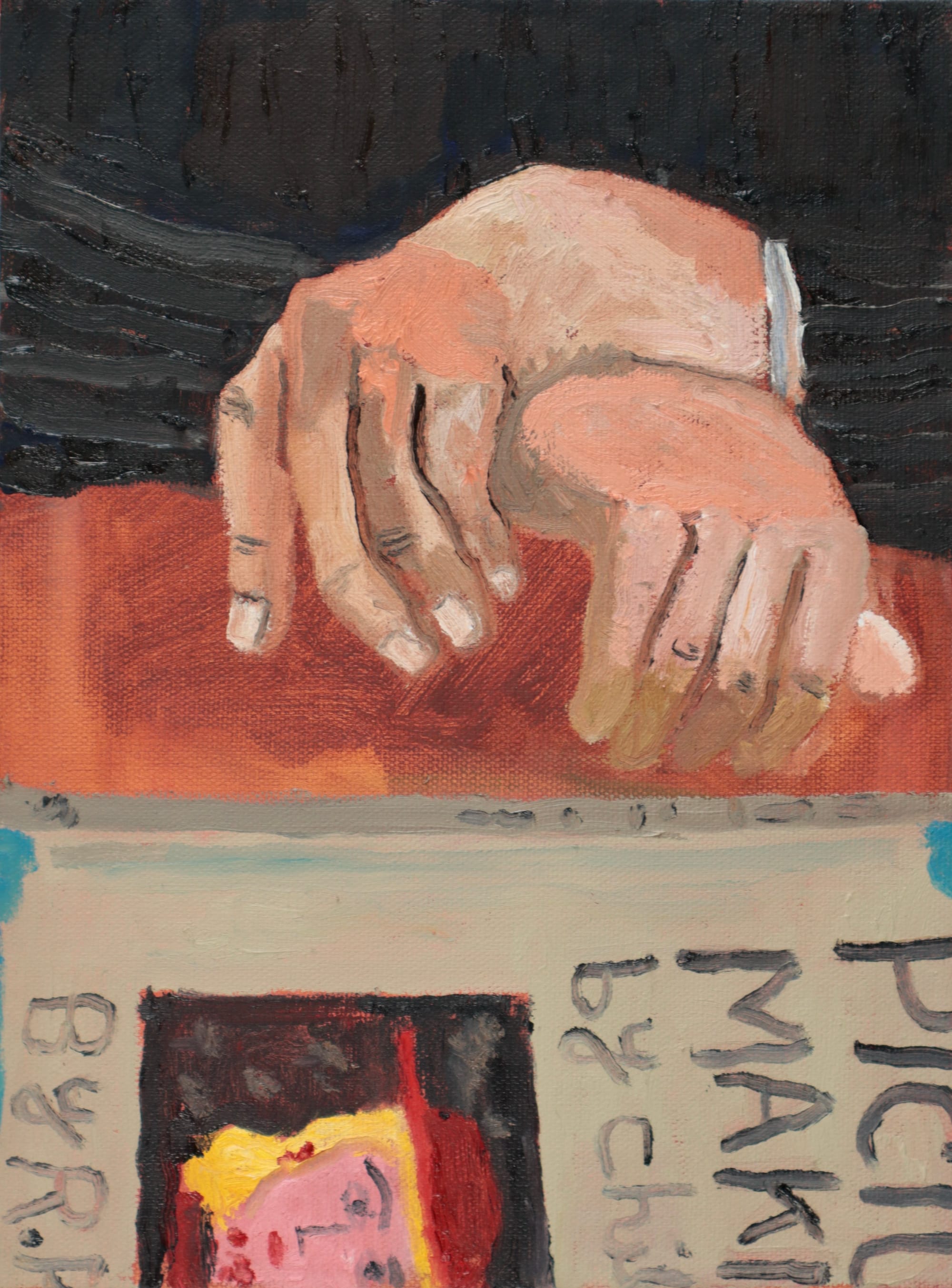
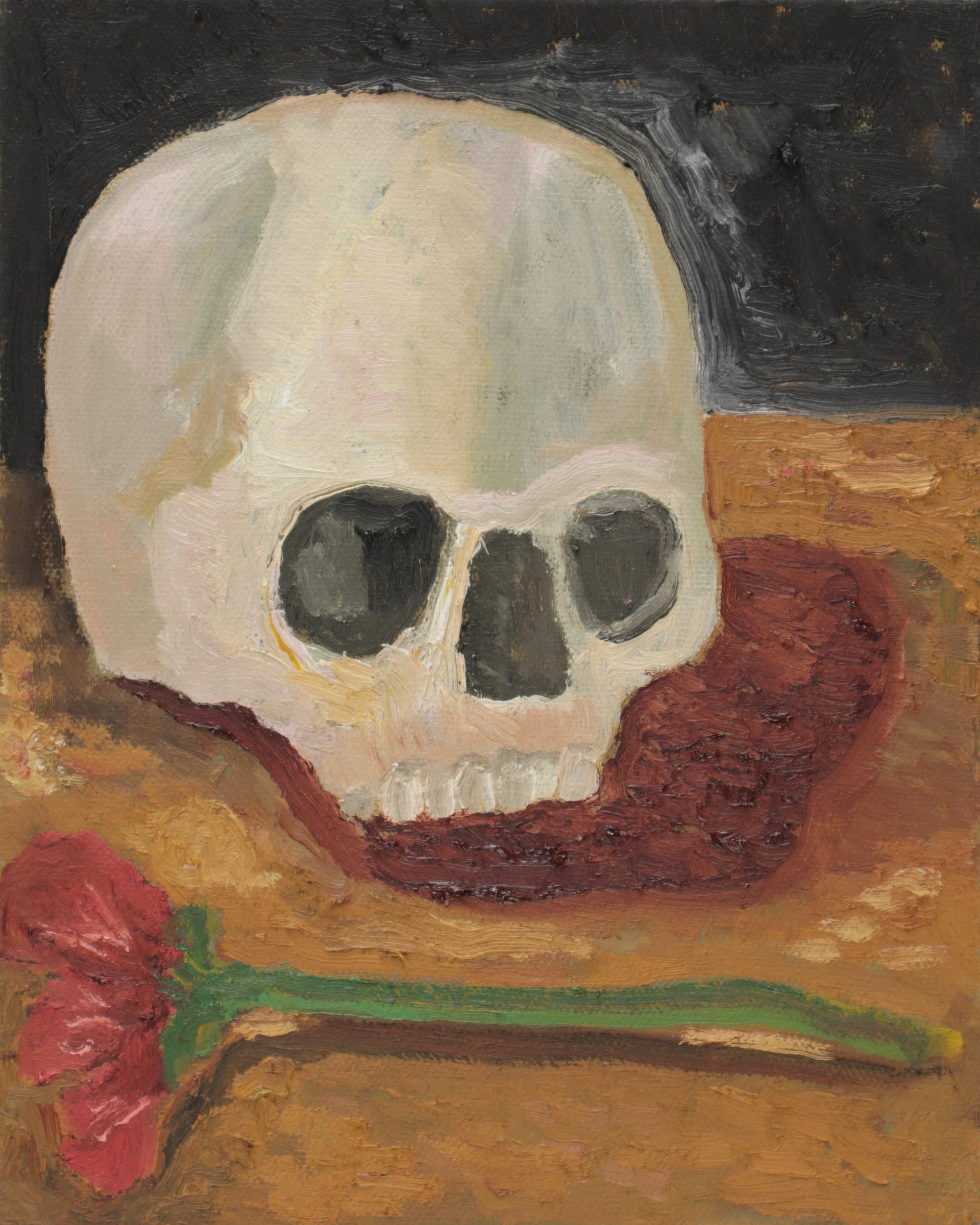
Left: Mark Milroy, “Picture Making by Children” (2026), oil on canvas; right: Mark Milroy, “Still Life with Skull and Flower” (2025), oil on canvas
Mark Milroy: JUMBO continues at JJ Murphy (53 Stanton Street, Lower East Side, Manhattan) through May 16. The exhibition was organized by the gallery.