Mary Frank charted a far different path from her male counterparts in the second half of the 20th century, who rejected the handmade in favor of fabrication. Frank, who is in her early 90s, and has been making work rooted in mythology and her study of dance with Martha Graham for decades, has long deserved to have her multi-genre work celebrated by a New York museum. The fact that this has not happened is not simply a matter of neglect or oversight — it is one of the many instances where, over time, prejudice against her aesthetic independence has become regarded as truth. Until that viewpoint changes, exhibitions such as Mary Frank at Steven Harvey Fine Art Projects will have to do.
Curated by Harvey, the exhibition focuses on Frank’s sculpture done between 1958 and 1985, including 11 sculptures made of wood, bronze, and ceramic, ranging from ones that fit in your palm to a large ceramic head seen in profile. Complementing this group are 5 works on paper, three of which are rendered in black ink. The two exceptions are a monotype, “Lovers” (c. 1980), and an oil-on-paper work, “Chasm” (1990), of a landscape in which a scumbled yellow sky illuminates the narrow passage between two different-colored mountains.
At the outset of her career, Frank announced her interest in the mythic in “Winged Woman” (1958), a chiseled wood sculpture made from a single section of a telephone pole. She maintains an impossible pose, standing on one leg with the other leg raised and wrapped around her thigh. The mythic woman with agency has since become a recurring subject in Frank’s work. She is not a goddess, at least not as they have been described in Greek and Roman mythology. These women are not petty, jealous, or concerned with power. Instead, they are self-sustaining, survivors who have not lost their capacity for love or tenderness.
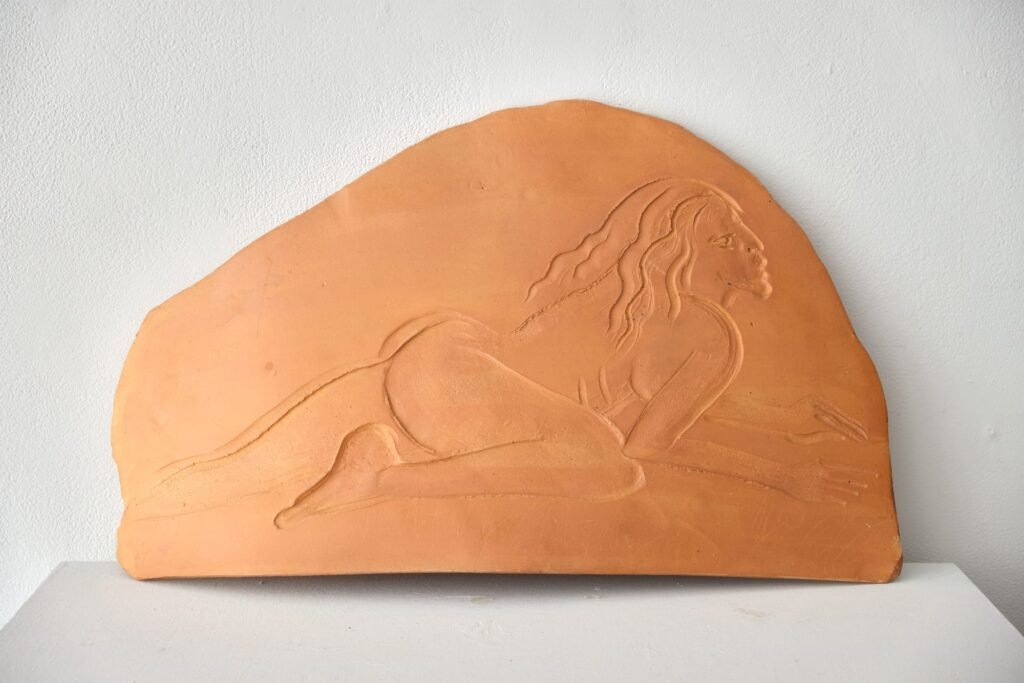
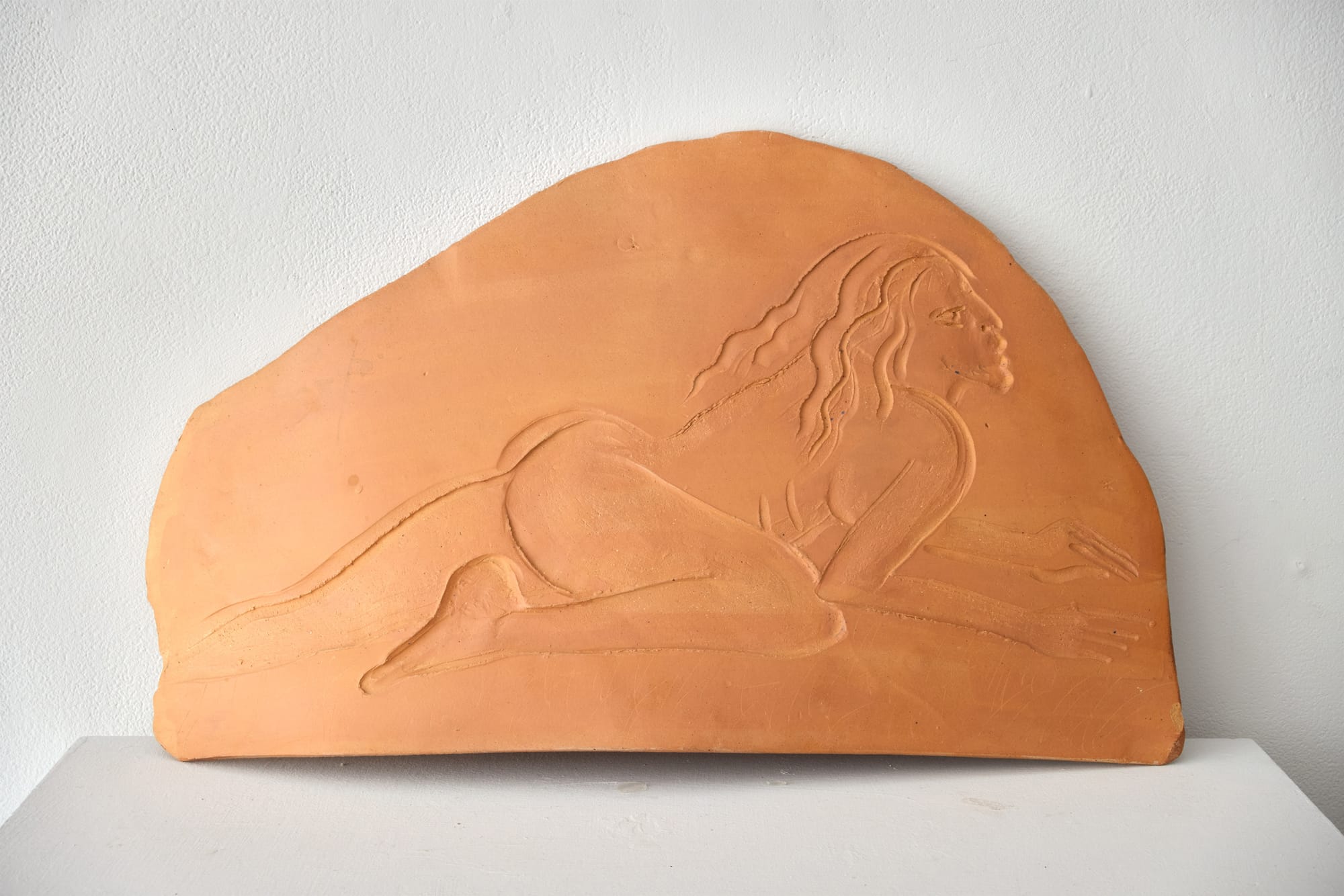
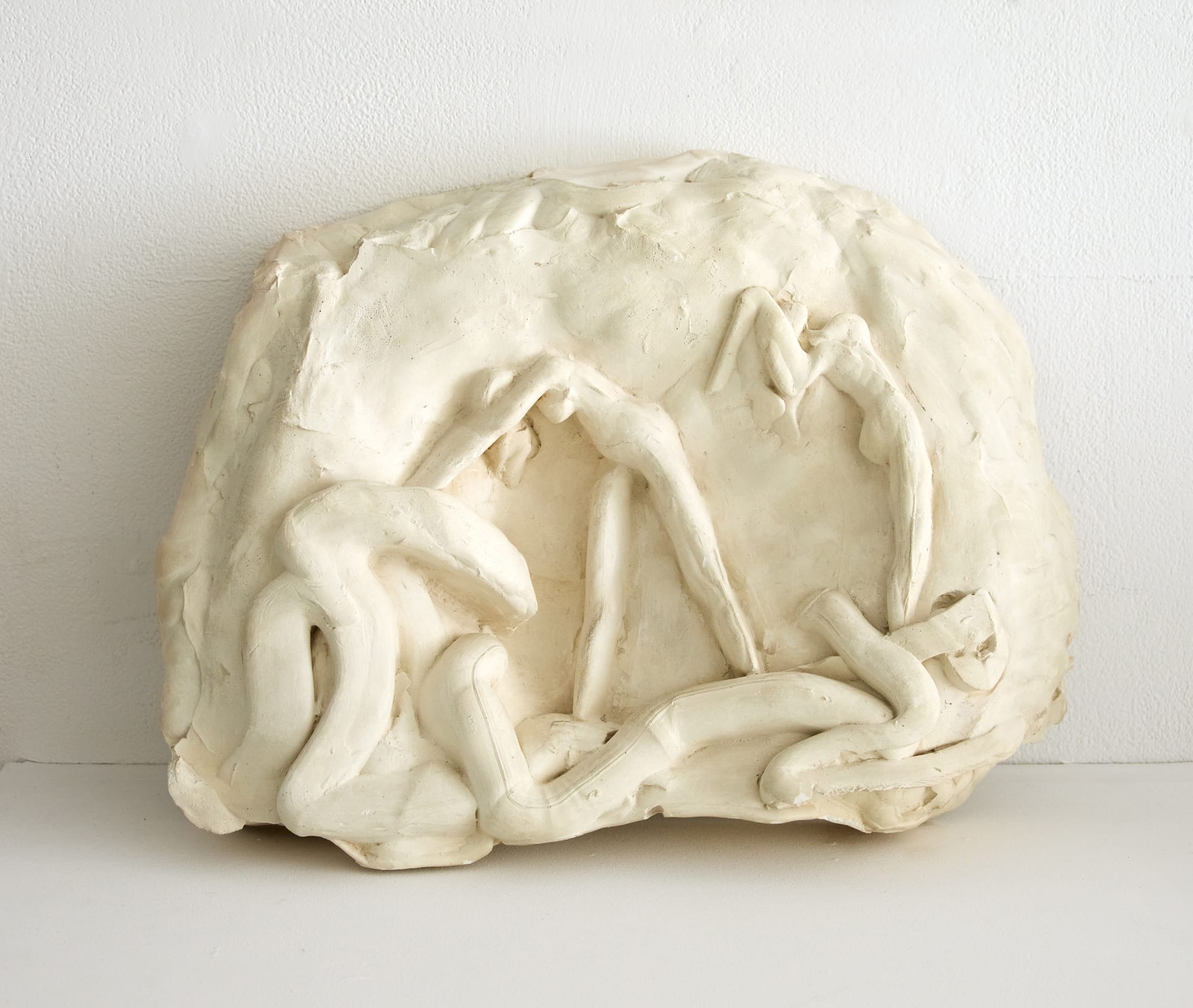
Working in ceramic, Frank can go from incising lines in a wet, malleable surface to shaping it into a form. In “Entrance” (1975) and “Embracing Couple” (c. 1980), neither of which is taller than 14 inches (~35.6 cm), Frank carves her subjects into thin, free-standing, earth-colored ceramic slabs. The pared-down lines are delicate and firm. The figures, almost exclusively women, seem to exist in a realm found somewhere between the Garden of Eden and a Renaissance version of the idyllic, where sorrow and lament can fill the air.
In the reddish-brown ceramic, “Dawn” (1975), Frank uses a thin slab of clay to shape a woman’s slightly upturned head in profile, resting on a section of wood. From one side, we see her with her eyes closed, dreaming. From the other side, we see a thin layer of clay attached to the hollow, shallow surface that resembles a head in profile, with incisions and indentations extending from where the profile’s eyes would typically be. A face within a face, suggesting the individual consists of layers of identity that have little to do with each other. Is this inner figure capable of channeling visions, as it seems to me? Anything feels possible in this elemental world Frank has concocted.
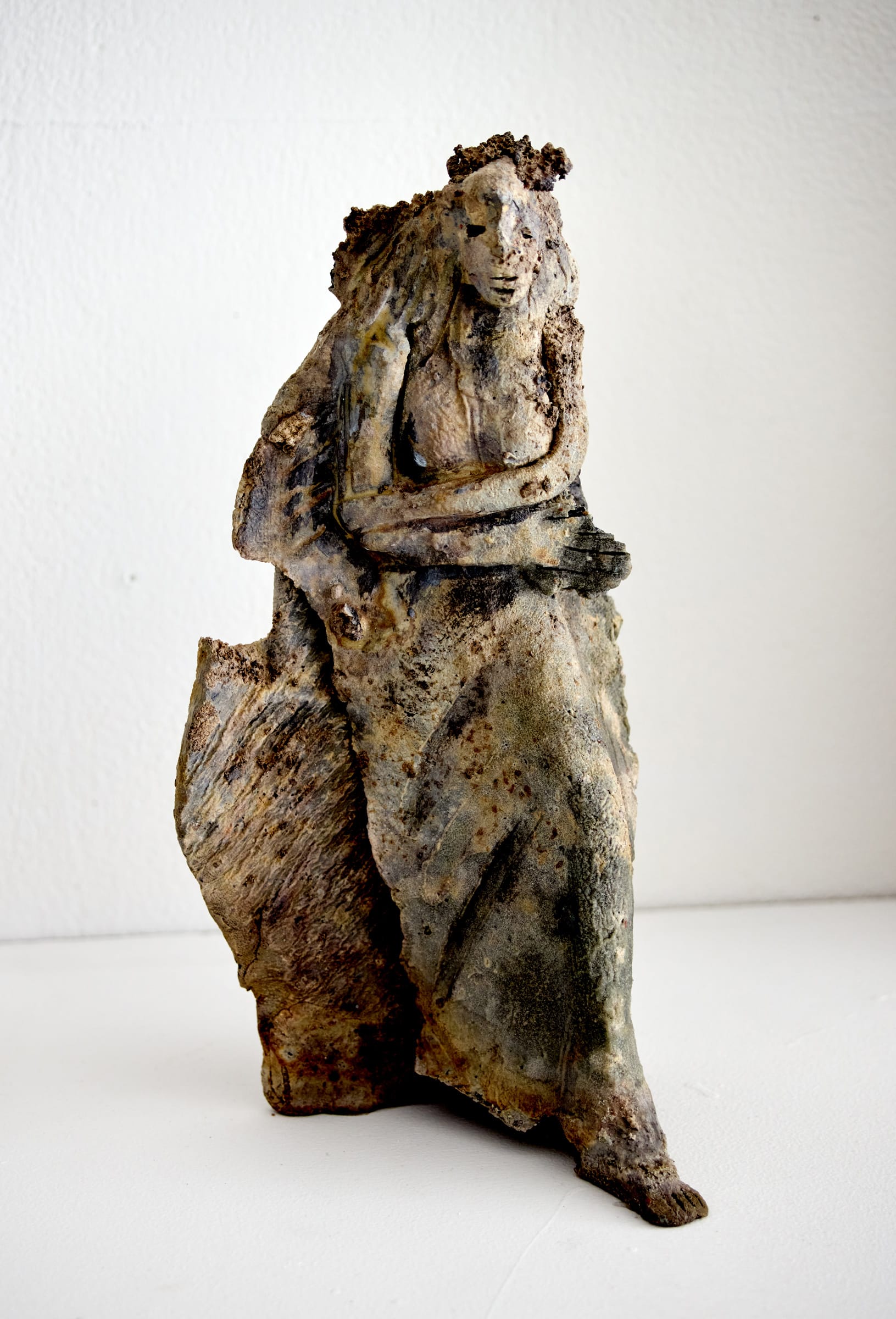
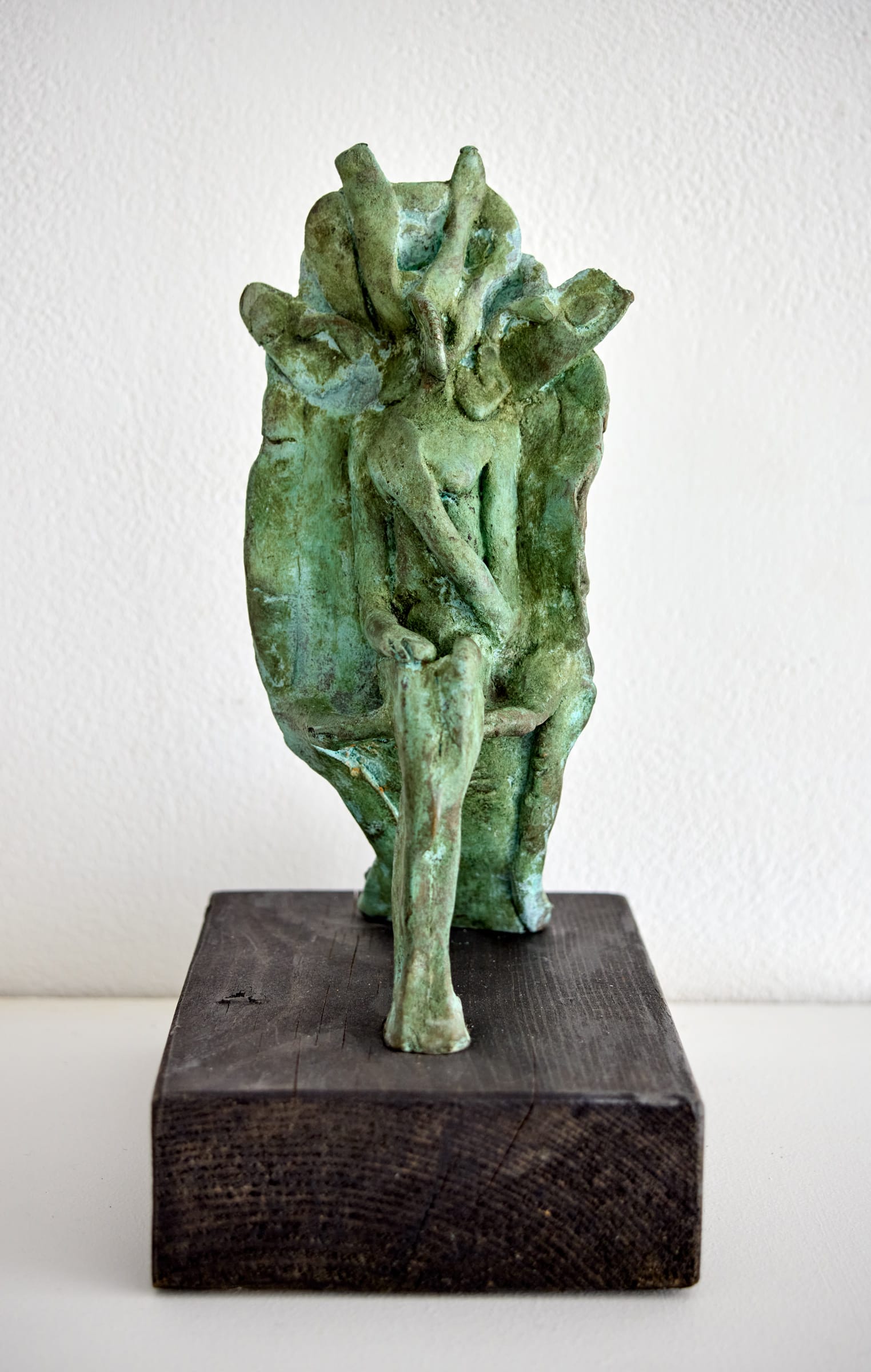
Left: Mary Frank, “Early Morn” (c. 1980), ceramic; right: Mary Frank, “Sitting” (1985), bronze with green patina
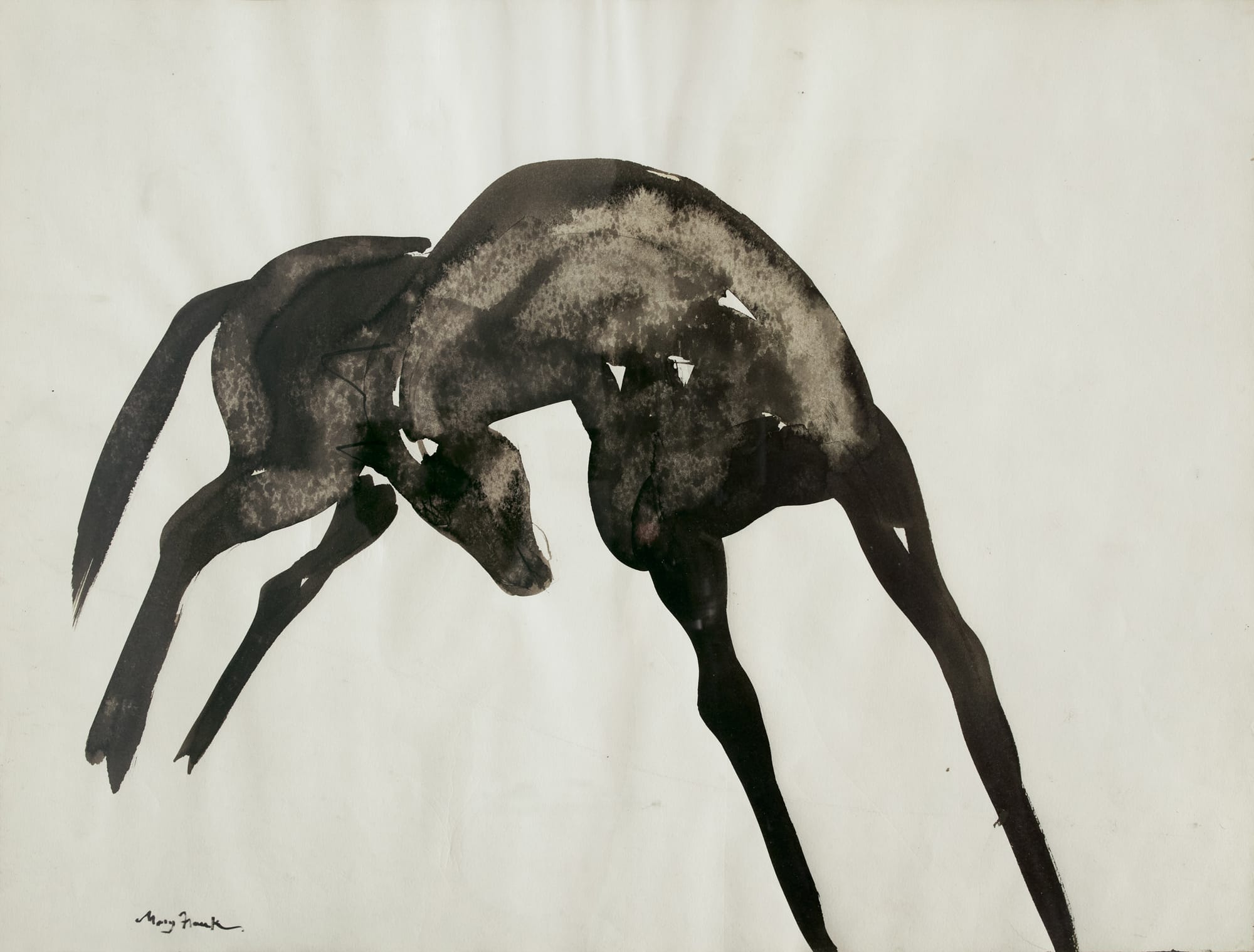
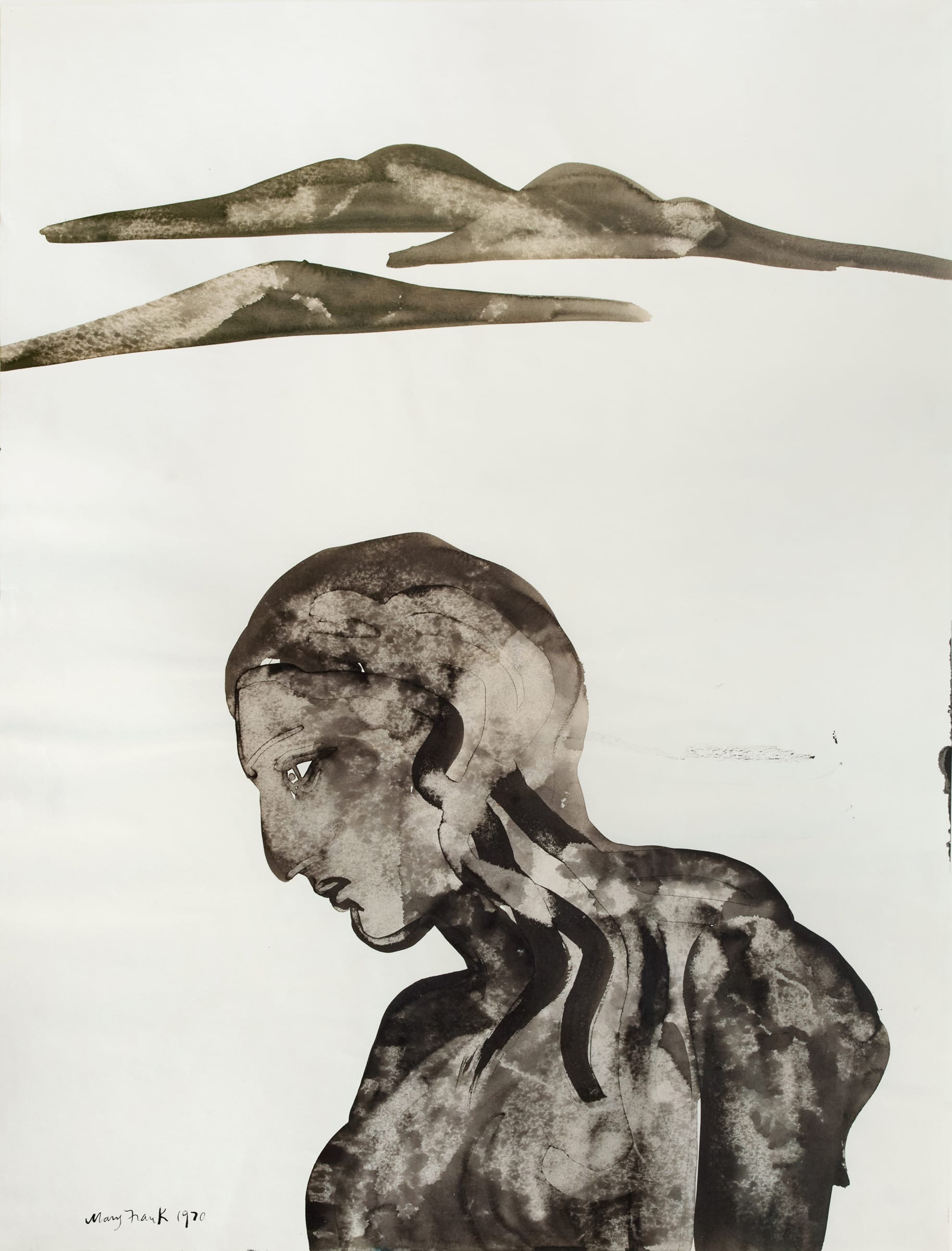
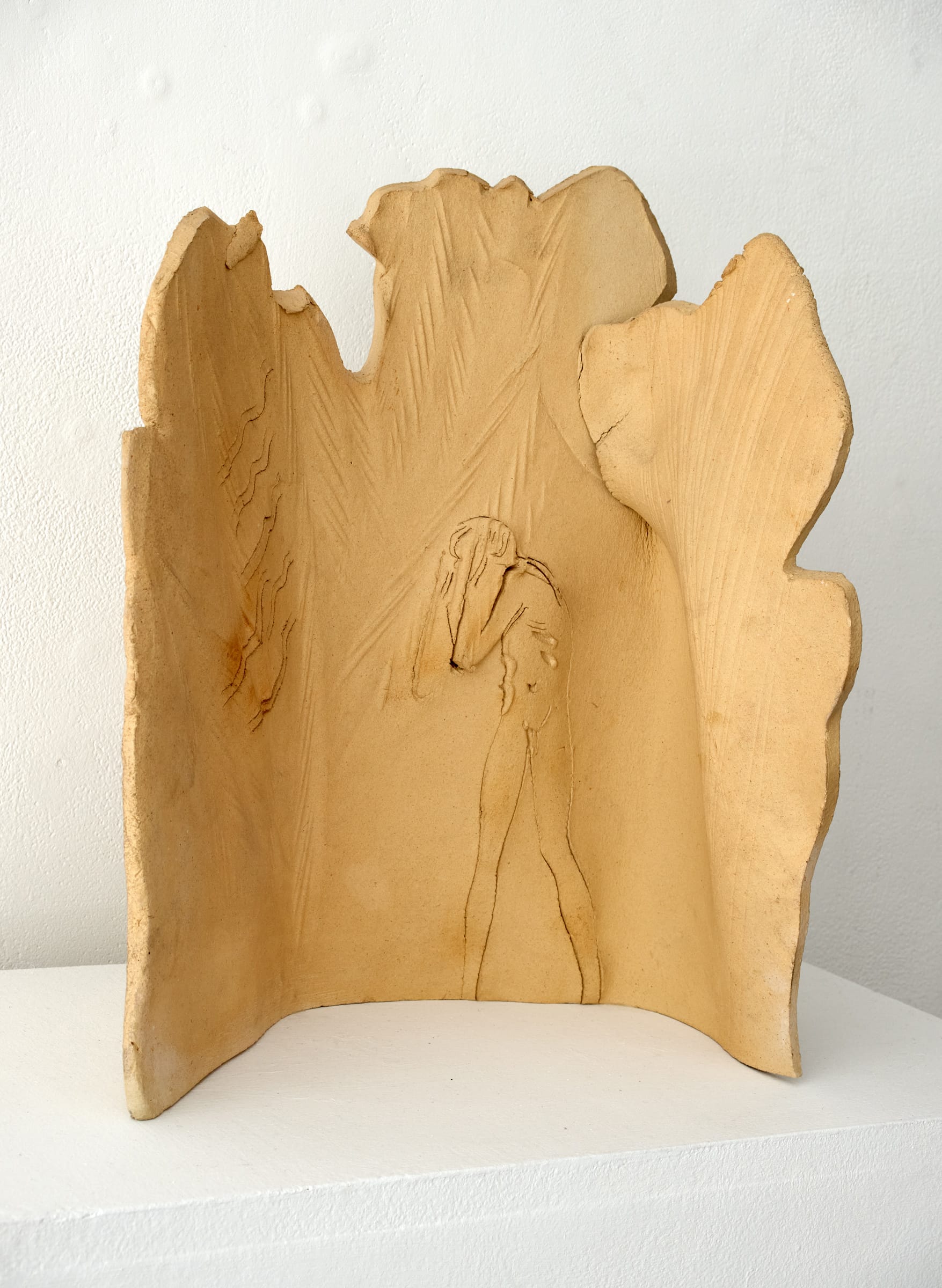
Left: Mary Frank, “Afterwards (MF 1031): (1970), ink wash; right: Mary Frank, “Entrance” (c. 1975), ceramic
Mary Frank continues at Steven Harvey Fine Art Projects (208 Forsyth Street, Lower East Side, Manhattan) through May 22. The exhibition was organized by Steven Harvey Fine Art Projects in collaboration with DC Moore Gallery.