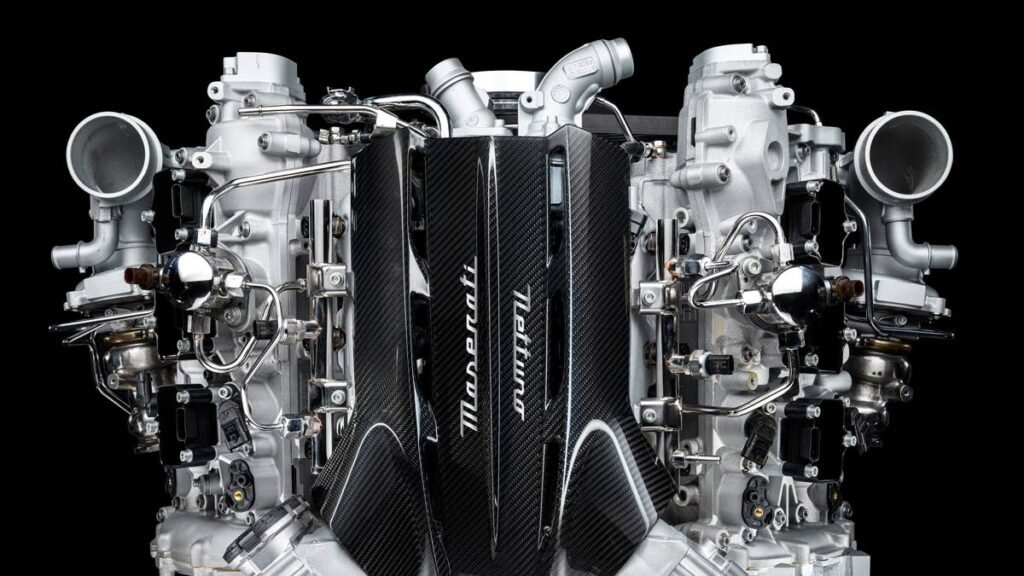
When the Nettuno 3.0-liter twin-turbo V6 engine debuted in the Maserati MC20 (now called the MCPura), the Italian automaker claimed the mill would only ever be used in the supercar, but it’s since been added to the rest of the Maserati range, including the Grecale, GranTurismo, and GranCabrio. With Formula 1-derived pre-chamber ignition, it’s a remarkably powerful and efficient engine, and it’s going to get even better with another element entrenched in the world of motorsport: hybridization. Basically, Maserati’s first in-house engine in more than two decades could be around for just as long.
Maserati Executives Love the Nettuno
Adam Lynton/Autoblog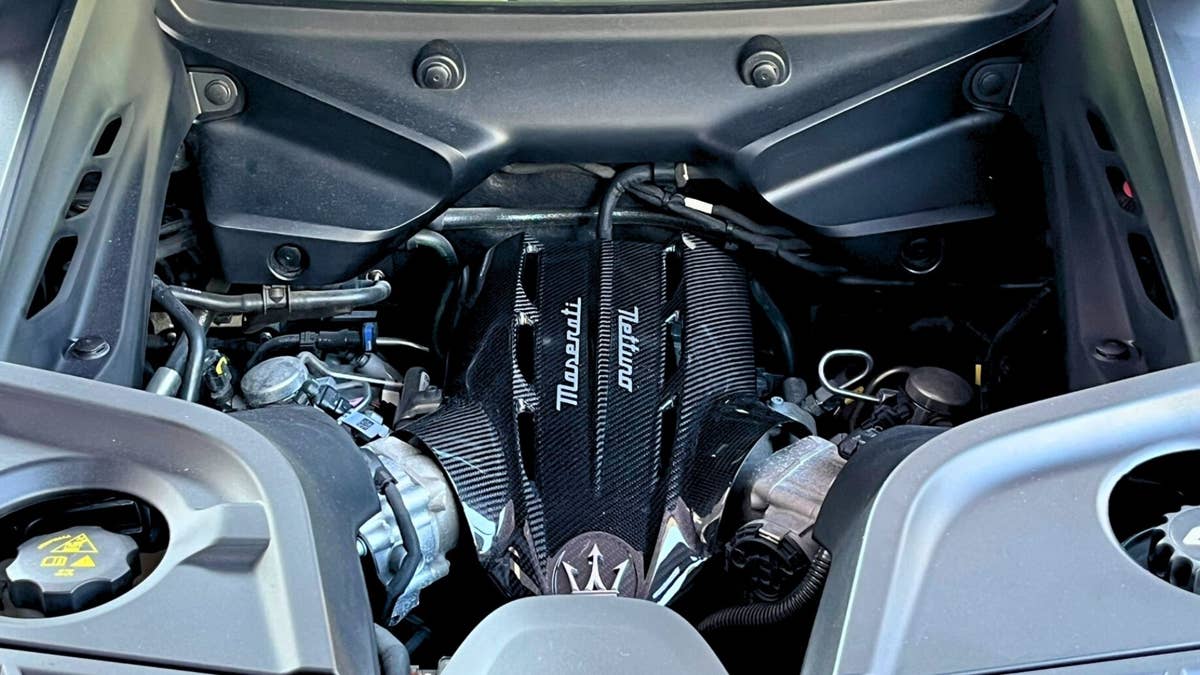
First launched in 2020, the Nettuno V6 is an engine that drew plenty of acclaim for its technical brilliance, and Maserati’s senior executives are still enamored by it, reports Motor1. Chief Operating Officer Santo Ficili says, “I am personally in love with this engine,” while Maserati Chief Marketing Officer Cristiano Fiorio had the following to say: “We do see a hybrid future for the Nettuno, because it’s another type of performance that we can get. It also gives additional value to the customer in the future.” But like the Formula One machines that inspired it, the Nettuno won’t be part of a plug-in hybrid setup.
“We have both low-hybridization – meaning 48-volt – and, eventually, high-voltage hybridization in our product portfolio. We are not pursuing a solution with the plug-in hybrid… So, mild hybridization, high-voltage hybridization, not plug-in hybridization.”
Presumably, Maserati intends to adopt electrification of the Nettuno in its mainstream portfolio first, meaning the Grecale and GranTurismo/GranCabrio. This will allow the automaker to continue offering its products globally, including markets like Europe, where new emissions regulations will come into effect near the end of 2026. But we could see a hybrid Maserati before then, with a new concept expected to debut at the 2026 Paris Motor Show in October.
Autoblog’s Take
Maserati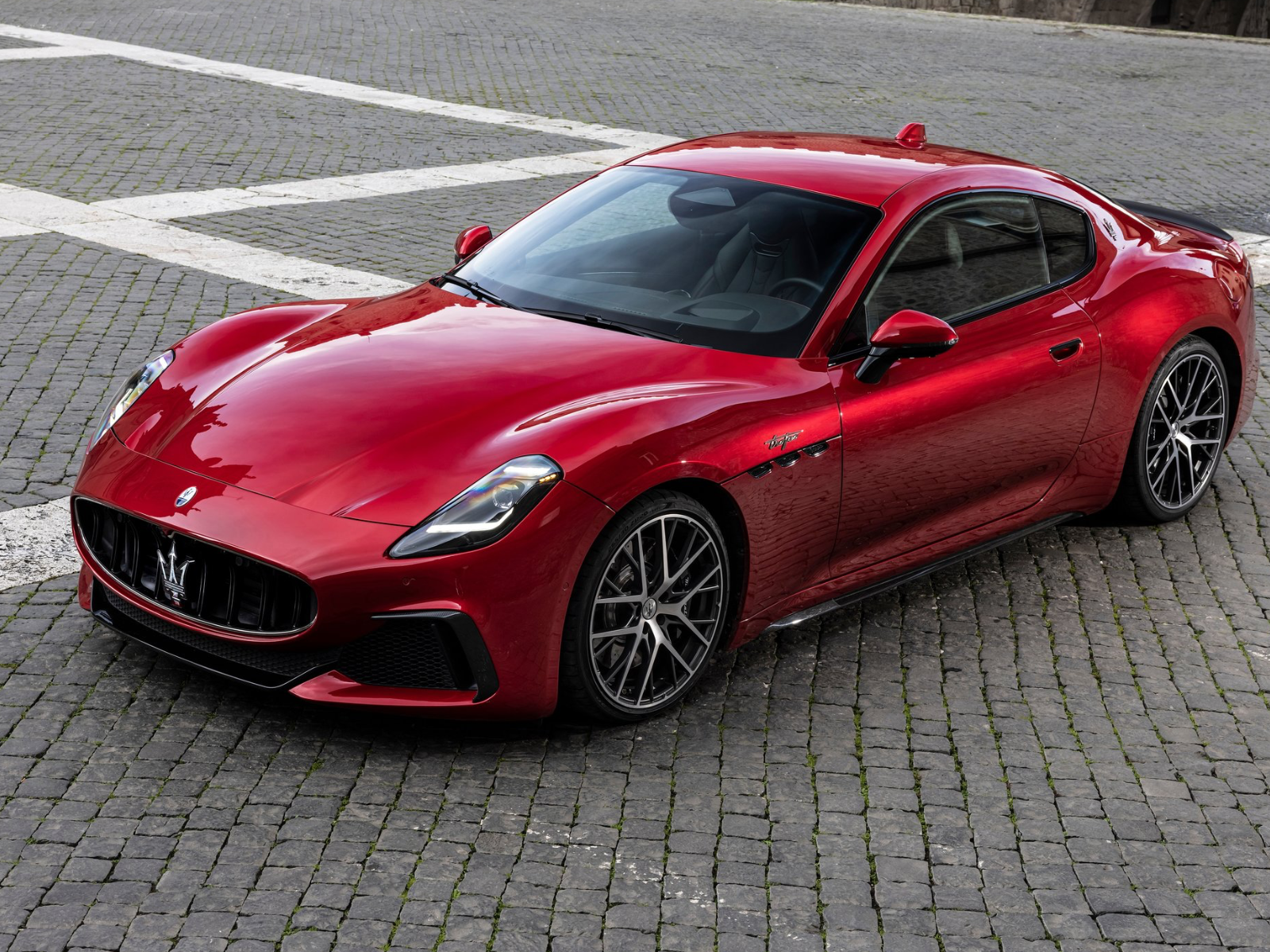
Maserati needs to adopt mild hybrids because its Folgore all-electric products have not been embraced, but why not plug-in hybrids that deliver more EV range and promise more power? PHEVs are massively complex and tend to have more problems than gas cars, and unless they’re used like EVs and charged every night, they struggle to match their MPG claims. The massive battery packs also take up space and add weight, and all of these factors combined make plug-in hybrids overly complex. Sure, you get lots of power – see the ill-fated Mercedes-AMG C 63, the new Audi RS 5, or the bloated BMW M5 – but PHEVs simply aren’t practical for most applications. Like fully electric cars, it seems that most people are just not ready to lug around weight and be inconvenienced by daily charging, so Maserati is aiming for the middle ground: more power and efficiency, less compromise and weight gain.