Mazda VS. Ferrari
In case you missed the news, Mazda and Ferrari are locked in a trademark battle right now. It’s over the use of the name Luce, which Mazda had used first. However, Ferrari claims to own the rights to that nameplate worldwide, but the folks from Hiroshima aren’t giving up without a fight. Mazda still has a claim over Luce in Japan, meaning Ferrari will have to change the name of its EV if Mazda chooses not to budge. So far, it’s looking that way.
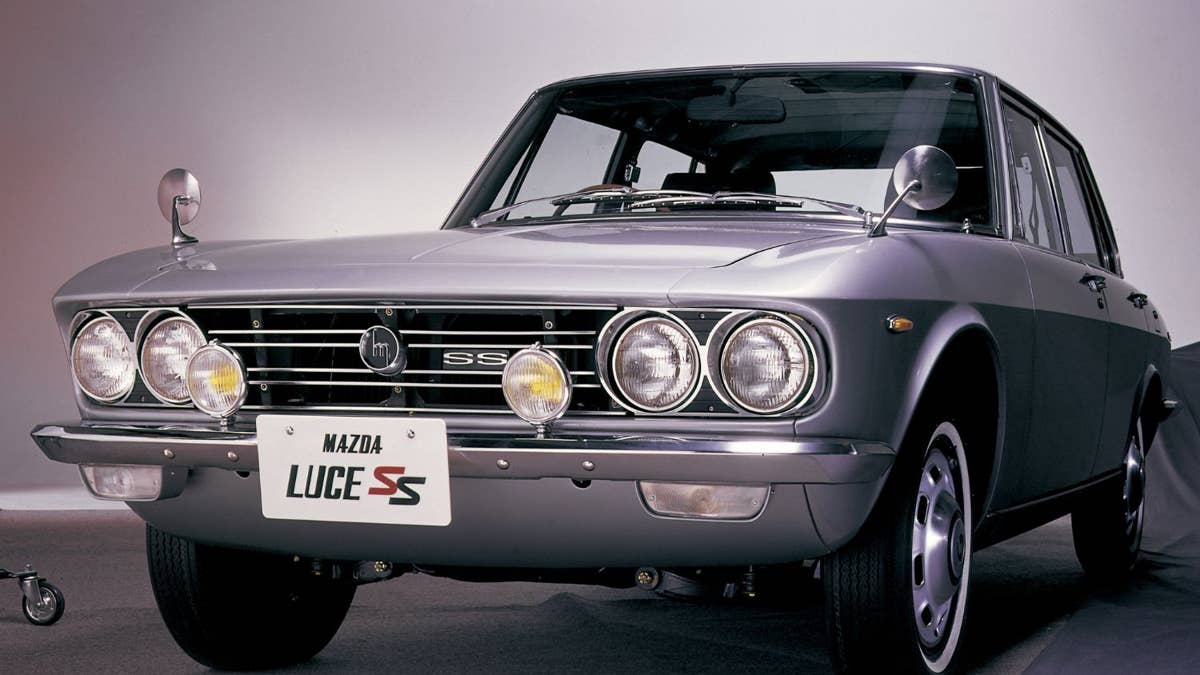
Following the reveal of the Italian Luce, the builders of the Japanese Luce have been doubling down on the trolling efforts. Recently, Mazda showed a photo of its first executive sedan on its socials with the caption “Did anyone say Luce?” On top of that, the company published a short comic highlighting its connection to Italian design. So far, Ferrari hasn’t made any rebuttals as it’s still busy defending itself.
The Car That Started It
The Luce was Mazda’s first foray into the executive car market. It then served as the company’s flagship model from 1966 to 1991. Five generations of the car were made over 25 years. Today, the model holds a special place in Mazda’s history, as it laid the foundation and set the direction of the company, never wavering in its focus on being seen as an innovative and daring automaker.
America did get the Luce, but it came under a different name. It was simply called the 1800, sold in extremely limited numbers, and rarer than hen’s teeth these days. It’s a shame that only a few made it stateside, but then again, it was the ’60s, and the war was still relatively fresh on everyone’s minds. Later export versions of the Luce were called 929.
Mazda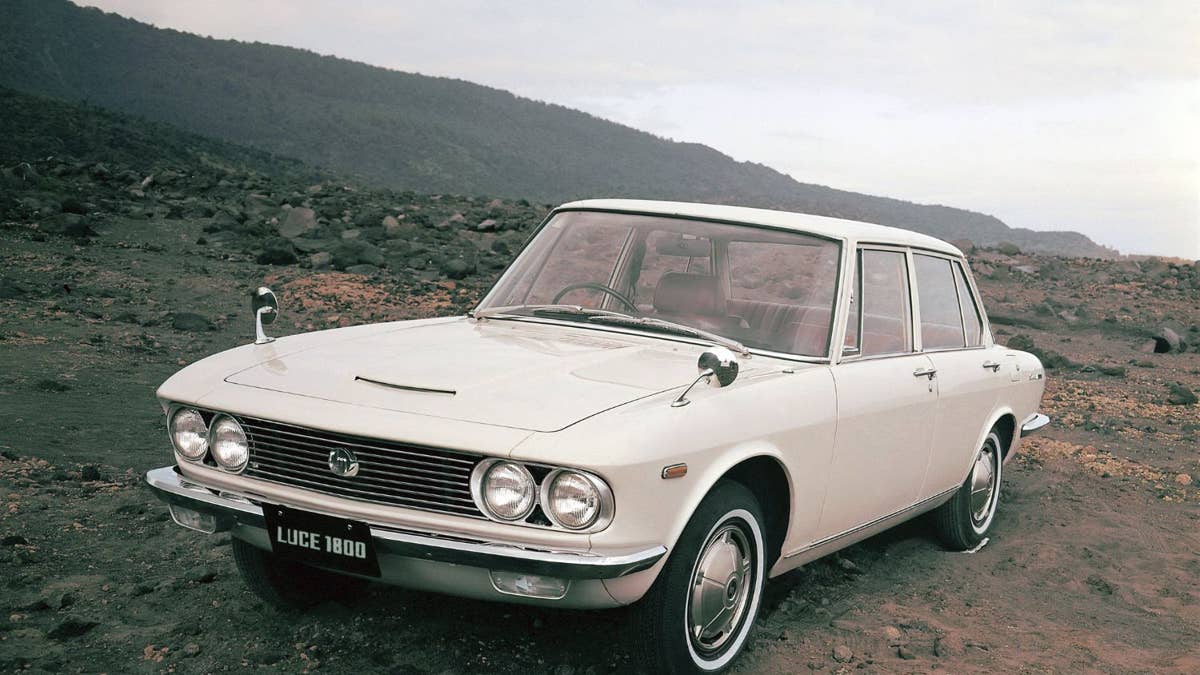
The Mazda-Italy Connection
Mazda’s claim of being inspired by Italian design wasn’t just marketing fluff. It all started in 1960 when Hieyuki Miyakawa and Marisa Bassano crossed paths at the Turin Motor Show. Miyakawa and Bassano, who would later marry, effectively held the key to collaboration between Bertone and Mazda on new designs. The two people they brought together? Tsuneji Matsuda, the president of Mazda at the time, and Giorgetto Giugiaro, a young designer working for Bertone at the time.
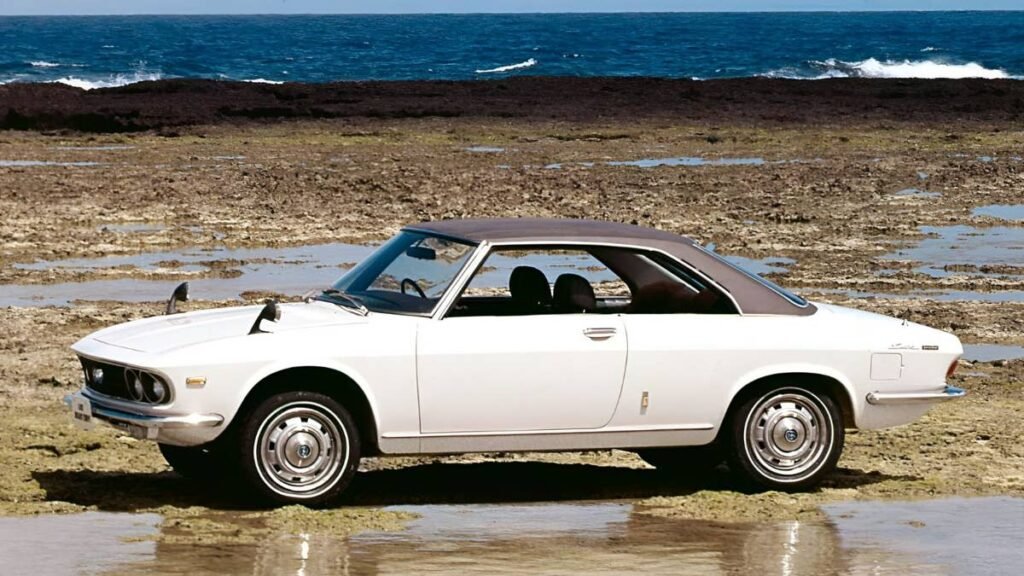
The result? Two cars that fused Japanese and Italian design philosophies. The first was the Familia of 1963, and three years later, the Luce in 1966. Giugiaro wasn’t done yet, though, as he followed it up with the Luce Rotary Coupe in 1969. While not penned by the Italian designer, we can see European influences on models such as the Carol kei car and the Cosmo sports coupe.
Mazda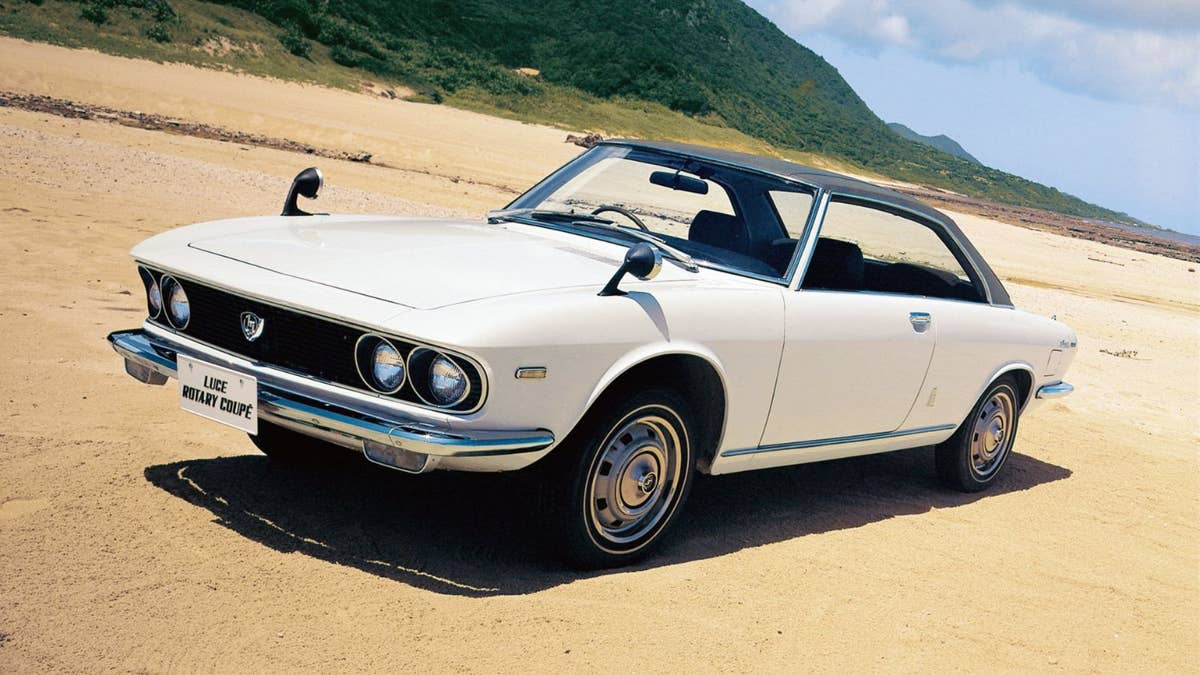
Design Analysis
At first glance, you’d be forgiven for thinking the Luce sedan came from Fiat, Alfa Romeo, or Lancia. The lights and grille are housed in a single shroud, while the long hood lends it a more serious presence. Its tall glasshouse is reminiscent of Italian sedans from the ’60s, while the kink in the rear window is a page out of a certain German automaker based in Munich. At the rear, a simple set of taillights adorns its fascia, and that wraparound windshield is something bean counters would immediately reject today. There was even a wagon version that looked just as good as the sedan.
But it was the Rotary Coupe that looked fantastic. In stark contrast to the sedan, it was lower and sleeker, sharing very little with its more practical sibling. The pillarless doors gave an uninterrupted view out the sides, and all in all, whispered elegance. We’ll admit that we see some shades of the Lancia 2000 Coupe and the Beta Coupe in the two-door Luce, but here’s the thing: The Mazda came first. It’s clean, simple, and unadorned with trinkets that take attention away from its overall design. In other words, it’s the exact opposite of the Ferrari Luce.
Mazda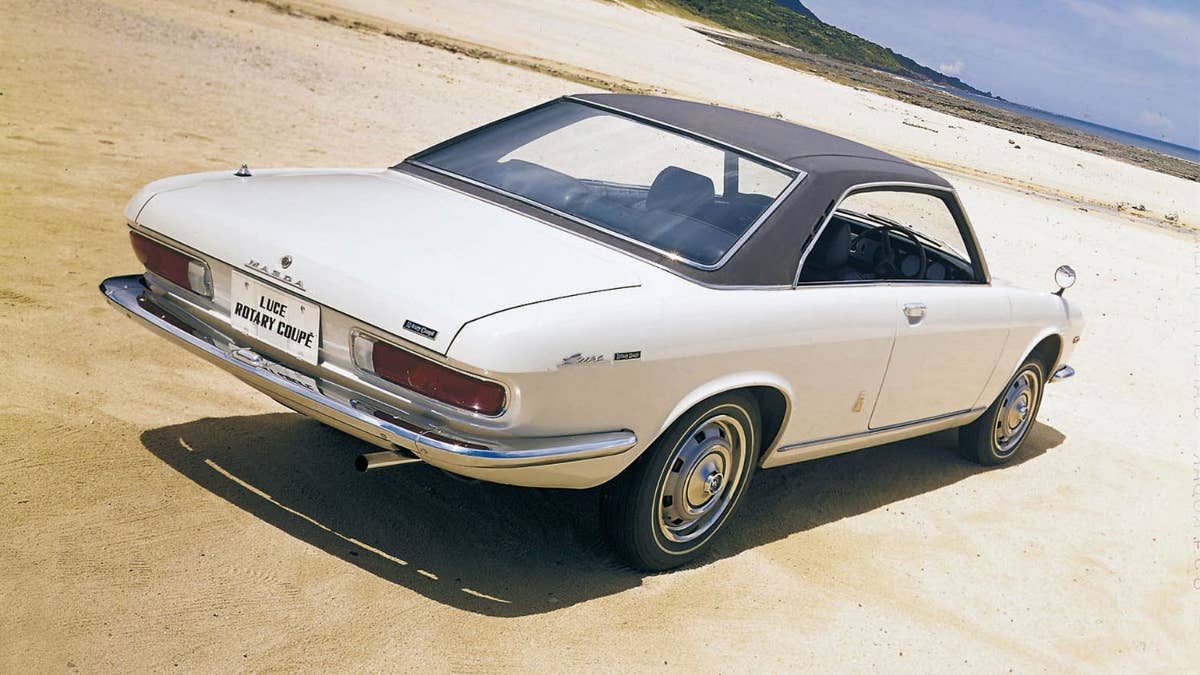
Mazda